
- Release Year: 2009
- Platforms: Linux, Macintosh, Windows
- Publisher: 1C Company, Tripwire Interactive, LLC
- Developer: Tripwire Interactive, LLC
- Genre: Action
- Perspective: 1st-person
- Game Mode: Co-op, Online Co-op
- Gameplay: Shooter
- Setting: Horror
- Average Score: 76/100
Description
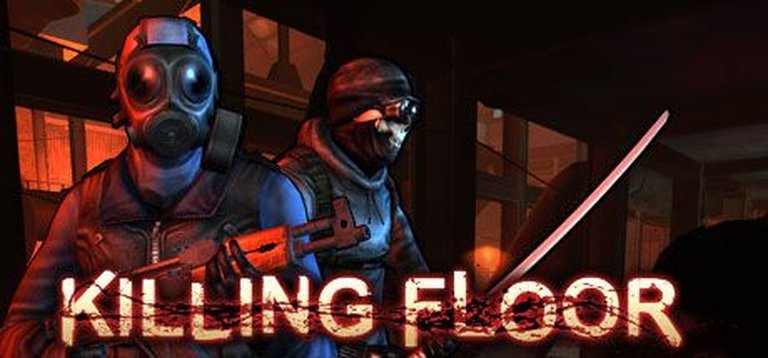
Killing Floor is a co-op horror first-person shooter where players, deployed in London, battle waves of failed experimental clones known as specimens. The game features intense combat with a variety of weapons and character perks that enhance abilities as players progress through increasingly difficult waves, culminating in a boss battle against the ‘Patriarch’.
Gameplay Videos
Where to Buy Killing Floor
Killing Floor Free Download
Killing Floor Cracks & Fixes
Killing Floor Patches & Updates
Killing Floor Mods
Killing Floor Guides & Walkthroughs
Killing Floor Reviews & Reception
metacritic.com (72/100): If you’ve enjoyed zombie games of the past and want to see a different take on what cooperative zombie horror games should be like, then I think you will enjoy Killing Floor too.
imdb.com : Killing Floor is one of those games that just sticks with you. It doesn’t feel like it was built to be a franchise or a brand. It feels like a simple, brutal idea executed perfectly, and that’s why it still holds up.
ign.com (80/100): While it’s still held down by a number of bugs, Killing Floor is an enjoyable alternative for those players that have exhausted their time with Left 4 Dead and are looking for something new.
Killing Floor Cheats & Codes
PC
Enter codes at the console by hitting the ` or ~ key during gameplay.
| Code | Effect |
|---|---|
| god | Toggle god mode (Once for on, again for off) |
| heal | Full health |
| fly | Fly |
| setgravity [number] | Set the gravity |
| walk | Disables No clipping mode |
| allammo | Maximum ammunition |
| ghost | No clipping mode |
| slomo [number] | Set speed; disabled after zedtime |
| behindview [0 or 1] | Toggle third person view |
Killing Floor: Review
In the pantheon of cooperative survival horror shooters, Killing Floor stands as a raw, unpolished gem—a game that, despite its technical shortcomings and dated visuals, captured the hearts of players through sheer intensity, brutal mechanics, and an unshakable sense of camaraderie. Released in 2009 by Tripwire Interactive, this $20 downloadable title evolved from a 2005 Unreal Tournament 2004 mod into a cultural touchstone for zombie-killing enthusiasts, offering a relentless, wave-based combat experience that remains uniquely satisfying nearly two decades later.
Development History & Context
The origins of Killing Floor trace back to 2005, when modder Alex Quick and his team crafted a total conversion for Unreal Tournament 2004. What began as a free multiplayer experiment quickly gained traction for its visceral combat and tense cooperative gameplay. By 2009, Tripwire Interactive—fresh off the success of Red Orchestra: Ostfront 41-45—recognized the mod’s potential and transformed it into a standalone retail release.
Development was swift and scrappy. With only around ten developers working over three months, the team leveraged the aging Unreal Engine 2 to deliver a game that, while visually dated even by 2009 standards, prioritized gameplay depth over graphical fidelity. This approach mirrored the indie ethos of the era: create something mechanically compelling first, polish later. The result was a game that felt both familiar and distinct, borrowing elements from Left 4 Dead but carving its own identity through class-based progression, weapon economy, and the iconic Patriarch boss fight.
Narrative & Thematic Deep Dive
Killing Floor doesn’t waste time on elaborate storytelling. The plot is lean, mean, and efficient: Horzine Biotech, a British military contractor, conducts unethical cloning and genetic manipulation experiments. Something goes catastrophically wrong. The specimens—grotesque, mutated humanoids—escape, overrunning London and turning the city into a “killing floor.”
The narrative serves as a backdrop rather than a focus, but its simplicity is its strength. There’s no hand-holding, no cinematic cutscenes—just you, your squad, and an endless tide of horrors. The specimens themselves are a menagerie of body horror: Clots that grab and bite, Gorefasts with blades for arms, Crawlers that skitter and leap, Bloats that explode in gore, Sirens that emit ear-splitting screams, Husks with arm-mounted flamethrowers, Scrakes wielding chainsaws, and Fleshpounds—massive, muscle-bound juggernauts that charge with terrifying speed.
At the center of it all is the Patriarch, Horzine’s CEO Dr. Kevin Clamely, who has transformed himself into a cybernetically enhanced monstrosity to protect his “children.” His presence as the final boss ties the gameplay to the lore, making each match feel like a desperate last stand against the architect of the apocalypse.
Thematically, Killing Floor taps into classic British sci-fi horror—think 28 Days Later meets Quatermass. It’s a story of scientific hubris, government secrecy, and survival against impossible odds. The specimens aren’t traditional zombies; they’re failed experiments, which adds a layer of existential dread. You’re not just fighting the undead—you’re fighting the consequences of playing god.
Gameplay Mechanics & Systems
At its core, Killing Floor is a wave-based survival shooter. Up to six players face off against increasingly difficult waves of specimens, culminating in a boss fight against the Patriarch. Between waves, players visit a trader to purchase weapons, ammo, armor, and equipment using cash earned from kills. This creates a satisfying risk-reward loop: spend wisely to survive the next wave, or risk being overwhelmed.
The game’s seven perks—Field Medic, Support Specialist, Sharpshooter, Commando, Berserker, Firebug, and Demolitionist—function as classes, each with unique bonuses and progression systems. Leveling up a perk requires completing specific actions (e.g., headshots for Sharpshooter, healing for Medic), encouraging players to specialize and cooperate. The synergy between perks is crucial; a well-balanced team can tackle any challenge, while a mismatched squad quickly falls apart.
Combat is brutal and unforgiving. Specimens are fast, aggressive, and relentless. The game’s “zed time” mechanic—a slow-motion effect triggered by particularly gory kills—adds a cinematic flair and tactical advantage, allowing players to line up headshots or escape dangerous situations. However, the Patriarch’s sheer power and the game’s occasional technical issues (spawn glitches, clipping problems) can frustrate even veteran players.
The weapon variety is impressive for a $20 game. From humble 9mm pistols and shotguns to flamethrowers, rocket launchers, and the iconic SCARMK17 assault rifle, each weapon feels distinct and satisfying to use. Melee combat, especially with the Berserker perk, offers a visceral alternative to ranged fighting, though it requires nerves of steel to get up close and personal with the specimens.
World-Building, Art & Sound
Killing Floor’s world is grim, gritty, and unapologetically British. The five maps—ranging from a Biotics Lab to a West London street—are dark, claustrophobic, and filled with environmental storytelling. Broken glass, overturned cars, and blood-splattered walls paint a picture of a city under siege. The Unreal Engine 2 graphics are dated, with chunky textures and stiff animations, but they contribute to the game’s raw, oppressive atmosphere.
Sound design is where Killing Floor truly excels. The specimens’ shrieks, skittering, and roars are genuinely unsettling, creating a constant sense of dread. The trader’s voice—equal parts helpful and unnerving—becomes iconic, with her repetitive quips (“Need some help, sweetie?”) both guiding and grating on players. The heavy metal soundtrack kicks in during combat, driving the adrenaline and making each wave feel like a battle for survival.
The game’s aesthetic is intentionally rough around the edges. It doesn’t try to be pretty; it tries to be tense, and it succeeds. The dated visuals, far from being a detriment, add to the game’s identity. It feels like a relic from a different era—a time when gameplay mattered more than photorealistic graphics.
Reception & Legacy
Upon release, Killing Floor was met with mixed but generally positive reviews. Critics praised its intense cooperative gameplay, satisfying gunplay, and unique class system, but noted its technical issues, lack of variety, and dated graphics. Metacritic scores averaged around 72/100, with reviewers comparing it favorably to Left 4 Dead while acknowledging its rougher edges.
Despite these critiques, Killing Floor found a dedicated player base. Its $20 price point made it accessible, and its replayability—thanks to multiple difficulty levels, mutators, and a thriving modding community—kept players engaged for years. The game’s success led to a sequel, Killing Floor 2, in 2016, which built upon the original’s foundation with improved graphics, more content, and refined mechanics.
Killing Floor’s influence can be seen in countless subsequent co-op shooters. Its wave-based structure, class system, and emphasis on teamwork became staples of the genre. The game also demonstrated the potential of modding communities, with thousands of user-created maps, weapons, and mutators extending its lifespan far beyond what the developers could have achieved alone.
By 2019, the Killing Floor series had sold over 10 million units combined, generating over $100 million in revenue. This success is a testament to the game’s enduring appeal and the strength of its core design.
Conclusion
Killing Floor is not a perfect game. Its graphics are dated, its technical issues are numerous, and its lack of narrative depth may turn off some players. But perfection is overrated. What Killing Floor offers is something rarer: a raw, unfiltered cooperative experience that prioritizes tension, teamwork, and satisfaction over polish and presentation.
It’s a game that understands the primal thrill of survival—of facing impossible odds with nothing but your wits, your weapons, and your friends. It’s a game that, despite its flaws, manages to be both challenging and rewarding, frustrating and exhilarating. It’s a game that, even in 2025, still holds up as a benchmark for cooperative survival horror.
In a market saturated with cinematic experiences and photorealistic graphics, Killing Floor stands as a reminder that sometimes, all you need is a good gun, a solid team, and a horde of monsters to shoot. It’s not just a classic co-op shooter—it’s a testament to the enduring power of gameplay over spectacle. If you haven’t played it, you missed something special. If you have, you know exactly what I mean.