
- Release Year: 2021
- Platforms: Windows
- Publisher: SCT
- Developer: SCT
- Genre: Action, Driving, Racing
- Perspective: Behind view
- Game Mode: Single-player
- Gameplay: Platforming, Puzzle, Racing
- Average Score: 69/100
Description
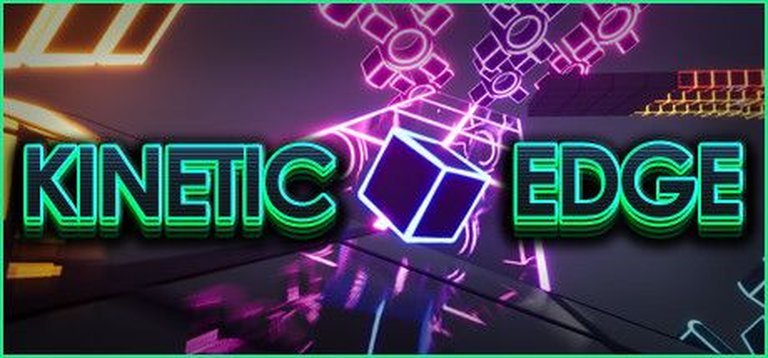
Kinetic Edge is a fast-paced action-racing platformer where players control a morphing polygon navigating vibrant, neon-drenched obstacle courses. The game features a variety of modes including competitive races, arena brawls, time-trial mazes, and golf-like challenges, all set against a visually intense, low-budget aesthetic. With a roadmap for future updates such as puzzle levels, co-op, and user-created workshop content, it delivers chaotic, short-burst gameplay focused on precise movement and competitive scoring.
Where to Buy Kinetic Edge
Kinetic Edge Reviews & Reception
metacritic.com (64/100): Overall, Kinetic Edge is a mixed bag.
waytoomany.games : I enjoyed Kinetic Edge’s simple premise, amount of content and gameplay loop, but I got beyond annoyed with its presentation.
thirdcoastreview.com : Kinetic Edge is a flashy game–but it’s also not a very good one.
web.phenixxgaming.com (75/100): Kinetic Edge is surely worth it if you’re into the above-mentioned games, but I’d imagine the experience will only get better once these modes are added!
Kinetic Edge: A Neon-Drenched Misstep with Potential
Introduction: The Allure of the Abstract
In the vast ecosystem of video games, where narrative complexity and graphical fidelity often dominate discourse, certain titles deliberately strip back the pretense to focus on the raw, unadulterated pleasure of movement and competition. Kinetic Edge, released in February 2021 by the small indie studio Seacorp Technologies (SCT), is one such game. It entered a market already primed by the success of Fall Guys and the enduring legacy of Marble Madness, promising a sleek, physics-driven experience wrapped in a hypnotic Tron-like aesthetic. However, from its earliest reviews, Kinetic Edge revealed itself to be a title of stark contrasts: a game with phenomenally tight controls and imaginative level design that was simultaneously undermined by an aggressively overwhelming visual style, a repetitive soundtrack, and a content roster that felt sparse at launch. This review posits that Kinetic Edge is a fascinating case study in indie development ambition colliding with practical constraints. It is not a forgotten classic, but rather a compelling “what could have been”—a game whose foundational mechanics are brilliant but whose presentation and initial scope prevent it from achieving the lasting resonance of its inspirations. Its true legacy may lie not in its player count, but in its demonstration of the fine line between stylish minimalism and sensory assault, and the critical importance of supporting a strong core with sufficient content and player-centric design.
Development History & Context: A Small Studio’s Big Bet
Kinetic Edge was developed and published by Seacorp Technologies (SCT), a little-known independent studio with no prior released titles listed on major databases. This context is crucial; the game bears the hallmarks of a passionate, resource-constrained team leveraging accessible, powerful tools to compete. Its development utilized Unreal Engine 4, a choice that explains the game’s visually crisp, reflective surfaces and dynamic lighting effects, but also hints at the technical learning curve a new studio might face in optimizing such a flashy aesthetic for broad accessibility.
The game arrived in early 2021, a period still feeling the reverberations of the COVID-19 pandemic, which had accelerated the growth of the indie scene on platforms like Steam and fueled the meteoric rise of casual, multiplayer-focused physics games like Fall Guys (2020). Kinetic Edge clearly aimed to capture a slice of that market but with a distinct identity. It eschewed the cute, character-driven approach of Fall Guys for a cooler, more abstract, arcade-revival aesthetic reminiscent of Tron (1982) and Tron: Legacy (2010), as well as classic isometric platformers like Marble Madness (1984) and Trailblazer (1986). The developers’ vision, as stated in the official Steam description, was to create “a physics game where you control a variety of shapes and objects” with a focus on community feedback and a live service model, promising “updates with requested modes and features.”
Technologically, the constraints were likely significant. While UE4 offered high-end visuals, the team’s implementation resulted in a game that, as multiple critics noted, could be visually “messy” and overwhelming, suggesting compromises in lighting design, user interface clarity, and menu stability (e.g., partial controller support). The decision to launch with a limited set of tracks per mode (typically 2-3) and no AI opponents in some modes points to a development timeline prioritizing core mechanics and a multiplayer-first design, possibly in hopes of building a community from the ground up. This placed the game in a high-risk, high-reward position: if a multiplayer community took root, the planned roadmap (Pool mode, more levels, co-op, a Workshop) could transform it. If not, it risked being a beautifully hollow experience.
Narrative & Thematic Deep Dive: The Beauty of No Story
To discuss Kinetic Edge‘s narrative is to discuss its deliberate and profound absence of narrative. There is no plot, no characters, no dialogue, and no textual lore. The “story” is purely emergent from the act of play: you are a shape (a sphere, cube, pyramid, etc.) in a neon-grid world, competing to reach a goal. This is not an oversight but a core philosophical design choice. The game’s thematic thrust is pure abstraction and kineticism.
The world itself is a non-space, a digital coliseum devoid of context. Its environments—black, glossy planes under pulsating neon arches and grids—evoke the “inside a computer” aesthetic of Tron, but stripped of any narrativeReason for being. Unlike Marble Madness, which implies a child’s imaginative play in a fantastical obstacle course, Kinetic Edge feels like a simulation, a training program, or an abstract sport. This thematic minimalism serves a dual purpose. First, it lowers the barrier to entry; there is no story to parse, no lore to absorb. You understand your objective instantly: get to the end. Second, it focuses the player’s entire cognitive engagement on the physics and the course. The tension arises not from “what happens next?” but from “how do I navigate this?” The morphing of your shape—sometimes forced by course gates—becomes the only “narrative” event, a sudden shift in the rules of your own body that requires immediate adaptation.
This approach aligns with a certain school of “post-narrative” game design that prioritizes systemic play over authored storytelling. The themes are implicit: mastery, precision, frustration, and triumph. The game is about the self-contained loop of attempt, failure, and eventual success (or the rage-quit of the Gauntlet mode). The minimalist aesthetic reinforces this, making the world feel like a sterile proving ground. It’s a theme of pure function, where the only character development is the player’s own improving skill and muscle memory. In this light, the criticisms about the game being “repetitive” or “boring” in single-player can be seen as a clash between a player expecting a game with a world and a game that is a world of mechanics and nothing more.
Gameplay Mechanics & Systems: Precision Platforming, But With Baggage
The core of Kinetic Edge is a physics-based platforming racer. The control scheme is deceptively simple: you control a geometric shape with a forward/backward movement input (mouse or controller stick), a double jump, a dash (both forward and, critically, usable in mid-air), and a pulse blast that pushes away nearby opponents or objects. This toolkit is robust and, for the most part, excellently implemented. The physics are consistent, and the controls are tight—a non-negotiable requirement for this genre, which the game largely achieves. The double-jump and air-dash create a satisfying sense of aerial control, allowing for corrective maneuvers and creative route-finding.
The shape-shifting mechanic is the game’s signature innovation. Starting as a sphere (the easiest to roll), you are periodically forced through “gateways” that transform you into other shapes: a cube (which catches on edges and slopes), a cylinder, a pyramid (which slides and tips unpredictably), a flat plate, or an icosahedron (d20). Each shape has a distinct moment of inertia and interaction with surfaces. The shift from the fluid roll of a sphere to the skidding, catching chaos of a cube is a dramatic moment that forces a complete mental recalibration. This system brilliantly combats complacency and, in theory, ensures every section of a course presents a fresh challenge.
The game is structured into five primary modes, each with its own courses and rule variations:
1. Race: The flagship mode. Navigate a course with checkpoints to reach the finish line first (against ghosts or players). It’s a pure test of speed and route memorization. Critics widely praised the level design here as “well-designed” and “challenging but fair.”
2. The Gauntlet: A brutal, checkpoint-free variant. One life, a seven-minute timer, and lengthy, intricate courses. It’s framed as the ultimate skill test and “rage” mode. Its design is tense and memorable, though critics noted its extreme difficulty could be punishing.
3. Golf: A mini-golf mode. Here, controls change fundamentally: you aim and charge a shot power meter. This is a significant tonal and mechanical shift. While fun in concept, it was a point of contention. Critics found it “frustrating” and “unfair” at times, with unclear shot lines and a control scheme that felt disconnected from the core physics gameplay. The pulse blast and jumping are removed, highlighting how much the main modes rely on that toolkit.
4. Maze: A procedurally generated maze race. The goal is to find the exit fastest. Critics were divided; some found it a “highlight” for its randomization, while others saw it as a test of luck over skill due to the random start point.
5. Arena: A multiplayer-only sumo-style mode where players battle to stay within a green zone while blasting others out. Its existence underscores the game’s multiplayer-first design philosophy.
Systemic Flaws: The brilliance of the core controls is marred by several consistent criticisms.
* Camera Control: The camera is entirely manual with no auto-follow or limits. This leads to frequent disorientation, “zero visibility” situations, and the infamous “surprise disappearing floor” effect where you can’t see what’s ahead because the camera isn’t positioned correctly. This is arguably the game’s single biggest technical flaw.
* Visual Clarity: The neon-heavy aesthetic, while stylish, actively harms gameplay. Reflections on the glossy black surfaces can obscure ledges and gaps. Flashing lights and intense color contrasts during dashes or in tunnel sections can temporarily blind the player to critical platform edges, turning a test of skill into a test of patience. As one critic starkly put it, it’s “an assault on your retinas.”
* Level Design Nitpicks: Some obstacles (moving walls, floors) have speed imbalances that feel cheap. Gaps between small platform segments can cause a shape to “catch” on an invisible edge, sending you flying backward—a frustrating penalty for minor misalignment.
* Sparse Solo Content: With only a handful of tracks per mode (e.g., 7 Race tracks, 3 Golf courses, 1 Gauntlet track at launch), the single-player experience is exhausted quickly. There is no AI opponent in any mode; you race only against your own time or ghost data. This makes modes like Race and Maze feel like sterile time trials rather than competitions, stripping away a core thrill.
World-Building, Art & Sound: Style as Both Asset and Liability
Kinetic Edge’s world is its most immediately striking feature. It presents a digital gladiatorial arena built on a foundation of pure, unadulterated synthwave/cyberpunk aesthetic. The palette is dominantly deep black and vibrant neon (cyan, magenta, electric blue, lime green). Surfaces are hyper-reflective, glassy, and metallic, creating a sense of sterile, futuristic cleanliness. The visual language directly references Tron, but with a sharper, more jagged, and less cohesive design than the iconic films. The level architecture is geometric and bold, with winding tracks suspended over void, towering arches, and circuit-like patterns. This is a world of pure form and light, intentionally devoid of any organic or narrative elements.
The art direction is a double-edged sword. When it works, it’s stunning. The clean lines and popping colors make the courses visually interesting and unambiguous in their geometry. The reflective properties add a layer of tangible physicality to the world. However, as detailed in the Gameplay section, the overuse of pulsating neon, bloom effects, and rapid light flashes creates visual noise. Checkpoints and key pathways can get lost in the glare. The “seizure warning” before the game is a telling acknowledgment of its sensory intensity. This isn’t just a stylistic choice; it’s a fundamental UX failure. A game whose core mechanic is precise navigation should never obscure the path. The art, in its attempt to create a “hypnotic” or “psychedelic” atmosphere, consistently works against the player’s ability to parse the environment.
The sound design is similarly minimalist and repetitive. The soundtrack consists of short, looped electronic/techno tracks. They fit the atmosphere perfectly—cold, futuristic, rhythmic—but they are notorious for their extreme brevity and rapid looping (every 2-3 seconds, as noted by critics), which becomes maddening over time. The sound effects (jump, dash, blast, collision) are functional and sharp but unremarkable. The audio, like the visuals, is a layer of atmosphere that quickly fades into the background or, worse, becomes an irritant. It lacks the dynamic range or memorable hooks that would elevate it beyond simple ambiance. The overall sensory package is high-impact but low-endurance, perfectly suited for short, 10-minute bursts but actively corrosive for longer sessions.
Reception & Legacy: A Flash in the Pan with a Flicker of Hope
Upon its release in February 2021, Kinetic Edge received a mixed-to-average critical reception. On Metacritic, it holds a 64 Metascore based on 6 reviews, with a 72% average on MobyGames from 2 critics. The consensus was remarkably consistent across outlets:
* Praised: Tight, responsive controls; inventive shape-shifting mechanic; strong level design in Race and Gauntlet modes; striking, unique visual aesthetic.
* Criticized: Overwhelming, eye-straining neon visuals; repetitive, looping soundtrack; severe lack of solo content and absence of AI; problematic manual camera; some modes (like Golf) feeling clunky or unfair; reliance on a multiplayer community that never fully materialized.
Review scores hovered in the 6.0-7.5/10 range (with Finger Guns at 8/10 and GameSpew at 50/100). It was frequently compared to Marble Madness, Fall Guys, Super Monkey Ball, and Golf With Your Friends. The common verdict was that it was a fun party game with a solid foundation, but a deeply flawed package as a single-player experience, marred by its own stylistic excesses.
Its commercial performance appears to have been modest. Priced at $7.99-$12.99 on Steam, it likely sold to a niche audience of physics-racer enthusiasts. The predicted player base collapse occurred quickly. As reviewers like Leo Faria (WayTooManyGames) and Steve Esposito (Seasoned Gaming) noted, finding multiplayer matches outside of launch window was difficult, validating concerns about its multiplayer-first design in a crowded market. The game’s “legacy” is thus one of unfulfilled potential.
SCT did honor its roadmap promise to an extent, with updates adding a Pool/Snooker mode (April 2021), more racing levels (May), and puzzle levels (June). The much-anticipated Workshop mode for user-created levels eventually arrived, a pivotal feature for longevity. However, there is little public data on whether this revived interest. The game seems to have settled into a quiet, persistent existence on Steam, with a small but dedicated core community, rather than becoming a breakout hit.
Its influence on the industry is negligible. It did not spawn clones or significantly impact the design of subsequent physics racers. Its primary contribution is as a cautionary tale about the importance of:
1. Player Comfort: Aesthetics cannot come at the cost of gameplay legibility.
2. Content Scope: Launching a multiplayer-focused game with insufficient content and no AI is a gamble that often backfires.
3. UI/UX Polish: Features like partial controller support and a barely visible selection cursor are unacceptable in a modern release.
In the historical tapestry of physics-based games, Kinetic Edge is a curious footnote. It sits between the arcade purity of Marble Madness and the battle-royale chaos of Fall Guys, attempting to fuse their essences but failing to synthesize a compelling whole. It proves that even with near-perfect core mechanics, a game can be undone by presentation and scope.
Conclusion: The Edge is Dull, But the Foundation is Solid
Kinetic Edge is a game of profound contradictions. It is a title with arguably the tightest and most satisfying物理-based movement in the indie racing sphere, paired with a shape-shifting system that is a masterclass in dynamic challenge design. Its core gameplay loop—mastering a course through repetition and adaptation—is inherently engaging and rewarding. Yet, it is封装ed in a sensory nightmare of blinding neon and grating loops, and delivered in a barren, multiplayer-dependent package that feels incomplete at launch.
As a historical artifact, Kinetic Edge is not a must-play classic. It will not be cited in academic papers or remembered in “best of” decade lists. Its place is that of a cult curiosity—a game that enthusiasts of the genre might explore to appreciate its mechanical brilliance while lamenting its flaws. It demonstrates that the “kinetic edge” of pure gameplay can be blunted by a lack of holistic design thinking.
The final, definitive verdict must be split. As a multiplayer party game with a full, active community and all roadmap features implemented (especially user-generated content), Kinetic Edge could have been a minor masterpiece of competitive physics fun. As it stands in its most common form—a solitary experience with a handful of tracks—it is a 7/10 title with severe asterisks. It is a brilliant tech demo and a promising blueprint that never quite built the house. Its legacy is a testament to the fact that in game development, style and substance must be in constant, harmonious dialogue; when style screams so loud you can’t see the path, even the most solid substance gets lost in the glare. For the historian, Kinetic Edge is a perfect case study in the perils of prioritizing aesthetic identity over player ergonomics and content depth.