
- Release Year: 2024
- Platforms: Windows
- Publisher: Broken Teapot Studios Inc.
- Developer: Broken Teapot Studios Inc.
- Genre: Action
- Perspective: Top-down
- Gameplay: Roguelike, Shooter
- Setting: Futuristic, Sci-fi
Description
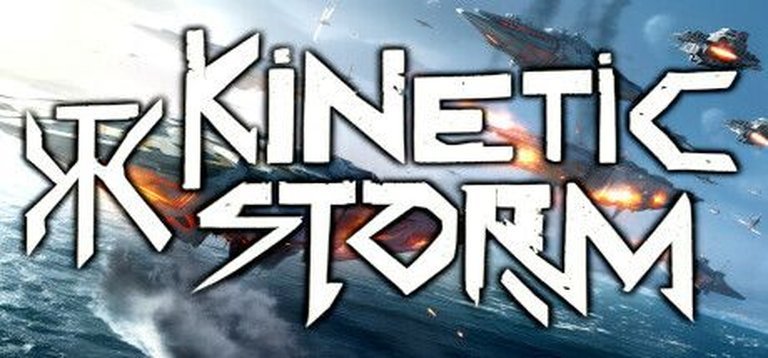
Kinetic Storm is a top-down roguelike shooter set in a futuristic sci-fi universe, where players pilot advanced aircraft through dynamically generated levels. The game blends fast-paced aerial combat with roguelike mechanics like procedural generation and permadeath, challenging players to navigate a kinetic storm of enemies and obstacles in a high-stakes, vehicular flight experience.
Where to Buy Kinetic Storm
PC
Kinetic Storm Reviews & Reception
steamcommunity.com : Overall I really enjoyed the game.
Kinetic Storm: A Flash in the Pan or a Persistent Tempest? An In-Depth Review of a Solo-Dev Roguelike Shooter
Introduction: The Eye of the Storm
In the crowded ecosystem of indie roguelike arena shooters, standing out requires more than just competent twin-stick controls and flashy particles. Kinetic Storm, the debut title from the singular Broken Teapot Studios Inc. (primarily the work of developer Douglas Tanner), stormed into Steam Early Access on July 29, 2024, with the promise of a “visually stunning” and “highly performant” experience built on a custom Vulkan engine. Its full release followed on April 21, 2025. This review posits that Kinetic Storm is a fascinating, deeply conflicted artifact—a game that demonstrates remarkable technical acumen and a solid grasp of core genre loops, yet is consistently held back by a pervasive lack of clarity, polish, and a distinct identity beyond its mechanical skeleton. It is not a forgotten classic, but rather a compelling case study in the perils of solo development where vision outstrips execution, and where the storm of gameplay mechanics occasionally obscures the very fun it seeks to generate.
Development History & Context: The One-Person Engine
The context of Kinetic Storm is almost entirely defined by its scale. With credits listing only three individuals—Douglas Tanner as the monolithic Engine, Game, and Gameplay Programmer/Designer, Ravee Intahchomphoo in Quality Assurance, and Wesley Howe on Additional Programming—this is the quintessential passion project born from a garage (or home office). Tanner’s ambition is immediately evident in the technical choice: a custom-built Vulkan engine. In 2024-2025, this is a herculean task for a solo developer, prioritizing low-level performance control and “responsive low-latency controls” over the rapid iteration possible with established frameworks like Unity or Godot. This decision explains the game’s stated performance strengths and likely contributed to its protracted Early Access period (from July 2024 to April 2025).
Kinetic Storm entered a market saturated with similar titles—from Enter the Gungeon and Nuclear Throne to Vagante and Wizard of Legend. The “top-down arena shooter with roguelike progression” is a well-trodden path. Its unique selling point, as per the store page, was its specific wave-based structure (clearing a wave to choose an upgrade) and an emphasis on synergy-building across weapon, skill, movement, and defense choices. The developer’s own roadmap, glimpsed in a Steam discussion from August 2023, was modest and sensible: more enemy types, a second boss, alternative weapons, multiple arenas, and elite enemies. This grounded approach suggests a developer aware of scope, yet the final product’s reception indicates these additions may not have been enough to overcome foundational issues.
Narrative & Thematic Deep Dive: The Void of Story
Here, the review must confront the game’s most glaring absence: a coherent narrative. The source material provides zero information on plot, characters, dialogue, or theme. The game is set in a generic “Sci-fi / futuristic” milieu, as tagged on MobyGames and Steam. Players control a “ship” in a top-down view, battling “waves of enemies” and “massive and terrifying boss enemies.” The setting is an abstract, scrolling 2D arena—likely a series of floating platforms against a starfield or nebula backdrop, a common trope in the genre.
This void is a critical failure. Even the most minimalist roguelikes (The Binding of Isaac, Slay the Spire) use their mechanics, enemy designs, and item descriptions to imply a world, a conflict, a tone. Kinetic Storm offers no such implication. The “synergies” between upgrades exist in a thematic vacuum. Why do a “dash” skill and a “homing missile” weapon interact? The game provides no lore, no environmental storytelling, no title cards or text logs. The “storm” is merely a nominal descriptor for the gameplay, not an embodied narrative force. This lack of narrative ambition—or perhaps the prioritization of code over prose—leaves the experience feeling sterile and ephemeral, a pure mechanics sandbox with no soul to anchor the player’s triumphs. The “sci-fi” label feels like a default setting rather than an intentional aesthetic choice.
Gameplay Mechanics & Systems: Synergy in Theory, Fog in Practice
The core loop is straightforward: pilot a ship, destroy all enemies in a wave, upgrade, repeat until death. The potential for depth lies in the four upgrade categories: Primary Weapon, Secondary Weapon, Skill, and Defense/Passive. The Steam store blurb emphasizes managing an “energy” resource for skills like the dash, suggesting a layer of resource management beyond the standard cooldown.
Strengths:
* Customization Promise: The idea of building a synergized loadout is genre-core. One can imagine shotgun-primary builds focusing on close-range dashes, or missile-secondaries benefiting from homing passives.
* Enemy Design Intent: The description notes enemies have “distinct abilities and defences… deadly up close, others from far away, or only from some angles.” This implies a puzzle-like combat where target prioritization is key.
* Performance: The custom Vulkan engine’s goal of “responsive low-latency controls” appears to have been met, as no reviews or discussions complain about input lag. This is a non-trivial achievement.
Flaws & Friction Points (Sourced from User Feedback):
* Opacity & Clarity: This is the recurring critique. User “P0NYSLAYSTATION” (Sept 2023) provided prescient feedback that likely persisted: bullet visibility is poor (“bigger bullets or a more defined ‘edge'”), mountain hitboxes are unintuitive (suggesting holographic barriers as a solution), and controller dash mechanics are “awkward” (dashing based on movement input vs. ship facing direction). These are not minor quibbles; they are fundamental flaws in visual communication and control ergonomics. A game where you cannot clearly see what will kill you or control your evasive maneuver with precision is a game built on a shaky foundation.
* Power-Up Presentation: A forum post (“X1-52a”) noted “Powerups disappear too fast…” This points to a potentially frantic and stressful upgrade phase that punishes players for reading options, undermining the strategic build-crafting promise.
* Questionable “Roguelike” Depth: With only a handful of upgrade options implied (and the developer’s early roadmap suggesting “at least one alternate” weapon), the “radically different” playthroughs may be more aspiration than reality. True roguelike depth comes from a vast, combinatorial item pool that creates emergent absurdity. The available data suggests a smaller, more curated pool, which can be a strength if balanced perfectly, or a weakness if it leads to repetitive builds.
The gameplay, therefore, is a study in unimplemented potential. The systems sound engaging on paper, but the user experience, as documented in early feedback and the “Mixed” Steam reviews (64% positive from 31 reviews), indicates these systems are often obscured by poor visual design and control issues.
World-Building, Art & Sound: Colorful but Empty
The Steam tags declare it “Colorful” and “Sci-fi.” The store page praises its “visually stunning” quality. The MobyGames entry lists “2D scrolling” visuals and a top-down perspective. This paints a picture of a vibrant, particle-heavy affair with a scrolling background, likely parallax, as the player’s ship navigates platforms.
However, no specific art style, character design, or environmental details are provided in the sources. We have no screenshots in the MobyGames entry to analyze. The “vibrant” claim is unsubstantiated. The user feedback on bullet visibility (glow vs. edge) suggests a visual design that prioritizes aesthetic flair (glowing projectiles) over functional clarity—a common indie pitfall. The “mountain” terrain implies a natural, rocky aesthetic, but without seeing it, we cannot judge its cohesion.
The sound design is completely unmentioned in all sources. No credits for sound design or music are listed (only Douglas Tanner’s programming credits). This either means the audio is minimal, stock, or implemented so poorly it’s not worth crediting—a significant omission for an action game where audio cues are critical for situational awareness in a bullet-hell context. The “full audio” Steam tag for English is present, but its quality and integration remain a profound mystery, and likely a neglectful one.
The atmosphere, thus, is one of aesthetic minimalism. The setting serves the mechanical need for a 2D plane with obstacles, not an immersive world. It is the visual equivalent of a wireframe model: functional, possibly performant, but artistically thin.
Reception & Legacy: Niche and Unproven
Reception at Launch: The numbers tell a clear story. As of the latest data (Steambase, Feb 2026), Kinetic Storm holds a Player Score of 65/100 based on 31 Steam reviews (20 positive, 11 negative). This “Mixed” rating for a low-volume indie title is not catastrophic, but it is far from a breakout hit. The small review sample suggests a very niche audience.
Community & Developer Response: The Steam discussions are sparse (38 topics) and largely focus on technical issues: crashes (“Fixed crash on startup”), save problems (“Crashing and won’t save settings”), and specific feedback like the dash control tweak request. The developer, Broken Teapot Studios, is actively engaging—pinning a thread on crashes, posting update logs (Version 60-64) addressing fixes for overlays, controller disconnects, and shader optimizations. This indicates a committed solo dev responding to community bug reports, but there is little discussion of deep gameplay changes or major content additions post-launch. The update logs are technical and fixed, not expansive.
Legacy & Influence: At this nascent stage, Kinetic Storm has no measurable legacy or influence. It does not appear on any “best of” lists (the Kotaku IGDB-powered page simply lists it as metadata). Its “Related Games” on MobyGames are based on title keyword matching (“Kinetic”), not design lineage. It has not spawned clones, inspired major developers, or entered the cultural conversation. It exists as a curio—a technically competent but flawed entry in a packed genre, developed by a lone coder who may have bitten off more than they could chew in terms of polish and presentation.
Conclusion: A Storm That Never Fully Breaks
Kinetic Storm is a game of profound contradictions. It is built on a formidable, bespoke technical foundation yet stumbles on the most basic principles of player communication. It offers a compelling framework for synergistic build-crafting but lags behind its peers in the breadth of its systems and the richness of its content. Its strongest attribute—its performant, low-latency feel—is immediately undercut by visual ambiguity and control imprecision.
For the历史游戏编年史 (historian of games), Kinetic Storm is not a landmark. It will not be remembered in decade-spanning retrospectives. Instead, it serves as a perfect snapshot of a specific indie development archetype in the mid-2020s: the talented solo programmer with the ambition to master low-level engine design, tackling a popular genre, but falling short on the holistic game design principles—juiciness, clarity, narrative context, and sheer volume of content—that separate good projects from great ones. Its “Mixed” reception is not a betrayal of a misunderstood masterpiece; it is a fair assessment of a game that is functional in parts but fails to coalesce into a consistently engaging whole.
Final Verdict: 65/100 – A Niche Technical Demo. Kinetic Storm is worth a curious glance for students of game engine programming and roguelike design, but its unclear visuals, control issues, and barren narrative setting make it impossible to recommend as a must-play experience. It is a tempest contained within a teacup, impressive in its construction but leaving the player largely dry. Its legacy will be as a testament to the sheer difficulty of making a good game, not just a working one.