
- Release Year: 2011
- Platforms: Windows
- Publisher: S.A.D. Software Vertriebs- und Produktions GmbH
- Developer: MoonCake Games Inc.
- Genre: Adventure
- Perspective: 1st-person
- Game Mode: Single-player
- Gameplay: Hidden object, Mini-games
- Setting: Fantasy
Description
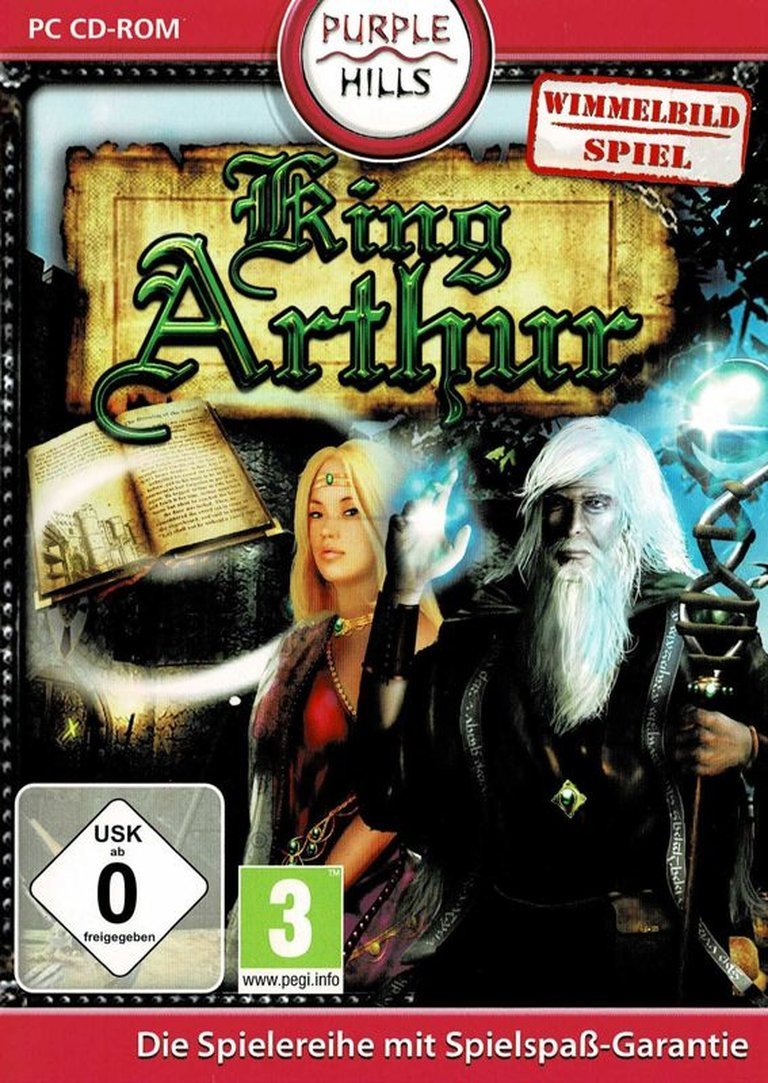
King Arthur is a fantasy adventure game released in 2011 for Windows, featuring a first-person perspective with fixed or flip-screen visuals. Players engage in hidden object gameplay and solve mini-games set within a legendary Arthurian world.
Gameplay Videos
Where to Buy King Arthur
King Arthur Guides & Walkthroughs
King Arthur Cheats & Codes
PC
Press [Ctrl] + [Shift] + 1 to display the console window. Enter one of the following codes to activate the corresponding cheat function. Note: Press [F1] while the console is displayed to list all commands. Press [F3] to step back to the last command.
| Code | Effect |
|---|---|
| SetSpeed [unit type number][number] | Set speed of indicated unit type |
| GetSpeed [unit type number] | Display speed of indicated unit in battle |
| Artifact [hero name] [artifact name] | Add or remove an artifact to or from indicated hero |
| SetXP [number] | Set experience points for the hero |
| AddXP [number] | Add experience points for the hero |
| AddUnitXP4Army | Add experience points to units of the given army |
| net | Drop connection or force reconnection in multi-player |
| GiveVP | Add victory points to the player |
| GiveVPTreshold | Add vp threshold to the player |
| GetStrength | Display three strength value of the given unit |
| SendCamera | Send actual camera position to the peer |
| Chat | Sends chat message to the peer in multi-player mode |
| GivePoints | Give HP or mana to the given unit in battle |
| SpawnQuest [quest name] | Spawns a quest to the given hexafield at Strategy map |
| FinishActiveQuest | Complete active quest with no rewards |
| GiveArtifact [artifact name] | Give artifact to the hero |
| AddSkill [skill name][1-4] | Give a skill to the hero |
| GiveLady [1-10] | Give brides to the player |
| GiveArmyUnit [unit name][number] | Spawn new unit into the army of the given hero |
| GiveFaith [-20 to 20] | Give faith to the player |
| GiveVirtue [-20 to 20] | Give virtue to the player |
| GiveMoney [amount] | Give money to the ruler |
| GiveFood | Give some food to the player |
| AutoBattleGodMode | Set God mode in autobattles |
| DeclareWarToHuman | Given ruler declares war against the player |
| DisableArcheryDamage | Disable all archery damage |
| EnableArcheryDamage | Enable archery damage |
| KillAll | Kill all units of the player in battle |
| WinBattle [player number] | Indicated player wins the battle |
| AddSkill [skill name] | Give a skill to the hero |
| ContractPassthroughStatement | Force contract of a passthrough statement between the player and the given ruler |
King Arthur: A Hidden Gem in the Arthurian Gaming Landscape
Introduction
King Arthur, released in 2011 by MoonCake Games Inc. and published by S.A.D. Software Vertriebs- und Produktions GmbH, is a hidden object adventure game that offers a unique blend of puzzle-solving and Arthurian lore. While it may not be as widely recognized as other titles in the genre, its intricate design and faithful adaptation of the legend make it a fascinating subject of analysis. This review will explore the game’s development, narrative depth, gameplay mechanics, artistic direction, and its enduring legacy in the gaming world.
Development History & Context
King Arthur was developed by MoonCake Games, a studio known for its niche titles that often blend historical themes with interactive gameplay. The game was released in an era where hidden object games were gaining traction, particularly among casual gamers. The technological constraints of the time limited the game to a fixed/flip-screen perspective, a common limitation for adventure games of the early 2010s. Despite these constraints, the developers managed to create a visually engaging experience that captured the essence of Arthurian mythology.
The gaming landscape in 2011 was dominated by big-budget titles and emerging indie games. King Arthur carved out a niche for itself by catering to players who enjoyed slower-paced, narrative-driven experiences. The game’s release on Windows aligned with the growing popularity of digital distribution platforms, making it accessible to a broader audience.
Narrative & Thematic Deep Dive
Plot and Characters
King Arthur retells the classic legend of King Arthur, focusing on his quest to unite Britain and defend it against various threats. The narrative is structured around a series of hidden object scenes and mini-games, each advancing the plot. The game features key characters from the legend, including Merlin, Guinevere, and Lancelot, each with their own subplots and interactions.
The dialogue is straightforward but effective, staying true to the Arthurian canon while adding interactive elements that engage the player. The game’s pacing is well-balanced, ensuring that the narrative remains engaging without overwhelming the player with excessive text.
Themes
The game explores themes of honor, loyalty, and the burden of leadership. Arthur’s struggle to maintain peace and justice in a tumultuous kingdom is a central theme, reflecting the timeless appeal of the Arthurian legend. The game also touches on the supernatural elements of the myth, such as Merlin’s magic and the enchantments of Excalibur.
Gameplay Mechanics & Systems
Core Gameplay Loop
King Arthur primarily revolves around hidden object scenes, where players must find and collect items to progress. These scenes are interspersed with mini-games that test the player’s problem-solving skills. The fixed/flip-screen perspective adds a layer of challenge, as players must navigate through different areas of the game world.
Combat and Progression
Combat is minimal and often resolved through mini-games rather than traditional action sequences. Character progression is tied to completing tasks and uncovering new areas, rather than a traditional leveling system. The user interface is intuitive, with clear instructions and hints to guide the player through each challenge.
Innovations and Flaws
One of the game’s innovations is its integration of Arthurian lore into the hidden object scenes. For example, players might need to find items related to the Knights of the Round Table or solve puzzles based on medieval customs. However, the fixed/flip-screen perspective can feel dated by modern standards, and the lack of voice acting limits the narrative’s impact.
World-Building, Art & Sound
Setting and Atmosphere
The game’s setting is a fantastical interpretation of medieval Britain, complete with castles, forests, and magical elements. The art style is vibrant and detailed, with each scene meticulously designed to immerse the player in the Arthurian world. The use of color and lighting enhances the game’s atmosphere, creating a sense of wonder and adventure.
Sound Design
The soundtrack complements the visuals with orchestral pieces that evoke the grandeur of the legend. Sound effects are used sparingly but effectively, such as the clinking of swords or the rustling of leaves, to enhance the immersive experience. The absence of voice acting is a notable omission, but the background music and sound effects help maintain the game’s atmospheric quality.
Reception & Legacy
At the time of its release, King Arthur received mixed reviews. Critics praised its faithful adaptation of the Arthurian legend and its engaging hidden object mechanics, but some found the gameplay repetitive and the lack of voice acting a drawback. Despite these criticisms, the game developed a cult following among fans of hidden object games and Arthurian lore.
Over time, King Arthur has been recognized as a notable entry in the Arthurian gaming genre. Its influence can be seen in subsequent hidden object games that incorporate historical and mythological themes. The game’s legacy lies in its ability to blend narrative depth with interactive gameplay, setting a standard for future titles in the genre.
Conclusion
King Arthur is a hidden object adventure game that successfully captures the essence of the Arthurian legend. Its detailed world-building, engaging narrative, and innovative gameplay mechanics make it a standout title in the genre. While it may not have achieved widespread acclaim, its faithful adaptation of the myth and immersive design ensure its place in video game history. For fans of hidden object games and Arthurian lore, King Arthur remains a treasure worth discovering.