
- Release Year: 2010
- Platforms: Windows
- Publisher: NeocoreGames Ltd.
- Genre: Compilation
- Game Mode: LAN, Online PVP, Single-player
- Average Score: 59/100
Description
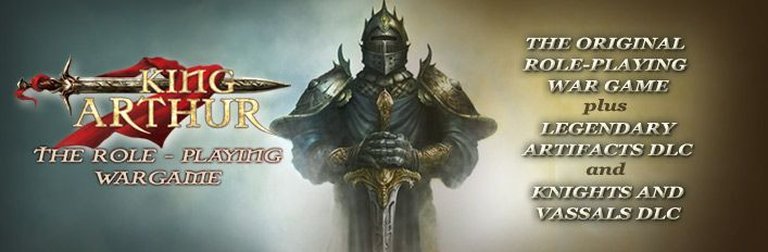
King Arthur Pack is a compilation that includes King Arthur: The Role-playing Wargame and its DLC expansions, Knights and Vassals and Legendary Artifacts. Set in the mythical Britannia of King Arthur’s legend, the game blends grand strategy on a campaign map with real-time tactical battles where heroes command troops, use magical abilities, and influence morale, offering a deep mix of strategy and role-playing elements.
King Arthur Pack Reviews & Reception
metacritic.com (59/100): The repetitive nature of this hack-and-slash title will eventually get the best of those who pursue it, and if it doesn’t the unfair difficulty of some later levels probably will.
King Arthur Pack Cheats & Codes
King Arthur: The Role-Playing Wargame (PC)
Press [Ctrl] + [Shift] + 1 to open the cheat console. Enter codes to activate cheats. Press [F1] for a list of commands.
| Code | Effect |
|---|---|
| SetSpeed | Sets speed of the given unit type, where unittype is a number, indexing a list of all unit types. |
| GetSpeed | Displays the speed of the given unit in battle (player 0 is the human player). |
| Artifact | Adds or removes an artifact to/from a hero. |
| SetXP | Sets XP of the hero. |
| AddXP | Adds XP for the hero. |
| AddUnitXP4Army | Adds XP to the units of the given army. |
| net | Multiplayer only: drops connection or forces reconnection. |
| GiveVP | Adds victory points to the player. |
| GiveVPTreshold | Adds victory point threshold to the player. |
| GetStrength | Displays three strength values of the given unit. |
| SendCamera | Multiplayer only: sends the actual camera position to the peer. |
| Chat | Multiplayer only: sends a chat message to the peer. |
| GivePoints | Battle only: gives HP or mana to the given unit. |
| SpawnQuest | Strategy map only: spawns a quest to the given hexafield (quest names are language dependent). |
| FinishActiveQuest | Completes the active quest with no rewards (may leave the game unfinishable). |
| GiveArtifact | Gives an artifact to the hero (or chooses randomly if not specified). |
| AddSkill | Grants a skill to the hero (skill names are language dependent). |
| GiveLady | Grants brides to the player. |
| GiveArmyUnit | Spawns a new unit into the army of the given hero (soldier types are language dependent). |
| GiveFaith | Gives faith to the player (range -20 to 20). |
| GiveVirtue | Gives virtue to the player (range -20 to 20). |
| GiveMoney | Gives money to the ruler (or to the player if not specified). |
| GiveFood | Gives some food to the player. |
| AutoBattleGodMode | Sets god mode in autobattles. |
| DeclareWarToHuman | The given ruler declares war against the player. |
| DisableArcheryDamage | Disables all archery damage. |
| EnableArcheryDamage | Enables archery damage. |
| KillAll | Battle only: kills all units of the player. |
| WinBattle | Battle only: the indicated player wins the battle (assumes player 0, the human, if not specified). |
| ContractPassthroughStatement | Forces contract of a passthrough statement between the player and the given ruler. |
King Arthur Pack: A Flawed Masterpiece Forging a Legend Through Strategy and Role-Playing
Introduction: The Sword in the Stone of Genre Hybrids
In the crowded landscape of late-2000s strategy games, King Arthur: The Role-playing Wargame emerged not as a mere licensed cash-in, but as an audacious, soulful experiment. It sought to do what few games had attempted: merge the grand, sweeping political canvas of the Total War series with the intimate, character-driven choices of a classic computer RPG, all wrapped in the most timeless of narratives—the Arthurian legend. The 2010 King Arthur Pack compilation, bundling the base game with its inaugural DLCs (Knights and Vassals and Legendary Artifacts), offers the most complete version of this ambitious vision at launch. This review argues that King Arthur Pack represents a pivotal, deeply flawed, yet ultimately essential milestone in the evolution of the strategy-RPG hybrid. Its legacy is not in perfect execution, but in its courageous synthesis of disparate gameplay loops and its profound, if messy, interrogation of myth through interactive morality—a flawed Excalibur that still gleams with potential.
Development History & Context: A Hungarian Studio’s Grand Vision
NeocoreGames: From Modders to Pioneers
Developed by NeocoreGames, a Budapest-based studio founded in 2005 by a collective of programmers and artists, King Arthur was a quantum leap from their earlier real-time tactics game, Killing Ground (2005). Led by lead designer Balázs Farkas and senior content designer Viktor Juhász, the team possessed a palpable passion for two pillars: deep, systemic strategy and rich narrative. Their vision was explicit: to create a “role-playing wargame” where the player didn’t just command armies but became the legend, with every decision shaping the kingdom’s soul and the heroes’ fates. Partnering with publishers Paradox Interactive (North America) and Ubisoft (Europe) provided crucial reach into the strategy gaming niche.
Technological Constraints and the Coretech Engine
Built on Neocore’s proprietary Coretech engine, enhanced with NVIDIA’s PhysX for physics (handling troop collisions, shield impacts, and environmental effects), the game pushed against the limits of late-2000s PC hardware. Battles aimed for spectacle with up to 1,000 units per side but fell short of the thousands seen in Total War. The campaign map was a fully rotatable 3D topographic model of Britannia, a technical feat that came with a cost: long loading times and occasional performance hits, issues noted in reviews like GameBanshee’s critique of The Saxons expansion. The decision to use text-based quests with sparse voice samples over full cinematics was a pragmatic one, conserving resources for the battle systems and map, but it created a narrative tone that was intimate yet static.
The 2009-2010 Gaming Landscape: A Window of Opportunity
The game arrived in a fertile period for genre blending. November 2009 saw the release of Dragon Age: Origins, which proved deep RPG choices could have mainstream appeal. Earlier that year, Empire: Total War had revolutionized the campaign map. King Arthur’s niche was to fuse these sensibilities. Its release was staggered: North America on November 24, 2009, and Europe in June 2010, a delay possibly tied to localization and final balancing. The post-launch support was significant, with patches 1.02 through 1.04 addressing critical issues like AI pathfinding and the infamous “overpowered archers” problem—a balance flaw so severe it warranted a specific toggle option in a patch. The King Arthur Pack itself, released January 20, 2010, was a savvy move to package the base game with its first wave of DLC, offering new unit types and artifacts to enhance replayability in a market increasingly wary of piecemeal content delivery.
Narrative & Thematic Deep Dive: Forging a Legend with Every Choice
Plot Structure: From Stone to Crown
The narrative is framed as a grand saga in “books,” chronicling Arthur’s rise. It begins with the iconic moment: Arthur, an unknown squire, pulls Excalibur from the stone. This act is not just coronation; it’s a metaphysical rupture. The sword’s liberation shatters an ancient seal, causing “The Magic Comes Back”—the Sidhe (faerie courts) re-enter the world, druidic powers surge, and Saxon invaders are emboldened. Britannia fractures into bickering kingdoms. The player’s goal is to unify the land through conquest, diplomacy, and moral抉择, culminating in a final confrontation with the traitorous Mordred and the forces of chaos.
Characters: Knights as RPG Avatars
The true narrative engine is the roster of Knights of the Round Table. These are not mere units; they are fully realized RPG characters with backstories, personalities, and 20-level progression trees. Drawing from Malory and White but heavily adapted, figures like Lancelot (chivalric but prideful), the bloodthirsty Sir Caradoc (“Blood Knight”), and the enigmatic Merlin are playable champions. Their loyalty is dynamic—neglect a knight’s campaigns for a year, and they may become disillusioned; fight constantly, and a figure like Lancelot gains morale. This creates emergent storytelling: a “Rightful” king might see Lancelot remain loyal, while a “Tyrant” might provoke his betrayal, forcing a tragic finale.
The Morality Axis: Religion and Rulership
The game’s most innovative narrative mechanic is its dual morality system, tracked on a radial chart:
1. Ruler Type: Rightful (benevolent, lawful) vs. Tyrant (ruthless, pragmatic).
2. Faith: Christianity (favoring knights, crusader units, defensive miracles) vs. the Old Faith (Celtic paganism, favoring guerrilla units, druidic spells, Sidhe alliances).
Every major quest choice, law enacted, and knight appointed shifts this balance. This isn’t cosmetic; it unlocks or locks content. A Christian path grants access to “Crusader” units and saintly healers. An Old Faith path might ally you with the Sidhe or unlock nature-based spells. This system makes the Arthurian myth a player-authored text. A “Christian Tyrant” might secure short-term military advantages but face rebellions and a fractured Round Table. An “Old Faith Rightful” king might quest for the Holy Grail in a pagan guise. The expansions extend this: The Saxons lets you play as the invading Christian Saxons under King Raedwald, framing Arthur’s conquest from the “villain’s” perspective, while The Druids explores the pagan Welsh.
Thematic Depth: The Cost of a Legend
Thematically, the game deconstructs the “Once and Future King” myth. Arthur is a “Non-Entity General”—you issue orders from Camelot, never leading a charge yourself. This emphasizes the burden of leadership and the isolation of power. The quests, delivered as text adventures reminiscent of Choose Your Own Adventure books, are where the theme sings. A simple rescue mission might offer choices: intimidate (Might), negotiate (Charisma), or use magic (Arcane). Succeed, and you gain an artifact or a loyal knight. Fail, and you spark a new war. These vignettes constantly ask: what kind of king are you? The legend is not pre-written; it’s a brutal, reactive sandbox where chivalry and tyranny are equally viable (and equally costly) tools.
Gameplay Mechanics & Systems: A Tapestry of Interlocking Loops
Core Loop: Seasons of Conquest
The campaign operates on a seasonal turn-based system on the 3D Britannia map.
* Summer/Autumn: Army movement and province conquest.
* Winter: Movement ceases. This is the “management season”: taxes (Gold) and harvests (Food) are collected, units and heroes gain XP and level up, buildings are constructed, and research is conducted.
* Resources: Streamlined to just Food (for army upkeep) and Gold (for construction, recruitment,laws). Province output is largely automatic but can be boosted by hero abilities.
* Province Control: To own a province, you must conquer its constituent towns and castles. This “Risk”-style map makes strategic placement of strongholds vital, as they project economic and military benefits onto surrounding counties.
Warfare: Real-Time Tactics with an RPG Heart
Battles shift to real-time tactics on predefined maps (forests, plains, ruins). Key innovations:
* Hero-Centric Combat: Knights are singularly powerful, capable of slaying dozens of troops. They wield active spells (lightning storms, healing, summoning fog) and passive auras that boost nearby troops. If a knight is captured or killed, army morale plummets.
* Victory Points (Morale System): A brilliant hybrid of Battlefield‘s control points and traditional morale. Maps have 3-5 flags. Controlling more points drains the enemy’s morale bar. Once it hits zero, the army breaks and flees—an instant-win condition that rewards positioning over simple attrition.
* Tactical Rock-Paper-Scissors: Spearmen counter cavalry, archers shred infantry, heavy infantry stand firm. Formations (Wedge for charges, Shield Wall for defense) and terrain (forests hinder cavalry, hills aid archers) add crucial depth.
* Notable Flaws: The archer dominance (pre-patch) was game-breaking. The tactical AI was often poor, leading to frustrating “hump” difficulties where enemy heroes would target the player’s knight relentlessly. Auto-resolve was heavily punitive, often giving worse outcomes than manually fighting a battle you were destined to win, a design choice that forced tedious micromanagement.
RPG & Campaign Systems: The Role-Playing Wargame
* Hero Progression: Knights earn XP in battle. In winter, you allocate skill points across trees (Warrior, Warlord, Mage). They can also be appointed as liege lords of provinces, where their passive skills (e.g., higher tax efficiency, reduced unrest) directly impact the economy.
* Questing: The text-adventure quests are the game’s narrative DNA. They use a simple stat check system (Might, Cunning, Charisma, Arcane). Success yields artifacts (from Legendary Artifacts DLC), new knights, or province boons.
* Morality in Action: Your position on the morality axis isn’t just for flavor. It unlocks specific units and spells in the recruitment and research trees. It also affects diplomacy: a pagan knight in a Christian province causes “Opposites Attract” morale penalties. Knights have their own moral leanings; forcing a pious knight to serve a tyrant king can cause loyalty loss.
* The “Forced Tutorial” Problem: The main Arthurian campaign is heavily railroaded in its early stages. You cannot recruit troops or collect taxes until after a specific early quest to restore Excalibur, and you cannot build or research until establishing your first stronghold—a tutorial disguised as progression that many players found confusing and restrictive, as noted in the TV Tropes analysis.
Multiplayer & Skirmishes
The game supported 2-player LAN/Internet skirmishes with customizable armies, a mode largely untouched by the morality systems. However, as The Saxons review on GameBanshee starkly highlights, by the time of that expansion, the multiplayer infrastructure was “clinically dead,” with no official servers and a broken lobby system, a sad fate for a feature with potential.
World-Building, Art & Sound: A Gritty, Mythic Britannia
Visual Direction: Grimdark Before It Was Cool
Neocore’s Britannia is a “Warhammer Fantasy”-infused vision of post-Roman Britain, distinct from the cleaner medievalism of most Arthuriana. The campaign map is a beautiful, mist-shrouded 3D terrain model where seasons are visibly rendered—lush green summers give way to snowy, blighted winters. Provinces feel like lived-in territories, not just colored blobs.
* Battlefields: Detailed and varied. Crumbling Roman stone circles, dense Bedegraine Forest (home of the Sidhe), muddy river fords. The PhysX effects, while modest by today’s standards, added tangible weight to shield collisions and trampling charges.
* Unit & Hero Design: A fantastic blend of historical grit and Celtic fantasy. You see chainmail alongside Sidhe warriors in glowing ichor, giants with crude clubs, and cavalry with ornate bardings. Heroes like Sir Caradoc (wearing a wolf pelt) or the Green Knight (a plant person) are visually striking and immediately communicate their “trope” and alignment.
* UI & Presentation: The UI is functional but dated, with cluttered radial menus. Load times are long, a significant flaw noted across sources. The in-battle camera can be unwieldy.
Sound Design: Orchestral Majesty and Tactical Feedback
The soundtrack is a major strength: a sweeping, orchestral score heavily infused with Celtic flutes and choral chants. It swells triumphantly during charges and turns ominously low during moral dilemmas, perfectly underscoring the epic-isolation tone.
* Battle Audio: Critical for gameplay. The ring of steel, thundering hooves, and distinctive spell incantations provide necessary audio cues. An archer volley sounds different from a cavalry charge.
* Voice & Ambiance: No full voice acting for quests (a budget constraint), but the written text is complemented by sparse, gravelly samples (e.g., Merlin’s warnings). Ambient sounds—wind through forests, regional birds—give the map a sense of place. The sound design masterfully makes the fantasy feel real and weighty.
Atmosphere: The Weight of Legend
Together, the art and sound create an atmosphere of brooding, mythic authenticity. This isn’t shiny, high-fantasy; it’s a muddy, rain-swept, magical Britain where faiths clash and heroes are as flawed as they are mighty. The world-building is reinforced by the game systems: a province turning to the Old Faith visually changes its iconography and available units; a winter turn visually and mechanically halts the world, emphasizing the cyclical nature of rule.
Reception & Legacy: Cult Classic and Influential Misstep
Launch Reception (2009-2011)
King Arthur: The Role-playing Wargame received “generally favorable reviews” (Metacritic 79/100) but with significant caveats.
* Praise: Critics lauded the captivating environment, the innovative victory point/morale system, and the deep RPG integration. PC Gamer (86%) called it a compelling hybrid. Eurogamer (7/10) noted its complicated, engrossing nature.
* Criticism: The “confusing decision-making mechanism” (GameSpot), the overpowered archers, the steep difficulty spikes, and the clunky UI/forced tutorial were consistent pain points. The moral choice system was praised in concept but sometimes felt shallow in mechanical impact.
* DLC & Expansions: The initial DLC (Knights and Vassals, Legendary Artifacts) were seen as modest content additions. The Saxons expansion (Metacritic 78) was well-received for its sandbox freedom and new perspective. The Druids (Metacritic 78) followed suit. However, the stand-alone Fallen Champions (Metacritic 54) was panned as a repetitive, underdeveloped skirmish pack, damaging the brand’s momentum.
Commercial Performance & The Pack
The base game and its DLCs sold modestly, primarily through digital storefronts like Steam and bundled in collections like the King Arthur Collection (2011) and this King Arthur Pack (2010). The Pack itself, according to MobyGames, has a very low user collection rate (3 players) and no reviews as of the provided data, suggesting it was seen as a value bundle for those who hadn’t already purchased the components separately, rather than a distinct product that garnered new attention.
Evolution of Reputation & Influence
Over the 2010s, the game’s reputation improved among strategy-RPG fans. Patches fixed the worst balance issues (the archer nerf, beginner difficulty). Enthusiasts recognized it as a cult classic—a flawed but profound experiment.
* On NeocoreGames: The lessons learned were monumental. The studio refined the hybrid formula in The Incredible Adventures of Van Helsing (2013), which boasted tighter action-RPG combat layered over a strategic map. The shift from the hybrid model to a pure tactical RPG in the 2021 reboot King Arthur: Knight’s Tale can be seen as a direct response to the execution problems of the original—trading grand campaign management for deeper, XCOM-style tactical encounters, but keeping the moral choices and knight progression.
* On the Genre: King Arthur prefigured the “fantasy Total War“ formula perfected by Total War: Warhammer (2016). The Warhammer titles explicitly borrowed the idea of hero-centric, RPG-progressing lords with game-changing spells and the concept of morally distinct factions (though more pronounced). It demonstrated that the Total War campaign shell could house rich, character-driven narratives—a lesson many hybrid developers took to heart.
* Arthurian Gaming Canon: It sits as a major entry in the “Neocore’s King Arthur series” and the broader “King Arthur / Camelot games” group on MobyGames. Its unique take—mixing Celtic mythology, anachronistic factions (Crusader-like units in 5th century Britain), and a reactive morality system—ensures it remains a distinctive, if niche, interpretation of the legend, separate from the historical film tie-in (2004) or the later dark fantasy of Knight’s Tale.
Conclusion: The Legend Endures, Warts and All
The King Arthur Pack is more than the sum of its parts; it is the encapsulated vision of NeocoreGames’ first bold swing at myth-making through game design. It delivers a strategic campaign of unparalleled reactivity, where your choices on a morality axis tangibly reshape your kingdom, army, and story. Its real-time battles are tactically rich, centered on the brilliant victory-point morale system that rewards smart positioning over simple attrition. The RPG progression for knights creates genuine attachment and emergent drama.
Yet, it is equally defined by its flaws: a frustrating tutorial, a punishing learning curve, a UI that lacks polish, balance issues that demanded community patching, and a multiplayer infrastructure that failed. The compilation itself is a straightforward bundle, offering no new content beyond convenience.
Its place in history is secure as a pivotal, genre-advancing prototype. It proved that the Total War template could be infused with meaningful RPG choice and Arthurian myth, directly influencing both its own sequel and the broader strategy landscape. For the historian, it is a fascinating case study in ambition versus execution. For the player, it is a demanding but deeply rewarding experience for those willing to wrestle with its systems. Pull Excalibur from this stone, and you will find a game that is rarely smooth, often punishing, but forever compelling—a flawed sword that still cuts deep into the heart of what a strategy game can be. It may not be the “Once and Future King” of its genre, but it is unquestionably a landmark that earns its place in the pantheon through sheer, audacious heart.
Final Verdict: 8/10 – A Flawed Masterpiece