
- Release Year: 2011
- Platforms: Android, Browser, iPad, iPhone, Macintosh, Windows Phone, Windows
- Publisher: Nival, Inc.
- Developer: KranX Productions Ltd., Nival, Inc.
- Genre: Role-playing (RPG), Strategy, Tactics
- Perspective: Diagonal-down
- Game Mode: Single-player
- Gameplay: Crafting, Hex-based battlefield, Quests, Turn-based combat
- Setting: Fantasy
- Average Score: 67/100
Description
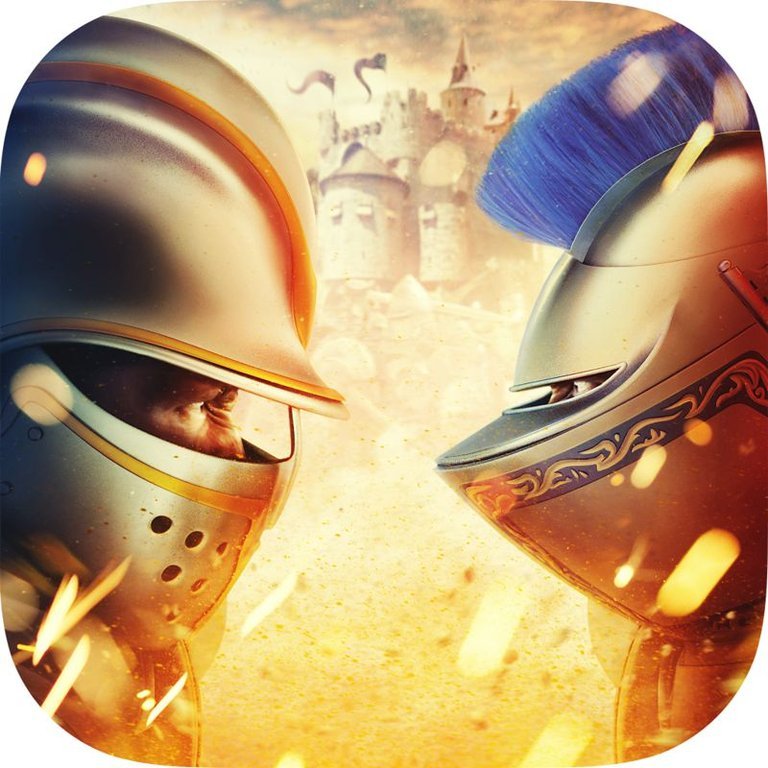
King’s Bounty: Legions is a free-to-play social network adaptation of the iconic strategy series, set in a vibrant fantasy world. Players command up to five squadrons in turn-based hexagonal-grid battles reminiscent of King’s Bounty: The Legend, while exploring a simplified 2D board to travel between castles. The game features quest-driven progression, tactical troop management, and a crafting system using battlefield loot, with NPCs offering rewards for completing missions. Though streamlined for social platforms, it retains strategic depth through unit coordination and resource management.
Gameplay Videos
Where to Buy King’s Bounty: Legions
PC
King’s Bounty: Legions Guides & Walkthroughs
King’s Bounty: Legions Reviews & Reception
gamepressure.com (54/100): King’s Bounty: Legions gives you the opportunity to beat the hell out of your friends in the much-anticipated PvP battles!
metacritic.com (80/100): Free doesn’t have to mean a developer is trying to pinch your pennies by depriving you of gameplay – King’s Bounty: Legions keeps the core combat of the series alive, making each time you play fulfilling.
steambase.io (54/100): King’s Bounty: Legions has earned a Player Score of 54 / 100. This score is calculated from 1,294 total reviews which give it a rating of Mixed.
mobygames.com (80/100): King’s Bounty: Legions is a social network focused take on the King’s Bounty series. The battle portion of the game plays mostly the same as King’s Bounty: The Legend, while the world map is greatly simplified in comparison.
en.wikipedia.org : King’s Bounty: Legions is a social, turn-based strategy video game developed jointly by Nival and KranX Productions.
King’s Bounty: Legions: Review
Introduction
In the pantheon of turn-based strategy franchises, few lineages are as storied—or as quietly influential—as King’s Bounty. Born in 1990 as New World Computing’s cult classic, the series redefined tactical RPGs before morphing into Heroes of Might & Magic. When Nival and KranX Productions resurrected the IP in 2008 with King’s Bounty: The Legend, it revitalized the franchise’s hex-based combat and whimsical fantasy world. Enter King’s Bounty: Legions (2011): a bold but flawed pivot to free-to-play social gaming. This review argues that Legions succeeded as a technical showcase of Unity-powered browser/mobile design and a surprisingly robust tactical core, yet ultimately faltered under the weight of its monetization model and ephemeral live-service infrastructure—echoes of which foreshadowed modern gaming’s triumphs and pitfalls.
Development History & Context
Developed by KranX Productions and Nival (known for Prime World and the Blitzkrieg series), Legions arrived at a volatile moment in gaming history. The social/mobile boom of 2010–2012 saw traditional studios scrambling to adapt to Facebook’s meteoric rise and the explosive growth of iOS/Android markets. Nival, having secured the King’s Bounty license, envisioned Legions as a cross-platform bridge—using the Unity engine to deliver 3D turn-based strategy to browsers, tablets, and phones with minimal compromise.
Technologically, Legions was ambitious. Unity enabled richly animated battles with dynamic lighting and layered particle effects, a feat unprecedented in browser-based gaming. Yet constraints lurked: the overworld map was stripped from The Legend’s exploratory splendor to a linear 2D board of nodes, optimizing for quick sessions. Mobile ports demanded further cuts—UI streamlining, reduced troop caps—to fit touchscreen play. Lead Producer Andrey Ryabovol pitched Legions as “Heroes of Might & Magic meets FarmVille,” targeting casual strategists while retaining the series’ tactical DNA. The gamble? Balancing depth with accessibility in an era dominated by bite-sized monetization.
Narrative & Thematic Deep Dive
Legions’ narrative is a footnote—a skeletal framework to contextualize its battles. Players assume the role of an anonymous Knight tasked with reassembling the “Armor of Kings,” a macguffin shattered across a kingdom besieged by dull archetypes: undead legions, beastly hordes, and misanthropic wizards. Dialogue, while occasionally flecked with Slavic wit, is utilitarian, dispensed by static NPCs who exist solely to issue combat quests.
Thematically, Legions inherits the series’ high-fantasy pastiche—allegories for moral decay, environmental ruin, and the corrupting allure of power—but reduces them to backdrop noise. Villains lack motivation beyond cartoonish malice, and player choice is nonexistent; quests are linear combat challenges, devoid of branching consequences. In contrast to The Legend’s reactive morality system, Legions leans into gamified repetition, its storytelling an afterthought to its loot-grind loop.
Gameplay Mechanics & Systems
At its core, Legions is two games in tension:
-
Single-Player Campaign: A stripped-down facsimile of The Legend. Players traverse a node-based world map, recruiting troops (over 50 unit types, from Skeletons to Black Dragons) and completing quests that unlock castles (25 in total). Combat unfolds on hex grids where turn-based skirmishes reward gear crafting materials—a hybrid of Heroes of Might & Magic’s unit tactics and Diablo’s loot chase.
-
Multiplayer/PvP: The focus. Players duel via asynchronous PvP (AI-controlled armies) or live PvP (“duels”), leveraging squads of five units across four Realms (Kingdom, Chaos, Ancients, Beasts) and five unit classes (Warrior, Defender, Mage, Archer, Healer).
Strengths:
- Combat Depth: Strategic nuance survives the transition. Unit synergies (e.g., Druids buffing Ents’ regeneration), terrain bonuses, and action-point management reward careful planning.
- Crafting Economy: Defeated foes drop components for forging armor and weapons, adding meta-strategy to party composition.
- Progression: XP and gold flow generously early on, reinforcing a satisfying power curve.
Flaws:
- Monetization Malaise: Free-to-play suffocates late-game pacing. Unit caps, “energy” timers, and premium troops (e.g., Lord of Chaos DLC) create steep paywalls.
- Repetition: Daily quests and PvP grinds grow stale without narrative stakes or procedural variety.
- UI Clutter: Mobile/browser compromises yield cramped menus and unintuitive touch controls.
World-Building, Art & Sound
Visually, Legions punches above its weight. The Unity engine delivers vibrant battlefields: forests sway, spells explode in chromatic bursts, and units—though recycled from The Legend—ooze personality via idle animations (e.g., Goblins squabbling). Art Director Tatyana Mikrukova’s palette balances fairy-tale warmth (Kingdom’s sunlit meadows) and gothic dread (Chaos’s volcanic spires).
Yet the overworld’s 2D austerity feels jarring—a regression from The Legend’s hand-painted 3D realms. Sound design similarly fluctuates: composer Sergey Eybog’s orchestral score elevates combat tension, but repetitive unit barks (“For the king!”) grate over time.
Reception & Legacy
Legions’ reception split critics and players. Jeuxvideo.com (80%) praised its “beautiful, engaging” social strategy, while Steam users (54% Positive) lambasted its pay-to-win grind. Commercial performance remains murky, but Nival’s shutdown of Legions in July 2022 signaled its twilight as a live-service experiment.
Legacy-wise, Legions foreshadowed trends:
– Pros: Proved turn-based tactics could thrive in browser/mobile formats, influencing later titles like The Battle for Polytopia.
– Cons: Exemplified how monetization erodes depth, a cautionary tale for franchises like Fire Emblem Heroes.
Conclusion
King’s Bounty: Legions is a sword double-edged by ambition. Its combat system remains a masterclass in accessible depth, and its Unity-powered spectacle broke ground for browser-based gaming. Yet its concessions to free-to-play avarice—grindy progression, predatory DLC—betrayed the franchise’s strategic soul. Today, Legions stands as a relic of gaming’s social-media adolescence: a bold prototype that succeeded technically but failed sustainably. For historians, it’s a vital case study. For players? A fleeting diversion—one best remembered as a flawed stepping stone, not a crown jewel.
Verdict: A tactical spark dimmed by its own compromises. 6/10.