
- Release Year: 2016
- Platforms: Quest, Windows
- Publisher: Infectious Ape
- Developer: Infectious Ape
- Genre: Simulation
- Perspective: 1st-person
- Game Mode: Online Co-op, Single-player
- Gameplay: Drawing, Graffiti, street art
- Setting: Contemporary
- Average Score: 80/100
- VR Support: Yes
Description
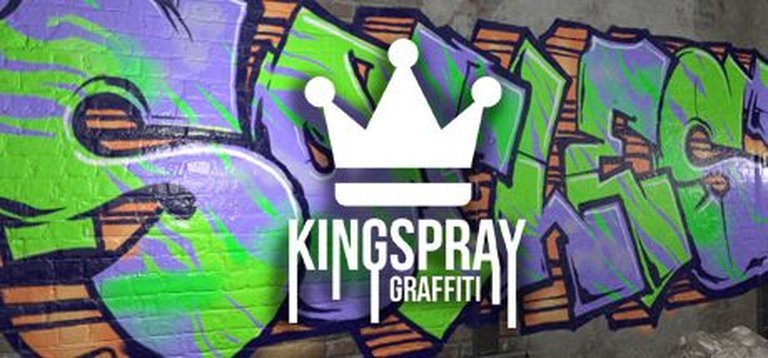
Kingspray Graffiti VR is a multiplayer virtual reality simulation game that immerses players in the contemporary world of street art, offering realistic graffiti painting experiences across various locations without real-world legal repercussions. Utilizing motion-controlled spray cans, users can create intricate murals with authentic paint physics, including dripping and splattering effects, while engaging in solo or online multiplayer sessions with up to three other players.
Gameplay Videos
Where to Buy Kingspray Graffiti VR
PC
Kingspray Graffiti VR Patches & Updates
Kingspray Graffiti VR Guides & Walkthroughs
Kingspray Graffiti VR Reviews & Reception
uploadvr.com : It’s a creatively freeing, flexible, and engaging experience that’s equal parts artistic expression and social engagement.
pocket-lint.com (80/100): It’s a fantastic change from the usual wave-based shooters.
Kingspray Graffiti VR: Review
Introduction
In the nascent landscape of virtual reality, few experiences capture the raw, unfiltered joy of creation like Kingspray Graffiti VR. This 2016 release from developer Infectious Ape offers a tantalizing proposition: the visceral thrill of spray-painting iconic street art without the real-world consequences—no fines, no fumes, no jail time. As a sequel to a 2010 Xbox 360 indie title, Kingspray evolved into a landmark VR application, blending hyper-realistic simulation with boundless creative freedom. Its legacy lies in pioneering a niche that merges artistic expression with immersive technology, offering a sandbox where even the most artistically inept can channel their inner Banksy. This review dissects Kingspray Graffiti VR as both a technical marvel and a cultural touchstone in VR’s evolution.
Development History & Context
Infectious Ape, a small studio founded by Andrew Bates, Craig Bentick, Nolan Cunningham, and Onomis, crafted Kingspray during VR’s infancy—a period defined by hardware limitations and experimental gameplay. Released on December 5, 2016, for Windows (SteamVR/Oculus Rift), the game capitalized on the HTC Vive and Oculus Touch’s motion controllers, translating the physicality of spray-painting into VR’s first-person perspective. The developers partnered with real-world graffiti artists and Ironlak paint manufacturers to ensure authenticity, integrating real-world color palettes and pressure mechanics. This was no mere port of its Xbox predecessor; it was a reinvention designed to leverage VR’s spatial immersion, allowing players to “bomb” walls in meticulously crafted environments. At launch, VR gaming was dominated by wave shooters and tech demos; Kingspray stood apart by focusing on creativity, reflecting a growing demand for non-combat VR experiences.
Narrative & Thematic Deep Dive
While Kingspray lacks a traditional narrative, its thematic core—urban artistic rebellion—is deeply embedded in its design. The game rejects conventional storytelling in favor of player-driven expression, positioning graffiti as a form of emancipation. Environments like derelict subway stations and nocturnal train yards evoke the grit of street culture, where art defies decay. Players aren’t characters but anonymous creators, their avatars merely vessels for paint-splattered self-expression. Dialogue is sparse, confined to tutorial tips from a “DJ guide” and multiplayer voice chats, fostering a sense of communal freedom. The absence of consequences—no law enforcement, no property damage—liberates players to experiment, mirroring graffiti’s outlaw ethos without moral weight. Even the game’s easter eggs—smashable bottles, driveable scissor lifts—reinforce themes of subversion, turning mundane objects into playgrounds for rebellion.
Gameplay Mechanics & Systems
Kingspray’s brilliance lies in its physics-first simulation. The spray-can mechanics are battle-tested, with pressure-sensitive controls and cap variations (e.g., thin lines vs. wide sprays) that replicate real-world behavior. Drips, fades, and wet/dry effects evolve dynamically, letting players layer paints for depth. A robust color system—boasting Ironlak’s real-world palette and metallics—supports everything from stenciling to freehand murals. Multiplayer enables up to four players to collaborate in real-time, with VOIP communication facilitating joint projects like sprawling, collaborative murals. Key systems include:
– Replay System: Records every spray stroke, allowing playback or cinematic rendering via a “Director Camera” for sharing creations.
– Projector Mode: Projects reference images onto walls, enabling tracing for novices.
– Interactive World: Ladders, scaffolds, and a Hetch-A-Sketch add physicality, while a virtual phone handles photos, 360° panoramas, and radio stations.
– UI: Streamlined for efficiency, with color sampling, undo/redo, and intuitive hand-based controls.
Yet, flaws persist. The tutorial has been criticized as “broken” (Steam discussions), and some surfaces (e.g., one-sided vans) limit creativity. Color-wheel precision is awkward, and connectivity issues occasionally plague multiplayer lobbies.
World-Building, Art & Sound
Environments are meticulously detailed, from the peeling brick of subway tunnels to the reflective metal of train carriages. Each location—city rooftops, abandoned bunkers, auto-repair shops—features unique surfaces (corrugated iron, plaster, glass) that interact with paint differently, heightening realism. Lighting systems include dynamic day/night cycles, with torches aiding nocturnal painting. Sound design emphasizes immersion: the hiss of spray cans, drips, and environmental textures (squeaking metal, distant trains) anchor the experience. The in-game radio—streaming hundreds of stations or custom MP3s—adds rhythm to creation, though music choices are subjective. Together, these elements transform virtual spaces into canvases, where walls become galleries and decay becomes a backdrop for art.
Reception & Legacy
Upon release, Kingspray earned critical acclaim, holding a “Very Positive” Steam rating (85% of 931 reviews) and praise from outlets like UploadVR and Pocket-lint. Critics lauded its “immersive realism” and “joyful creativity,” with one calling it a “breath of paint-fumed air” in a VR landscape dominated by shooters. However, concerns arose about the Steam version being “abandoned” in favor of Oculus updates, and tutorial bugs irked newcomers. Commercially, it found a niche among VR enthusiasts and aspiring artists, priced affordably at $14.99. Its legacy endures: Kingspray paved the way for VR art tools like Tilt Brush and Quill, proving the viability of non-combat VR experiences. It remains a benchmark for simulation precision, cited in academic discussions of VR’s creative potential, and its community continues to share masterpieces on platforms like Reddit and VR art hubs.
Conclusion
Kingspray Graffiti VR is a triumph of technical ambition and artistic freedom. Despite minor flaws—dated visuals, occasional UI quirks—it delivers an unparalleled VR experience, transforming the rebellious spirit of graffiti into a tangible, legal joy. Its realistic physics, multiplayer collaboration, and creative tools set a gold standard for VR simulation, while its exploration of urban themes resonates as a testament to VR’s capacity to reimagine reality. For historians, it’s a pivotal artifact of early VR; for artists, it’s a sandbox without constraints. In an era of fleeting trends, Kingspray endures not as a game, but as a canvas—a place where anyone can be an urban Picasso, one virtual spray can at a time. Verdict: An essential, genre-defining masterpiece that still paints a vivid stroke in VR’s history.