
- Release Year: 2018
- Platforms: Windows
- Publisher: RewindApp
- Developer: RewindApp
- Genre: Simulation
- Perspective: Side view
- Game Mode: Single-player
- Average Score: 58/100
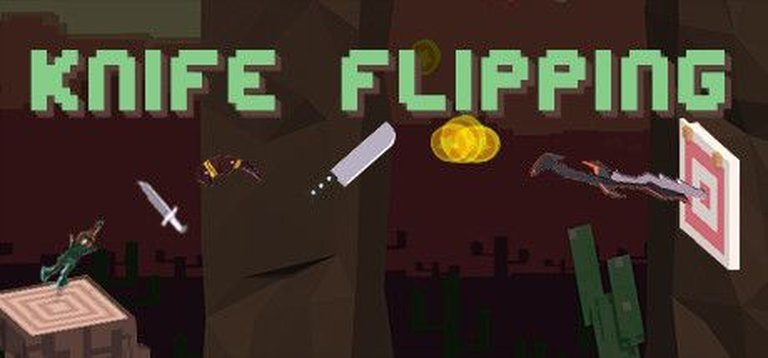
Description
Knife Flipping is a casual simulation game where players aim to master the art of knife throwing by performing as many flips as possible to achieve high combos and beat their personal records. Set in a visually appealing 2D and 3D environment, the game features three distinct levels and a variety of 30 different knives and swords, offering an addictive and engaging experience for those looking to become the ultimate knife-flipping champion.
Where to Buy Knife Flipping
PC
Knife Flipping Cracks & Fixes
Knife Flipping Reviews & Reception
steambase.io (56/100): Knife Flipping has earned a Player Score of 56 / 100.
store.steampowered.com (60/100): 60% of the 10 user reviews for this game are positive.
Knife Flipping: A Deep Dive into the World of Virtual Blade Mastery
Introduction
In the vast and ever-expanding universe of video games, few titles manage to capture the essence of simplicity and addictiveness quite like Knife Flipping. Released on May 25, 2018, by RewindApp, this game has carved out a niche for itself in the simulation genre. At first glance, Knife Flipping might seem like a straightforward, almost mundane concept—flipping knives to achieve the highest combo possible. However, beneath its simple premise lies a game that is both engaging and surprisingly deep, offering players a unique blend of challenge and satisfaction.
Development History & Context
RewindApp, the developer behind Knife Flipping, is a relatively small studio that has focused on creating casual and simulation games. The studio’s vision for Knife Flipping was to create a game that was easy to pick up but difficult to master, appealing to both casual gamers and those looking for a more challenging experience. The game was developed using the Unity engine, a popular choice for indie developers due to its flexibility and ease of use.
The gaming landscape in 2018 was dominated by large-scale titles and complex narratives, making Knife Flipping a refreshing departure from the norm. The game’s simplicity and focus on a single, repetitive action—flipping knives—was a bold move that paid off. It tapped into the growing trend of hyper-casual games, which emphasize quick, satisfying gameplay loops over intricate storytelling or complex mechanics.
Narrative & Thematic Deep Dive
Knife Flipping is not a game that relies on a deep narrative or complex characters. Instead, it focuses on the pure, unadulterated joy of mastering a skill. The game’s premise is simple: players must flip knives to achieve the highest combo possible, beating their own records and striving for perfection. This simplicity is the game’s greatest strength, as it allows players to focus entirely on the gameplay without being distracted by unnecessary plot elements.
The thematic core of Knife Flipping revolves around the idea of mastery and self-improvement. The game encourages players to keep trying, to keep flipping, and to keep pushing themselves to achieve higher and higher scores. This theme of perseverance and the pursuit of excellence is a universal one, resonating with players of all ages and backgrounds.
Gameplay Mechanics & Systems
At its heart, Knife Flipping is a game about precision and timing. Players must flip knives in such a way that they land on their blades, creating a satisfying “clink” sound and adding to their combo. The game features three different levels, each with its own unique challenges and obstacles. As players progress, they unlock new knives and swords, each with its own unique properties and flipping characteristics.
The core gameplay loop is addictive and satisfying. The act of flipping a knife and hearing it land perfectly on its blade is incredibly rewarding, and the game’s simple controls make it easy for players to jump in and start playing. However, mastering the game requires a great deal of skill and practice, as players must learn to control the angle and force of their flips to achieve the highest possible combos.
The game’s UI is clean and intuitive, with a minimalist design that keeps the focus on the gameplay. The game’s visuals are simple but effective, with a mix of 2D and 3D decorations that add to the game’s charm. The sound design is equally impressive, with the satisfying “clink” of a successful flip being one of the game’s most memorable features.
World-Building, Art & Sound
Knife Flipping takes place in a simple, abstract world that is designed to keep the focus on the gameplay. The game’s levels are visually distinct, with each one featuring its own unique decorations and obstacles. The game’s art style is clean and minimalist, with a focus on bright colors and simple shapes. This aesthetic choice helps to keep the game’s visuals from becoming distracting, allowing players to focus entirely on the act of flipping knives.
The game’s sound design is equally impressive. The satisfying “clink” of a successful flip is one of the game’s most memorable features, and the game’s soundtrack is a mix of upbeat, energetic tracks that help to keep players engaged and motivated. The sound effects are crisp and clear, adding to the game’s overall sense of precision and control.
Reception & Legacy
Upon its release, Knife Flipping received a mixed but generally positive reception. Critics praised the game’s simple yet addictive gameplay, as well as its clean visuals and satisfying sound design. However, some critics noted that the game’s lack of depth and narrative might make it less appealing to players looking for a more complex experience.
Commercially, Knife Flipping was a success, with the game selling well on Steam and other platforms. The game’s low price point and simple premise made it an attractive option for casual gamers, and its addictive gameplay loop kept players coming back for more.
In the years since its release, Knife Flipping has developed a cult following among fans of simulation and casual games. The game’s simple yet challenging gameplay has made it a favorite among players looking for a quick, satisfying gaming experience. While it may not have the same level of recognition as some of the bigger titles in the genre, Knife Flipping has carved out a niche for itself and remains a beloved title among its fans.
Conclusion
Knife Flipping is a game that defies expectations. At first glance, it might seem like a simple, almost mundane concept—flipping knives to achieve the highest combo possible. However, beneath its simple premise lies a game that is both engaging and surprisingly deep, offering players a unique blend of challenge and satisfaction.
The game’s simple yet addictive gameplay, clean visuals, and satisfying sound design make it a standout title in the simulation genre. While it may not have the same level of recognition as some of the bigger titles in the genre, Knife Flipping has carved out a niche for itself and remains a beloved title among its fans.
In the end, Knife Flipping is a testament to the power of simplicity in game design. It proves that a game doesn’t need complex narratives or intricate mechanics to be engaging and satisfying. Sometimes, all it takes is a simple, well-executed concept and a focus on pure, unadulterated gameplay. For that, Knife Flipping deserves a place in the annals of video game history as a unique and memorable title.