
- Release Year: 2020
- Platforms: iPhone, Nintendo Switch, PlayStation 3, PlayStation 4, PlayStation 5, PS Vita, Windows Apps, Windows, Xbox One, Xbox Series
- Genre: Role-playing (RPG)
- Perspective: Top-down
- Game Mode: Single-player
- Gameplay: Japanese-style RPG (JRPG)
- Setting: Fantasy
- Average Score: 100/100
Description
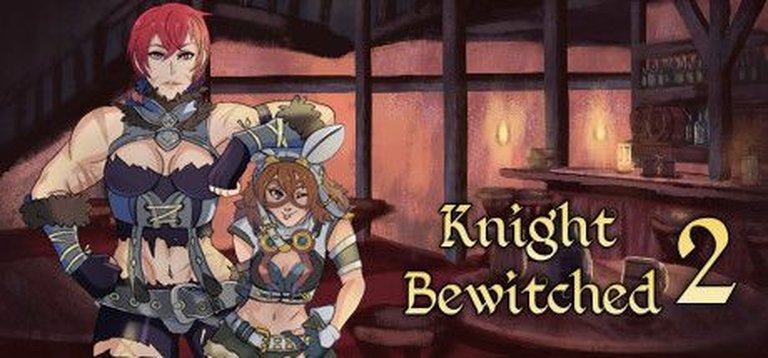
Knight Bewitched 2 is a top-down Japanese RPG set in a fantasy world, developed using RPG Maker MV and released in 2020. As the sequel to Knight Bewitched in the Knights of Ambrose series’ Timeline 2, players lead a party including Rae, Alex, and Hermes to assist the Deepforge dwarves in reclaiming their ancestral home in the Underworld. After successfully liberating the dwarves, the party confronts the remnants of the Cult of Drakon, now led by Lissandra, who seeks to revive the ancient world-ending entity Typhus the Worldbreaker using the powerful Vulcan Stone.
Gameplay Videos
Where to Buy Knight Bewitched 2
Knight Bewitched 2 Guides & Walkthroughs
Knight Bewitched 2 Reviews & Reception
rpggamers.com : Overall, Knight Bewitched 2 is an entertaining game that is perfect for fans of the Knights of Ambrose Saga or anyone who appreciates a thrilling jRPG experience.
Knight Bewitched 2: Review
Introduction
In the ever-expanding landscape of indie role-playing games, few series manage to carve out a niche as distinct and dedicated as the Knights of Ambrose Saga. Developed by Joshua Keith and Team Bewitched, Knight Bewitched 2 arrives as the second entry in Timeline 2, a sequel that builds upon its predecessor’s foundation while charting its own ambitious course. Released in August 2020, this standalone JRPG merges classic SNES-era sensibilities with modern conveniences, offering a tale of redemption, conspiracy, and cosmic threats. As a professional game journalist and historian, I argue that Knight Bewitched 2 stands as a remarkable achievement in indie development—a testament to how passion, community collaboration, and technical ingenuity can overcome the constraints of its RPG Maker MV origins. It not only honors the legacy of its forebears but also innovates in narrative complexity and player agency, solidifying the Ambrose saga as a hidden gem in the JRPG renaissance.
Development History & Context
Knight Bewitched 2 emerged from the collaborative efforts of Joshua Keith, a solo developer leveraging RPG Maker MV, and a network of plugin creators, artists, and testers. The project’s genesis dates to late 2019, with Keith noting approximately 4.5 months of active development (excluding a brief hiatus). This rapid turnaround is impressive, given the game’s polished execution—a feat achieved through a combination of pre-built assets and custom enhancements. Keith utilized the RPG Maker 3DS FES graphics set for in-game visuals, while commissioning original artwork from local artist Rae Stilwell for key illustrations, lending the game a cohesive aesthetic identity.
Technically, the game navigated RPG Maker MV’s limitations by integrating plugins from luminaries like Yanfly (battle systems), Galv (encounter mechanics), and Tsukihime (custom effects). This allowed for nuanced features such as adjustable difficulty, toggleable on-screen vs. random battles, and a robust skill-enhancer system. The 2020 gaming landscape was ripe for such a release: indie JRPGs were thriving on platforms like Steam and Itch.io, with players craving accessible yet deep experiences. Knight Bewitched 2 capitalized on this demand, priced at $4.99–$14.99 depending on the platform, and marketed through niche communities like RPG Maker Web forums. Its release on Steam, Aldorlea, and Android (later) demonstrated Keith’s commitment to accessibility, while the game’s LGBTQ+ themes and yuri undertones resonated with a growing audience seeking inclusive narratives.
Narrative & Thematic Deep Dive
Set three months after Knight Bewitched, the game opens with mercenaries Rae and Alex hired by the Deepforge Expedition to reclaim the lost dwarven fortress Deepforge I from the Ambrose Underworld. This premise quickly escalates into a geopolitical thriller, as the party uncovers the Cult of Drakon infiltrating the expedition. Led by Lissandra—the newly ascended head of the cult—the group seeks the fragmented Vulcan Stone to resurrect Typhus the Worldbreaker, an ancient apocalyptic threat. The narrative excels in its layered storytelling, weaving character arcs with overarching lore.
Key characters are defined by their growth and moral ambiguity. Rae, initially a friendly Amazoness, becomes the party’s moral compass, threatening violence against Hermes during his betrayal to protect her companions. Alex’s suspicion of Hermes foreshadows the latter’s role as The Mole—Lissandra’s brother and a chessmaster orchestrating events to free her from a divine curse. Hermes’s tragic sacrifice—using the Vulcan Stone to purge Lissandra of “Lilith’s Blessing” at the cost of his humanity—elevates the game from a simple dungeon crawl into a Shakespearean tragedy. Supporting characters like Ogronn, an ogre who evolves from antagonist to redeemer, and Lissandra, who hides vulnerability beneath haughtiness, add depth. Themes of redemption, the corrupting influence of power (embodied by the Vulcan Stone’s curse), and resistance against divine manipulation (Lilith’s master) permeate the narrative. The dialogue is sharp, with humor and tension balancing moments of pathos, such as Ash’s guilt-ridden exile after freeing himself from brainwashing.
Gameplay Mechanics & Systems
Knight Bewitched 2 delivers a refined turn-based combat experience, drawing inspiration from classic SNES-era JRPGs while streamlining modern conveniences. The core loop involves assembling a 4-person party from 8 total members (Rae, Alex, Ruth, Gwen, Stray, Uno, Hermes, and Malady) to explore dungeons, solve puzzles, and battle foes. Combat is tactical, emphasizing elemental weaknesses, buffs/debuffs, and character-specific skills. For instance, Ruth’s Mediguard mitigates damage, while Malady’s Innoculated passive grants poison immunity.
Key systems include:
– Adjustable Difficulty: “Casual” mode streamlines grinding for story-focused players, while “Heroic” offers a punishing challenge for veterans.
– Encounter Flexibility: Players can toggle between on-screen enemies (for strategic positioning) and random encounters (for classic dungeon-crawling tension).
– Progression Mechanics: Reserve party members gain full EXP, though plot-locked characters miss out, creating resource-management decisions. The “Bag of Spilling” resets returning characters’ levels, forcing players to re-evaluate party composition.
– Exploration & Rewards: 40 unique Skill Enhancers (e.g., Gwen’s Smelling Salt) encourage thorough exploration, while rare “Alpha Beasts” (e.g., Alpha Wisp, Alpha Wyvern) drop exclusive loot. The post-game grind on Mount Vulcan is a highlight, with enemies dropping Ribbons and gear.
– UI & QoL: A free “Handbook” app tracks quests and items, while in-game shops and equipment swapping per turn minimize tedium.
Innovations like the “Chessmaster” plot—where Hermes manipulates both the cult and the party—add meta-narrative depth, though the reliance on RPG Maker MV’s base engine occasionally leads to clunky animations or item management quirks.
World-Building, Art & Sound
The Ambrose Underworld is a triumph of environmental storytelling. Subterranean locales like Deepforge I (a dwarven ruin reclaimed from magma), Eredor (a snow-covered pass), and Zamaste (a volcanic city under siege) each boast distinct biomes and lore. The Deepforge dwarves, once side characters, become central to the narrative, their history of greed-driven doom (the original fortress’s collapse due to materialism) providing a cautionary backdrop.
Artistically, the game masterfully blends retro and modern aesthetics. SNES-style 16-bit pixel graphics evoke nostalgia, while commissioned splash art (e.g., hot springs scenes) adds emotional weight. Character designs are expressive, with Rae’s fiery demeanor and Lissandra’s regal bearing standing out. Sound design leans on RPG Maker MV’s stock assets but effectively underscores mood—creepy dungeon ambient sounds for Spore Marsh, triumphant battle themes for boss fights. The lack of a full original soundtrack is a minor drawback, but the existing audio complements the visuals without overwhelming them.
Reception & Legacy
Upon release, Knight Bewitched 2 garnered critical and player acclaim. Steam reviews average 100/100 (35 reviews), praising its “story-driven combat,” “polished pixel art,” and “incredible value.” Players lauded the non-linear exploration and meaningful choices (e.g., Ogronn’s redemption path). Critically, it was noted for surpassing its predecessor’s ambition, though some lamented its reliance on RPG Maker MV’s limitations. Commercially, it sold well across multiple platforms, with Keith offering Steam keys to Itch.io buyers to foster goodwill.
Its legacy is twofold. Within the Ambrose saga, it expanded the series’ lore and influence, spawning a 2021 sequel (Celestial Hearts) and a dedicated fanbase. In the broader indie JRPG scene, it demonstrated how RPG Maker MV games could achieve commercial polish, inspiring developers to blend retro mechanics with modern sensibilities. The game’s LGBTQ+ themes and yuri storytelling also contributed to a more inclusive genre landscape.
Conclusion
Knight Bewitched 2 is more than a sequel—it’s a love letter to classic JRPGs, reimagined through an indie lens. Joshua Keith’s vision, executed with community support, results in a game that balances accessibility with depth, narrative complexity with satisfying gameplay. Its stellar character arcs, innovative systems, and rich world-building elevate it above typical RPG Maker fare. While minor technical constraints hold it back from perfection, its emotional resonance and polish ensure a lasting impact. For fans of Final Fantasy VI or EarthBound, or anyone seeking a story-driven RPG with heart, Knight Bewitched 2 is an essential addition. It stands not just as a chapter in the Ambrose saga, but as a testament to indie gaming’s boundless potential. Final Verdict: A Masterclass in Niche Storytelling.