
- Release Year: 2021
- Platforms: Nintendo Switch, PlayStation 4, Windows, Xbox One, Xbox Series
- Publisher: Chainsawesome Games Inc.
- Developer: Chainsawesome Games Inc.
- Genre: Action
- Perspective: Top-down
- Gameplay: Arcade, Party game, Shooter
- Setting: Fantasy
- Average Score: 70/100
Description
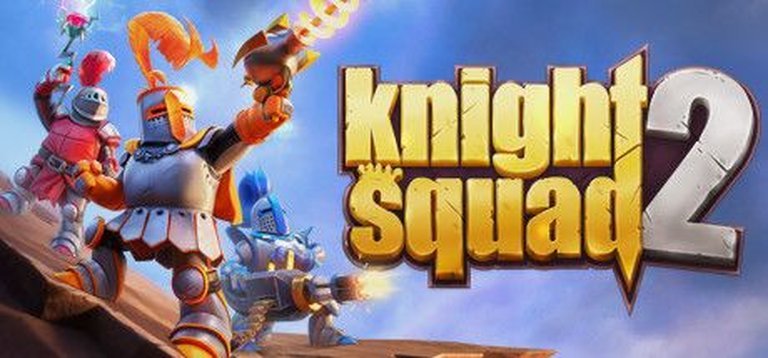
Knight Squad 2 is a fast-paced, top-down multiplayer party shooter set in a whimsical fantasy world where cartoonish knights engage in chaotic arena battles, wielding swords, bazookas, and magical items like unicorn mounts to outmaneuver and annihilate rivals. Featuring 13 diverse game modes such as Capture the Grail, Battle Royale, Soccer, and Juggernaut, along with extensive customization options including presets, bots, modifiers, and item variants, it delivers arcade-style action for solo or group play across platforms like Windows, Nintendo Switch, Xbox, and PlayStation.
Gameplay Videos
Where to Buy Knight Squad 2
PC
Knight Squad 2 Cracks & Fixes
Knight Squad 2 Guides & Walkthroughs
Knight Squad 2 Reviews & Reception
metacritic.com (70/100): Knight Squad 2 is a fun, competent, and chaotic multiplayer game great for parties, but features little to keep players interested beyond the few hours it will take to tackle all the game modes and unlock all the Knights.
opencritic.com (70/100): Knight Squad 2 is a fun, competent, and chaotic multiplayer game great for parties, but features little to keep players interested beyond the few hours it will take to tackle all the game modes and unlock all the Knights.
thirdcoastreview.com : I really like the variety of game modes in Knight Squad 2—there’s definitely enough that we didn’t get tired playing it for the hours that we did.
purenintendo.com : Knight Squad 2 is a top-down action party game that gives you 13 different, chaotic ways to claim dominance.
moviesgamesandtech.com : Fun, fast-paced and varied action.
Knight Squad 2: Review
Introduction
Imagine a medieval tournament where knights don’t joust on horseback—they rocket-launch unicorns, paint arenas in team colors, and summon minion armies amid explosive chaos. Knight Squad 2 erupts onto screens as the boisterous sequel to Chainsawesome Games’ 2015 cult hit Knight Squad, transforming a Game Jam prototype into a full-fledged multiplayer frenzy. Born from fan demand during a pandemic that starved couch co-op of its social fuel, this top-down arcade shooter delivers unadulterated party pandemonium for up to eight players. My thesis: Knight Squad 2 masterfully evolves its predecessor’s Bomberman-meets-Gauntlet formula into the definitive digital alehouse brawl, proving that simplicity, customization, and sheer absurdity can outshine AAA spectacle in the enduring art of multiplayer mayhem.
Development History & Context
Chainsawesome Games, a nimble six-person indie studio in Quebec City, Canada, founded in 2012, has carved a niche in “easy-to-grasp multiplayer games” that prioritize friend-vs-friend carnage over narrative depth. Knight Squad 2 traces its lineage to a 2013 Game Jam prototype: a 48-hour sprint yielding an arcade-inspired top-down arena battler echoing Bomberman and Gauntlet. This won first prize, spawning the original Knight Squad—a retro 2D success that built a fervent community clamoring for more amid the studio’s detour to Aftercharge.
By 2019, with market research boiled down to “fans want a sequel,” development kicked off. The team—two programmers, two artists, one QA tester, and communications officer Laurent Mercure—leveraged Unity for cross-platform polish (Windows, Xbox One/Series, Switch, PS4). Key shifts addressed past critiques: ditching pixelated retro aesthetics for stylized 3D cartoons appealing to families and kids, who propelled the original’s word-of-mouth triumph. Technological constraints were minimal—humble specs (Core i3, 4GB RAM, DX10 GPU) ensured broad accessibility—but the 2021 landscape loomed large. COVID-19 torpedoed convention demos, forcing a pivot to online showcases, streamer partnerships, and cross-play emphasis. Marketing leaned on free “Trials” mode for friends to join owners gratis, while self-publishing via Steam ($14.99) and consoles navigated a saturated indie scene dominated by battle royales and live-services. Absent DLC plans, cut content from KS1 (e.g., some modes/knights) fueled promises of free updates, embodying indiedom’s scrappy ethos: iterate on what works, amplify the fun.
Narrative & Thematic Deep Dive
Knight Squad 2 shuns traditional plotting for pure pugilistic poetry, its “story” a tapestry of unlockable knights’ bios dripping with satirical absurdity. No epic quests or betrayals here—just 15 eccentric warriors, each a caricature of chivalric tropes. Storm “shocks” foes with latent lightning but wields a sword; Solo’s blade “makes metal melodies” in his minstrel delusions; Smash quests for “lowest intellect,” dumber than hammers. Later unlocks demand feats like 1000 kills or Konami-code esoterica (Knight 11: a salmon via Up-Up-Down-Down sequence), blending grind with whimsy. Savior embodies duty’s son, while Selfie implodes from vanity (#NoFilter).
Themes orbit chaotic competition as modern catharsis: medieval fantasy as equalizer, where one-hit kills mock heroism, and power-ups (unicorn mounts, ghost essence) parody RPG progression. Dialogue? Nonexistent beyond bios and UI taunts, yet the subtext sings—absurdity triumphs over skill, friendship fractures in friendly fire, and victory’s thrill is ephemeral amid respawns. In a post-pandemic era craving connection, it thematizes joyful destruction: knights as avatars for players’ primal urges, turning living rooms into coliseums. This lack of narrative depth isn’t flaw but feature, freeing focus for emergent tales born from a mate’s bazooka betrayal or a soul-hoarding spree.
Gameplay Mechanics & Systems
At its molten core, Knight Squad 2 loops around top-down deathmatches: move (direct control), attack (sword swing/projectile), block (buckler shield—a KS2 innovation), respawn, repeat. One-hit kills ensure blistering pace, balanced by quick revives on team banners, fostering aggressive play over camping. Thirteen modes (up from KS1’s fewer) span free-for-all, teams (2v2, 4v4), and squad variants, each a 3-5 minute sugar rush:
- Objective-Driven: Capture the Grail/Flag (steal, return for points); Soccer (armed football); Payload (escort explosive cart); Crystal Rush (drill enemy crystals); Soul Hunter (harvest/return souls); Painter (color-domination via territorial encirclement); Race (laps with sabotage); Minion Master (slay for AI minions, unleash on forts).
- Survival/Control: Battle Royale (last standing across rounds); Gladiator/Domination (zone/point control); Juggernaut (wield OP machine gun for kills).
Customization elevates replayability: four presets (A-D) mix modifiers (slippery floors, exploding bodies, no bucklers, max-level items); item rates (none to fast); starting/active gear (no weapon to Lightning Staff, Eagle Punch, Ice Aura, Horse). Bots scale Easy-to-Extreme, filling lobbies seamlessly. Tourney mode chains randomized matches to crown champions. UI shines—intuitive menus, lobby codes for Trials joins, cross-play harmony—but chaos can obscure knights amid particle frenzy, demanding color mastery.
Progression? Unlock knights (first eight via 1000 kills, others via feats like “hold big gun long” or “stay gold-mined minute”), fueling meta-grind. Flaws: bots camp cheaply; modes echo staples (CTF, Payload) sans revolution; solo lacks depth. Yet innovations like shield defense and weapon-leveling (collect for upgrades) refine the loop into addictive alchemy.
World-Building, Art & Sound
Arenas—nearly 100 labyrinthine fantasy maps—evoke tourney grounds reimagined as explosive playgrounds: castles, forests, watery salmon streams, gold mines. No overworld or lore; “world-building” emerges from modular chaos, where drills shatter crystals and payloads rumble tracks, immersing via environmental interplay (e.g., slippery modifiers turn zones treacherous).
Visuals leap from KS1’s retro flatness to vibrant 2.5D cartoons: chunky knights pop with exaggerated animations (unicorn gallops, saw-gun spins), particle explosions cascade, yet overhead clutter frustrates identifiability. Depth cues (overlays, impassables) aid navigation, running buttery on modest hardware.
Sound design amplifies frenzy: medieval twangy OST pulses upbeat aggression; effects—booms, zaps, metallic clashes—punctuate one-hits with cartoonish glee. No voiceover, but bio quips and UI beeps weave whimsy. Collectively, they forge intoxicating atmosphere: sensory overload mirroring thematic bedlam, pulling players into knightly revelry.
Reception & Legacy
Launch acclaim crowned Knight Squad 2 a Steam darling (Very Positive: 92% from 165+ reviews; 9.3/10 aggregated), with critics echoing praise for party prowess (GamingTrend: 70/100, “chaotic fun”; Pure Nintendo: 8/10, “online savior”; Nindie Spotlight: 7.5/10). Commercial? Modest sales via $15 price, bolstered by cross-play/Trials virality amid 2021’s remote gaming surge. MobyGames notes scant critic scores but fervent collectors; Metacritic/OpenCritic hover mid-70s, faulting chaos/visual muddle and KS1 overlap.
Reputation endures positively: evolved from “retro gem” to “polished party staple,” influencing indies like Stick Fight via mode variety/custom chaos. COVID marketing (streamers, online cons) cemented its remote-co-op niche, spawning updates (e.g., lobby tweaks). Legacy? A beacon for small-team triumphs—proving sequels thrive on iteration, not reinvention—inspiring micro-studios to chase multiplayer joy. Yet, thin solo/replay hooks limit pantheon status; it’s a generational torch for couch kings.
Conclusion
Knight Squad 2 distills multiplayer ecstasy into pixel-perfect absurdity: 13 modes, infinite variants, cross-play camaraderie, all wrapped in cartoon medieval mayhem. Chainsawesome’s sequel honors its Game Jam roots while conquering 2021’s isolation, delivering accessible anarchy that fractures friendships and forges legends. Flaws—visual frenzy, mode familiarity, solo sparsity—notwithstanding, it cements a proud indie pedestal: essential for party hosts, nostalgic nod for KS1 faithful. Verdict: A chaotic crown jewel in arcade history—grab swords, summon squads, and claim thy grail. Score: 8.5/10—Highly Recommended.