
- Release Year: 2023
- Platforms: Macintosh, Windows
- Publisher: PQube Ltd
- Genre: Special edition
Description
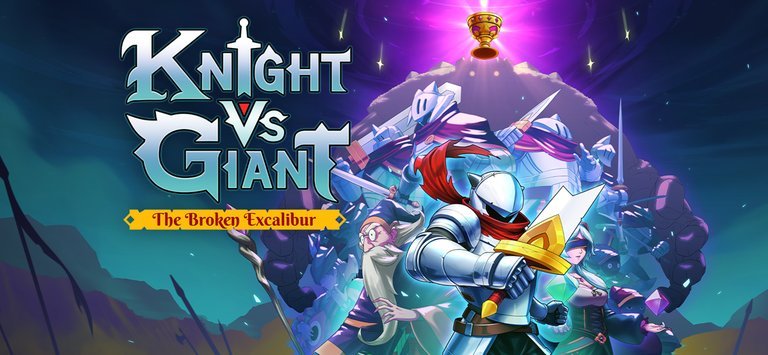
Knight vs Giant: The Broken Excalibur – Soundtrack Bundle is a special edition combining the action-adventure game where players battle a towering foe with the legendary broken sword Excalibur in a medieval setting, along with its original soundtrack. Developed by Gambir Studio and published by PQube Ltd., this bundle was released in October 2023 for Windows and Macintosh, offering an immersive experience of combat and atmosphere.
Where to Buy Knight vs Giant: The Broken Excalibur – Soundtrack Bundle
PC
Knight vs Giant: The Broken Excalibur – Soundtrack Bundle Guides & Walkthroughs
Knight vs Giant: The Broken Excalibur – Soundtrack Bundle: Review
Introduction
In the ever-expanding pantheon of indie roguelites, few titles blend Arthurian grandeur with frenetic combat as distinctly as Knight vs Giant: The Broken Excalibur. Released in October 2023 by Gambir Studio and published by PQube Ltd., this action-adventure game garnered attention not only for its gameplay but also for its meticulously crafted soundtrack. The Soundtrack Bundle—combining the base game and its original score—represents more than a mere collector’s edition; it’s a holistic experience that elevates the narrative and combat through auditory synergy. This review dissects the bundle’s components, examining its development, narrative depth, mechanical innovation, artistic cohesion, and enduring legacy. While its roguelite framework doesn’t reinvent the wheel, the synergy between gameplay and audio creates a uniquely immersive journey through a fractured Camelot, solidifying it as a noteworthy, if niche, entry in the indie canon.
Development History & Context
Gambir Studio, a relatively new developer, crafted Knight vs Giant during a period of intense competition in the indie action-roguelite space. Released in October 2023, the game arrived amidst a surge of titles like Hades and Dead Cells, which set high benchmarks for combat and replayability. The studio’s vision was clear: to distill the essence of Arthurian legend into a tightly focused, top-down experience. Technically, the game leveraged 2D artistry with procedurally generated dungeons—a cost-effective choice that emphasized replayability but constrained environmental storytelling.
Published by PQube Ltd., a specialist in indie distribution, the game received simultaneous launches on Windows, Mac, and PlayStation 5 via GOG and Steam. The Soundtrack Bundle was a deliberate response to audience demand for expanded editions, a common trend in the 2020s where digital goods bundle soundtracks to enhance perceived value. Composer Aji Priandaka’s score, developed alongside the game, became a cornerstone of this strategy. The bundle’s inclusion of both MP3 and WAV formats catered to audiophiles, reflecting an industry shift toward premium digital extras. Despite technological constraints (e.g., minimal system requirements for broad accessibility), the game’s Steam Deck Verified status underscored its commitment to PC and handheld versatility.
Narrative & Thematic Deep Dive
The narrative unfolds as a tragic reinterpretation of Arthurian myth. In a pivotal blunder, the Knights of the Round Table’s quest for the Holy Grail unleashes the Void Giant, an interdimensional entity that decimates Camelot. King Arthur’s subsequent death and Excalibur’s shattering symbolize the collapse of chivalric ideals. Merlin’s spell to banish the giant backfires, transporting the entire kingdom to the Astral Dimension—a liminal space where reality frays. Arthur is resurrected to confront three colossal “aspects” of the Void Giant, while scattered citizens represent the kingdom’s fragmented soul.
This setup explores themes of failure and redemption. Arthur’s resurrection is a second chance, not an absolution, as he must atone for his knights’ hubris. The Broken Excalibur itself becomes a metaphor: its jagged edges mirror Arthur’s fractured leadership, yet it channels the fallen knights’ abilities, suggesting that strength emerges from communal sacrifice. Dialogue is sparse but purposeful, with NPCs like the enigmatic Morgana offering morally ambiguous “gifts,” blurring lines between aid and corruption. The Void Giant’s design—three distinct boss personalities—personifies chaos: one embodies raw destruction, another manipulation, and the third entropy, reflecting the multifaceted nature of catastrophe. Ultimately, the narrative champions resilience, as rebuilding Camelot brick by brick mirrors the player’s iterative progress through runs.
Gameplay Mechanics & Systems
Knight vs Giant excels in its combat and progression loops. As a top-down roguelite, it blends permadeath with persistent progression. Players control Arthur, wielding the Broken Excalibur as a conduit for fallen knights’ powers. Combat emphasizes agility and timing: Arthur can dodge, parry, and unleash area-of-effect attacks tied to specific knights (e.g., Tristan’s “Thousand Blossom Slash” for crowd control). The “Harness the Powers” system—unlocking Lancelot’s Arondight or Galahad’s shield—adds strategic depth, encouraging weapon-switching mid-combat.
Character progression centers on 100+ abilities, branching into active skills (e.g., shockwave attacks) and passives (e.g., health regeneration). These are enhanced through blessings—random, temporary upgrades that encourage risk-taking. Procedural generation ensures dungeon layouts and enemy placements vary, though biomes (Brochalant Forest, Sarrache Desert, Suidhe Volcano) retain distinct enemy archetypes, balancing familiarity with novelty.
The Citizens and Castle Restoration system adds a meta-layer. Rescuing NPCs unlocks talents (e.g., a blacksmith enhancing weapon damage) and upgrades to Camelot’s Builder’s Guild. This transforms the castle from a hub into a living testament to progress, though some upgrades feel grind-heavy. UI is clean, with a minimalist map and ability tree, though controller support, while present, can feel imprecise during fast-paced boss fights.
World-Building, Art & Sound
The Astral Dimension serves as a surreal canvas. Biomes are rendered in a cartoony, hand-drawn style, blending medieval iconography with fantastical elements: Brochalant’s bioluminescent flora contrasts Sarrache’s sandworms, while Suidhe’s molten pits evoke Hadesian underworlds. This visual palette creates a dreamlike dissonance, reinforcing the kingdom’s displacement.
Sound design elevates the experience. Aji Priandaka’s 11-track soundtrack is a masterclass in thematic cohesion. “Unyielding Chivalry” (the main theme) fuses orchestral grandeur with Celtic folk instruments, embodying Arthur’s resolve. Environmental tracks like “Beneath the Viridian Canopy” use harps and flutes to evoke serenity, while boss battles like “Monstrous Siege” thunder with percussive dread. The WAV format’s crispness highlights layered details—distant echoes in “Ruins of Camelot” or the haunting vocalizations in “Unknowable Terrors.”
Together, art and sound forge an immersive loop: dodging a giant’s stomp under “De Excidio et Conquestu Britanniae” (a Latin-themed track) feels viscerally heroic. Even downtime, like rebuilding Camelot, is enriched by tracks like “Rebirth of Camelot,” turning upgrades into triumphant moments. This synergy is the bundle’s crowning achievement, making the soundtrack indispensable rather than supplementary.
Reception & Legacy
At launch, Knight vs Giant received lukewarm-to-positive reviews. Steam’s 72% “Mostly Positive” rating (139 reviews) praised its combat and art but criticized repetitive late-game content. MobyGames and GOG show no critic scores, suggesting limited mainstream coverage. Commercially, the bundle’s pricing ($21.58 base, discounted to $12.96 on GOG) positioned it as a mid-tier indie title. Its historical low of $7.18 on Steam (per GG.deals) indicates steady but explosive sales during promotions.
Legacy-wise, the game’s impact is modest but influential. Its citizen-rescue system prefigures meta-progression seen in titles like Vampire Survivors, blending storytelling with gameplay loops. The emphasis on character-themed abilities also echoes contemporary roguelikes, though it lacks the narrative depth of Hades II. The Soundtrack Bundle itself set a precedent for indie developers, demonstrating how audio can be a key selling point. However, its niche Arthurian theme limits cross-genre appeal, and its roguelite mechanics, while solid, feel derivative next to genre titans.
Conclusion
Knight vs Giant: The Broken Excalibur – Soundtrack Bundle is a testament to the power of cohesion. While its gameplay rarely strays from established roguelite tropes, its narrative ambition and audio-visual fusion create a singular experience. The soundtrack isn’t just an add-on; it’s the emotional backbone, transforming repetitive runs into epic sagas. For fans of Arthurian myth or roguelites seeking character-driven action, this bundle is a compelling, if imperfect, odyssey.
Verdict: A solid 4/5. The bundle earns high marks for its artistry, combat polish, and innovative audio integration, though it falls short in narrative originality and long-term engagement. It may not redefine the genre, but it proves that even in a crowded market, a focused vision—when amplified by great sound—can carve out a memorable legacy.