
- Release Year: 2012
- Platforms: Linux, Macintosh, PlayStation 3, PS Vita, Wii U, Windows
- Publisher: Ripstone Ltd.
- Developer: Green Hill Games, Nifflas’ Games
- Genre: Action, Platform, Puzzle
- Perspective: Side view
- Game Mode: Single-player
- Gameplay: Exploration, Fetch quests, Metroidvania, Platforming, Puzzle elements
- Setting: Fantasy, Underground
- Average Score: 80/100
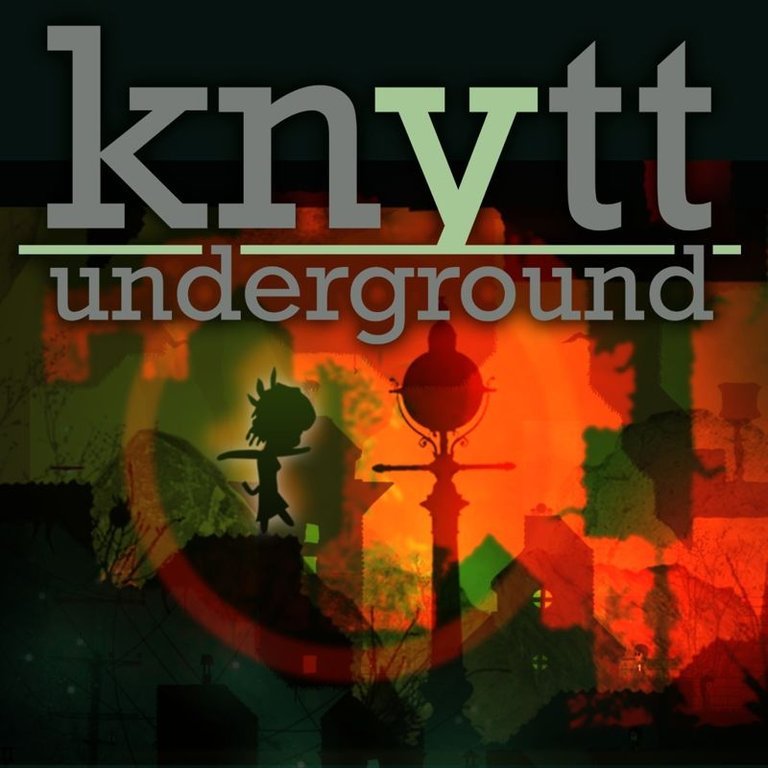
Description
Knytt Underground is a side-scrolling exploration platformer where the protagonist, Mi, must ring six fate bells to save her underground world. The game features a vast interconnected world spanning about 1800 one-screen rooms, divided into three chapters that can be played in any order. Mi, who is mute, is accompanied by two fairy followers that do the talking for her. The gameplay involves platforming, puzzles, and NPC interactions, with Mi gaining new abilities as she progresses, allowing her to explore freely.
Gameplay Videos
Where to Buy Knytt Underground
PC
Knytt Underground Guides & Walkthroughs
Knytt Underground Reviews & Reception
metacritic.com (76/100): An expansive masterpiece, with amazing controls, stunningly atmospheric music, an intriguing graphical approach and oddball story that keeps players on their toes.
gamingnexus.com : this is one of 2012’s best games.
gamefaqs.gamespot.com : I expected nothing, yet still I’m disappointed.
Knytt Underground Cheats & Codes
PC
At any point in-game, hold down the following keys on your keyboard to unlock an ability.
| Code | Effect |
|---|---|
| LG | Higher Jump |
| MR | Increased Speed |
| Extra=Balloon | Use a Balloon |
| Extra=Hang Glider | Use a Hang Glider |
Knytt Underground: A Subterranean Odyssey of Exploration and Existential Whimsy
Introduction
In an era dominated by AAA bombast and live-service monetization, Knytt Underground (2012) stands as a defiant oddity—a sprawling, contemplative Metroidvania that rejects combat in favor of serene exploration and existential musings. Developed by Swedish indie visionary Nicklas “Nifflas” Nygren, the game is the culmination of a decade of minimalist platformers, blending the atmospheric melancholy of Knytt (2006) with the mechanical experimentation of Within a Deep Forest (2006). This review posits that Knytt Underground is not merely a game but a meditative artifact—a labyrinthine metaphor for the search for meaning in a world teetering on collapse.
Development History & Context
Nifflas’ Games, a one-man studio later bolstered by Green Hill Games and publisher Ripstone, crafted Knytt Underground during a transitional period for indie development. Released on PlayStation 3, Vita, Wii U, and PC, the game arrived alongside peers like Fez and Limbo, yet deliberately subverted their conventions. Built using the Multimedia Fusion engine, its technological constraints birthed ingenious design: non-scrolling, single-screen rooms (1,800+ in total) evoked the claustrophobic charm of 8-bit classics while enabling intricate environmental storytelling.
Nygren’s vision was deeply personal. The game’s fragmented narrative and fourth-wall-breaking humor reflect his disillusionment with mainstream game design, favoring player agency over guided spectacle. Released in December 2012, it quietly countered the industry’s obsession with cinematic narratives, instead offering a vast, nonlinear world where the journey itself was the thesis.
Narrative & Thematic Deep Dive
Knytt Underground unfolds in a post-human underground society, where humanity’s extinction has left Sprites, Fairies, and sentient machinery to debate philosophy and superstition. Players control Mi, a mute Sprite tasked with ringing the Six Bells of Fate—a cosmic ritual believed to stave off apocalypse. However, the game immediately undermines its own premise: Mi’s fairy companions, Cilia (a nihilistic cynic) and Dora (an idealistic mystic), bicker over whether the prophecy is sacred truth or collective delusion.
The narrative rejects traditional structure. Quests involve fetching items for eccentric NPCs—a sentient laser cannon, a depressed robot, a cult of internet archivists—who dissect themes of faith, identity, and futility. One faction, the Myriadists, worships human artifacts as divine relics, while the anarchic “Disorder” dimension satirizes game design tropes. The writing oscillates between Beckettian absurdity and Monty Python-esque farce, culminating in multiple endings that question the player’s role in perpetuating meaningless rituals.
Beneath the humor lies a poignant critique of ideological rigidity. Mi’s muteness turns her into a blank canvas, reflecting the player’s own skepticism or investment in the world’s decaying mythology.
Gameplay Mechanics & Systems
At its core, Knytt Underground is a platformer stripped of violence. Mi navigates using wall-climbing and a morphing ability—transforming into “Bob,” a rubber ball with physics-driven bounce mechanics. The fusion of these abilities in Chapter 3 unlocks the game’s true potential, requiring players to chain transformations mid-air to bypass environmental puzzles.
Key Systems:
– Power-Ups: Temporary abilities granted by colored orbs (e.g., green flight, red super-jump) enable sequence-breaking but expire upon room transitions, demanding improvisation.
– Quest Design: NPCs gate progress via fetch quests, yet the solutions are often nonlinear. A single key item might be buried in a secret room or traded through a daisy chain of characters.
– Death & Progression: Death respawns players instantly in the same room, encouraging experimentation. Save points are sparse, rewarding meticulous exploration.
Flaws emerge in the late game: the sheer scale (40+ hours for 100% completion) can overwhelm, and the lack of permanent upgrades may frustrate Metroidvania purists. Yet these choices are deliberate—Nygren prioritizes mood over mastery, inviting players to linger in the game’s haunting caves rather than “conquer” them.
World-Building, Art & Sound
The underground realm is a patchwork of biomes—fungal forests, neon-lit tech ruins, lava chambers—each rendered in Nygren’s signature blend of pixel art and photorealistic backdrops. The fixed-screen approach creates a diorama-like intimacy, with parallax scrolling adding depth to otherwise static scenes.
Sound design is the game’s unsung hero. Nygren collaborated with six composers, including Within a Deep Forest’s D Fast and Anodyne’s David Kanaga, to craft an ambient-electronic soundtrack that ebbs between tranquility and unease. Tracks like “Disorder” layer glitchy synths over throbbing basslines, while “Utopioca” lulls with minimalist piano melodies. The audio-visual synergy evokes a melancholic dreamscape, where every creak of machinery or drip of water reinforces the world’s fragile ecology.
Reception & Legacy
Critics praised Knytt Underground’s ambition (76% aggregate score) but were divided on its pacing. Gaming Nexus hailed it as “one of the most elaborate game worlds ever created,” while Destructoid lambasted its “blah blah blah” storytelling. The Wii U version’s GamePad integration—a real-time map display—was particularly lauded, yet the PS Vita’s portability suited its bite-sized exploration best.
Though commercially muted, the game’s influence rippled through indie circles. Its nonviolent design presaged Gris and Hollow Knight’s more contemplative moments, while its environmental storytelling inspired Rain World’s ecosystem-driven narratives. A cult following persists, with speedrunners still dissecting its sequence-breaking potential.
Conclusion
Knytt Underground is a paradox: a game about futility that teems with vitality. It rejects the power fantasies of its genre, offering instead a zen garden of crumbling ruins and existential jokes. For some, its aimlessness will irritate; for others, its refusal to commodify play is revolutionary. A decade later, it remains a testament to the beauty of small things—a pixelated Waiting for Godot where the bells you chase may never toll, and that’s precisely the point.
Verdict: Knytt Underground is a flawed masterpiece, a labyrinth not of challenges but of ideas. Its whispers linger long after the credits roll, demanding to be heard in an industry increasingly deafened by noise.