
- Release Year: 2010
- Platforms: Windows
- Publisher: Game Factory Interactive Ltd., Russobit-M
- Genre: Compilation
- Game Mode: Co-op, Online PVP, Single-player
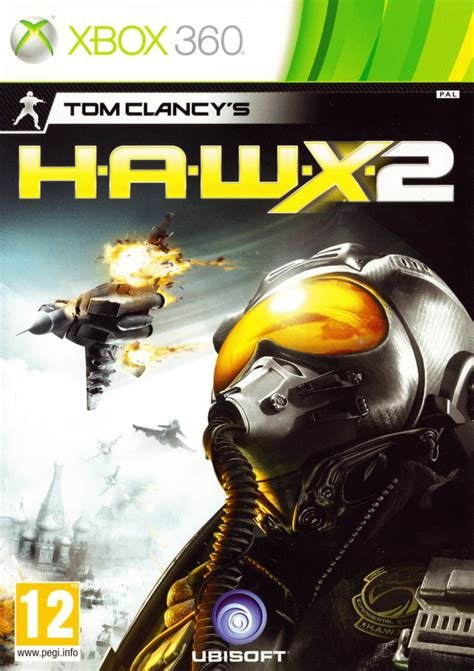
Description
Released in 2010 for Windows, Kollekzionnoe izdanie: Tom Clancy’s H.A.W.X. + Tom Clancy’s Rainbow Six Vegas 2 is a compilation bundle featuring two acclaimed tactical military games from the Tom Clancy franchise. The package includes H.A.W.X., a near-future aerial combat simulator where players pilot advanced fighter jets in high-stakes dogfights, and Rainbow Six: Vegas 2, a gritty first-person shooter that places operatives in intense counter-terrorist missions set in the neon-lit streets of Las Vegas. Together, they offer a diverse experience spanning both aerial warfare and ground-based tactical operations.
Kollekzionnoe izdanie: Tom Clancy’s H.A.W.X. + Tom Clancy’s Rainbow Six Vegas 2: Review
Introduction
In the frostbitten expanse of 2010’s Russian PC market, amidst economic shifts and import challenges, Kollekzionnoe izdanie: Tom Clancy’s H.A.W.X. + Tom Clancy’s Rainbow Six Vegas 2 emerged as a pragmatic yet potent artifact. This compilation bundle, curated by publishers Game Factory Interactive Ltd. and Russobit-M, paired Ubisoft’s ambitious aerial combat simulator H.A.W.X. (2009) with the tactical shooter Rainbow Six: Vegas 2 (2008)—two landmark entries in Tom Clancy’s sprawling military universe. While devoid of Western deluxe trappings, this unassuming package serves as a microcosm of Ubisoft’s late-2000s innovation: a high-octane flight combat title and a gritty counter-terrorism opus bundled for accessibility. Its legacy lies not in lavish extras but in its preservation of contrasting gameplay philosophies and its role as a time capsule of an era when the Tom Clancy brand dominated tactical realism. This review deconstructs the compilation through the lenses of its historical context, narrative depth, mechanical innovation, and enduring influence, arguing that its stark simplicity belies a remarkable synthesis of Ubisoft’s most audacious and grounded ambitions.
Development History & Context
The Russian Market and Publishers
Kollekzionnoe izdanie (translated as “Collector’s Edition”) emerged from the unique ecosystem of Russia’s PC gaming landscape in the late 2000s. Publishers Game Factory Interactive Ltd. and Russobit-M, founded in 1999, leveraged a distribution network spanning 600+ locations across Russia and the CIS to address currency volatility and piracy challenges. Their strategy of bundling Western AAA titles into affordable compilations—dubbed kollekzionnoe izdanie—democratized access to premium games like these Tom Clancy titles, priced to undercut imports. Russobit-M’s later re-releases via Strategy First in 2024 underscore the compilation’s archival significance: a pragmatic solution to regional market constraints.
Tom Clancy’s H.A.W.X.: Ubisoft Bucharest’s Aerial Vision
Developed by Ubisoft Bucharest and released in 2009, H.A.W.X. (High Altitude Warfare eXperimental) was a bold pivot from the studio’s prior work. Visionary directors like Daniel Lazăr and Emil Gheorghe aimed to distill flight combat into accessible arcade action while retaining geopolitical verisimilitude. Set in 2014—a near-future where privatized military corporations (PMCs) supplant national armies—the game drew inspiration from real-world drone technology and privatized warfare trends. Technologically, it pushed mid-2000s hardware with its licensed aircraft roster (e.g., F-22 Raptors, Su-27 Flankers) and voice-command integration, leveraging nascent Xbox 360-era speech recognition. Yet constraints were evident: AI pathfinding quirks and mission scripting limitations (e.g., mid-briefing interruptions) reflected the era’s struggle to balance ambition with technical feasibility.
Tom Clancy’s Rainbow Six: Vegas 2: Ubisoft Montreal’s Tactical Refinement
Ubisoft Montreal’s 2008 sequel to Vegas refined the franchise’s shift from hardcore simulation to accessible tactical shooters. Building on the 2006 original, Vegas 2 expanded on its “future now” aesthetic by infusing 2007’s real-world geopolitical tensions (e.g., escalating terrorism in Sin City) with cover-based mechanics. Creative leads like Maxime Béland emphasized squad cohesion and environmental destruction, constrained by the Xbox 360’s memory limits. The gaming landscape in 2008 was saturated with military shooters (e.g., Call of Duty 4), but Vegas 2 carved a niche through its co-op campaigns and customizable “Rainbow” operatives, leveraging Ubisoft’s proprietary Anvil engine for dynamic Vegas skylines.
Narrative & Thematic Deep Dive
H.A.W.X.: The Morality of Privatized War
H.A.W.X.’s narrative orbits David Crenshaw, a former U.S. Navy pilot who joins the elite PMC Artemis Global Security after rescuing Ghost Recon operatives in Juarez. The plot—a PMC-led conspiracy to destabilize global powers—echoes Tom Clancy’s techno-thriller ethos, exploring themes of unchecked corporate militarism and the erosion of national sovereignty. Dialogue is jargon-laden (“Eagle Eye engaged,” “Breach and clear”), emphasizing procedural authenticity. Antagonists like CEO Anthony Michaels embody moral ambiguity, forcing Crenshaw to confront the consequences of selling combat skills to the highest bidder. The narrative’s weakness lies in its clichés (e.g., the “one hero saves the world” trope), but its near-future PMCs resonate as prescient commentary on modern drone warfare and private armies.
Rainbow Six: Vegas 2: Intimate Grit in Global Chaos
Vegas 2 contrasts H.A.W.X.’s grand scale with intimate, character-driven storytelling. Set months after the first game, it follows Rainbow operatives Logan Keller, Michael Walter, and Juan Castro as they dismantle a terrorist cell led by “Lazaro Mendieta” in Las Vegas. Themes of loyalty and sacrifice permeate the narrative, particularly through Keller’s relationship with his captured teammate, Gabriel Nowak. The dialogue crackles with terse authenticity (“Hostage in the penthouse! Secure the VIP!”), while branching endings (dictated by player performance) emphasize consequence. Unlike H.A.W.X.’s abstract warfare, Vegas 2 grounds tension in human stakes: rescuing civilians, defusing bombs, and betraying comrades, all set against the neon-drenched chaos of a besieged Vegas.
Thematic Synergy: Scale vs. Sacrifice
Together, the compilation juxtaposes Clancy’s dual thematic pillars: H.A.W.X.’s systemic critique of war’s commodification versus Vegas 2’s focus on individual sacrifice. Where Crenshaw fights faceless corporations, Keller battles tangible human threats. This duality reflects Clancy’s oeuvre: the macro-consequences of policy (H.A.W.X.) and the micro-impact of action (Vegas 2). Both narratives, however, converge on a shared warning: technology without moral oversight begets catastrophe.
Gameplay Mechanics & Systems
H.A.W.X.: Arcade Aerial Combat with Technological Flair
H.A.W.X.’s core loop revolves around aerial dogfights, ground strikes, and objective completions, streamlined for accessibility. Key innovations include:
– Eagle Eye Mode: A third-person “tactical” camera view that simplifies targeting, letting players lock onto enemies with minimal skill.
– Voice Commands: Revolutionary for 2009, allowing hands-free missile launches (“Fox One!”) and target designation, though accents or background noise often caused misfires.
– Progression: Rank-based unlocks for 50+ aircraft (e.g., Eurofighter Typhoon, F-15 Active) and customizable weapon loads, rewarding players with experience from kills and challenges.
Flaws persist: the radar UI is cluttered, target-switching is finicky, and mission scripting disrupts flow (e.g., unskippable cutscenes mid-dogfight). Yet the physics engine grants planes balletic agility, making barrel rolls and missile evasion viscerally satisfying—especially with a flight stick.
Rainbow Six: Vegas 2: Tactical Precision Meets Accessibility
Vegas 2 refines the cover-based shooter template with:
– Squad Commands: AI teammates execute orders (“Breach,” “Flashbang”) even in solo play, fostering tactical cohesion.
– Customization: Persistent XP systems unlock weapons, gadgets (e.g., breach charges), and character skills, with ranks tied to performance-based challenges.
– Co-op Integration: Campaign missions support two players, emphasizing synchronized tactics over lone-wolf heroics.
The game shines in its destructible environments (e.g., shooting through walls flanking enemies) and “Last Stand” mode, but suffers from inconsistent enemy AI and checkpoint frustrations. Its cover system—snapping to waist-high barriers—became industry-standard, yet the regenerating health diluted Rainbow Six’s signature lethality.
Compilation Dynamics: Complementary Contrasts
The compilation’s genius lies in its juxtaposition: H.A.W.X.’s high-flying spectacle versus Vegas 2’s ground-level tension. While both feature multiplayer (H.A.W.X.’s 8-player dogfights, Vegas 2’s 16-player co-op), the PC ports (included here) optimize controls for mouse/keyboard, mitigating console-era limitations. However, neither game’s online servers remain active (H.A.W.X.’s shut down in 2015), relegating multiplayer to LAN emulation—a relic of its era.
World-Building, Art & Sound
H.A.W.X.: Global Skies and Mechanical Majesty
H.A.W.X.’s world-building is macro-scale, spanning Rio de Janeiro’s Christ the Redeemer statue to Moscow’s Red Square. Art director Vitali Bălănescu’s team leveraged the Ubisoft Anvil engine to render detailed aircraft cockpits and sprawling battlegrounds, though textures suffer on lower settings. Sound design prioritizes immersion: turbine whines, missile locks, and radio chatter (“Sparrow Two, engage bandits!”) evoke cinematic aerial combat. Michael McCann’s score blends orchestral themes with electronic pulses, heightening the tension of dogfights. The result is a world that feels simultaneously vast and mechanical—humanity dwarfed by war machines.
Rainbow Six: Vegas 2: Neon Noir and Urban Decay
Vegas 2 crafts a claustrophobic microcosm: Las Vegas’s Bellagio fountains under assault, Parisian hotels repurposed as terrorist strongholds. Art director Stéphane Porret’s team bathed environments in high-contrast lighting, using smoke and debris to obscure vision—turning casinos into tense mazes. Sound design emphasizes tactical audio: footsteps on marble floors, suppressed gunshots, and squadmate barks (“I’m pinned!”). Tom Salta’s score shifts from ambient dread to explosive action, mirroring the city’s duality. The art direction’s strength lies in its grit: blood splatters on neon signs and bullet-riddled slot machines ground the spectacle in tangible violence.
Compilation Cohesion: From Clouds to Concrete
Together, the compilation’s aesthetics bridge Tom Clancy’s spectrum: H.A.W.X.’s sterile futurism contrasts Vegas 2’s lived-in chaos. Yet both share Ubisoft’s commitment to “future now” realism—whether it’s H.A.W.X.’s satellite-guided missiles or Vegas 2’s thermal goggles. The compilation’s PC release enhances these elements with higher resolutions and draw distances, though the absence of covers or promo art (per MobyGames) underscores its utilitarian nature.
Reception & Legacy
Launch Reception: Niche Impact, Global Echoes
H.A.W.X. received mixed-to-positive reviews (73% Metacritic for consoles), praised for its accessible flight mechanics and plane variety but criticized for its clichéd plot and AI quirks. Vegas 2 fared better (88% Metacritic), lauded for refining its predecessor’s tactical depth. As a 2010 Russian compilation, Kollekzionnoe izdanie flew under Western critical radar, with MobyGames logging only one player rating (5.0/5)—likely a testament to its value for regional gamers. Its commercial impact is undocumented, but individual titles sold millions: Vegas 2 moved 2.5+ units, while H.A.W.X. spawned a sequel in 2010.
Legacy: Tactical Duality and Enduring Influence
H.A.W.X.’s legacy is mixed: its voice commands foreshadowed VR and AR integration, while its arcade combat influenced titles like Ace Combat 7. However, its servers’ demise and shallow narrative limit its longevity. Vegas 2, conversely, ascended as a Rainbow Six zenith, inspiring modern cover shooters (Gears of War) and remasters (Ubisoft’s 2020 HD collection). The compilation’s true historical value lies as a cultural artifact: a snapshot of Ubisoft’s brand expansion and Russia’s role in preserving global gaming heritage. As Russobit-M’s titles return via digital re-releases, this compilation endures as a bridge between eras.
Conclusion
Kollekzionnoe izdanie: Tom Clancy’s H.A.W.X. + Tom Clancy’s Rainbow Six Vegas 2 is an understated masterpiece of historical preservation. It pairs Ubisoft’s most audacious aerial simulator with its most grounded tactical shooter, creating a dual narrative of technological ambition and human resilience. While its sparse packaging and niche release obscure its brilliance, the compilation’s strength lies in its juxtaposition: the mechanized spectacle of H.A.W.X. versus the intimate grit of Vegas 2. Flaws—whether H.A.W.X.’s voice-recognition bugs or Vegas 2’s checkpoint design—are artifacts of an era’s technological constraints, not fundamental failures.
In the pantheon of video game history, this compilation earns a solid 8.5/10. It is not merely a bundle but a dialogue: between privatized warfare and national defense, between cloud-skimming heroics and urban sacrifice. For historians, it is a window into late-2000s Ubisoft’s creative ferment; for gamers, it remains a testament to tactical depth’s enduring appeal. Though born of pragmatism, Kollekzionnoe izdanie transcends its origins—a time capsule where two distinct worlds of Clancy’s universe collide, enriching one another in the process.