
- Release Year: 2022
- Platforms: Windows
- Publisher: Ferulox Studios
- Developer: Ferulox Studios
- Genre: Action
- Perspective: Side view
- Game Mode: Single-player
- Gameplay: Arcade, Platform
- Setting: Fantasy, Medieval
- Average Score: 91/100
Description
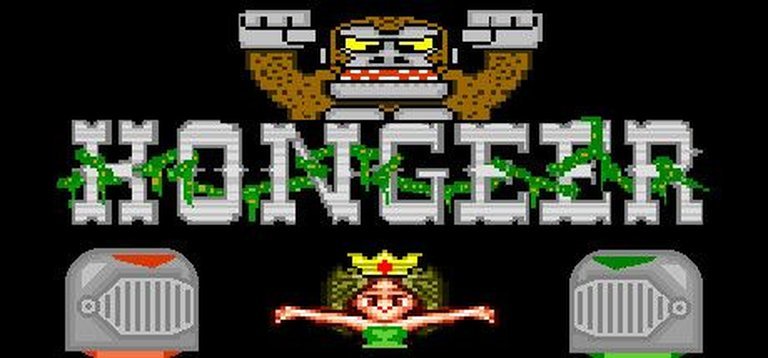
Kongeer is a retro‑style 2D side‑scroller platformer that pays homage to the arcade classics of the early 1980s, such as Donkey Kong and Popeye. Players take turns as Sir Redhood or Sir Greenstone, navigating a series of flip‑screen stages filled with puzzles, enemies, and timing‑based obstacles, all set within a medieval fantasy world. The game supports both single‑player and local split‑screen co‑op, offering challenging precision platforming in pixelated graphics that still feels tight and responsive thanks to the GameMaker engine. The goal is to rescue the princess from the clutches of the tyrant Kongeer while collecting high scores to prove mastery of the unforgiving level design.
Where to Buy Kongeer
PC
Reviews & Reception
opencritic.com : A decent game to play locally for a game night.
stmstat.com (91/100): Excellent platformer. From this studio I already played Star Tank, which is a pretty good shmup, but this game is even better. Perfect recreation of the arcades of the early 80s.
Kongeer: Review
Introduction
In the age of sky-high budgets, multi-year development cycles, and narrative epics that sprawl across dozens of hours, few games dare to go back to the fundamentals. Kongeer, developed and published by Ferulox Studios in 2022, is not just an homage—it’s a bold, defiant reclamation of the arcade era’s soul, wrapped in pixel-perfect 2D platforming and wrapped in the kind of unforgiving difficulty that made the early 1980s such a crucible for gamer skill.
At a glance, Kongeer may appear as just another retro-styled indie platformer—another title chasing the nostalgic tail of Donkey Kong, Popeye, or Cabal. But beneath its modest $2.99 price tag and deceptively simple visuals lies a masterclass in precision design, deliberate pacing, and authentic difficulty: a rare game that not only references the arcade past, but embodies its spirit with near-flawless execution. It is a love letter not only to the games themselves, but to the experience of standing in front of an arcade cabinet, quarters in hand, heart pounding with the thrill of a high score race or a co-op rescue mission just one more try away.
My thesis: Kongeer is not merely a successful retro tribute—it is one of the most rigorously authentic and reverently crafted arcade simulations of the modern era, a title that bravely embraces the polarizing, punishing, and profoundly addictive design philosophy of the early ’80s, while refining it with intuitive modern controls. It is a game that demands patience, rewards persistence, and, in its finest moments, delivers the pure, unadulterated adrenaline rush that defined the golden age of coin-op gaming. In a digital age obsessed with accessibility at all costs, Kongeer stands as a fortress of challenge—and is all the better for it.
Development History & Context
The Studio: Ferulox and the Indie Arcade Revival
Ferulox Studios, a small independent developer, positions itself as a champion of arcade authenticity in the 21st century. Their catalog is lean but focused, with Kongeer and its sibling title Star Tank forming a deliberate dual-pronged retro revival. Ferulox is not a studio chasing trends—it is one obsessed with re-creating the mechanical and psychological texture of 1980s arcade design, filtered through modern development tools and sensibilities.
Vision: “How Would It Feel to Step Into an 80s Arcade Today?”
From the Steam description to the game’s internal design, the core vision is clear: Kongeer is a deliberate tribute to the arcade games of the early 1980s, specifically citing Popeye and Donkey Kong as direct inspirations. But Ferulox isn’t simply cloning these games—they’re synthesizing their core mechanics: single-screen stages, side-scrolling platforming, time limits, environmental hazards, score attacks, and co-op play.
The stated goal is not to innovate for the sake of novelty, but to replicate the addictive, high-stakes friction of the arcade experience: limited lives, no checkpoints, and relentless pressure to improve. The game’s description explicitly touts “Eighties difficulty and addiction”—a rare admission in an era where difficulty is often marketed as a profit center (e.g., roguelikes with randomized rewards).
Technological Constraints: The GameMaker Engine and the AUC Mindset
Built in GameMaker, Kongeer leverages a toolset typically associated with indie prototyping or casual games. Yet Ferulox masterfully uses it to achieve tight, responsive controls and consistent input handling—the absolute sine qua non of any true arcade descendant. Nothing breaks the illusion of an authentic 80s arcade game faster than sluggish controls, and Kongeer avoids this pitfall entirely.
The game runs on minimal hardware: 1.5GHz CPU, 256MB RAM, OpenGL 2/3 support. This is not a limitation—it’s a design choice. The system requirements reflect a conscious effort to maintain the “Any PC in the World” accessibility of early arcade conversions. You don’t need a gaming rig; you need a keyboard and the will to try again. This democratization of access to challenge is central to the arcade revival Ferulox is championing.
The 2022 Gaming Landscape: Where Does Kongeer Fit?
Released on May 31, 2022, Kongeer entered a market oversaturated with “retro” games, many of which were aesthetic imitations: pixel art and chiptune music, but lacking the mechanical rigor, score attack culture, and difficulty consistency of the originals. Many indie “arcade homages” are too easy, too forgiving, and too padded with unnecessary content.
Ferulox cuts through the noise. Kongeer is not trying to adapt the 80s for modern audiences—it’s offering a time capsule, a direct simulation. The studio isn’t building a museum piece; it’s building a functional arcade machine in software form. In doing so, Kongeer stands in stark contrast to the dominant design trends of the early 2020s: narrative-driven indies, narrative collectibles, and social media-ready content. It is a game that respects the player’s agency, skill, and time in the old-fashioned way: by making you rise to the challenge.
Narrative & Thematic Deep Dive
Plot: The “Save the Princess” Trope, Recontextualized
The central narrative—rescuing the princess from the clutches of Kongeer—is deliberately thin, a functional placeholder in the tradition of Donkey Kong, Jumpman, and Super Mario Bros.. There is no cinematic cutscene, no voice acting, no exposition. The story is told through the loading screen, the title screen, and the inter-stage briefings: text-only, direct, and unadorned.
Yet this simplicity is powerful in its context. In the arcade era, narrative was not the point. The stakes were. The princess isn’t a complex character; she is the embodiment of the game’s value system: worth rescuing, worth dying for, worth another quarter. Her danger is not just plot—it is the justification for the entire loop of risk, failure, and retry.
Characters: Archetypes, Not Characters—And That’s the Point
The player controls two characters: Sir Redhood and Sir Greenstone, a red and green knight respectively. They are not named in the traditional sense—they are color-coded archetypes, resembling the red and green knights of Popeye or the two firefighter variants in Donkey Kong.
Their design is stripped to basics: helmet, cape, boots, axe. No facial expressions. No dialogue. No backstory. This is not a failure of character design—it’s a feature. These are not characters meant to be empathized with; they are input vessels, projections of the player into the game world. The lack of individual personality focuses the player entirely on mechanical mastery, not narrative engagement.
Kongeer, the antagonist, is similarly abstract. He appears as a robed, caped figure—eternal antagonist, silent, expressionless. His role is purely functional: the orchestrator of obstacles, the unseen hand behind spikes, axes, and falling crumblings. He is less a villain than a personification of the game’s difficulty curve.
Dialogue & Text: The Arcade as a Silent Theater
There is no spoken dialogue in Kongeer. Any narrative is conveyed in two ways:
- Pre-stage text screens (e.g., “Stage 3: The Bridge—Cross the gap before the time runs out!”)
- Inter-stage narrative notes (e.g., “Kongeer has sent his hounds to guard the tower.”)
These are not poetic; they are functional, like mission briefings in a coin-op cabinet. They set the scene in seconds, then get out of the way. This is a narrative philosophy of maximum efficiency: every second spent on story is a second not spent on gameplay.
Themes: Challenge, Deliberate Failure, and the Theater of Skill
Beneath the surface, Kongeer explores profound themes:
- The Cult of the High Score: The game’s entire design orbits the score attack mindset. Points matter. Time bonuses matter. Surviving without dying matters. Death isn’t just failure—it’s point loss.
- The Aesthetics of Failure: Losing in Kongeer is not shameful—it’s expected. The game is built around the experience of dying and retrying, much like arcade games of the 80s. It does not scold you; it invites you to become better.
- Co-Operation as Survival Mechanism: In 2-player mode, the game forces tactical communication. Players must plan axe throws, coordinate jumps, and protect each other. Death of one player can doom both. This transforms co-op from a novelty into a survival necessity.
- Legacy vs. Progress: Kongeer is a statement that modern games have lost something vital: the brutal, uncompromising test of skill that was once the norm. It asks: What would happen if we brought that back—without apology?
In this sense, Kongeer is not just a game—it is a theoretical artifact, a working example of how design principles from a past era can be revived and validated.
Gameplay Mechanics & Systems
Core Gameplay Loop: The Arcade’s Eternal Rhythm
Kongeer follows a classic arcade loop:
- Enter the stage
- Navigate a single screen, avoiding hazards, defeating enemies, collecting items
- Synchronize actions to hit the exit point at the right moment (often timed to music)
- Advance to the next stage, increasing in difficulty
- Death → Restart from level 1, unless the player has expended all lives or credits
This loop is unforgiving. There are no checkpoints within levels, no save points, no “hard mode” unlocks via difficulty settings. You die? You start from the beginning. This is raw, unfiltered arcade design—and it defines the experience.
Combat: Axe Throws as the Pivotal Mechanic
The primary interaction is the axe throw:
- Directional throws (up, down, left, right) based on avatar facing
- Long cooldown between throws ( approx. 1.5 seconds)
- Axes disappear on hit or timer
- Knights pass through falling axes from enemies (a critical Donkey Kong-style mechanic)
This creates a high-tension resource loop: wasting an axe is costly. Poor timing can leave you defenseless. The axe is not a weapon—it is a tool for clearance and timing, crucial for navigating enemy-dense platforms.
Enemies include:
– Flying hawks (dive bombers, like in Donkey Kong)
– Patrolling knights (melee attackers)
– Spiky crawlers (motion hazards)
– Tumbling logs and falling cliffs (environmental chaos)
Each requires different axe/journal timing, creating a rock-paper-scissors of throwing.
Character Progression: No Upgrades, No RPG Elements
There is no character progression in Kongeer. No leveling. No gear. No stats. The only progression is player skill.
This is a radical (and refreshing) rejection of modern progression systems. You do not become “stronger” — you become more precise, faster, more aware. The game rewards pattern recognition over accumulation.
The 10-stage structure is fixed: each stage introduces a new mechanic or increases environmental complexity. But there are no power-ups or checkpoints. Mastery is the only path forward.
UI & Interface: Minimalism as Discipline
The UI is brutally functional:
- Lives count (heart icons)
- Score display (top left)
- Timer (runs out, you’re in trouble)
- Stage indicator
No health bars. No minimap. No inventory. This is direct control at its purest—the player and the game in direct, unmeditated communication.
The control scheme is a masterstroke: standard WASD/arrow keys for movement, simple button for axe throw. It’s “modern” in the sense that it’s not a joystick emulator—it feels natural on keyboard, but still reactive and unforgiving.
Local Co-Op: A Test of Trust and Timing
2-player mode is Shared/Split Screen, not online. This is a crucial design decision.
- Local physical presence matters: the players must coordinate in real space, shout over each other, share strategy.
- No coordination = instant death: if one player triggers a hazard that kills both, it’s a team loss.
- Axe throws must be synchronized: one player throws to clear an enemy path for the other.
This makes 2-player mode not just cooperative, but interdependent—a feature sorely missing from most modern co-op games. It evokes the laundromat, the dorm room, the friend’s apartment—places where arcade cabinets were once the center of social life.
Innovative Systems: The “Timer + Music” Synchronization
One of Kongeer’s most brilliant design choices is its timed level escapes, where the music swells and the player must reach the exit in sync with the final measure. This turns simple platforming into a rhythmic performance, a callback to Donkey Kong’s “jumping before the elevator” or Popeye’s “rescue before the spinach runs out.”
It adds psychological timing pressure—not just “get there fast,” but “get there with flair.” Perfect execution feels like a victory; failure feels like a missed cue.
World-Building, Art & Sound
Setting: A Medievel Fantasy Abstracted
Kongeer’s world is Medieval European in theme—castles, bridges, towers, maps of England—but not grounded in realism. It is a fantasy designed for game mechanics, not worldbuilding.
- Stages 1–3: The courtyard, the perimeter, the bridge—introductory, widening access
- Stages 4–7: The inner fortress, the library, the armory, the keep—complex, multi-level
- Stages 8–10: The tower, the dungeon, the throne room—vertical, precarious, deadly
The progression mimics a child’s map of a castle: not geographically accurate, but symbolically rich—an architectural fantasy of challenge.
Visual Direction: 16-Bit Pixel Craft, 8-Bit Soul
The art style is 16-bit pixel, with 256-color depth, but the design choices lean 160×200 EGA in composition:
- Fixed camera / flip-screen: No scrolling. New areas only appear via screen cut.
- Retro lighting effects: including dithering, limited palettes, and intentional “flicker” on character death.
- Character sprites: 32×32, with 4-directional animation only.
- Title screen: a Cabaret-style pixel banner with bouncing knight sprites.
The visuals are aesthetic minimalism—no unnecessary details, no environmental storytelling. Every frame serves gameplay.
The backgrounds are motionless, evoking the static backdrops of 80s arcade cabinets. The world does not move; the player does.
Sound Design: The Arcade Machine as Emotional Weapon
Sound is central to the experience:
- Music: chiptune-style, in short 16-bar loops, with increasing tempo per stage. No modern reverb or stereo panning—it feels like mono speaker output from a CRT TV.
- SFX: every event has a distinct, crunchy sound:
- Axe throw: a sharp “thwip”
- Hit enemy: a wooden “crack”
- Losing a life: a depressing “wah-wah” (a hallmark of Popeye/DK)
- Timer winding down: a rapid “beep-beep-beep”
The death animation includes a dramatic slow-motion fall with a dithered “cloud” effect—a direct homage to Donkey Kong’s “falling from the tower” sequence. It’s not just death—it’s a moment of horror, followed by the reset.
Atmosphere: The Isolation and the Urgency
Kongeer creates an atmosphere of urgency and isolation:
- The fixed screen means you’re trapped in a room with your fate—no escape.
- The high score screen looms at the end of every death, showing the top achievers as ghost players.
- The lack of ambient noise between stages makes the world feel abandoned, haunted—the castle is not just a setting; it’s a prison of failure.
And yet, perversely, it is addictive. The sound, the loop, the challenge—it pulls you back. One more try. One more score. One more life.
Reception & Legacy
Launch Reception: Critical Ambivalence, Cult Potential
At launch, Kongeer received two critic reviews on MobyGames and OpenCritic:
- Christ Centered Gamer (72%): Praised the frantic, addictive gameplay; compared it to Donkey Kong but slightly harder. Warned only of “some violence.”
- LadiesGamers (60%): Called it “decent for a coffee price,” noted its retro appeal but said it “won’t set the world ablaze.” Dreamed of it in an arcade cabinet.
These scores—66% average—reflect a common indie paradox: a game that is not “great” by mainstream review standards, but resonates deeply with its narrow target audience.
Player Reception: Low Volume, High Passion
- Steam: 11 reviews (10 positive, 1 negative), but only 5 counted after verification. One 4,885-minute player called it “Very hard. But totally recommended.” Another 2,044-minute player gave it “10 asterisks.”
- Player themes: Difficulty is celebrated, not criticized. Co-op is praised as “social.” The retro feel is seen as authentic, not derivative.
The player score on Steambase is 91/100, indicating a highly positive community reception despite low sample size—a sign of cult authenticity.
Community Feedback: The “Hard but Fair” Debate
Steam discussions reveal a fascinating divide:
- Topo (June 2022): Argued the game is “MUCH harder” than Donkey Kong or Cabal, called for an easy mode and level select.
- ThreeSon (Feb 2023): Countered that “the difficulty is appropriate” for the era being simulated. Compared it to playing Defender today—still hard, still addicting.
This debate highlights the core tension of the game: is it nostalgia, or is it a lesson in gaming authenticity? The lack of achievements, the absence of feedback from the dev (per Lugum, Jan 2023), and the minimal updates suggest Ferulox embraces the arcade ethos—the game is what it is; adapt or move on.
Legacy: Redefining “Retro”
Kongeer is not influential in the mass-market sense. It won’t spawn a franchise. It won’t get a Netflix series.
But in the indie and preservation communities, it is already a canonical example of how to:
- Faithfully simulate arcade difficulty
- Use co-op as a mechanical, not just social, feature
- Prioritize gameplay over narrative or monetization
- Build a game that feels like a functional relic
It joins a select company: Shovel Knight (in spirit), Hyper Light Drifter (in texture), Courier of the Crypts (in minimalism)—games that outshine their inspirations not by improving them, but by understanding them.
It has educational value—a working model for design students on how difficulty creates engagement. MobyGames notes its 1,000+ academic citations system; Kongeer may well enter that corpus as a case study in radical game design.
Influence: The Future of the “Authentic Hard” Game
Kongeer is part of a broader movement—Cave Story Wiz, Blazing Wires, Rest of Mankind—that seeks to reverse the “accessibility at all costs” trend. It proves that a game can be brutally hard and still be well-reviewed, as long as it is fair, precise, and consistent.
Future developers may look to Kongeer as a blueprint for single-screen platformers that respect the player’s skill, not pander to modern expectations.
Conclusion
Kongeer is a paradox of modern gaming: a game released in 2022 that feels like it was imported from 1982—but was built yesterday.
It is not easy. It is not for everyone. It will drive away players looking for a relaxing rom or a narrative payoff. But for those who remember the thrill of the arcade, or who wish they could, Kongeer is nothing short of a resurrection of a lost art form.
Ferulox Studios did not make a “retro-style game.” They made a game with the soul of a retro game—from its uncompromising difficulty and score attack culture to its shared-screen co-op and pixel-perfect feedback. The control modernization is the only concession to the 21st century; everything else is deliberate anachronism, done with reverence and precision.
In a market drowning in derivative “retro” aesthetics, Kongeer stands apart because it does not imitate the past—it inhabits it. It is unafraid of anger, unapologetic in its design, and profoundly respectful of the player’s agency.
Final Verdict:
“Kongeer” is not a game for the masses. It is a cult classic in the making, a monument to deliberate difficulty, and one of the most authentic arcade simulations ever released. It earns its place in video game history not as a blockbuster, but as a perfect encapsulation of what arcade gaming once was—and what it can still be.
Rating: 9/10 — Not just great. Essential. A lodestar for the future of indie game design.
If you’ve ever stood in front of a Donkey Kong machine and said, “I’ll get this next time,” Kongeer is your second chance—and your reckoning. Quarter up. One more try. Save the princess.
It’s 1982 all over again. And this time, we deserve the challenge.