
- Release Year: 2016
- Platforms: Linux, Macintosh, Windows
- Publisher: Majesco Entertainment Company, Midnight City
- Developer: Playables LLC
- Genre: Driving, Racing
- Perspective: 3rd-person (Other)
- Game Mode: Single-player
- Setting: Futuristic, Sci-fi
- Average Score: 71/100
Description
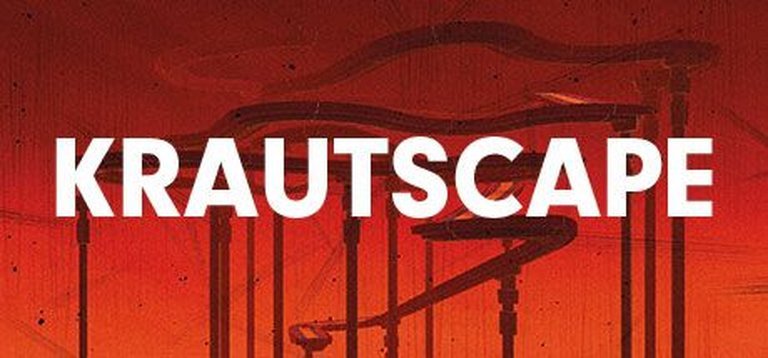
Krautscape is a futuristic racing game where players pilot bird-like flying cars on procedurally generated tracks. The lead player dynamically builds the racetrack while others chase, balancing the need to follow the path for speed boosts with the freedom to glide through shortcuts. Featuring both competitive multiplayer modes (online, LAN, or splitscreen) and singleplayer challenges, the game blends strategic track-creation with high-speed aerial maneuvering in a sci-fi setting loosely inspired by the eccentric 19th-century inventor Konrad von Krautkopf.
Krautscape Cracks & Fixes
Krautscape Patches & Updates
Krautscape Guides & Walkthroughs
Krautscape Reviews & Reception
steambase.io (67/100): Krautscape has earned a Player Score of 67 / 100.
metacritic.com (76/100): User Score: Generally Favorable Based on 5 User Ratings 7.6
spritesanddice.com : Krautscape may not have a lot of tricks up its sleeve, but it does one thing and it does it well.
stmstat.com : Multiplayer only racing game where the one in the lead build upcoming track during the race.
Krautscape: The Lost Architecture of Avian Racing Amid Publisher Skies
Introduction
Beneath the crimson glow of a geometric sky, eight-wheeled birds danced on ribbons of light—Krautscape was a fleeting fever dream in the indie racing canon. Released in 2016 to whispers of critical acclaim yet shackled by corporate turbulence, this Swiss-developed experiment merged track-building agency with aerial liberation, only to vanish from digital storefronts like its fictional inventor Konrad von Krautkopf’s legacy. This review dissects Krautscape’s mechanical audacity, its thematic whimsy, and the tragic arc of a game whose wings were clipped by publishing disputes—yet whose DNA persists in the procedurally daring corners of modern indie design.
Development History & Context
The Alpine Laboratory
Developed by Zurich-based Playables (led by Mario von Rickenbach, later known for Plug & Play and Dreii), Krautscape emerged from academic roots at Zurich University of the Arts. Commissioned with support from Pro Helvetia, Switzerland’s Arts Council, the project fused minimalism with anarchic physics—a contrast to the AAA racing hegemony of Forza and Gran Turismo. Built in Python with adapted physics code from Angel Garcia, the team prioritized “nonlinear movement and intelligent shortcuts” over precision driving (Press Kit, 2016).
The Indie Gold Rush & Corporate Quicksand
Debuting in 2013 at GDC as a “Best in Play” winner, Krautscape’s momentum attracted Midnight City (a short-lived Majesco Entertainment indie label). This partnership proved fateful: Majesco’s 2016 financial collapse and restructuring led to Krautscape’s delisting from Steam, severing its commercial lifeline post-launch (Press Kit, 2023). Rickenbach later cited the dispute as “unresolvable”—a cautionary tale of indie devs navigating publisher minefields.
Narrative & Thematic Deep Dive
The Myth of Konrad von Krautkopf
Embedded within GitHub repositories and Facebook lore lies Krautscape’s absurdist mythology: Konrad von Krautkopf, a 19th-century German inventor whose flying cars were allegedly stolen by Carl Benz. This meta-narrative—penned with the sarcasm of a rejected Terry Gilliam script—framed the game as a posthumous tribute, positioning players as heirs to his airborne revolution.
Mechanics as Metaphor
The gameplay allegorizes Krautkopf’s struggle against convention: the leader constructs the racetrack (order), while chasers rupture it through flight (chaos). Vehicles—avian hybrids with no thrusters—required the track for speed, symbolizing systemic dependency versus individual rebellion. Dialogue is absent, yet the friction between track layers and skyward defiance crafts a silent commentary on innovation versus tradition.
Gameplay Mechanics & Systems
Aerial Dialectics: Building vs. Breaching
Krautscape inverted racing norms through three asymmetric multiplayer modes:
– Snake: The lead player extends a glowing track; followers poach checkpoints mid-flight.
– Ping Pong: Racers rebound between moving goalposts, demanding collaborative sabotage.
– Collector: A point-scoring free-for-all where track segments double as currency.
Physics straddled arcade whimsy and simulation rigor: ground traction offered speed but risked flipping on sharp inclines (as critiqued in Sprites & Dice, 2016), while aerial gliding—activated by holding a button to sprout wings—demanded momentum conservation akin to Super Mario Sunshine’s FLUDD mechanics.
The Solitude of Single-Player
Post-launch updates added time trials—Driving, Flying, and Track Building—but these were lambasted as undercooked. Flying trials shined by rewarding aerial acrobatics, yet driving-focused challenges devolved into physics-battling frustration (“infuriating to prevent flipping,” noted Sprites & Dice). Local multiplayer (4-player splitscreen) remained the core draw, while online lobbies languished in player deserts.
World-Building, Art & Sound
Red Skies & Polygonal Birds
Set against an endless vermilion void punctuated by stark geometric islands, Krautscape evoked a Moebius-meets-Tron surrealism. Low-poly vehicles and floating black particles created a hypnotic, almost meditative minimalism—”gorgeous in presentation,” lauded Sprites & Dice. UI elements were stripped to primary-color waypoints, amplifying focus on movement.
Phil McCammon’s Adaptive Soundtrack
McCammon’s score—a fusion of glitchy electronica and ambient synths—shifted dynamically with speed and altitude. Drones swelled during flights, while percussion sharpened during ground sprints, mirroring the player’s kinetic state. This synergy between action and audio bordered on synesthetic, elevating tension during close races.
Reception & Legacy
Critical Whispers, Commercial Silence
Launch reviews were sparse but glowing: Rock Paper Shotgun called it “a gem of gleaming promise,” while Indie Statik praised its “artistic accomplishment” (Press Kit, 2016). Yet Steam reviews settled at Mixed (67/100), citing clunky controls and dead multiplayer (Steambase, 2025). The game sold poorly—burdened by Majesco’s collapse and minimal marketing.
The Ripple Effect
Though commercially stillborn, Krautscape’s DNA resurfaces in:
– TrackMania’s player-authored tracks
– Descenders’ procedural terrain reactivity
– Rocket League’s aerial vehicular acrobatics
Its delisting cemented cult status—a “lost indie” studied for its daring asymmetry.
Conclusion
Krautscape is a paradox: a mechanically visionary title shackled by publisher missteps and half-realized solo play. Its soul lives in chaotic local sessions—where friends scream over split-screen as tracks collapse beneath them—and in McCammon’s transcendent score. For historians, it exemplifies indie creativity’s vulnerability to corporate entropy; for players, a $3.49 Steam key (when findable) buys access to racing’s most bizarre architectural experiment. Like Konrad von Krautkopf’s phantom machines, Krautscape remains an incomplete revolution—a fleeting glimpse of airborne utopia, forever grounded yet never forgotten.
Final Verdict: A flawed masterpiece of procedural racing, essential as a museum piece, tragic as a commercial entity. ★★★☆☆ (Innovation: ★★★★★; Execution: ★★☆☆☆).