
- Release Year: 2008
- Platforms: Windows
- Developer: Jonatan Söderström
- Genre: Action
- Perspective: Side view
- Game Mode: Single-player
- Gameplay: Destructible terrain, Platform, Procedural generation
- Average Score: 76/100
Description
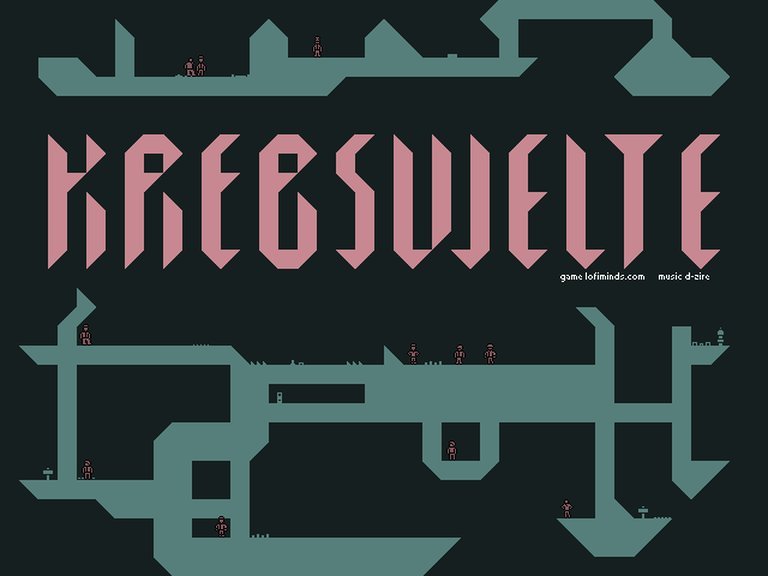
Krebswelte is an action-platformer created for TIGSource’s Procedural Generation competition, where players control a mercenary navigating chaotic, randomly generated levels. Each stage requires finding a key and reaching the exit while overcoming traps, enemies like bats and bulls, and destructible terrain rebuilt over time. Players earn money for weapons upgrades, bombs, and hiring additional mercenaries as extra lives, with all levels, NPC portraits, and item stats procedurally generated. While the original release used fixed seeds, version 1.2 introduced a random mode for unique playthroughs.
Krebswelte Reviews & Reception
mobygames.com (56/100): A chaotic and procedurally generated action game with destructible terrain.
verticalslicegames.com (96/100): Hailed as a monumental achievement and a masterful sequel, Hollow Knight: Silksong has been met with near-universal acclaim.
Krebswelte Cheats & Codes
PlayStation 2
Go to the Cheat Codes menu under the Options section and enter the code.
| Code | Effect |
|---|---|
| KellyKG12R | Unlocks Kelly Kelly’s Alternate Attire |
| DXCostume69K2 | Unlocks Shawn Michaels and Triple H’s DX Attires |
PlayStation 3
Go to the Cheat Codes menu under the Options section and enter the code.
| Code | Effect |
|---|---|
| KellyKG12R | Unlocks Kelly Kelly’s Alternate Attire |
| DXCostume69K2 | Unlocks Shawn Michaels and Triple H’s DX Attires |
PSP
Go to Options, then Cheat Codes, and type them in. IMPORTANT: The codes are case sensitive! Use the L2 or R2 buttons to change from lower to upper case.
| Code | Effect |
|---|---|
| KellyKG12R | Unlocks Kelly Kelly’s Alternate Attire |
| DXCostume69K2 | Unlocks Shawn Michaels and Triple H’s DX Attires |
Wii
Go to the Cheat Codes menu under the Options section and enter the code.
| Code | Effect |
|---|---|
| KellyKG12R | Unlocks Kelly Kelly’s Alternate Attire |
| DXCostume69K2 | Unlocks Shawn Michaels and Triple H’s DX Attires |
Xbox 360
Go to the Cheat Codes menu under the Options section and enter the code.
| Code | Effect |
|---|---|
| KellyKG12R | Unlocks Kelly Kelly’s Alternate Attire |
| DXCostume69K2 | Unlocks Shawn Michaels and Triple H’s DX Attires |
Krebswelte: Review
Krebswelte, a game developed by Jonatan Söderström (Cactus) and released in 2008, stands as a testament to the early days of procedural generation in video games. Created as an entry for TIGSource’s “Procedural Generation” competition, Krebswelte offers a unique blend of action and platforming elements within a randomly generated world. This review will delve into the game’s development history, narrative themes, gameplay mechanics, world-building, and its enduring legacy.
Development History & Context
The Studio and Creators’ Vision
Jonatan Söderström, known professionally as Cactus, is a Swedish game developer who has been creating small freeware games since 2004. His work is characterized by a focus on interesting visuals and innovative gameplay mechanics. Krebswelte was one of his early experiments in procedural generation, a technique that generates game content algorithmically rather than manually designing it.
The game’s development was driven by a desire to explore the potential of procedural generation, a concept that was gaining traction in the indie game community. Söderström aimed to create a game that could offer a fresh experience every time it was played, leveraging the power of algorithms to generate levels, enemies, and items on the fly.
Technological Constraints and Gaming Landscape
Krebswelte was developed using GameMaker, a popular game development engine known for its accessibility and ease of use. This choice of engine allowed Söderström to focus on the creative aspects of the game rather than getting bogged down in technical details. The game was released as freeware, making it accessible to a wide audience and aligning with the indie ethos of the time.
The gaming landscape in 2008 was dominated by large-scale, polished titles from major studios. However, the indie scene was burgeoning, with developers like Söderström pushing the boundaries of what was possible with limited resources. Krebswelte’s procedural generation was a novel approach that stood out in a market filled with hand-crafted levels and linear narratives.
Narrative & Thematic Deep Dive
Plot and Characters
Krebswelte’s narrative is minimalistic, focusing more on the gameplay experience than a deep storyline. The player controls a mercenary who must navigate procedurally generated levels to find a key and reach the exit. The lack of a traditional narrative allows the game to prioritize replayability and emergent gameplay.
The mercenary character is a silent protagonist, with no backstory or dialogue. This anonymity allows players to project their own experiences and motivations onto the character, enhancing the game’s immersive qualities. The enemies and traps encountered in the levels serve as obstacles rather than narrative devices, further emphasizing the game’s focus on action and exploration.
Dialogue and Themes
Given the game’s minimalistic approach to storytelling, dialogue is sparse. The few interactions that do occur are functional, providing information about the game’s mechanics or hinting at the procedural nature of the world. Themes of exploration, survival, and the unpredictable nature of life are woven into the gameplay, encouraging players to adapt and strategize on the fly.
The game’s procedural generation adds a layer of unpredictability, making each playthrough a unique experience. This unpredictability mirrors the chaos and unpredictability of life, reinforcing the game’s themes of adaptation and resilience.
Gameplay Mechanics & Systems
Core Gameplay Loops
Krebswelte’s core gameplay loop revolves around exploration, combat, and progression. Players must navigate procedurally generated levels, avoiding traps and defeating enemies to reach the exit. The game’s mechanics are designed to encourage experimentation and adaptation, with each level presenting new challenges and obstacles.
The mercenary’s incredible jumping abilities and gun allow for a variety of gameplay styles. Players can choose to stealthily navigate levels, using their jumping skills to avoid enemies, or engage in direct combat, using their gun to blast through obstacles. This flexibility adds depth to the gameplay, allowing players to tailor their experience to their preferences.
Combat and Character Progression
Combat in Krebswelte is fast-paced and challenging. The mercenary’s gun has unlimited ammo but takes time to reload, adding a layer of strategy to combat. Players must manage their ammo and reload times, choosing when to engage enemies and when to conserve ammo.
Character progression is handled through the collection of money and the purchase of upgrades. Money can be found in treasure chests or dropped by defeated enemies. This money can be used to purchase faster and more powerful guns, bombs, or additional mercenaries, who function as extra lives. This system encourages players to explore and engage with the game’s economy, adding depth to the gameplay.
UI and Innovative Systems
The game’s user interface is minimalistic, with a focus on clarity and functionality. The UI provides essential information, such as the mercenary’s health and ammo, without cluttering the screen. This clean design allows players to focus on the gameplay, enhancing the game’s immersive qualities.
One of the game’s most innovative systems is its procedural generation. Levels, NPC portraits, and weapon stats and appearances are all generated procedurally, ensuring that each playthrough is unique. This system adds a layer of unpredictability to the gameplay, encouraging players to adapt and strategize on the fly.
World-Building, Art & Sound
Setting and Atmosphere
Krebswelte’s world is a chaotic assortment of squares, with each level generated procedurally. This randomness creates a sense of unpredictability and excitement, as players never know what to expect. The game’s art style is simple but effective, using a limited color palette to create a distinctive visual identity.
The game’s atmosphere is enhanced by its sound design. The music, composed by David Johan Elfström (d-zire), is atmospheric and immersive, complementing the game’s visuals and gameplay. The sound effects are equally well-designed, providing clear feedback for the player’s actions and enhancing the game’s immersive qualities.
Visual Direction and Sound Design
The game’s visual direction is characterized by its simplicity and clarity. The use of a limited color palette and clean, geometric shapes creates a distinctive visual identity that is both recognizable and memorable. This simplicity allows the game’s procedural generation to shine, as the randomness of the levels is not obscured by overly complex visuals.
The sound design is equally well-executed, with atmospheric music and clear sound effects that enhance the gameplay experience. The music complements the game’s visuals and gameplay, creating a cohesive and immersive experience. The sound effects provide clear feedback for the player’s actions, enhancing the game’s responsiveness and interactivity.
Reception & Legacy
Critical and Commercial Reception
Krebswelte received mixed reviews upon its release. Critics praised the game’s innovative use of procedural generation and its challenging gameplay, but some found the game’s simplicity and lack of narrative depth to be limiting. The game’s freeware status made it accessible to a wide audience, but it also meant that it lacked the marketing and distribution support of commercial titles.
Despite its mixed reception, Krebswelte has gained a cult following among indie game enthusiasts. Its innovative use of procedural generation and challenging gameplay have made it a standout title in the indie game canon. The game’s influence can be seen in subsequent titles that have adopted procedural generation as a core mechanic.
Influence on Subsequent Games and the Industry
Krebswelte’s influence on the indie game scene is undeniable. Its innovative use of procedural generation paved the way for subsequent titles that have adopted this technique as a core mechanic. Games like Spelunky, The Binding of Isaac, and No Man’s Sky have all built on the foundations laid by Krebswelte, using procedural generation to create unique and challenging gameplay experiences.
The game’s legacy can also be seen in the broader gaming industry. Procedural generation has become a staple of modern game design, with developers using this technique to create vast, open worlds and dynamic gameplay experiences. Krebswelte’s influence can be seen in titles like Minecraft, Terraria, and Outer Wilds, all of which use procedural generation to create unique and engaging gameplay experiences.
Conclusion
Krebswelte is a pioneering title in the world of procedural generation, offering a unique and challenging gameplay experience that has stood the test of time. Its innovative use of procedural generation, challenging gameplay, and distinctive visual and audio design have made it a standout title in the indie game canon. Despite its mixed reception upon release, Krebswelte has gained a cult following and has influenced a generation of developers and gamers.
In the annals of video game history, Krebswelte holds a special place as a trailblazer in procedural generation. Its legacy can be seen in the countless titles that have adopted this technique as a core mechanic, creating unique and engaging gameplay experiences. For those seeking a challenging and unpredictable gameplay experience, Krebswelte remains a must-play title.