
- Release Year: 2019
- Platforms: Windows
- Publisher: Markt+Technik Verlag GmbH
- Genre: Compilation
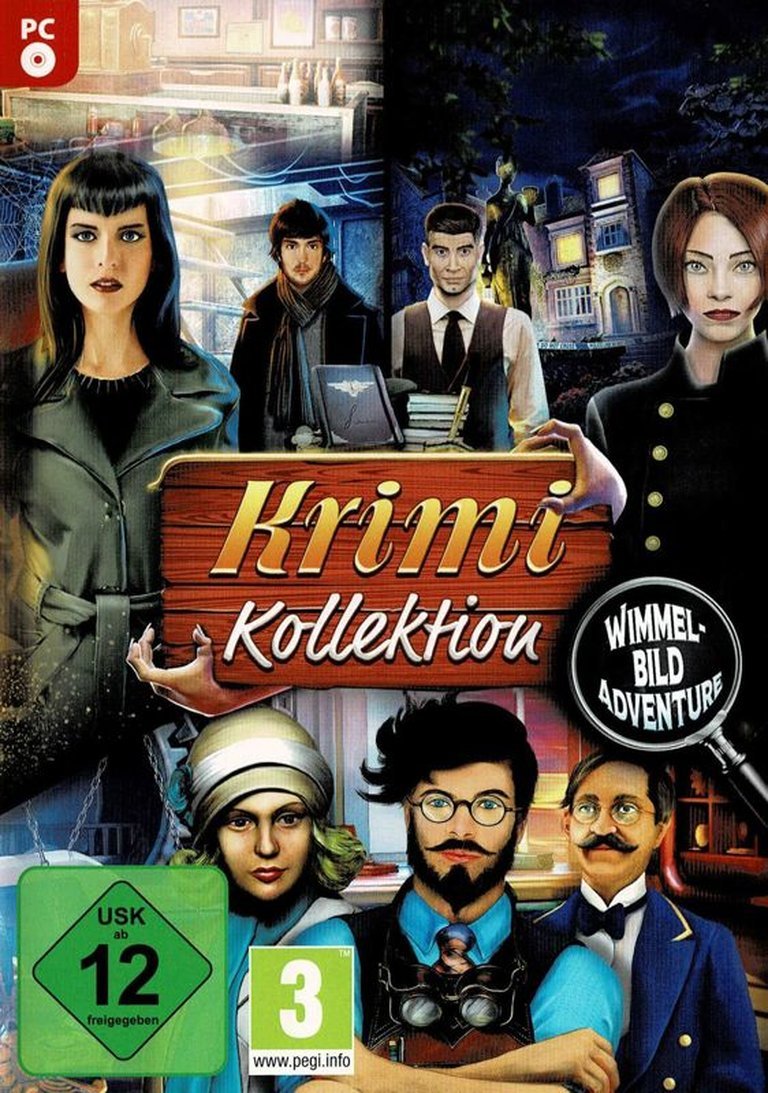
Description
Krimi Kollektion is a 2019 retail compilation for Windows that bundles three distinct games: Dead Link: Pages Torn, Showing Tonight: Mindhunters Incident, and The Dreamatorium of Dr. Magnus 2. Published by Markt+Technik Verlag GmbH and rated PEGI 3 for all ages, this CD-ROM collection provides a variety of gaming experiences without a unified narrative premise.
Krimi Kollektion Reviews & Reception
ign.com : These are the year’s best-reviewed games at IGN.
Krimi Kollektion: A Forgotten Artifact of German PC Gaming’s Anthology Era
Introduction: The Unseen Compilation
In the vast digital archives of video game history, certain titles exist not as celebrated milestones but as quiet testaments to a specific time, place, and distribution model. Krimi Kollektion (German for “Crime Collection”) is precisely such a title—a retail compilation released in 2019 for Windows by the German publisher Markt+Technik Verlag GmbH. It represents a curious late-era survivor of a once-common practice: bundling multiple niche or older games into a single, budget-priced physical release. This review does not dissect a unified creative vision, for Krimi Kollektion possesses none. Instead, it examines a commercial artifact, a package containing three disparate titles—Dead Link: Pages Torn, Showing Tonight: Mindhunters Incident, and The Dreamatorium of Dr. Magnus 2—that collectively offer a window into the shadowy corners of the German PC gaming market, the enduring appeal of specific sub-genres, and the stark contrast between anthology commodification and auteur-driven design. Its thesis is this: Krimi Kollektion is historically significant not for what it is, but for what it represents—the final, faint echo of a brick-and-mortar distribution strategy for casual and genre-specific games in a digital-first era, packaged alongside a complete absence of critical or cultural footprint.
Development History & Context: The Publisher, The Market, The Mystery
The studio behind Krimi Kollektion is not a developer but a publisher: Markt+Technik Verlag GmbH. This company, primarily known for its computer magazines (PC Player, PC Games) and associated media, operated in the German-language market. Their foray into game publishing, particularly with compilation bundles, was a logical extension of their brand—leveraging editorial familiarity with certain genres to curate collections for their readership.
The technological constraints of the era are ironically inverted for this title. Released in 2019, Krimi Kollektion was a physical CD-ROM release in an age of digital storefronts, cloud streaming, and expansive SSD installations. This anachronism is its most defining technical feature. The games within are not contemporary 2019 productions; they are repackaged older titles, likely from the 2000s or early 2010s, originally developed for less powerful systems. The compilation itself required minimal development resources—essentially menu programming, disc mastering, and rights clearance—making it a low-risk, low-cost product for a publisher with existing distribution channels in German-speaking Europe.
The gaming landscape at the time of its release was dominated by:
1. Digital Storefront Dominance: Steam, Epic Games Store, and GOG were the primary PC marketplaces.
2. The “Remaster/Collection” Trend: Publishers focused on high-definition remasters of classic franchises (e.g., Crash Bandicoot N. Sane Trilogy) or definitive editions of modern games.
3. Niche Digital Bundles: Humble Bundle and similar services offered pay-what-you-want collections of indie titles.
4. The Last Gasp of Physical PC: Physical PC releases were largely relegated to collector’s editions, major AAA titles, or, as in this case, extremely budget-priced compilations targeting less digitally connected demographics or specific regional markets.
Krimi Kollektion fits squarely into the last category. It was not competing with Control or God of War; it was competing with supermarket bargain bins and mail-order catalogues. Its target audience was likely older German-speaking players with an affinity for “Krimi” (crime/mystery) or “Wimmelbild” (hidden object) games—genres with a strong, decades-long following in Germany, often associated with casual gaming and newspaper/magazine promotions.
Narrative & Thematic Deep Dive: Three Fragmented Stories
Without access to the games themselves, analysis must rely on titles and genre conventions. The compilation groups three titles, each implying a distinct narrative approach:
-
Dead Link: Pages Torn: The title suggests a mystery involving a broken connection or a severed narrative thread. “Pages Torn” implies a story told through documents, diaries, or case files—a classic device in investigative games. Thematically, it points to fragmentation, lost information, and the investigative process of piecing together a shattered truth. It likely follows a detective or journalist protagonist uncovering a conspiracy where evidence has been deliberately destroyed.
-
Showing Tonight: Mindhunters Incident: This title evokes a live event (“Showing Tonight”) and a psychological hunt (“Mindhunters”). It suggests a narrative centered on a performance, spectacle, or public event that masks a darker, psychological thriller. The “Incident” frames it as a reported case file. Themes would include theater of the mind, performance versus reality, and the hunt for a Manipulator whose weapon is psychological warfare. The setting might be a traveling circus, a stage play, or a public exposition that becomes a crime scene.
-
The Dreamatorium of Dr. Magnus 2: This is the most evocative. “Dreamatorium” portmanteaus “dream” and “operating room” or “auditorium,” implying a place where dreams are dissected, displayed, or controlled. “Dr. Magnus” suggests a mad scientist or psychologist figure. The “2” indicates a sequel, placing it within a series. Thematically, it dives headfirst into the psychology of dreams, the ethics of subconscious manipulation, and the blurred line between therapeutic tool and prison. It likely explores Jungian or Lovecraftian concepts of the collective unconscious made manifest.
Collective Themes: While disjointed, the compilation as a whole hints at a publisher’s curatorial interest in investigation, psychological tension, and the unraveling of ordinary reality. Unlike the cohesive, auteur-driven world of Control—where the paranormal is institutionalized and the setting is the story—these games likely present anthological, self-contained mysteries. There is no overarching narrative linking them; the “collection” is purely commercial. The player is not a Director in a secret agency but a series of isolated protagonists solving discrete puzzles within genre conventions.
Gameplay Mechanics & Systems: A Survey of Sub-Genres
The titles point to three distinct, likely casual-oriented, gameplay paradigms:
- Dead Link: Pages Torn: Predicted to be a point-and-click adventure or hidden object game (Wimmelbild) with an investigative bent. Mechanics would involve examining scenes, collecting clues (the “pages”), combining inventory items, and dialogue trees with suspects. Progression is linear, puzzle-based, and narrative-driven with minimal combat. The “torn” element might manifest as a journal or map that fills up as clues are found.
- Showing Tonight: Mindhunters Incident: This suggests a psychological thriller adventure or perhaps a light “hidden object with adventure elements” game. Gameplay might involve exploring a backstage or venue area, finding objects related to performers’ psyches, and solving puzzles that reveal the Mindhunter’s methods. It could incorporate timed pressure (the “tonight” deadline) or sanity mechanics where the player character’s perception shifts.
- The Dreamatorium of Dr. Magnus 2: The sequel status and “Dreamatorium” setting strongly imply a causal, puzzle-based adventure set in a surreal, shifting environment. Gameplay would involve navigating non-Euclidean spaces, using dream-logic items (e.g., a “nightmare filter,” a ” lucidity harness”), and solving puzzles that involve perception, memory, and symbolic interpretation. It may feature light platforming or navigation puzzles within the dreamscape.
Common Traits (Inferred):
* UI: Simple, point-and-click interfaces. Likely a static inventory bar and highlighted interactive zones.
* Progression: Linear chapter or scene-based progression. No skill trees, no RPG elements. Completion is 100% based on puzzle/object discovery.
* Innovation/Flaws: Any innovation would be genre-specific within the hidden object/adventure space (e.g., a unique puzzle type tied to the theme). Flaws would be typical of budget titles: repetitive hidden object searches, obtuse puzzle logic, limited voice acting (if any), and dated 2D pre-rendered or simple 3D graphics from their original development era.
* Contrast with Control: Where Control built a systemic, physics-driven sandbox where powers interact with a reactive environment (Launch throwing any object, environmental destruction), Krimi Kollektion‘s games would offer scripted, discrete interactions. There is no “Emergent Gameplay” here; there is only “Designed Puzzle.”
World-Building, Art & Sound: The Aesthetics of the Anthology
The “World” of Krimi Kollektion is not a singular place but three distinct, genre-standard environments:
- Dead Link: Likely a gritty, noir-tinged urban environment—rain-slicked streets, dimly lit offices, cluttered detective agency, or a crime scene. Art style would be darker, more realistic for its time, aiming for a “serious mystery” tone.
- Showing Tonight: A vibrant, theatrical backstage or carnival setting. Art would contrast the glamour of the show with seedy, hidden corridors. Potential for stylized, slightly exaggerated character designs (the performers) against mundane settings.
- The Dreamatorium: A surreal, abstract space. Art direction would be the most ambitious of the three, featuring distorted architecture, floating objects, impossible color palettes, and symbolic imagery. This is where a developer might attempt visual innovation within technical limits, creating a space that feels psychologically unsettling.
Sound Design would be functional: ambient tracks for each location, stingers for discoveries or scares, and perhaps minimal voice acting (likely German-dubbed, given the publisher). The goal is mood enhancement, not immersive simulation. There would be no dynamic score reacting to player action like the Hiss’s leitmotif in Control.
Contribution to Experience: The art and sound serve the immediate, genre-specific mood. They do not build a cohesive universe or support systemic gameplay. They are backdrop, not character. The Oldest House in Control is a character because its Brutalist architecture is a manifestation of bureaucratic order being consumed by chaos, and its shifting nature is a gameplay mechanic. The settings in Krimi Kollektion are merely containers for puzzles.
Reception & Legacy: The Sound of Silence
Critical & Commercial Reception at Launch: There is no record of critical reviews for Krimi Kollektion on MobyGames or any aggregator. This is not surprising. The compilation received zero mainstream press coverage. Its sales figures are entirely unavailable but can be inferred as very low. It was a product for a specific retail channel (likely German software sections of electronics stores or supermarkets) targeting a known, underserved demographic. Its success would have been measured in units shipped to retailers, not critical acclaim.
Evolution of Reputation: The reputation is, and will remain, non-existent. It has no cult following, no speedrunning community, no fan wiki. It is a complete vacuum in the cultural consciousness of gaming. Searches yield nothing beyond the bare-bones MobyGames entry. This obscurity is its most defining legacy characteristic.
Influence on the Industry: Krimi Kollektion has had zero measurable influence. It did not pioneer a genre, popularize a mechanic, or inspire other developers. It represents the end of a line: the era of the publisher-curated, physical anthology for the mass-market PC casual gamer. Its true “influence” is as a data point marking the decline of that specific business model. The lessons learned from its likely marginal existence contributed to the industry’s consolidation around digital storefronts, where curated collections (like those from Humble Bundle or Steam) are algorithm-driven and global, not publisher-curated and regional.
Contrast with Control‘s Legacy: Control is a defining title of the late 2010s. It won Game of the Year awards, sold over 5 million copies, pioneered real-time ray tracing implementation, spawned a connected universe, and influenced environmental design and narrative integration. Its legacy is actively being built with sequels and spin-offs. Krimi Kollektion‘s legacy is the absence of one. It is a footnote demonstrating that for every Control—a €30 million, three-year passion project—there were dozens of anonymous compilations like this, barely registering on the industry’s radar.
Conclusion: A Historical Curio, Not a Game
Krimi Kollektion is not a game in the traditional critical sense. It is a commercial time capsule. Its value lies not in its constituent parts—which are themselves obscure and unremarkable—but in its form. It captures a moment (2019) where the physical PC game market, particularly in Germany, still had a niche for inexpensive, genre-specific compilations from publishers with magazine roots. The games within are artifacts of earlier design philosophies: linear, puzzle-focused, narrative-lite adventures for an audience perhaps less interested in systemic depth and more in a digestible mystery to solve over an evening.
To subject it to the same analytical rigor as Control is to compare a hand-stitched, self-published zine to a Guggenheim-exhibited graphic novel. Control is an authored experience, a meticulously constructed world where every shifting corridor, every environmental document, and every combat encounter serves a unified thematic and mechanical vision of “the conflict of the strange and the mundane.” Krimi Kollektion is a product of aggregation, with no such vision. Its themes are generic, its mechanics are recycled, and its world is a series of disconnected, disposable puzzles.
Final Verdict: As a game, Krimi Kollektion is irrelevant. As a historical artifact, it is perfectly emblematic. It scores a de facto 0/10 on any scale of artistic or mechanical merit, but as a document of the retail landscape’s final years, it is a curiosity worth a single archival entry. It reminds us that the gaming landscape is a pyramid, with a few towering, influential works like Control supported by a vast, unseen base of transient, anonymous products like this. Its place in video game history is as filler, not foundation—a silent testament to the fact that most games are not made to be remembered, but to be sold. For every player who explored the shifting Brutalist maze of the Oldest House, thousands more may have purchased a compilation like this from a supermarket shelf, solved its final puzzle, and forgotten it by the next week. That, in itself, is a monumental, if unintentional, comment on the economics of the medium.