
- Release Year: 2010
- Platforms: Amiga, Browser, Commodore 64, Genesis, Linux, Macintosh, NES, Nintendo 3DS, Ouya, PSP, Wii, Windows, Xbox, ZX Spectrum
- Publisher: Broke Studio, Double Sided Games, Locomalito, Lucera Project, Parisoft, PlayOnRetro, RetroWorks
- Developer: Locomalito
- Genre: Action
- Perspective: Side view
- Game Mode: Single-player
- Gameplay: Arcade, Platform
- Setting: Fantasy
- Average Score: 85/100
Description
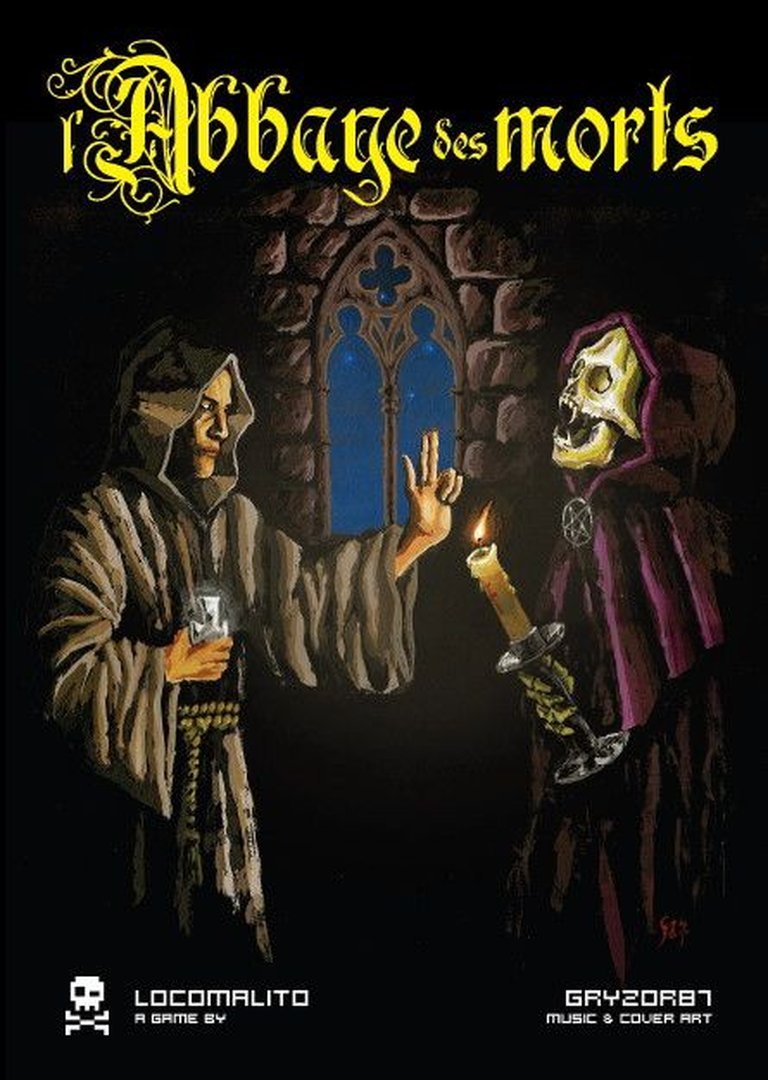
Set in 13th-century France during the persecution of the Cathars, you play as Jean Raymond who hides in an Abbey concealing evil catacombs beneath. Designed to emulate ZX Spectrum aesthetics and inspired by classics like Manic Miner and Jet Set Willy, the game challenges you to navigate interconnected rooms, collect twelve Cathar crosses, avoid lethal moving enemies, and utilize bells/switches to unlock passages while managing lives through checkpoints and heart pickups.
Gameplay Videos
l’Abbaye des Morts Cracks & Fixes
l’Abbaye des Morts Guides & Walkthroughs
l’Abbaye des Morts Reviews & Reception
hardcoregaming101.net : One game that does pull it off is l’Abbaye des Morts.
l’Abbaye des Morts Cheats & Codes
Genesis/Mega Drive
| Code | Effect |
|---|---|
| A2YT-EA9C | Always maximum number of lives after death |
l’Abbaye des Morts: A Gothic Tapestry Woven in Pixels
Introduction
In the hallowed, pixelated halls of retro gaming, few titles capture the imagination quite like l’Abbaye des Morts (Abbey of the Dead). Born from the mind of Spanish indie developer Locomalito (Juan Antonio Becerra Vilchez) during a vacation in France’s Languedoc region, this 2010 freeware gem transcends its minimalist ZX Spectrum roots to deliver a haunting meditation on historical persecution and supernatural dread. As Jean Raymond, a Cathar monk fleeing the brutal Albigensian Crusaders, players descend into an abbey concealing catacombs of unspeakable evil. Its legacy lies not in graphical spectacle or mechanical complexity, but in its masterful fusion of historical tragedy, atmospheric design, and unyielding challenge—a testament to how profound artistry can bloom within the most rigid technical constraints. This review deconstructs the game’s genesis, narrative depth, mechanics, and cultural impact, arguing that l’Abbaye des Morts stands as a pinnacle of retro-inspired horror platformers, a dark jewel in the indie renaissance of the late 2000s.
Development History & Context
The Genesis of a Demake
l’Abbaye des Morts emerged as a passion project during Locomalito’s travels in Languedoc, the historic epicenter of the Cathar persecution in the 13th century. Struck by the region’s somber history and armed with his love for 1980s ZX Spectrum platformers like Manic Miner and Jet Set Willy, Locomalito conceived the game in a burst of creative fervor, completing its core mechanics and art in just two weeks. The initial Windows version, crafted in GameMaker, was designed not as a modern game, but as a meticulous demake—faithfully replicating the ZX Spectrum’s 256×192 resolution, 16-color palette, and monophonic sound. This choice was both aesthetic and ideological: the stark, high-contrast sprites and black backgrounds mirrored the bleakness of the Cathar narrative, while the technical limitations forced a focus on pure gameplay and atmosphere.
Technological Constraints and Adaptations
The game’s development was inherently tied to its retro inspirations. Locomalito intentionally avoided modern conveniences, embracing the Spectrum’s flip-screen design (where each screen transition required completion before advancing) and single-color sprites to evoke the era’s arcade challenge. This purity extended to its sound design, which relied on Gryzor87’s compositions using PXTone and BeepFX tools—tools chosen for their ability to replicate the beepy, limited audio of 1980s computers. The Linux version (2013) later introduced a 16-bit graphics mode, but the core 8-bit aesthetic remained the soul of the project.
The Gaming Landscape of 2010
When released in September 2010, l’Abbaye des Morts entered a burgeoning indie scene shaped by the success of titles like Cave Story (2004). Retro-inspired games were gaining traction, but few balanced authenticity with such thematic depth. While mainstream gaming was dominated by high-definition epics, Locomalito’s demake tapped into a niche community of retro enthusiasts craving authenticity. Its freeware model and open-source code (rewritten in C by fans MoonWatcher and Nevat in 2012) catalyzed an unprecedented porting effort, transforming it into a multi-platform phenomenon with releases for over 20 systems—from the ZX Spectrum and Commodore 64 to the Sega Mega Drive and Nintendo 3DS. This adaptability cemented its status as a bridge between vintage computing and modern accessibility.
Narrative & Thematic Deep Dive
A Tragic History in Pixels
The game’s narrative, sparse yet potent, unfolds through environmental storytelling and cryptic scrolls. Players assume Jean Raymond, a Cathar monk fleeing the Albigensian Crusade—a brutal campaign by the Catholic Church to eradicate the “heretical” Cathars, who preached asceticism and rejected material wealth. The abbey, initially a sanctuary, reveals itself as a site of deeper horror: a catacomb where twelve monks betrayed their faith, hanged for their corruption, and left behind inverted crosses (symbols of evil). Jean’s mission—to collect twelve genuine Cathar crosses—becomes a struggle to purify the abbey while evading its spectral and monstrous denizens.
Minimalist Storytelling and Thematic Resonance
Dialogue is nonexistent, replaced by evocative screen names (e.g., “Evil Church,” “Hangman Tree”) and hint scrolls that nudge players toward solutions. This silence amplifies the game’s themes:
– Persecution and Faith: Jean’s persecution mirrors the Cathars’ historical fate, culminating in a bittersweet ending where he is burned at the stake by crusaders but finds salvation. The game’s manual notes that while his body perishes, his soul ascends to heaven—blurring the line between historical tragedy and spiritual triumph.
– Corruption and Redemption: The inverted crosses symbolize the corruption of faith, requiring the “Wheel of Faith” mechanism to realign them. The four hanged monks suggest a cycle of betrayal and punishment, while the abbey’s evil represents the unchecked power of institutional violence.
– Supernatural Horror: The descent into the catacombs, replete with dragons, ghosts, and Satan himself, reframes historical trauma as cosmic horror. As TV Tropes notes, the game avoids gore, relying on the imagination to fuel dread—much like 1980s Spanish classic La Abadia del Crimen.
Ambiguity and the Player’s Role
The narrative thrives on ambiguity. Are the crusaders at the end truly evil, or merely misguided? Does Jean’s redemption justify his suffering? These questions, left unanswered, transform gameplay into an introspective journey. The “Blind Idiot” Translation trope noted in TV Tropes (e.g., a DVD cover with awkward English) underscores the game’s origin as a deeply personal, non-commercial project—one where thematic weight outweighs polished presentation.
Gameplay Mechanics & Systems
Core Loops and Controls
At its heart, l’Abbaye des Morts is a non-linear exploration platformer. Jean Raymond navigates 23 interconnected screens—each a self-contained puzzle of traps, enemies, and collectibles. Controls are minimalist: left/right movement, jump, and crouch. Combat is absent; survival hinges on precise timing, as Jean is a “One-Hit-Point” vulnerable to everything from bats to water droplets. This design echoes Spectrum classics like Dynamite Dan, where avoidance was paramount.
Progression and Challenge
The game’s structure demands backtracking and discovery:
– Crosses and Hearts: Twelve Cathar crosses must be collected to banish Satan, with red hearts granting extra lives.
– Checkpoints: Stone pillars with crosses serve as respawn points, softening the game’s punishing difficulty—a critical feature given its unforgiving enemy placement.
– Puzzles and Switches: Bells and switches open new paths, requiring players to map the abbey’s layout. The “Leap of Faith” mechanic (hinted at in scrolls) exemplifies the game’s cerebral design, demanding trust in unseen mechanics.
Innovations and Flaws
While faithful to its inspirations, the game introduces subtle innovations. The Linux version’s 16-bit graphics mode offers visual clarity without sacrificing atmosphere. Conversely, flaws persist: the MSX port (2020) suffered from memory-initialization crashes, and the Sega Mega Drive version’s dramatic pauses disrupted flow. Yet these quirks, noted in sources like the Finnish Retro Game Comparison Blog, became part of its charm. The game’s balance—challenging but fair—earned praise for its responsiveness, with Hardcore Gaming 101 highlighting its “responsive controls” that defined Locomalito’s ethos.
Enemy Design and Environmental Hazards
Enemies are varied and thematically resonant: bats symbolize pestilence, spiders represent decay, and the Grim Reaper embodies mortality. Environmental hazards—spikes, water, and collapsing floors—force players to treat the abbey as a living entity. As the sources note, “Everything is trying to kill you,” making each screen a tense negotiation of risk and reward.
World-Building, Art & Sound
Visual Atmosphere: Spectrum Noir
The game’s art direction is its most striking feature. The ZX Spectrum aesthetic—bold single-color sprites against black backgrounds—creates a stark, chiaroscuro effect. This wasn’t mere mimicry; it was a narrative tool. As Locomalito stated, the limited palette “leaves things to the imagination,” letting player perception fill in the horror. Later ports expanded this: the Commodore 64 version used hi-res graphics for richer detail, while the Sega Mega Drive offered seven faux-retro modes (e.g., Game Boy, CGA) alongside native 16-bit art. Yet the original’s monochromatic grit remains definitive, with sites like Hardcore Gaming 101 praising its ability to evoke “black-and-white horror movies.”
Sound Design: Beeping Dread
Gryzor87’s soundtrack is a masterclass in atmospheric minimalism. Using the Programmable Sound Generator (PSG) for monophonic melodies, the compositions blend eerie arpeggios with haunting melodies. Tracks like the catacomb theme evoke 1950s horror films, while silence in key moments (e.g., the “Hangman Tree” screen) amplifies tension. Sound effects—simple blips for jumps, chimes for bells—are functional yet evocative. The Spectrum 128K version’s AY chip conversion added polyphony, but the original’s beeper tracks retain a raw, unsettling purity.
Setting and Symbolism
The abbey’s screens are meticulously crafted microcosms of decay. The “Evil Church” features inverted crosses; the “Pestilent Beast” room houses a dragon; the “Wheel of Faith” room requires aligning crosses—a metaphor for restoring order. As the Finnish Retro Game Comparison Blog notes, “Something visually unique happens on every screen,” from hanged monks in the “Hangman Tree” to skeletal remains in “Death’s Room.” This variety, combined with the flip-screen structure, transforms exploration into a pilgrimage through collective trauma.
The Role of Color and Contrast
In the original version, color clash—a Spectrum limitation where adjacent pixels cause bleeding—was intentionally retained, adding to the game’s retro authenticity. Ports like the Linux version let players toggle between 8-bit and 16-bit graphics, but the monochrome original remains the most thematically potent, its stark visuals mirroring the bleakness of Jean’s plight.
Reception & Legacy
Launch Reception and Critical Acclaim
Initially a niche curiosity, l’Abbaye des Morts gained traction through word-of-mouth and retro gaming forums. Its first major review came from Retro Gamer in 2019, which scored the Commodore 64 port 85%, praising its lack of color clash and polished gameplay. Critics lauded its atmosphere and faithfulness to its influences, with Hardcore Gaming 101 calling it “a tightly made platformer with a very effectively executed atmosphere.” However, its freeware status and retro focus limited mainstream visibility, leading to a Metacritic score of “tbd”—a reflection of its cult appeal over commercial success.
Community-Driven Evolution and Physical Ports
The game’s open-source release in 2012 ignited a porting frenzy. Fans transformed it into a multi-platform behemoth, with versions for the ZX Spectrum (2014), Sega Mega Drive (2017), MSX (2020), and even the Sam Coupé (2024). Physical editions followed: RetroWorks released a ZX Spectrum tape, PlayOnRetro produced a Mega Drive cartridge, and Double Sided Games handled the Commodore 64 release. These ports weren’t mere conversions; they reimagined the game for new audiences. The Sega version, for instance, added “Crusader Mode” (a post-ending campaign) and seven graphic palettes, while the MSX port fixed bugs and enhanced enemy animations. As the sources note, these efforts turned l’Abbaye des Morts into “a living project,” with Locomalito himself surprised by its reach.
Cultural Impact and Influence
The game’s legacy is twofold:
– Retro Revival: It exemplified the demake movement, proving that technical limitations could enhance narrative depth. Its success inspired titles like Maldita Castilla (also by Locomalito) and cemented the ZX Spectrum as a creative touchstone.
– Historical Gaming: By weaving the Albigensian Crusade into its plot, the game engaged players with history beyond textbooks. As the Finnish Retro Game Comparison Blog states, “The Cathar setting isn’t just flavor—it’s the game’s soul.”
– Community and Preservation: The game’s moddability and ports fostered a global community. ColecoVision and Dreamcast versions were announced, with fan-made cover art and soundtracks extending its life beyond Locomalito’s initial vision.
Enduring Appeal
A decade later, l’Abbeye des Morts remains a touchstone for retro horror enthusiasts. Its blend of challenge, history, and atmosphere ensures replayability, while the MSX and Sega ports offer fresh takes for veterans. As one MSXdev player remarked, “Nice game! Smooth gameplay. Congratulations!”—a sentiment echoed across platforms.
Conclusion
l’Abbaye des Morts is more than a game; it is a time capsule of historical tragedy, distilled into pixelated form. Locomalito and Gryzor87’s creation succeeds where many retro-inspired projects falter: by using constraint as a catalyst for creativity. The game’s ZX Spectrum roots are not a gimmick but a narrative device, its stark visuals and beeping sounds amplifying the horror of Jean Raymond’s plight. Its gameplay, while challenging, is fair and purposeful, transforming exploration into a meditation on faith, persecution, and redemption.
The game’s legacy is undeniable. From its humble origins as a two-week project to its status as a multi-platform cult classic, it exemplifies the power of indie development to innovate within limitation. Ports like the Sega Mega Drive and Commodore 64 versions demonstrate how a core vision can adapt and thrive, while its historical themes resonate beyond gaming, inviting players to confront the darkness of the past.
In the pantheon of retro platformers, l’Abbaye des Morts stands as a masterpiece of atmosphere and design. It is a game that haits not with jump scares, but with the quiet weight of history—a testament to the idea that the most profound horror often lies not in what we see, but in what we imagine. For those willing to embrace its challenge, it offers an unforgettable journey into the heart of darkness, one pixel at a time.