
- Release Year: 2008
- Platforms: Macintosh, Windows
- Publisher: 1C Company, Meridian4, Inc., Rake in Grass
- Developer: Rake in Grass
- Genre: Action, Role-playing (RPG)
- Perspective: Top-down
- Game Mode: Single-player
- Gameplay: Arcade, Experience points, Random level generation, Shooter, Side missions, Weapon variety
- Setting: Horror, Steampunk, Victorian
- Average Score: 70/100
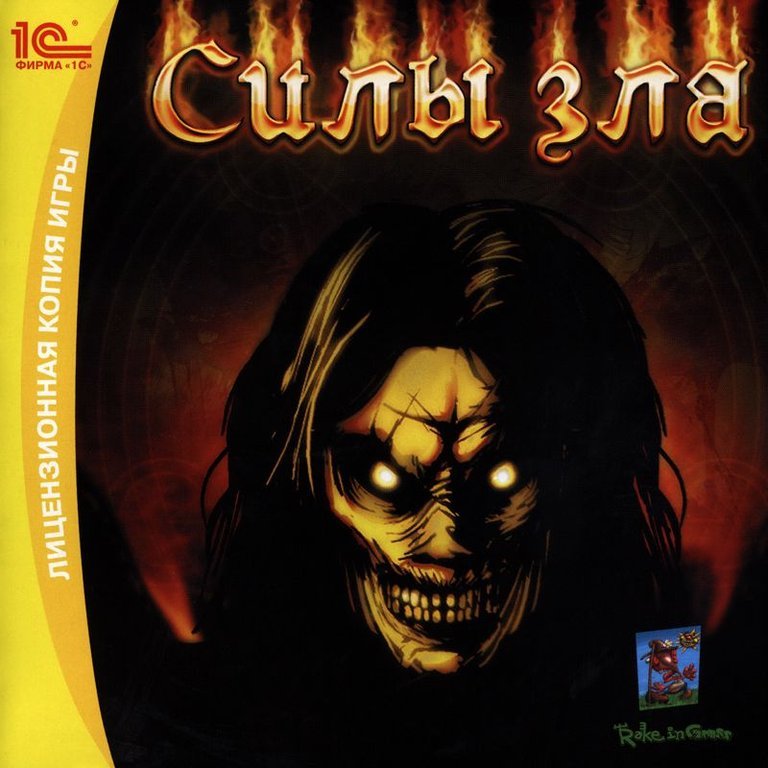
Description
Set in the late 19th century during a surge in paranormal activity, Larva Mortus casts players as an agent investigating supernatural threats across forests, dungeons, and graveyards. Using Victorian-era weapons like revolvers, shotguns, and a Tesla-designed Dynamo-Gun, you battle diverse enemies including zombies, demons, and werewolves in procedurally generated levels, completing missions to eradicate monsters, recover artifacts, and save souls while gaining experience to upgrade abilities like constitution and poison resistance.
Gameplay Videos
Where to Buy Larva Mortus
PC
Larva Mortus Free Download
PC
Larva Mortus Patches & Updates
Larva Mortus Guides & Walkthroughs
Larva Mortus Reviews & Reception
metacritic.com (64/100): While Larva Mortus won’t satisfy your shooter itch if you’re a die hard fan of 3D shooters, if you enjoy a good dungeon romp, and don’t mind the highly detailed 2D graphics, it’s definitely worth the price.
honestgamers.com : Skip this and play Victor Vran instead
Larva Mortus Cheats & Codes
PC
Use the following key combinations: press Alt-L in a quest to level up, press Alt-C in a quest to open the cheat menu, and press T during gameplay to summon Giant Bats.
| Code | Effect |
|---|---|
| Alt-L | Character Level Up |
| Alt-C | Bring up Cheat Menu |
| T | Summon Giant Bat |
Larva Mortus: A Gothic Carnival of Carnage
Introduction
In the annals of indie horror, few titles capture the lurid charm of Victorian Gothic quite like Larva Mortus. Released in 2008 by Czech studio Rake in Grass, this top-down shooter emerged as a cult favorite—a digital penny dreadful brimming with supernatural dread and cathodic violence. More than a decade later, its legacy persists not as a genre-defining revolution, but as a testament to the enduring appeal of focused, atmospheric action. This review dissects Larva Mortus through the lens of its development, narrative, mechanics, artistry, and cultural footprint, arguing that its unpolished brilliance lies in its masterful fusion of pulp-horror tropes with addictive, accessible gameplay.
Development History & Context
Born from the crucible of Eastern Europe’s indie renaissance, Larva Mortus was crafted by Rake in Grass—a small Czech studio with a penchant for arcade-style innovation. Under the direction of František Chmelař (concept/graphics) and programming wizardry from Pavel Tovaryš, the team leveraged the Torque 2D engine to create a game that prioritized atmosphere over graphical fidelity. This technological pragmatism allowed for rapid development, though it imposed inherent constraints on sprite animation and environmental complexity. The game’s music, composed by the formidable duo Borislav Slavov and Victor Stoyanov, became an unlikely standout, its orchestral horror score elevating the experience beyond its indie budget.
Released on May 13, 2008, Larva Mortus arrived at a pivotal moment. The digital distribution revolution was in full swing, with Steam and GOG democratizing access to niche titles. Priced initially at $20 (later plummeting to $0.99 on GOG), it positioned itself as an accessible, budget-friendly alternative to AAA horror games. Its 2009 Steam release solidified its reach, and the subsequent open-sourcing of its Torque 2D code under non-commercial terms in 2009—a forward-thinking move for its era—ensured its preservation. This context is crucial: Larva Mortus wasn’t a groundbreaking technical marvel, but a passionate distillation of late-19th-century Gothic horror for a new generation of gamers.
Narrative & Thematic Deep Dive
- Larva Mortus* unfolds as a loving pastiche of Victorian Gothic literature and pulp adventure. Set in the gaslit twilight of the 19th century, the game thrusts players into the role of an enigmatic agent for a clandestine paranormal investigation agency—a clear homage to Bram Stoker, H.P. Lovecraft, and Hammer Horror films. The plot revolves around a fragmented cursed artifact, originally unearthed by five doomed adventurers, now sought by an ancient warlock. As the agent, players must traverse continents—from Transylvanian castles to Egyptian tombs—to recover the relic’s shards before malevolent forces reunite them.
The narrative is delivered through hand-drawn comic-book cutscenes, a stylistic choice that reinforces the game’s pulp-fiction ethos. While the dialogue is sparse and the protagonist remains a silent cipher, the storytelling shines through environmental cues and mission briefings. Thematic richness lies in its exploration of cosmic dread versus human resilience. The artifact’s corruption mirrors the era’s anxieties about science and the occult, while the agent’s solitary crusade evokes themes of duty against overwhelming evil. Though not narratively innovative, Larva Mortus excels in atmosphere, using its simplicity to immerse players in a world where every shadow conceals a lurking horror.
Gameplay Mechanics & Systems
At its core, Larva Mortus is a masterclass in distilled arcade action. The top-down perspective delivers immediate, tactile combat, controlled via WASD movement and mouse-aimed shooting. The core loop—clear rooms of enemies to proceed—is deceptively simple yet endlessly replayable, powered by procedurally generated missions. Thirty monster types—from spectral ghouls to flaming zombies—demand tactical adaptation, with each enemy exhibiting distinct behaviors. A werewolf’s charge, a ghost’s phasing, or a bat’s swarm require split-second responses, keeping combat dynamic despite the limited enemy variety.
The game’s genius lies in its weapon design. Nine armaments, all Victorian-themed, range from the mundane (revolver, shotgun) to the fantastical (Tesla’s Dynamo-Gun, flamethrower). Crucially, each weapon has situational effectiveness: ghouls resist arrows but succumb to electricity, while flaming zombies perish to swords but thrive against fire. This encourages constant weapon-switching and prevents combat from stagnating. RPG elements are light but purposeful: skill points upgrade attributes like Constitution (health), Regeneration, and Poison Resistance, allowing for emergent playstyles. However, the system’s simplicity is a double-edged sword; stats like “Luck” feel underdeveloped, and builds rarely diverge meaningfully.
Mission objectives—destroying cursed seals, saving civilians, or hunting boss monsters—add variety, yet often devolve into “room-clearing” repetition. The random generation ensures no two dungeons are identical, but also creates uneven difficulty. A room might spawn an overwhelming horde of vampires in a confined space, leading to frustrating deaths. The lack of mid-mission save checkpoints compounds this issue, though the penalty is softened by short mission lengths. Glitches like enemies getting stuck in walls mar the experience, yet the sheer weight of a minigun’s recoil or the satisfying thwack of a sword cleaving a zombie head justifies these flaws. In essence, Larva Mortus offers a “buy it if you like the genre” experience—addictive in bursts but repetitive long-term.
World-Building, Art & Sound
- Larva Mortus* succeeds visually through thematic cohesion rather than technical prowess. Its 2D top-down environments—from foggy graveyards to decaying catacombs—are rich in steampunk detail: brass fittings, arcane runes, and flickering gaslight. While character animations are rudimentary (reminiscent of early Flash games), the art direction compensates with meticulous backgrounds and lighting effects that amplify horror. Shadows writhe, torches cast dynamic glows, and gore (toggleable) splatters with grim satisfaction. The comic-book cutscenes, rendered in ink-washed noir, are a standout, delivering narrative beats with cinematic flair.
Sound design elevates the atmosphere to operatic heights. Slavov and Stoyanov’s score is a haunting tapestry of strings, piano, and thunderous percussion, evoking classic horror films. Sound effects—from the visceral crack of a whip to the electric hum of the Dynamo-Gun—are tactile and impactful. Monsters have distinct audio cues: zombies groan, specters whisper, and werewolves howl, aiding spatial awareness in chaotic battles. The absence of voice acting is deliberate, relying on environmental storytelling and the player’s imagination. Together, art and sound forge an immersive world where dread is palpable, even during routine monster hunts.
Reception & Legacy
Larva Mortus launched to mixed-to-positive reviews, reflecting its niche appeal. Critics lauded its addictive gameplay and atmosphere but criticized its repetition. MobyGames aggregates a 76% critic score, with standout praise from Bytten (92%) for its “fabulous” action loop and Indie Game Magazine (82%) for its “unique” 19th-century setting. Conversely, CanardPC (60%) deemed it “honest but repetitive,” and VictoryGames.pl (60%) lamented its failure to match Rake in Grass’s previous masterpiece, Jets’n’Guns. Steam players later validated its longevity, awarding it a “Mostly Positive” 76/100 from 750+ reviews. Users championed its value and replayability, noting flaws like uneven difficulty but dismissing them as forgivable at its budget price.
Its legacy is that of a cult classic—a title preserved through digital distribution and community mods, enabled by its open-source release. While it didn’t spawn direct sequels, its influence echoes in top-down shooters like Victor Vran and the roguelike resurgence. Larva Mortus endures as a blueprint for atmospheric indie horror: proving that strong art direction, compelling sound, and focused gameplay can transcend technical limitations. Its reputation has evolved from a budget curiosity to a beloved time capsule of Gothic gaming.
Conclusion
Larva Mortus is a flawed gem—a digital penny dreadful that transcends its technical constraints through sheer thematic force. It succeeds not as an innovator, but as a masterful distillation of Victorian horror into potent arcade action. Its gameplay loop remains addictive, its weapons satisfyingly diverse, and its atmosphere thick enough to choke on. Yet repetition and uneven temper its brilliance. For players seeking a visceral, no-frills horror experience, it remains essential—a testament to the power of passion over polish. In the grand tapestry of gaming history, Larva Mortus occupies a vital niche: a cult classic that proves the most enduring monsters aren’t supernatural, but the ones we create with limited resources and limitless imagination. Verdict: A flawed but essential cult classic.