
- Release Year: 2008
- Platforms: Windows
- Publisher: Fancy Bytes, Like Dynamite GmbH
- Developer: L39 Studios GmbH i. Gr., Playland Virtual Games Fonds GmbH
- Genre: Action
- Perspective: 1st-person
- Game Mode: Single-player
- Gameplay: Pinball
- Average Score: 60/100
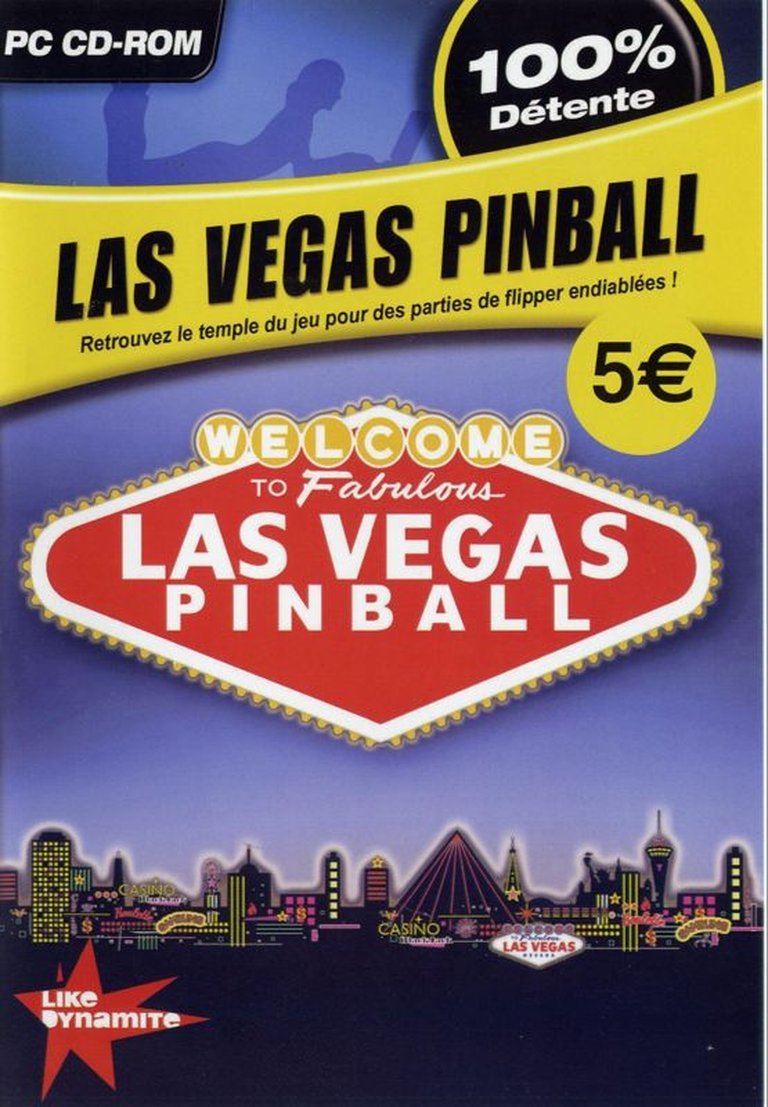
Description
Las Vegas Pinball is a straightforward pinball simulator themed around the vibrant atmosphere of Las Vegas. The game features three themed tables—Black Jack, Roulette, and Slot Machine—offering classic pinball mechanics like ball save, capture/multiball, and nudge, though it lacks mini-games or skill shots. Players begin with 20 credits and can dynamically switch between six camera views during gameplay for a varied visual experience.
Las Vegas Pinball Reviews & Reception
gamefaqs.gamespot.com (60/100): 7 users have rated this game (average: 3 / 5)
forums.arcade-museum.com : I visited the Pinball Hall of Fame in Vegas and thought it was SUPER cool.
Las Vegas Pinball: Review
Introduction
In the neon-lit pantheon of casino culture, pinball has long held a paradoxical role—a mechanical interloper amid card tables and slot machines, yet an enduring symbol of tactile entertainment. Las Vegas Pinball (2008) arrives as a digital homage to this legacy, marrying the flashing thrills of Sin City with the silver-ball dynamics of arcade tradition. Yet beneath its thematic veneer lies a game of stark simplicity—a barebones simulator that eschews narrative ambition for straightforward gameplay. This review argues that Las Vegas Pinball is a functional but forgettable artifact of its era, emblematic of the challenges faced by niche developers in an industry increasingly obsessed with complexity.
Development History & Context
Developed by the German studios L39 Studios GmbH i. Gr. and Playland Virtual Games Fonds GmbH, Las Vegas Pinball emerged in January 2008 as a modest commercial release for Windows. Published by Like Dynamite GmbH and Fancy Bytes, the game reflected a late-2000s trend of budget-friendly digital pinball simulators capitalizing on nostalgia for physical arcades.
The era was dominated by titles like Pinball Hall of Fame: The Williams Collection (2008), which painstakingly recreated licensed tables. By contrast, Las Vegas Pinball’s small team opted for an original, thematically unified approach—a decision likely informed by resource constraints. The game’s development coincided with the real-world Las Vegas Pinball Hall of Fame’s expansion—a nonprofit museum preserving over 700 machines (per PinballMuseum.org). Yet while the physical museum celebrated pinball’s electro-mechanical history, this digital counterpart lacked the licensing clout to replicate it.
The result is a product of compromise: three generic tables constrained by limited budgets and the technological boundaries of early 3D engines.
Narrative & Thematic Deep Dive
Las Vegas Pinball is devoid of narrative, characters, or dialogue—a deliberate choice that aligns with its aim as a pure simulator. Its “themes” are purely aesthetic, grafting Las Vegas’s casino tropes onto its trio of tables:
- Black Jack
- Roulette
- Slot Machine
Each table incorporates visual motifs—deck cards, spinning wheels, and payout reels—but these elements serve no deeper purpose. There are no win/loss narratives, no progression systems, and no emergent storytelling. The thematic veneer exists solely to contextualize gameplay, evoking the sensory overload of a casino floor without satirizing or interrogating it.
This lack of thematic depth feels like a missed opportunity. Unlike Twilight Zone (1993) or Medieval Madness (1997)—physical tables with rich scenarios—Las Vegas Pinball’s digital facsimiles reduce the city’s excess to superficial decoration.
Gameplay Mechanics & Systems
The core loop mirrors classical pinball: launch the ball, manipulate flippers, and target ramps/bumpers to score. Each table includes:
– Ball Save: A temporary reprieve after drain.
– Multiball: Up to three balls in play simultaneously.
– Nudge: Tilt avoidance via keyboard/mouse.
Key innovations:
– Six Camera Angles: Dynamic real-time perspective shifts—from overhead to bumper-level views—offer tactical visibility.
– 20-Credit Limit: Players start with finite continues, incentivizing replay mastery.
Critical flaws:
– No Mini-Games/Skill Shots: Unlike contemporaries (The Pinball Arcade), tables lack mission-based objectives or nuanced scoring tiers.
– Predictable Physics: Ball movement lacks the nuanced weight and chaos of real machines.
– UI Limitations: Scoring displays are rudimentary; menus feel like afterthoughts.
The absence of a “video mode” (a staple since 1980s solid-state tables) renders gameplay monotonous, reducing replayability.
World-Building, Art & Sound
Visual Design:
The tables adopt a kitschy, low-poly approximation of Vegas glitz—think neon grids, faux-luxury textures, and oversized casino icons. While functional, the art direction lacks polish, resembling early 2000s mobile games more than immersive simulations.
Sound Design:
Electro-mechanical clicks, bumpers, and flipper clacks dominate, but lack the layered dynamism of iconic tables (Attack from Mars’s explosions, Funhouse’s cackling dummy). The soundtrack oscillates between generic casino jingles and sterile electronic loops.
Atmosphere:
The game evokes a sterilized arcade corner in a budget Vegas hotel—functional, but devoid of the seedy charm or sensory bombardment that defines the city.
Reception & Legacy
At launch, Las Vegas Pinball garnered no major critic reviews (MobyGames). Player reception remains sparse, with a 3/5 average on GameFAQs based on seven sparse user ratings. Collectors largely ignored it—only three users logged ownership on MobyGames.
Legacy:
The game exemplifies the pitfalls of low-budget digital pinball. While the real-world Pinball Hall of Fame thrived as a cultural preserve, Las Vegas Pinball faded into obscurity, overshadowed by licensed compilations and indie darlings like Pinball FX. Its sole innovation—live camera switching—would later be refined in titles like Zen Pinball.
Its legacy is a cautionary tale: Thematic cohesion cannot compensate for mechanical shallowness.
Conclusion
Las Vegas Pinball is a relic of pinball’s digital transition—a game more notable for its conceptual proximity to Sin City than its execution. Its three tables offer fleeting amusement but lack the strategic depth, audiovisual craft, or replay value to compete with contemporaries or classics.
For historians, it underscores an era when indie developers grappled with pinball’s translation to PCs—a challenge only solved years later by studios like Zen Studios. For players, it remains a curious footnote: a game that captures Vegas’s glitz in aesthetic only, while forgetting the soul of the silver ball.
Final Verdict: A functional but forgettable simulator—best left to completists and archaeologists of pinball’s digital age.