
- Release Year: 2020
- Platforms: Windows
- Publisher: Flat Tail Studios AB
- Developer: Flat Tail Studios AB
- Genre: Action, Simulation
- Perspective: 1st-person
- Game Mode: Single-player
- Gameplay: Survival horror
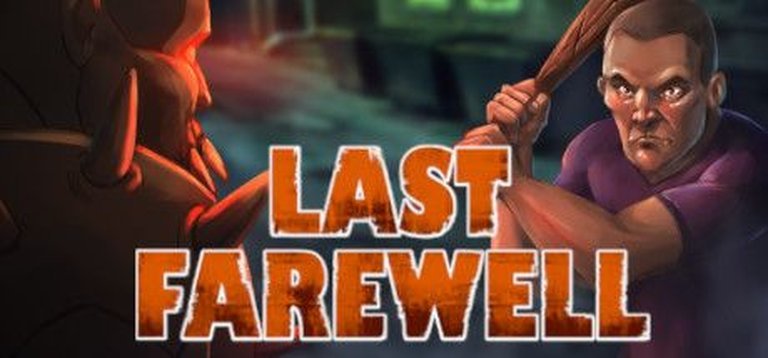
Description
Set in the evocative town of Kamikawa, Japan, ‘Last Farewell’ is a first-person survival horror game that intertwines exploration, hidden object puzzles, and a deeply personal narrative. Players assume the role of Makoto, who returns to his childhood home after a long absence, only to find that building new friendships and a romantic life is overshadowed by psychological horrors and distortions of reality. This action-simulation hybrid challenges players to survive the emotional and supernatural threats while uncovering the secrets of the past.
Gameplay Videos
Where to Buy Last Farewell
PC
Last Farewell Free Download
Last Farewell Guides & Walkthroughs
Last Farewell: Review
Introduction: The Unstable Genesis of a Twin Title
The name “Last Farewell” carries an inherent gravity, suggesting a definitive endpoint, a poignant conclusion. Yet, in the annals of 2020s indie gaming, it refers not to one experience but to two starkly divergent projects, a nomenclatural schism that itself tells a story about the chaotic, overlapping realities of digital distribution and small-scale development. One is a cooperative survival-horror title born from the wave-defense genre’s peak, trapped in a prolonged Early Access limbo. The other is an AI-assisted psychological visual novel that subverts its own romantic premise into a nightmare. This review will treat both as legitimate, if fractured, heirs to the “Last Farewell” moniker, dissecting their individual DNA and collective implications. My thesis is that the dual existence of these games encapsulates two dominant, often contradictory, currents in modern indie development: the pursuit of robust, iterative gameplay systems versus the exploration of narrative form through contentious new tools. Neither achieved classic status, but together they form a fascinating case study in identity, ambition, and the varied fates of games that share a name but little else.
Development History & Context: Two Studios, Two Eras, One Name
The 2020 “Last Farewell”: Flat Tail Studios and the Co-op Survival Boom
The 2020 title, listed on MobyGames and Steambase with the Moby ID 151508, was developed by Flat Tail Studios AB, a Swedish indie entity. Its release into Steam Early Access on April 19, 2022 (with an earlier EA start noted as October 2020 on some analytics sites) places it squarely in the post-Valheim, post-Rust boom of accessible survival-crafting games. The technological and design context is clear: leveraging the power of Unity or similar engines to create a first-person, co-op-focused experience where the core loop is the classic “day/night cycle.” Players scavenge and fortify by day, then defend a fixed point (the Town Hall) against escalating waves by night. This was a well-established, proven formula, but one notoriously difficult to perfect without significant resources. Flat Tail’s vision appears to have been a purist take: a tense, systems-driven experience where player cooperation is the only path to longevity. The “soul experience” mechanic—where死亡 (death) grants permanent, but double-edged, progression—is a direct nod to the roguelite influence permeating the genre. The development context here is one of constrained ambition: a small team aiming to iterate on a crowded formula, betting on the strength of their cooperative gameplay and procedural tension.
The 2024 “The last farewell”: Zetsumi, AI, and the Visual Novel Disruption
The second game, released on November 22, 2024, is cataloged on Steam and RAWG under the slightly altered stylization “The last farewell.” It is the work of a distributed team led by Zetsumi, with contributors including Yas Rose, Abu Al Hassan Qasim, Sakura, and others—a multinational collective common in the post-pandemic indie scene. Its context is entirely different: the rise of AI-assisted game development. The Steam store page explicitly discloses: “This game is mainly based on several aspects that were developed using modern artificial intelligence, such as some graphics, backgrounds, and music… while merging it with the content drawn with a human character from the development team.” This places it at the epicenter of the 2023-2025 debate on creativity, copyright, and the democratization (or dilution) of game art. The core pitch is a classic visual novel structure: a protagonist, Makoto, returns to his Japanese hometown, Kamikawa, for a story of romance and friendship. The twist, advertised in the store description and a provocative “Error!!” warning, is a psychological horror meta-narrative where the idyllic world unravels into an illusion, revealing a connection to a serial murder victim. This game’s development was not about systemic gameplay depth but about narrative execution and stylistic fusion, using AI to generate a large volume of assets (scenes, music) for a low-budget project.
The Collision and Its Meaning
That these two games, released four years apart by entirely different teams, share an identical primary title is a perfect storm of marketplace saturation and discoverability failure. The later 2024 game’s creators may have knowingly or unknowingly stepped on an existing title’s toes, a risk in an era of global, instantaneous publishing. For historians, this collision is not a footnote but a central theme: it demonstrates how the Steam ecosystem can silently host multiple, unrelated entities under one searchable name, complicating legacy, review aggregation, and player memory. The 2020 game’s Moby entry, created in November 2020, predates the 2024 release but exists in a parallel track, with minimal collected data (only 1 player on Moby), suggesting both obscurity and a fragmented player base.
Narrative & Thematic Deep Dive: Survival vs. Unreality
“Last Farewell” (2020): Emergent Narrative from Systems
The 2020 survival game has no scripted story in the traditional sense. Its narrative is emergent and systemic, a tale told through player actions and the relentless pressure of its mechanics. The “plot” is the night-to-night struggle in the Town Hall fortress. The “characters” are the player-avatars and their friends (or strangers in co-op), their relationships forged in the crucible of shared crisis. Dialogue is limited to practical coordination (“Need nails!” “Cover the gate!”). The primary theme is communal resilience against inevitable decay. The “soul experience” mechanic injects a profound thematic weight: each death is not a failure but a necessary, traumatic lesson that makes the next attempt more capable yet also more perilous, as the “dangers” unlocked are not purely beneficial. This creates a cycle of Faustian bargains, where progress is measured in accumulated, haunted wisdom. The farewell is not to a person, but to innocence, to safety, and ultimately to the self, as the soul grows ever more seasoned and perhaps monstrous.
“The last farewell” (2024): The Deconstruction of a Genre
The 2024 visual novel presents a heavily plotted, scripted narrative that is explicitly about the deconstruction of its own surface genre. The initial chapters establish a mukōban (return-to-hometown) romance/drama, with Makoto reconnecting with old friends and a potential love interest in the picturesque, nostalgic Kamikawa. This is classic visual novel fare, bolstered by “charming 2D graphics” and a focus on relationship-building choices. The thematic seed here is nostalgia as a prison. The “Error!!” and later revelation that Kamikawa is an illusion, a constructed reality experienced by a victim of a serial killer, pivots the game into psychological horror and existential investigation. The farewell is to reality itself, to trusted memories, and to the perceived safety of one’s own mind. The AI-generated content becomes eerily relevant: the beautiful, stable world is literally fabricated by an algorithm (the killer’s or the game’s diegetic system), making the player’s interaction with it a participation in a lie. The core question is whether Makoto (and the player) can discern the “glitch” in the system and salvage any truth before the illusion consumes him. It’s a post-modern critique of visual novel escapism, using the genre’s own tools to trap and horrify its audience.
Gameplay Mechanics & Systems: Co-op Loops vs. Branching Illusions
Last Farewell (2020): A Roguelite Fortress Siege
The gameplay is a day/night tactical simulation. The daytime phase is a scavenging and construction sandbox within and around the Town Hall. Key systems include:
* Resource Management: Wood, metal, and other scavengables are finite and location-specific. Prioritization is key—do you reinforce walls or build traps?
* Crafting & Progression: The “soul experience” unlocks a meta-progression tree of crafting recipes and “experiences” (permanent buffs/debuffs). This is the game’s core hook: you are permanently changing your options, for better or worse, across runs. A positive review might praise a run where a new defensive turret blueprint was unlocked; a negative one would curse a run where a “debuff” made enemies faster.
* Co-op Dynamics: The interface is direct control (first-person), requiring manual scavenging, building, and combat. Communication is non-verbal or through external voice chat. Systems must be intuitive enough for strangers to cooperate under stress. The defensive contraptions (barricades, spiked pits, etc.) require coordinated placement.
* Combat & Scaling: Night waves are the stress test. Enemy types, numbers, and aggression scale with each survived night. The combat is visceral but simple—melee and makeshift ranged weapons—relying on positioning and defensive setups rather than skill trees.
* Flaws: As per Steam analytics (Niklas Notes, Steambase), the most frequent criticism is “Bugs and Crashes” (~12% of negative reviews) and “Lack of Content”. The game’s systems, while conceptually solid, are likely under-polished, with exploits, inconsistent hit detection, and a perceived lack of enemy variety or late-game goals beyond “survive one more night.” The “Potential for Improvement” tag (~10%) acknowledges the solid foundation but current frustration.
The last farewell (2024): Branching Paths and a Broken Reality
Gameplay is that of a standard visual novel/choice-driven adventure with a twist. The core loop is:
1. Navigate 2D scenes of Kamikawa.
2. Engage in dialogue with characters, making choices that affect relationship meters (romance, friendship) and potentially the story branch.
3. Explore the environment for clues and items.
4. Eventually trigger the narrative pivot into the “red room” horror sequences, which likely change the mechanics—perhaps to escape puzzles, object-finding (“hidden object puzzle” as tagged), or survival-horror evasion.
The “interactive options that affect the course of events” are classic VN branching. The innovation, if any, lies in how the illusion-breaking mechanic is implemented. Does the game “glitch” the interface? Do choices in the “normal” world have surreal consequences later? The Steam tags are wildly eclectic (“Dating Sim,” “Action Roguelike,” “Word Game”), suggesting either a chaotic mix of minigames or, more likely, a confusing marketing/identity where the game’s shifting genres are part of the intended disorientation. The primary “system” is the narrative structure itself, with the AI-generated backgrounds creating a bizarre uncanny valley where the beautiful, familiar town occasionally fractures into something alien and wrong.
World-Building, Art & Sound: Polish vs. Procedural Unease
Last Farewell (2020): Functional Austerity
The world is a generic, decaying urban environment rendered in standard first-person 3D. The art direction is functional survivalism: boarded windows, scrap heaps, overgrown lots. The Town Hall is the only “safe” haven, a cluttered, improvised fortress. Atmosphere is built through lighting (day/night contrast), sound design (distant moans, creaking barricades), and the palpable tension of empty streets during the day. It aims for a Left 4 Dead or Project Zomboid sense of gritty immediacy. The visual style is not distinctive; its success depends on immersion through mechanics and co-op camaraderie. The soundtrack is likely ambient and tense, swelling during attacks. The strength here is cohesion through constraint—the world is believable because it is sparse and systematically presented.
The last farewell (2024): The AI Uncanny Valley
This is where the AI disclosure becomes critical. The “charming 2D graphics that embody the beauty of Kamikawa” are almost certainly AI-generated or AI-assisted still images of anime-style Japanese countryside and interiors. The “emotional soundtrack” is also AI-composed. The result is a world that is aesthetically consistent but soullessly perfect, every cherry blossom tree and traditional house rendered with a smooth, generic beauty that lacks human imperfection. This becomes the game’s greatest strength and fatal flaw. In the “normal” phases, the AI art creates a bland, pleasant escapism. When the horror hits—the “red room,” the “glitch”—the contrast is terrifying not because the horror imagery is itself profoundly scary, but because the beautiful, artificial foundation is revealed as a fragile and malevolent construct. The sound design, likely AI-generated ambient tracks, would similarly shift from serene melodies to discordant, algorithmically “off” noise. The world-building is meta-textual: the town of Kamikawa is a fake place, and the AI art unconsciously underscores that lie with every perfectly generated, meaning-empty frame.
Reception & Legacy: Mixed Signals and a Cautionary Tale
Last Farewell (2020): The Long Grind of Early Access
Upon its staggered EA release (2020/2022), the game was overshadowed by bigger contemporaries. Its Steam reviews (aggregated by Steambase as of Feb 2026: 69% Mixed from 78 reviews) tell a clear story:
* Positive (54 reviews): Praise the “Fun with Friends” (co-op is the game’s saving grace), acknowledges the “Potential for Improvement,” and enjoys the core survival/crafting loop.
* Negative (24 reviews): Predominantly cites “Bugs and Crashes” as a game-breaking issue and “Lack of Content”—players burn through the available systems and see a thin endgame or enemy variety.
* The 5.6h estimated playtime suggests most players engage for a few sessions before the flaws outweigh the fun.
Its legacy is that of a cult co-op curio. It has not significantly influenced major titles but exists in the long tail of survival games that perfected neither the solo nor the co-op experience. Its “roguelite” soul-progression was innovative in concept but may have been let down by execution. For historians, it’s a case study in how a solid core mechanic can be undermined by technical debt and scope creep in Early Access.
The last farewell (2024): The AI Elephant in the Room
With no Steam user reviews as of early 2026, its reception is nascent and will be defined by one factor: AI-generated content. Pre-release coverage or word-of-mouth will inevitably focus on:
1. The Narrative Twist: Does the psychological horror payoff justify the slow-burn VN setup?
2. The AI Artistry: Can players accept a world built by an algorithm? Will the “uncanny” effect be intentional horror or just cheap-looking?
3. The Identity Crisis: Do the dozens of Steam tags signal a rich, genre-blending experiment or a confused, directionless project?
Its legacy, if any, will be as a touchstone in the AI debate. It is a pure test case: a game where the AI contribution is not a tool for efficiency (creating background props) but for core aesthetic components (backgrounds, music). If it finds an audience, it will encourage more such projects. If it fails, it will be cited as proof of AI’s artistic bankruptcy. Its potential influence is on the business model of micro-team visual novels, proving you can produce a multi-language, multi-platform product with minimal human artistic labor. It is, in essence, a prototype for a new, controversial pipeline.
The Shared Legacy: A Name, A Problem
Together, these games create a lasting issue: search result pollution. A player searching for “Last Farewell” today will find both, with no clear disambiguation on major platforms. This harms both titles. The 2020 game misses players looking for a narrative experience; the 2024 game misses players looking for a co-op survival game. For game preservationists (like MobyGames’ community), this is a headache requiring separate entries, cross-referencing, and careful historical notes. Their shared name is a lesson in the importance of unique branding in a crowded digital storefront.
Conclusion: Two Farewells, One Fragmented History
“Last Farewell” is not a single game but a diptych of indie development in the 2020s. One, by Flat Tail Studios, is a earnest, troubled attempt to iterate on a beloved multiplayer genre, its legacy written in bug reports and co-op sessions that ebbed away. The other, by Zetsumi’s collective, is a daring, ethically fraught experiment in using AI to warp a classic narrative genre into a meta-horror critique, its legacy yet to be determined by the market’s acceptance of its artificial soul.
Neither will be remembered as a masterpiece. The 2020 game will be a footnote in the survival-crafting canon, a reminder that even the most promising systems require relentless polish and content updates to retain players. The 2024 game will be a citable case study in game design and ethics courses, a game that is about artificiality and whose very creation embodies that theme.
Their simultaneous existence is the most enduring historical artifact. It speaks to an era where a name is just a tag, where a visual novel can be labeled “Action Roguelike,” where two teams oceans apart can unknowingly launch separate voyages under the same flag. The true “last farewell” here may be to the idea of a singular, unambiguous game identity in the vast, searchable library of Steam. In that sense, Last Farewell—both of them—are already icons of our fragmented, algorithmically-defined gaming history.