
- Release Year: 2020
- Platforms: Windows
- Publisher: iLand Studios
- Developer: iLand Studios
- Genre: Action, Simulation
- Perspective: 1st-person
- Game Mode: Single-player
- Gameplay: Open World, Sandbox
- Setting: Post-apocalyptic
- Average Score: 50/100
Description
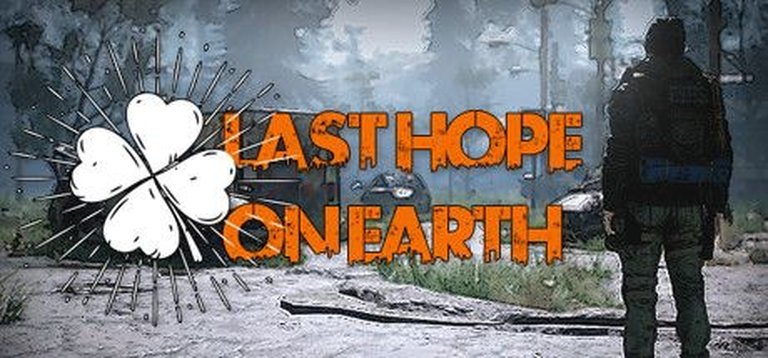
Last Hope on Earth is an action simulation game set in a post-apocalyptic world decades after a nuclear catastrophe in 2055. Survivors emerge from underground bunkers to find a barren desert wasteland known as The Divide, rebuilding society in the reconstructed city of Quanta while facing environmental hazards, rival factions like Avatraz and Krona, and the challenges of survival in a first-person sandbox environment.
Where to Buy Last Hope on Earth
PC
Last Hope on Earth Cracks & Fixes
Last Hope on Earth Guides & Walkthroughs
Last Hope on Earth Reviews & Reception
steambase.io (50/100): has earned a Player Score of 50 / 100
stmstat.com : It’s a fun game, has some aspects to get better (but remember, it’s early access for that reason).
Last Hope on Earth Cheats & Codes
PC (Steam)
Open up the console using ~ tilde (above TAB key). Can’t be seen in VR, you’ll have to look at the game’s window on your computer. Type the following commands:
| Code | Effect |
|---|---|
| cht_bEnableCheats=1 | Activate cheats |
| cht_bEnableCheats=3 | Activate cheats and cheat shortcuts (O key for all weapons, K to kill everything on screen, G for godmode) |
| cht_bGiveAll=1 | Give all weapons with full mag |
| gam_strLevel=”Shaanti_02″ gamStart() | Start the second level of Shaanti |
| gam_strLevel=”Earth_03″ gamStart() | Start level Earth_03 |
| gam_strLevel=”Valtos_04″ gamStart() | Start level Valtos_04 |
| gam_strLevel=”Pladeon_02″ gamStart() | Start level Pladeon_02 |
| gam_strLevel=”Arcadia_Minor_04″ gamStart() | Start level Arcadia_Minor_04 |
Last Hope on Earth: Review
Introduction
In the vast, desolate landscape of post-apocalyptic survival games, Last Hope on Earth emerges as a poignant, if deeply flawed, chronicle of humanity’s desperate struggle against annihilation. Released in 2020 as a solo-developed Early Access project by Gabriel Alves under iLand Studios, the game thrusts players into a radioactive wasteland where hope is a currency scarcer than clean water. Its legacy is one of ambitious world-building and technical ambition, shackled by the limitations of a single creator’s vision and the brutal expectations of the survival genre. This review deconstructs Last Hope on Earth not merely as a game, but as a raw, unpolished artifact—a testament to both the resilience of indie development and the unforgiving nature of Early Access purgatory. Our thesis is that Last Hope on Earth succeeds as a immersive, lore-driven sandbox but fails as a mechanically polished or narratively coherent experience, ultimately cementing its place as a fascinating yet frustrating footnote in the history of post-nuclear dystopias.
Development History & Context
Last Hope on Earth is the brainchild of Gabriel Alves, a solo developer operating under the iLand Studios banner, a testament to the modern indie ethos where a single individual can leverage powerful engines like Unreal Engine 4 to realize expansive visions. The game entered Early Access on November 1, 2020, priced at $8.99 (€7.39), a modest fee that immediately signaled its unfinished state. Alves explicitly framed its debut as a collaborative effort, inviting community participation to shape its alpha/beta trajectory over a planned 6-10 months before a full release—a timeline that, tragically, was never realized. The last official update came over four years ago, leaving the project in a state of suspended animation.
The technological constraints were significant yet ambitious. Alves targeted “maps of up to 400km²” and promised dynamic “more than 8 different climate types” alongside Unreal Engine 4’s graphical prowess. This ambition collided head-on with the realities of Early Access. The 2020 gaming landscape was saturated with open-world survival games like Valheim and Sons of the Forest, raising the bar for polish and player engagement. Alves’s position as a “one-man team” was both his greatest strength (creative control, passionate vision) and his greatest weakness (limited scope for bug squashing, feature depth, and sustained development). The game’s Steam page explicitly declared it required “broadband internet” and recommended 16GB RAM, reflecting its complex multiplayer ambitions but also its unwieldy nature for less powerful systems. This context is crucial: Last Hope on Earth wasn’t just another survival game; it was an underdog’s monumental attempt to carve a niche in a crowded field with minimal resources, a battle it ultimately lost to the relentless demands of scope and time.
Narrative & Thematic Deep Dive
The narrative of Last Hope on Earth is its most compelling facet, a deeply intricate tapestry woven from betrayal, technological hubris, and the fragility of civilization. The lore, meticulously detailed on the official Fandom wiki, traces humanity’s near-extinction to 2055, when a cataclysmic nuclear exchange (“over 10 thousand nukes”) scarred the Earth, reducing most of the surface to “The Divide,” a vast desert of debris and dead earth. Survival became confined to bunkers, with one, the “Acropolis,” spearheading bizarre technological salvation: bio-engineered implants (“Drifters”) enabling exploration of the irradiated surface. By 2082, the world became habitable again, leading to the construction of “Quanta,” a rebuilt city governed by “The People’s Militia.” This “New Century” was short-lived.
The core conflict erupts between two factions born from the Drifter exodus: Avatraz (founded by the Acropolis in 2113, led by CEO Zaden Schäfer) and Krona (founded in 2111 by two brothers, strayers from Avatraz’s ideals). Krona’s base, the “Monolith,” provided AI units that initially protected Quanta. The narrative’s tragic climax occurs in 2127 during Krona’s leadership transition. Vain, the new leader (following his brother’s resignation), is critically injured by a bomb planted during the ceremony. Zaden Schäfer, his close friend, is present but unharmed. Blaming Avatraz, Vain launches a vengeful one-man assault on their headquarters, slaughtering dozens but inexplicably sparing Zaden, sparking a devastating war. By 2129, Krona has systematically dismantled Avatraz’s outposts (Sirius, Argos, Athina, Verton), leaving only “Zafra” and the vulnerable Acropolis. You, a “Keeper,” are deployed by Avatraz’s commander, Zefar Vyse, as their “last hope.”
The themes are stark and resonant. Betrayal is the engine of the plot, embodied by Vain’s unproven accusation and Zaden’s survival. Technological Hubris is evident in the Drifters’ implants and Krona’s reliance on AI, both contributing to societal division. The Corrosion of Hope permeates the setting: Quanta is under martial law, survivors are trapped, and the “last hope” is a desperate, likely suicidal gambit. The Futility of War is underscored by Krona’s near-total victory and the civilian suffering. The narrative’s strength lies in its factional politics, the moral ambiguity of Vain’s rage, and the sense of inevitable decline. However, its delivery within the game is minimal—experienced through environmental storytelling, faction names, and the grim starting point—leaving the rich lore largely untapped during actual gameplay.
Gameplay Mechanics & Systems
Last Hope on Earth promises a “gigantic world” and a “struggle for survival,” but its core gameplay loops reveal a game caught between ambitious design and Early Access execution.
- Core Loops & Sandbox: The primary loop involves resource gathering (wood, metals, food), crafting basic tools and weapons, and building bases or fortresses. The world is a true sandbox—players are free to “build your fortress or city, gather players and create wars.” Base building is theoretically unlimited, allowing for elaborate structures. However, the implementation feels sparse; players reported difficulty even harvesting basic resources like wood (the axe “does nothing at all”), severely stunting early progression.
- Combat: The game boasts both PvE (Player vs. Environment) and PvP (Player vs. Player). PvE involves battling “infected” and “monsters made of pure radiation,” with “different levels of difficulty” and boss encounters (“Nuclear Aberrations”). Combat is first-person (though a third-person option is tagged), with “weapons of the most varied types with different attachments.” While the concept of fighting radiation-based horrors is thematically strong, reviews highlighted significant issues: poor enemy AI, monotonous encounters, and frustrating controls (“look up and down, it doesn`t matter how much u rise the sensivity”). PvP is a constant threat, with players able to “destroy them and become a cold-blooded killer,” fostering tense interactions but also griefing.
- Survival Mechanics: The game emphasizes harsh conditions: “Do not starve,” requiring players to “collect fruits,” “hunt wild animals,” or “make friends,” and “cook.” Climate is a dynamic threat, with “storms, rain and lots of snow” requiring preparation. However, reviews indicate these systems feel underdeveloped or punitive, contributing to the “harder” solo experience mentioned by one player, without the depth of genre leaders.
- Character Progression & Multiplayer: Progression is implied through crafting better gear and potentially facing tougher enemies, but the system lacks depth. Multiplayer is a key selling point: “Play alone or gather your friends” via online co-op, LAN, or Remote Play Together. Servers can be player-hosted. This aspect holds the most potential, with cooperative base building and PvE/PvE battles offering emergent fun, but the technical state often hindered the experience.
- UI & Innovation: The UI is described as “Direct control,” which likely means a minimalist HUD. Innovation lies in the factional warfare concept and the scale promised, but these were unrealized. The most significant flaw was the lack of player guidance (“Lacks a walk thru of what you can do”) and the feeling that many features (“new weapons, crafting materials, items, mechanics, new biomes and zones, new enemies”) were planned but never implemented.
In essence, the gameplay is a disjointed collection of survival tropes. The sandbox freedom is attractive but hampered by clunky mechanics and a lack of content. The PvP/PvE duality is a solid foundation, but the execution falls short. It’s a game where the ambition of the systems vastly outstrips their polish or completeness.
World-Building, Art & Sound
The world of Last Hope on Earth is its most successful creation, a desolate yet strangely beautiful testament to nuclear devastation. The setting is meticulously defined: the vast, irradiated desert known as The Divide, littered with the skeletal remains of the old world. Sprawling across this wasteland is the rebuilt city of Quanta, a symbol of fragile human ingenuity, constantly shadowed by the looming Monolith of the rival faction, Krona. The narrative lore breathes life into these locations—the Acropolis bunker, the destroyed outposts, the patches of “untouched” land—creating a palpable sense of history and conflict.
Artistically, the game leverages Unreal Engine 4 to render a bleak, cohesive aesthetic. The visuals are described as “desolate,” with “debris, dead earth and trees for miles,” contrasted by the imposing architecture of Quanta and the stark, alien brutalism of the Monolith. While screenshots are scarce, the promise of “good graphics” from reviews and the engine’s capabilities suggest a world with realistic lighting, weather effects, and detailed environmental textures, even if the overall art direction leans towards the functional rather than the stunning. The “low-poly” aesthetic hinted at in some related tags isn’t prominent here; instead, the focus is on creating a believable, oppressive atmosphere.
Sound design remains the most enigmatic aspect due to limited documentation. However, the genre conventions and the setting imply a soundscape dominated by the howl of the wind across The Divide, the distant rumble of storms, the unsettling silence of ruins, and the guttural shrieks of radiation monsters. The potential for atmospheric audio is immense, underscoring the isolation and danger. Player reviews don’t critique sound, suggesting it was functional but unremarkable, perhaps lacking the distinctiveness needed to elevate the immersion. The sound of building, crafting, and the cacophony of factional warfare would be crucial, but likely underdeveloped.
Together, the world-building and visual direction create a compelling stage for the narrative tragedy. The art style, while perhaps not groundbreaking, effectively conveys the scale of the apocalypse and the precariousness of human survival. The atmosphere is one of lingering dread, where hope is as fragile as the rebuilt structures and the silence is more menacing than any roar.
Reception & Legacy
The reception of Last Hope on Earth upon release and in the years since has been decidedly mixed, reflecting its status as an ambitious but incomplete Early Access title. On Steam, it holds a “Mostly Negative” rating, with a Player Score of 50/100 based on 46 reviews (23 positive, 23 negative). Player reviews highlight the core issues: “Lacks alot of basic needs,” “can’t even get basic things to function like harvesting wood,” and the feeling that it “should not be released to buy yet.” Critic reviews are notably absent, with Metacritic listing a “tbd” Metascore, indicating no professional critical analysis was garnered.
The negative reviews, often citing brief playtimes (minutes to a few hours), focused on the game’s unfinished state, clunky mechanics, and lack of content. One damning user review stated, “This should not be released to buy yet, not even for early access.” Positive reviews, however, acknowledged the developer’s struggle (“I understand it’s a one man Dev”) and the potential glimpsed within the sandbox. One player noted, “It’s a fun game, has some aspects to get better… You will have much more fun if you play with your friends,” while another praised the “good graphics, very good optimization” in the context of its alpha status. The game’s “Mixed” score on Steambase and STMSTAT confirms this polarized player base.
The legacy of Last Hope on Earth is one of unfulfilled promise and cautionary tale. Its reputation has solidified around its Early Access abandonment, with the last update over four years ago. It has not influenced subsequent games or the industry in any significant way, lacking the polish or innovation required to leave a mark. Its legacy lies instead in its documentation: a detailed, compelling lore on its Fandom wiki that far surpasses the actual game it describes. It serves as a stark reminder of the risks of solo development, the challenges of Early Access sustainability, and the disparity between a rich narrative concept and its execution in an interactive medium. While it may be remembered by a small niche for its world-building, it is unlikely to be revisited by the broader gaming community.
Conclusion
Last Hope on Earth is a profoundly frustrating experience, a game that embodies the tragic gap between a grand, well-conceived vision and the harsh realities of development. Its strengths are undeniable, particularly in the intricate, faction-driven lore that paints a vivid picture of a post-nuclear humanity teetering on the brink. The promise of a vast, dynamic sandbox rife with PvP, PvE, and base building holds inherent appeal, and the atmospheric art direction effectively conveys the desolation of The Divide. However, these strengths are systematically undermined by the game’s Early Access state. Clunky mechanics, a severe lack of content, and the apparent abandonment by its solo developer render it more of a conceptual demo than a playable experience.
The narrative deep dive reveals a rich tapestry of betrayal and survival, yet this remains largely untapped within the gameplay itself. The systems—combat, crafting, survival—are functional at best, often broken, and lack the depth or polish expected of the genre. Its reception, a resounding “Mostly Negative” from players and a silent shrug from critics, accurately reflects its state at abandonment.
Ultimately, Last Hope on Earth earns its place in video game history not as a forgotten masterpiece or a genre innovator, but as a poignant artifact. It stands as a testament to the passion indie developers can pour into their worlds, but also as a cautionary tale about the perils of scope, the pitfalls of Early Access without sustained support, and the difficulty of translating a complex narrative into engaging mechanics. For the patient historian or the niche enthusiast fascinated by its lore, it offers a glimpse into an alternate, unpolished reality. For the average player seeking a fulfilling survival experience, it remains a desolate land best left unexplored. Its true “last hope” may be as a preserved relic of ambition over execution.