
- Release Year: 2018
- Platforms: Windows
- Publisher: Digital Confectioners
- Developer: Digital Confectioners
- Genre: Action
- Perspective: 1st-person
- Gameplay: Shooter
Description
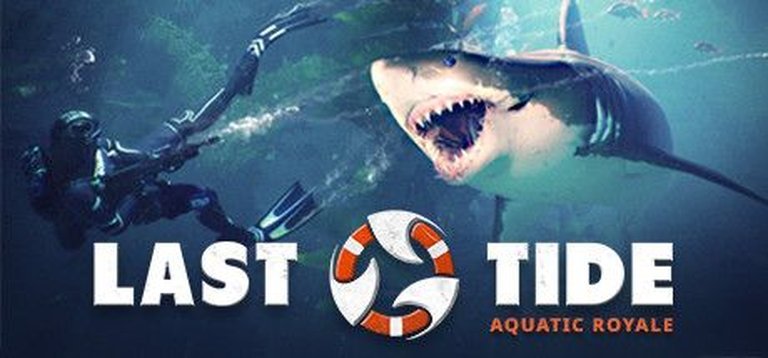
Last Tide: Aquatic Royale is a first-person shooter that reimagines the battle royale genre beneath the waves, pitting 100 divers against each other in a fight for survival amid the ocean’s treacherous depths. Players must scavenge for gear, evade aggressive sharks, and outmaneuver opponents in a bid to be the last one swimming in this intense underwater contest.
Gameplay Videos
Last Tide: Aquatic Royale Guides & Walkthroughs
Last Tide: Aquatic Royale Reviews & Reception
gamevalio.com : Not the best time to jump in.
Last Tide: Aquatic Royale: A Deep Dive into a Submerged Ambitious Failure
Introduction: Sinking or Swimming?
In the golden age of the battle royale boom circa 2018, a thousand copies of PlayerUnknown’s Battlegrounds and Fortnite clamored for attention. Into this saturated arena plunged Last Tide: Aquatic Royale, a title that promised not just a new map, but a new medium for combat: the crushing, light-starved depths of the ocean. From the New Zealand-based studio Digital Confectioners—already veterans of the asymmetrical shark-hunter horror game Depth—came a vision of 100 divers fighting for survival amidst schools of fish, crumbling wrecks, and the ultimate alpha predator, the Megalodon. Its official description sold a dream of “underwater freedom of movement” and tense, three-dimensional warfare. However, the story of Last Tide is not one of a triumphant surface-break, but a poignant case study in ambition constrained by technical realities, market timing, and the sheer difficulty of translating a revolutionary concept into a sustainable live-service game. This review will argue that while Last Tide was a mechanically fascinating and atmospherically unique outlier, its legacy is cemented not by its player base, which evaporated, but by its bold demonstration of how environmental physics can fundamentally reshape a genre—a lesson learned too late for its own survival.
Development History & Context: From Prototype to Pressure Cooker
The origins of Last Tide lie not in the ocean, but on land. According to the official presskit hosted on lasttide.com, the project began in late 2015 as a prototype for a “different setting,” capitalizing on the nascent battle royale mod scene. By mid-2016, development was shelved as the small studio refocused on supporting Depth and contract work. The prototype’s resurrection in early 2017 was a direct response to a maturing market with titles like H1Z1 and The Culling. The key differentiator? The setting. The team pivoted to an underwater world, a clever move that allowed them to reuse and modify assets from Depth, accelerating prototyping.
This pragmatic reuse, however, came with the baggage of Depth‘s design philosophy. Depth was a tightly focused, asymmetrical 4-v-4 experience. Scaling its core “diver vs. shark” tension to a 100-player, free-for-all battle royale was a monumental leap. The development was augmented by a partnership with Oregon-based art studio Supergenius and Florida-based sound studio Engine Audio, indicating a stretch to meet the demands of a larger-scale project. The timeline is critical: Early Access launch on August 27, 2018. This placed Last Tide in the second wave of battle royale clones, after the peak of the genre’s explosive growth but before its consolidation. It competed directly with Realm Royale (also 2018) and the looming specter of Apex Legends (2019). The pressure to enter the market “while the iron was hot” likely exacerbated the decision to launch into Early Access with a core concept but a fragile live-service infrastructure.
The Steam community posts and guide from 2018-2019 reveal a game in active, if sometimes erratic, development. Patch notes from September and November 2018 show a rapid iteration cycle: adding the “Hunt” event mode, the Megalodon boss, the “Clam Shop” for cosmetics, and the crucial “VOIP” (voice chat). The developer communications are telling—a December 2019 post apologizes for “extreme patience” as they “assembled ourselves back together,” hinting at internal turmoil or resource reallocation. A January 2025 community post, years after the game’s effective death, bluntly accuses the developers of greed and canceling Last Tide to refocus on Depth—a claim that aligns with the final shutdown notice. The servers, as announced on February 20, 2024, were permanently terminated on March 31, 2024, ending all official support. Last Tide was not just a commercial failure; it was a project the studio itself had to abandon.
Narrative & Thematic Deep Dive: The Lore of the Last Breath
It is a crucial and telling point that Last Tide possesses no traditional narrative. There is no campaign, no cutscenes, no in-game lore collectibles. The story is emergent, environmental, and brutally simple: 100 divers are launched from a warship into a contracting arena infested with sharks. The “why” is irrelevant. This absence is not a flaw but a thematic cornerstone. The game’s narrative is written in its mechanics and environment, creating a purveying atmosphere of desperate, aquatic survival horror.
The Environment as Antagonist: The ocean is not a neutral battlefield; it is an active, malevolent character. The constant, auditory heartbeat that intensifies as sharks approach (as detailed in the Steam beginner guide) is a masterstroke of ambient storytelling. It replaces a traditional “health bar” with a primal, physiological warning. The “S.T.E.V.E.” robot’s protective shield—a bubble that hides divers from shark perception—is a fleeting moment of narrative sanity in a chaotic world. Its collapse, announced by a horn, is a diegetic event that signifies the game’s central conflict resuming.
The Shark Ecology: The game weaves a subtle ecological narrative through its mechanics. The guide notes that “Each zone is inhabited by a different shark species,” and shark difficulty escalates toward the map’s northwest. This creates a geographical hierarchy of terror, a food chain where the player is consistently prey. The introduction of the Megalodon as a “roaming boss” via a September 2018 update adds a mythic, kaiju-like layer. Defeating it yields the “harpoon” and the “Mecha-lodon” dive pod skin—a tangible reward for conquering the environmental apex predator. This transforms the shark from a random hazard into a structured, repeatable boss fight, reinforcing the theme of man conquering nature’s ultimate weapon.
Player as Narrative Agent: In the absence of a script, the player’s actions become the narrative. The decision to use a “Chum Grenade” (Chumnade) to betray a teammate or lure a shark onto an enemy is an act of profound, watery malice. The act of equipping the “Golden Crown”—a helmet replacement that doubles points but offers zero protection—is a performative, reckless statement of confidence. The community’s own slang (“top 1!”) and the shared experience of the “bombing run” (explosions that reshape the battlefield) create a communal, ephemeral lore far more potent than any written text. Last Tide’s narrative is the collective memory of its players’ final, desperate moments.
Gameplay Mechanics & Systems: Weight, Water, and Wits
At its core, Last Tide is a battle royale, but one submerged in a fluid medium that rewrites every conventional rule of the genre. The gameplay is a constant negotiation between three forces: other players, the encroaching shark-shielded zone, and the physics of water.
The Three-Act Structure: The beginner guide perfectly outlines the flow.
* Early Game (The Dive): 100 players launch simultaneously from a warship in torpedo-like Divepods. The choice of landing zone is critical; named areas (abandoned sea labs, sunken ships, reefs) offer better loot. The “Shark Shield” (the safe zone) is initially large and protective.
* Mid Game (The Squeeze): The shield contracts, forcing encounters. Loot crates drop from planes (though the “bombing run” was later removed per patch notes, replaced by other mechanics). The oxygen system, introduced in the “Hunt” update, adds a persistent resource timer, forcing divers to find “Diving Cylinders” or perish, adding a layer of survival beyond combat.
* End Game (The Final Circle): The arena shrinks to a tiny space around the S.T.E.V.E. robot. The tension peaks. With fewer players, sound (HRTF audio) and positioning are paramount. The rare Golden Crown becomes a high-risk, high-reward gamble.
Inventory & Progression: The loot system is tiered (White/Blue/Orange) and weight-based. A key innovation is the “bag” slot, which determines total carry weight, not just slot count. Attachments (sights, scopes, barrels, magazines) are found separately and attached to weapons, creating a deep, combinatorial arsenal. The guide details weapon families:
1. Traditional Firearms (Steel Darts): SPP-1 Pistol, P11 Pistol, ADS/APS Rifles.
2. Spearguns (Spear Ammo): One-shot, high-damage weapons like the Spear Gun and Volleyjet shotgun.
3. Gyro Guns (Mini Jets): The Gyro Pistol and Gyro Rifle, with unique projectile physics.
4. Specialist: The Grappling Hook (for mobility and disruption) and the Lobber (grenade launcher with Flare, Ink, and Chum ammo).
This variety is Last Tide‘s strength. A fight at 50 meters with a scoped Spear Gun feels entirely different from a close-quarters brawl with a Volleyjet or a tactical engagement using Chumades to manipulate shark AI. The “Bangstick,” an explosive melee weapon added in September 2018, offers a high-risk, high-damage tool for stealthy sharks or desperate divers.
The Shark Mechanic: The Unseen Third Party: This is the game’s defining, double-edged sword. Sharks are not direct player control but a persistent environmental hazard that can be manipulated. The “Chum Grenade” is a genius tactical item, turning the ocean’s predators into weapons. However, the system is fraught with inconsistency. Community posts and guides frequently discuss shark behavior quirks—”Chumnades: Can no longer queue-up multiple sharks” (patch note) indicates prior exploits. The heartbeat audio is vital, but its precision is debated. A shark attack is often a sudden, cheap death from off-screen, a source of profound frustration that breaks the tactical PvP loop. It’s a brilliant idea that, in execution, sometimes feels like a punitive random number generator rather than a predictable ecological element.
Flaws in the System: The game’s Early Access state is palpable in its systems.
* Communication: The lack of in-game VOIP was a glaring omission for a squad-based tactical game, only addressed in later patches. The community relied on Discord, fracturing the player base.
* Matchmaking: The guide explicitly states the game was squad-only initially, with a bonus for solo queue. This limited accessibility. The December 2018 community post about “greed” and pairing new players with top leaderboard players points to brutal, potentially broken matchmaking.
* Progression & Rewards: “Clams” (in-game currency) and “Pod Tokens” were promised for cosmetics and relaunch mechanics, but the guide from 2019 notes: “As of the moment, nothing. They are in-game currency that will be used to buy cosmestics at a later date.” The cosmetic shop (the “Clam Shop”) launched with Divepod skins, but a meaningful progression loop was perpetually “coming soon.”
* Server & Technical Issues: The final shutdown is the ultimate technical failure. Earlier, the Steam news posts detail “fixed various crashes” and “performance improvements” repeatedly, indicating a fragile netcode and optimization challenges, especially for a physics-heavy underwater sim.
World-Building, Art & Sound: A Gorgeous, Desolate Abyss
If Last Tide has one undisputed, masterpiece-quality achievement, it is the creation of its aqueous world. The official website boasts “world-leading underwater light absorption tech” and “HRTF technology creates an immersive soundscape.”
Visuals: The underwater environments are stunningly realized. Light doesn’t just dim; it scatters, creating volumetric god rays that pierce the blue gloom from the surface. Coral reefs teem with (mostly non-interactive) sea life. The wreckage—frigates, cargo ships, a nuclear submarine—is detailed, rusted, and claustrophobic. The art direction favors a realistic, slightly desaturated palette that feels authentically marine. The diver models and equipment are crisp, 3D-realistic, and readable, a necessity in the murky depths. The Divepod designs, especially the unlockable skins like “MANTA-2” and “Molten,” are iconic pieces of industrial design.
Sound Design: This is where the game transcends. Engine Audio’s work is phenomenal. The muffled, distorted pop of a gunshot underwater. The chilling, low-frequency thrum of a shark’s approach. The click-hiss of a tank emptying. The satisfying thwack of a spear gun. The distant, groaning creak of a shipwreck. The HRTF (Head-Related Transfer Function) audio is not a gimmick; it is a core survival tool. You can hear a shark circling behind a pillar. You can locate the plip of a grenade or the bubbling breath of a teammate. The soundscape is a constant, terrifyingly beautiful dialogue between you and the deep.
The Atmosphere of Isolation: Together, these elements create a potent, singular atmosphere. It is not the frantic, colorful chaos of Fortnite. It is the slower, more deliberate terror of Alien: Isolation, but in a wide-open, three-dimensional space. The sense of scale is both beautiful and horrifying. You are a tiny, fragile human in a vast, alien, and hungry world. The “no fall damage” rule is a small but significant touch—the only dangers are other players and the beasts of the deep. This world-building makes the absence of a narrative feel intentional. The ocean is the story.
Reception & Legacy: A Bubble That Burst
Launch and Critical Reception: Last Tide entered Early Access to a modest but attentive audience. Steam review data, as aggregated by sites like Gamevalio, shows a “Mixed” or “64% Positive” rating from roughly 950 reviews at the time of its delisting. Reviews were polarized. Praise centered on its unique premise, tense atmosphere, and clever mechanics (Chumades, grappling hook). Criticisms were consistent: a small player base leading to long queue times, repetitive gameplay, inconsistent shark AI, and a feeling of a game perpetually “to be finished.”
The NamuWiki entry bluntly states: “Steam evaluation was very positive, but popularity decreased because it was not attracting people compared to the number of people who repeatedly reduced since August and September 2018.” This captures the classic Early Access death spiral: a niche game with a high skill ceiling and punishing mechanics struggles to retain a critical mass of players, leading to worse matchmaking, longer waits, and accelerating decline.
The Long Decline and Shutdown: Community activity on Steam speaks volumes. The forums are a ghost town of troubleshooting requests (“GPS not available”), complaints about cheaters and matchmaking (“greed”), and darkly humorous observations (“cancels development on depth to go full time on last tide cancels development on last tide a short time later lmao”). The final news post in February 2024 was a simple, somber obituary: servers closing in six weeks. The game was functionally dead years before, but this was the legal interment.
Influence and Legacy: Last Tide‘s direct influence on the industry is minimal. It did not spawn clones. Its core idea—a fully realized underwater combat environment—is so technically demanding and niche that it remains a one-off. Its legacy is as a proof-of-concept. It demonstrated that water is not just a texture but a dynamic, physics-driven gameplay layer. The grappling hook for 3D traversal, projectile ballistics affected by drag, and sound propagation through a dense medium are all ideas that could, and should, inform future titles. It is a cult artifact, remembered fondly by a small cadre of players who appreciated its ambition and its terrifying, beautiful vision. It stands as a cautionary tale about the perils of the battle royale gold rush, the risks of small-studio scaling, and the heartbreaking gap between a brilliant central mechanic and a sustainable, polished live-service product. It is the game that asked, “What if a battle royale were underwater?” and then, tragically, gave us the answer with itself as the sacrifice.
Conclusion: A Sunken Masterpiece?
Last Tide: Aquatic Royale is a contradiction: a flawed, incomplete, commercially failed game that is also a singular and brilliant design statement. It is impossible to recommend as a game to play today, with its servers dead and its community scattered to the digital currents. To do so would be to recommend diving on a shipwreck with no air supply.
However, as a subject of study and as an experience to be remembered, it is essential. Its world is one of the most atmospherically rich and mechanically coherent in all of gaming. Its understanding of underwater physics as a core gameplay pillar—affecting movement, weapons, sound, and tactics—was years ahead of its time. The tension between the tactical PvP gunfight and the existential threat of the shark-encroachment created a unique psychological pressure cooker that no land-based battle royale has replicated.
Its failures are as instructive as its successes: the lack of robust progression, the inconsistent AI, the poor netcode, and the inability to build a community in a hyper-competitive market moment. Digital Confectioners bet on a revolutionary setting to carry a derivative genre formula, and the setting, as wondrous as it was, was not enough.
In the pantheon of battle royales, Last Tide is a sunken galleon—not part of the main fleet, but a fascinating, treasure-laden wreck for historians and enthusiasts to explore. It was not the future of the genre, but a daring, speculative branch of its evolutionary tree that withered. Its true verdict is not whether it was “good” by commercial metrics, but whether it achieved its vision. On that count, it did. We got to swim in its depths, hear the sharks circling in the dark, and feel the terrifying, liberating weight of the water. For that brief, shining moment in Early Access, it was utterly, uniquely Last Tide. That is a legacy that outlives any server shutdown.
Final Verdict: A groundbreaking, atmospheric failure. A must-study for game designers, a poignant reminder for live-service developers, and a ghost ship in the ocean of battle royale history.