
- Release Year: 2014
- Platforms: Android, iPad, Macintosh, Windows
- Publisher: Big Fish Games, Inc
- Developer: Mariaglorum
- Genre: Adventure
- Perspective: 1st-person
- Game Mode: Single-player
- Gameplay: Hidden object, Puzzle elements
- Setting: Fantasy
- Average Score: 81/100
Description
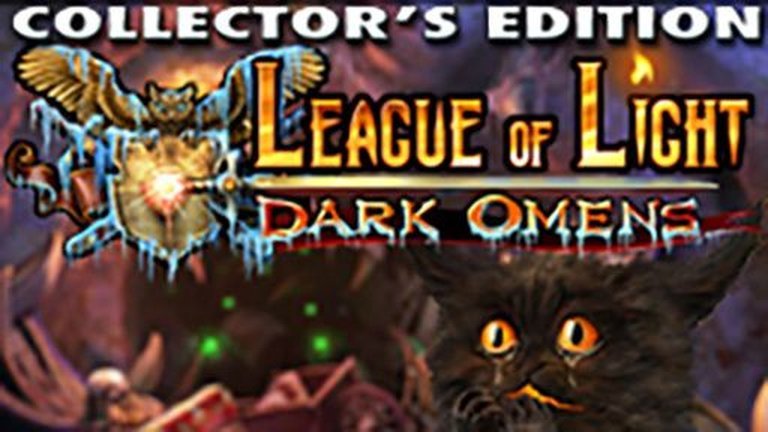
Set in 1866, League of Light: Dark Omens (Collector’s Edition) follows your journey to a hidden castle in the Carpathian Mountains, where you are recruited by the mysterious League of Light, a secret society dedicated to fighting dark forces. Thrust immediately into your first mission, this first-person hidden object adventure game blends puzzle-solving, exploration, and fantasy elements in a richly atmospheric world of omens and intrigue.
Gameplay Videos
Where to Buy League of Light: Dark Omens (Collector’s Edition)
PC
League of Light: Dark Omens (Collector’s Edition) Guides & Walkthroughs
League of Light: Dark Omens (Collector’s Edition) Reviews & Reception
steambase.io (100/100): Positive
League of Light: Dark Omens (Collector’s Edition): Review
Introduction
Imagine arriving at a foreboding castle nestled in the mist-shrouded Carpathian Mountains in 1866, only to be thrust into a clandestine war against supernatural horrors—welcome to League of Light: Dark Omens (Collector’s Edition), the gripping inaugural chapter of Mariaglorum’s celebrated hidden-object puzzle adventure (HOPA) series. Released amid the mid-2010s casual gaming boom, this title from Big Fish Games exemplifies the genre’s golden era, blending Gothic fantasy with intricate seek-and-solve mechanics. As a cornerstone of the League of Light franchise, it paved the way for sequels like Wicked Harvest and Silent Mountain, amassing a cult following among HOPA enthusiasts. My thesis: While technical glitches mar its otherwise stellar execution, Dark Omens stands as a masterclass in atmospheric storytelling and polished hidden-object design, cementing its place as an underrated gem in casual adventure gaming history.
Development History & Context
Mariaglorum, a boutique Ukrainian studio specializing in casual adventures, crafted League of Light: Dark Omens as their entry into Big Fish Games’ prolific HOPA ecosystem. Founded in the early 2010s amid Eastern Europe’s burgeoning game dev scene, Mariaglorum drew from the rich tradition of point-and-click adventures, echoing classics like Myst but tailored for the accessible, trial-based model popularized by Big Fish. Publisher Big Fish Games, dominant in the casual market since the early 2000s, handled distribution across platforms, starting with Macintosh and Android in 2014, followed by iPad and Windows (Steam) in 2016.
The game’s development occurred during a transitional era for casual games: post-2010 mobile explosion but pre-mobile battle royale dominance. Technological constraints favored low-spec 2D engines—requiring just a 1.6 GHz CPU, 1 GB RAM, and DirectX 9—enabling broad accessibility on aging PCs, Macs, and early tablets. This aligned with Big Fish’s “try before you buy” model, where free hour-long demos hooked players into full purchases. The Collector’s Edition, priced at $9.99 (often discounted to $3.99 on Steam), added value with extras like a bonus dwarven kingdom chapter, reflecting industry trends toward premium content to combat piracy and boost retention.
In the gaming landscape, 2014-2016 saw HOPAs thrive as “comfort food” for adults seeking bite-sized escapism amid AAA blockbusters like Grand Theft Auto V. Competitors like Mystery Case Files set high bars for production values, pressuring Mariaglorum to innovate within budget limits. The result? A title that balanced Gothic lore with replayable mechanics, launching a series bundled into the 2017 League of Light: Collection.
Narrative & Thematic Deep Dive
At its core, Dark Omens unfolds a richly layered tale of secret societies and eldritch terror, set against the 1866 Carpathian backdrop—a deliberate nod to Bram Stoker’s Dracula and Transylvanian folklore. Players embody a protagonist recruited by the enigmatic League of Light, a shadowy order combating “dark forces” from their mountain fastness. No sooner do you pledge allegiance than you’re dispatched to Sorrow’s Well, a beleaguered village plagued by a rampaging beast. Questions abound: Is the creature real, or a fabrication? Who pulls the strings from the ominous Dark Lord’s castle overlooking the hamlet?
The plot masterfully escalates from personal initiation to cosmic confrontation. Early acts immerse you in village intrigue—whispers of lycanthropy, cursed artifacts, and betrayed alliances—building to revelations tying the beast to the Dark Lord’s machinations. Characters shine through sparse but evocative portrayals: the grizzled League mentor offers cryptic guidance; terrified villagers provide emotional anchors; the beast itself evolves from feral menace to tragic figure, humanized via optional lore collectibles. Dialogue, delivered via subtle voiceovers and text bubbles, crackles with period-authentic phrasing—”No one ever said being in the League would be easy!”—infused with moral ambiguity.
Thematically, Dark Omens probes light versus shadow duality, mirroring the League’s ethos against overwhelming darkness. Secret societies evoke Freemason conspiracies and Victorian occultism, while supernatural beasts symbolize primal fears and societal outcasts. Subtle environmental storytelling—diaries hinting at the Dark Lord’s fall from grace—adds depth, critiquing blind faith in institutions. The Collector’s Edition bonus chapter expands this into dwarven realms, introducing underground politics and ancient pacts, enriching the lore without diluting the core arc. Pacing masterfully balances exposition dumps with interactive discovery, making every revelation feel earned in this 4-6 hour epic.
Gameplay Mechanics & Systems
Dark Omens epitomizes the HOPA loop: point-and-select exploration in pre-rendered 1st-person scenes, punctuated by hidden-object scenes (HOGs), puzzles, and inventory-based progression. Core gameplay revolves around scouring dioramas for clues, combining items (e.g., a lantern lens with oil for illumination), and tackling multi-step challenges.
HOGs are the crown jewel—”stellar” per Diehard GameFAN—featuring morphing objects, interactive lists (drag-and-drop mechanics), and themed variety: junk piles, ghostly silhouettes, silhouettes-only for tension. Puzzles range from intuitive (lockpicking with shape-matching) to brain-teasing (beast-tracking via rune alignment), with scalable hints preventing frustration. Character progression is narrative-driven: unlock League gadgets like a spectral analyzer mid-game, gating areas until story beats resolve.
UI is clean and intuitive—inventory bar at screen bottom, hint button recharging via sparkles—but not revolutionary. Inventory management shines with contextual highlighting, reducing pixel-hunting tedium. Flaws emerge: occasional glitches (e.g., unresponsive objects, as noted in reviews) disrupt flow, and linear structure limits replayability beyond Collector’s extras. Innovative touches include dynamic lighting affecting visibility and beast chases adding timed urgency. Overall, systems cohere into a satisfying 5-7 hour loop, ideal for casual sessions.
- Strengths: Morphing HOGs, varied puzzles, gadget progression.
- Weaknesses: Glitches, sparse branching paths.
- Innovation: Beast mechanics blend action-lite with puzzles.
World-Building, Art & Sound
The game’s fantasy Carpathians pulse with Gothic dread: fog-enshrouded villages, crumbling castles, and subterranean dwarven halls (bonus content) form a cohesive, immersive tapestry. World-building excels via layered details—scrawled notes reveal League history, environmental puzzles tie into lore (e.g., aligning mountain totems summons visions).
Art direction dazzles with hand-crafted 2D scenes: lush, painterly vistas boast intricate foreground clutter and parallax scrolling for depth. Lighting gradients evoke perpetual twilight, amplifying horror—candle flickers reveal hidden paths, shadows conceal omens. Collector’s concept art gallery unveils iterative designs, from beast sketches to castle blueprints.
Sound design elevates immersion: a downloadable soundtrack blends orchestral swells (haunting strings for villages) with folk motifs (dwarven chants). Full English voiceovers deliver gravitas, while SFX—howling winds, beast roars, puzzle clicks—forge tension. These elements synergize: a HOG amid thunderous storms feels visceral, transforming casual puzzling into atmospheric dread.
Reception & Legacy
Launch reception was modestly positive amid sparse coverage. Diehard GameFAN (2013 preview, unscored) lauded “stellar hidden object sequences” and “fun world,” deeming it a near “favorite HOG of all time” save for glitches. Steam users echo this: 100% positive (13 reviews), praising accessibility and value. MobyGames lacks a score, but 2 collectors signal niche appeal. Commercially, Big Fish sales thrived via bundles; Steam pricing ($3.99 deals) sustains longevity.
Legacy endures as League of Light originator, influencing sequels (Silent Mountain, 2015) and the 2017 collection. It epitomized Big Fish’s HOPA formula—dark fantasy, extras-laden CE—impacting studios like GrandMA. In industry terms, it bridged casual-PC to mobile, prefiguring free-to-play HOPAs. Cult status grows via retrospectives, its glitches patched in ports, affirming resilience.
Conclusion
League of Light: Dark Omens (Collector’s Edition) weaves a compelling Gothic yarn with exemplary HOG craftsmanship, atmospheric artistry, and thematic depth, marred only by era-typical bugs. In video game history, it exemplifies the 2010s HOPA zenith—a accessible gateway to fantasy horror for millions, launching a durable series. Verdict: 8.5/10—essential for genre fans, a timeless pick for cozy supernatural sleuthing. Amid modern indies, it reminds us: sometimes, the simplest omens cast the longest shadows.