
- Release Year: 2012
- Platforms: Android, iPad, Macintosh, Windows
- Publisher: Big Fish Games, Inc
- Developer: Mariaglorum
- Genre: Adventure
- Perspective: 1st-person
- Game Mode: Single-player
- Gameplay: Hidden object, Puzzle elements
- Setting: Fantasy
Description
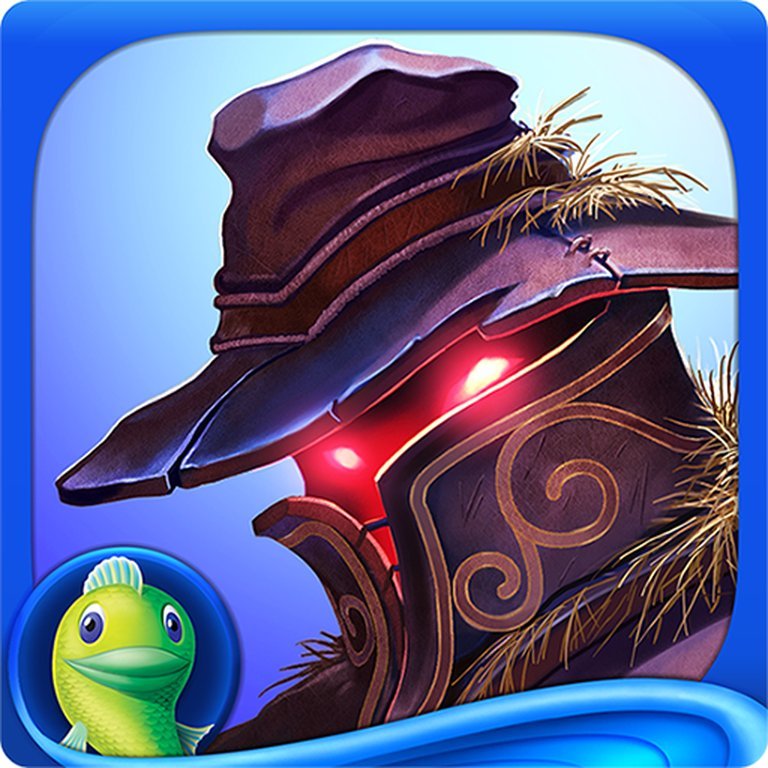
League of Light: Wicked Harvest (Collector’s Edition) is a first-person hidden object adventure game set in a fantasy world, where players investigate the terror plaguing Blake’s Mountain caused by a wicked harvest. Developed by Mariaglorum and published by Big Fish Games, it features puzzle elements, point-and-click interface, and extra collector’s content as part of the League of Light series.
Gameplay Videos
Where to Buy League of Light: Wicked Harvest (Collector’s Edition)
PC
League of Light: Wicked Harvest (Collector’s Edition) Guides & Walkthroughs
League of Light: Wicked Harvest (Collector’s Edition) Reviews & Reception
game-solver.com : Loved this game! Relaxing yet challenging.
League of Light: Wicked Harvest (Collector’s Edition): Review
Introduction
In the shadowed cornfields of Blake’s Mountain, under the ominous glow of an impending Red Moon, children vanish into the night, snatched by unseen horrors—a premise that hooks like a classic fairy tale twisted into nightmare fuel. League of Light: Wicked Harvest (Collector’s Edition), released across platforms from 2012 to 2017, stands as a quintessential hidden object puzzle adventure (HOPA) from the golden age of casual gaming. Developed by Mariaglorum and published by Big Fish Games, it embodies the genre’s blend of eerie mystery, point-and-click exploration, and brain-teasing challenges. As a historian of interactive entertainment, I see this title not just as a spooky detective yarn but as a snapshot of Big Fish’s dominance in the early 2010s HOPA market, where accessible thrills met serialized storytelling. My thesis: While Wicked Harvest excels in atmospheric tension and Collector’s Edition value, its adherence to formulaic mechanics cements it as a reliable but unremarkable pillar in the League of Light series, deserving rediscovery by genre enthusiasts yet unlikely to transcend its casual roots.
Development History & Context
Mariaglorum, a boutique Ukrainian studio known for polished casual adventures, crafted League of Light: Wicked Harvest amid the booming HOPA scene of the early 2010s. Led by project manager Maxim Strelyaev, game designers Alexander Alekhin and Oleg Skorikov, lead programmer Sergey Lysenko, and art director Alexander Bekasov, the team of 35 (including a robust roster of 2D and 3D artists like Alexandra Jalunina and Anatoly Belyaev) delivered a title optimized for low-spec hardware—1.6 GHz processor, 1 GB RAM, DirectX 9—reflecting the era’s focus on broad accessibility via download portals like Big Fish Games.
Big Fish Games, the undisputed king of casual PC and mobile titles, published the game starting with Android on December 2, 2012 (Google Play v1.0), followed by iPad (July 2015, v1.0.8 free version), Mac (August 2016 via MacGameStore), and Windows/Steam (April 24, 2017). This staggered rollout mirrored the shift from PC dominance to mobile fragmentation, constrained by touch interfaces and early tablet hardware limitations (e.g., iPhone 5s+ compatibility). Strategic Music Studio handled audio, emphasizing the genre’s reliance on licensed soundscapes over bespoke scores.
The 2010s casual landscape was defined by Big Fish’s “Game Club” model—free trials leading to paid Collector’s Editions—pitting Wicked Harvest against giants like Mystery Case Files. Technological hurdles included 32-bit Mac incompatibility (failing on macOS 10.15+), screen scaling bugs on mobile (e.g., iOS quarter-screen glitches), and optimization for touch/point-and-select interfaces. Vision-wise, Mariaglorum aimed for serialized lore in the League of Light franchise (preceded by Dark Omens, followed by Silent Mountain), blending folklore-inspired fantasy with light horror to appeal to cozy gamers seeking escapism amid economic uncertainty post-2008 recession.
Narrative & Thematic Deep Dive
At its core, Wicked Harvest weaves a taut fairy-tale horror narrative: As a nameless detective for the enigmatic League of Light, you investigate child abductions in Blake’s Mountain, a fog-shrouded hamlet gripped by dread as the Red Moon looms. No one knows the celestial event’s full portent—”everyone agrees it can’t be good”—but shadowy creatures prowl, and whispers point to a “wicked Scarecrow” orchestrating kidnappings for an ancient Red Moon Ceremony. The plot unfolds in first-person vignettes, from desolate farms to cavernous lairs, culminating in revelations tying folklore to cosmic ritual.
Plot Breakdown:
– Act 1: Arrival and Investigation – You arrive amid panicked villagers, uncovering trails via clues like bandages on wounded imps and eerie scarecrow effigies. Dialogue is sparse but flavorful, delivered through environmental storytelling and ghostly missives.
– Act 2: Descent into Darkness – Deeper lore emerges: The Scarecrow, a pumpkin-headed abomination, harvests children as sacrifices, echoing grim harvest myths like European straw-man legends or American Children of the Corn.
– Act 3: Climax and Resolution – Confront the Scarecrow in a ritual chamber, blending puzzle-solving with moral choices (e.g., sparing creatures hints at redemption arcs).
Characters: The protagonist is a silent everyman, empowering player agency, while NPCs like the Healer (whose daughter stars in the bonus chapter) add emotional stakes. The Scarecrow antagonist steals scenes with its grotesque, “cute pumpkin scarecrow boy” duality—adorable yet malevolent, subverting expectations.
Themes:
– Fear of the Unknown: The Red Moon symbolizes inevitable doom, mirroring real-world anxieties like child safety scares.
– Harvest as Metaphor: Wicked reaping critiques exploitation, with fantasy elements (owls as riddle-keepers) nodding to Slavic folklore.
– League Legacy: Ties to prior games establish a shadowy organization, fostering replayability through interconnected lore.
Dialogue shines in brevity—cryptic, immersive—avoiding dated voice acting pitfalls. Flaws include predictability (telegraphed twists) and mild horror (9+ rating limits gore), but the script’s polish earned beta tester raves: “The story is good… I loved this game!!!”
Collector’s Exclusives: Bonus chapter extends the Healer’s tale; 25 hidden owls unlock mountain riddles; achievements gate extras like wallpapers.
Gameplay Mechanics & Systems
Wicked Harvest epitomizes HOPA loops: point-and-click exploration punctuated by hidden object scenes (HOS), puzzles, and inventory quests. Core cycle: Examine scenes, collect items, solve gates to progress.
Core Loops:
– Exploration: 1st-person static screens with hotspots; intuitive hint system (recharges via sparkles).
– Hidden Object Scenes: Varied mastery—lists, silhouettes, fragmented, interactive (e.g., bandage imp’s arm). Morphing owls add collectathon depth.
– Puzzles: 20+ mini-games: jigsaws, pattern-matching, stone-placing (glitch-prone per reviews), rune alignments. Skippable after timeouts, with strategy guide for accessibility.
Progression & UI: No deep RPG elements; linear advancement via inventory combos (e.g., use lantern on shadows). UI is clean—touch-optimized, radial menus—but mobile ports suffer lag/freezes. Achievements (e.g., perfect HOS) encourage replays.
Innovations/Flaws:
– Pros: Diverse HOS variety; bonus content doubles playtime (4-6 hours main + extras).
– Cons: Repetitive loops; glitches (stone mini-game stalls, crashes post-bandage); no combat, limiting agency.
| Mechanic | Strengths | Weaknesses |
|---|---|---|
| HOS | Varied types, rewarding observation | Occasional pixel-hunting |
| Puzzles | Relaxing difficulty curve | Glitchy on mobile |
| Collectibles | Owls integrate lore | Tedious without guide |
Overall, solid but formulaic—relaxing for casuals, frustrating for puzzle purists.
World-Building, Art & Sound
Blake’s Mountain pulses with autumnal dread: withered fields, jack-o’-lantern lairs, moonlit caverns. Art direction by Alexander Bekasov dazzles—hand-painted 2D vistas by 11 artists (e.g., Darya Dogadina’s intricate details) evoke Tim Burton whimsy laced with horror. 3D models (Anatoly Belyaev’s leads) add subtle depth to creatures, though static screens limit dynamism.
Atmosphere: Red Moon bathes scenes in crimson, amplifying paranoia; dynamic fog/lighting shifts mood seamlessly.
Sound Design: Strategic Music’s score blends orchestral swells with creaking woodwinds—haunting yet non-intrusive. SFX (rustling straw, imp whimpers) immerse; full English audio/subtitles enhance accessibility. Beta praise: “Beautiful and delicate graphics.”
Elements synergize for cozy terror: Visuals pull you in, sound sustains unease, world-building via collectibles deepens fantasy roots.
Reception & Legacy
Launch reception was quietly positive in casual circles—no MobyScore due to sparse data, Steam’s 5 user reviews all thumbs-up (needing more for aggregate), MacGameStore 4.7/5. App Store feedback (108+ ratings) lauds “perfect storyline,” “variety of mini games,” but gripes glitches (“can’t advance,” crashes). Big Fish beta testers hailed it “Editor’s Choice” for quality.
Commercially, it bundled in League of Light: Collection (Steam, $25.35), pricing at $9.99 (historical lows $2.99). No mainstream buzz—niche amid HOPA saturation—but influenced series (28 overlapping credits with Silent Mountain).
Legacy: Solidified Mariaglorum/Big Fish formula, paving for 20+ similar titles. No industry-shaking impact (unlike Mystery Case Files), but endures for portable spookiness. Post-2017, mobile issues faded it; Steam/Mac revivals preserve it. In HOPA history, a mid-tier gem—fun, flawed, forgettable beyond fans.
Conclusion
League of Light: Wicked Harvest (Collector’s Edition) distills HOPA essence: compelling Red Moon mystery, gorgeous art, ample extras, delivered by a dedicated Mariaglorum team amid casual gaming’s peak. Strengths in narrative chills and value outweigh repetitive mechanics and technical hiccups, earning it a firm 8/10—recommended for Big Fish faithful seeking light horror. Historically, it exemplifies 2010s downloadable delights, a harvest of accessible adventure whose legacy whispers in the genre’s shadowed fields, worthy of a nostalgic playthrough before the moon rises again.