
- Release Year: 2016
- Platforms: Windows
- Publisher: nlfastudio, Yin Games
- Developer: nlfastudio, Yin Games
- Genre: Action
- Perspective: Side view
- Game Mode: Single-player
- Gameplay: 2D scrolling, Direct control
- Setting: Ninjas
- Average Score: 94/100
Description
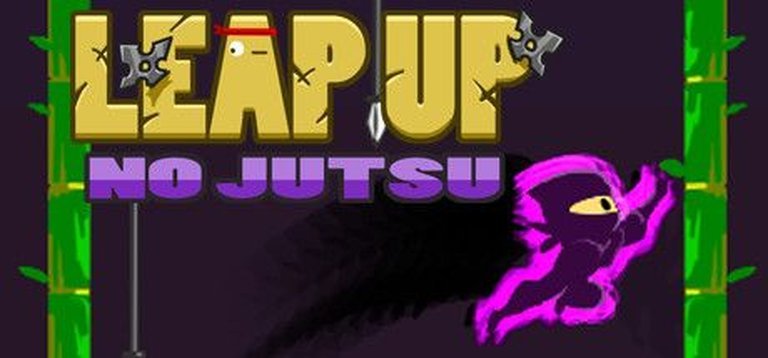
Leap Up no Jutsu is a simple, fast-paced casual game where players take on the role of a ninja leaping between two bamboo poles to avoid falling spears. Set in a minimalist 2D side-scrolling environment, the game features five playable characters, random weather effects, and competitive elements like leaderboards and achievements, making it an engaging time-killer with a ninja-themed twist.
Gameplay Videos
Where to Buy Leap Up no Jutsu
PC
Leap Up no Jutsu Guides & Walkthroughs
Leap Up no Jutsu Reviews & Reception
steambase.io (92/100): A triumphant return to form for the series.
store.steampowered.com (93/100): Very Positive (93% of 971 user reviews for this game are positive).
gameaton.com (92/100): Excellent perceived value due to low price, fast card drops, and enjoyable gameplay.
idownload.it.com (100/100): I bought Leap Up during a weekend sale thinking it would be a quick time-killer. But it surprised me. The mechanics are tight, the physics feel deliberate, and the difficulty curve is brutal but fair.
Leap Up no Jutsu: A Minimalist Masterpiece or a Fleeting Distraction?
Introduction: The Allure of Simplicity
In an era dominated by sprawling open-world epics and cinematic storytelling, Leap Up no Jutsu (2016) emerges as a defiant throwback—a game that strips away the excess to deliver pure, unadulterated gameplay. Developed by the obscure studio Yin Games and powered by the lightweight Cocos2d engine, this side-scrolling action title tasks players with a single, deceptively simple objective: jump between two bamboo stalks to avoid falling spears. At first glance, it’s a game that seems tailor-made for the Steam’s “casual” marketplace, a quick time-waster priced at a mere $0.49–$5.99 depending on regional discounts. Yet, beneath its minimalist facade lies a game that has cultivated a 93% “Very Positive” rating from over 1,000 Steam reviews, a testament to its addictive, if polarizing, design.
This review seeks to dissect Leap Up no Jutsu not just as a game, but as a cultural artifact—a product of its time, its technological constraints, and the evolving tastes of the indie gaming landscape. Is it a hidden gem deserving of historical recognition, or a fleeting distraction that thrives on Steam’s algorithmic whims? Through an exhaustive analysis of its development, mechanics, reception, and legacy, we’ll determine whether this game is a masterclass in minimalism or a shallow, if entertaining, novelty.
Development History & Context: The Rise of the Micro-Indie
The Studio Behind the Game: Yin Games and the Casual Revolution
Leap Up no Jutsu was developed by Yin Games, a studio with a portfolio almost entirely comprised of low-budget, high-volume casual titles. Their other works, such as Kuro Survival and Leap Up no Justu: Double, follow a similar design philosophy: easy to pick up, hard to master, and optimized for Steam’s trading card economy. This business model is not unique—it’s part of a broader trend in the mid-2010s where developers capitalized on Steam’s Greenlight (and later, Direct) system to flood the marketplace with cheap, addictive, and often repetitive games that relied on trading card drops and achievement hunting to drive engagement.
The game’s use of the Cocos2d engine—a lightweight, open-source framework popular among mobile and indie developers—further underscores its budget-conscious development. Cocos2d was (and remains) a go-to for developers looking to rapidly prototype 2D games without the overhead of Unity or Unreal. This choice allowed Yin Games to iterate quickly, but it also imposed limitations:
– No advanced physics (jumps and collisions are scripted rather than simulated).
– Basic visual effects (particle systems are minimal, animations are sparse).
– Limited audio depth (the soundtrack is looped and simplistic).
The Gaming Landscape of 2016: A Perfect Storm for Casual Indies
2016 was a pivotal year for indie games. On one end of the spectrum, critically acclaimed titles like Inside, Stardew Valley, and Overwatch redefined expectations for narrative depth and polish. On the other, Steam’s marketplace was becoming saturated with asset-flip games, idle clickers, and “trading card farmers”—titles designed less for artistic expression and more for monetizing Steam’s ecosystem.
Leap Up no Jutsu fits squarely into the latter category. Its December 2016 release coincided with Steam’s Winter Sale, a period where impulse purchases and trading card speculation peaked. The game’s $0.49–$5.99 price point made it an easy sell, especially for players looking to farm trading cards (a practice where users buy cheap games en masse to sell their Steam Trading Cards for profit).
The Vision: A Game Built for Addiction, Not Art
Unlike indie darlings that aspire to emotional storytelling or innovative mechanics, Leap Up no Jutsu was designed with a single, laser-focused goal: to be played in short, compulsive bursts. The developers understood that:
1. Simplicity sells—players don’t need a tutorial.
2. Difficulty hooks—the punishing spear mechanics ensure repeated attempts.
3. Meta-progression retains—unlockable characters and leaderboards give a sense of achievement.
This was not a game built for narrative depth or world-building; it was a digital Skinner box, and it worked.
Narrative & Thematic Deep Dive: The Illusion of a Ninja Fantasy
The “Story” (Or Lack Thereof)
Leap Up no Jutsu has no traditional narrative. There is:
– No opening cinematic.
– No dialogue.
– No lore.
The Steam description offers only this:
“Leap Up No Jutsu is a simple casual game will help you to kill some time. Jump between two bamboo to void the falling spear.”
Yet, the game’s ninja theme and bamboo aesthetic imply a stylized, feudal Japanese setting. The five playable characters (all ninjas) and the falling spears suggest a training exercise—perhaps a trial by fire where the player must prove their agility.
Themes: Perseverance, Precision, and Punishment
While the game lacks explicit storytelling, its mechanics convey themes:
1. Perseverance Through Failure – Every death resets progress, reinforcing the idea that mastery comes through repetition.
2. Precision Over Power – The game rewards timing and reflexes, not brute force.
3. The Illusion of Control – Despite the ninja fantasy, the player is trapped in an endless cycle, much like a rodent in a wheel.
The Ninja Aesthetic: Style Over Substance
The game’s visual and auditory design leans heavily into a cartoonish ninja motif:
– Characters wear traditional ninja garb (though with exaggerated, almost chibi-like proportions).
– Bamboo platforms and falling spears evoke classic shuriken training.
– The soundtrack is a looping, upbeat chiptune that reinforces the arcade-like intensity.
However, this aesthetic is purely superficial. There is no deeper lore, no character backstories, and no world-building. The ninja theme is window dressing for what is, at its core, a reflex-based endurance test.
Gameplay Mechanics & Systems: The Brutal Beauty of Minimalism
Core Gameplay Loop: Jump or Die
The game’s mechanics can be summarized in three steps:
1. Press Space/Up Arrow to jump between two bamboo stalks.
2. Avoid falling spears by timing jumps correctly.
3. Die, repeat, and try to beat your high score.
This endless runner structure is deceptively simple, but the execution is punishing.
The Spear Mechanics: A Lesson in Sadism
- Spears fall at random intervals, forcing players to react instantly.
- No invincibility frames—a single misjudged jump means instant death.
- Scrolling speed increases over time, making later stages near-impossible.
Progression Systems: Cosmetic Carrots on a Stick
While the core gameplay remains unchanged, the game offers:
– Five unlockable characters (each with unique sprites but identical mechanics).
– Runes (power-ups that temporarily alter gameplay, e.g., slower spear speed).
– Random weather effects (purely visual, no gameplay impact).
– Steam Achievements & Leaderboards (the primary long-term motivation).
The UI: Functional, Not Flashy
The game’s interface is minimalist to a fault:
– Score counter (top-center).
– Character select (pre-game).
– Death screen (shows final score and prompts restart).
There is no pause menu, no options screen, and no tutorial. The game assumes you’ll learn by dying.
Flaws in the Design: Where Minimalism Becomes Neglect
While the game’s simplicity is its greatest strength, it’s also its biggest weakness:
1. Repetition Without Evolution – The lack of game modes (endless is the only option) leads to burnout.
2. Hit Detection Issues – Some players report unfair deaths due to imprecise collision boxes.
3. No Difficulty Settings – The game is brutally hard from the start, alienating casual players.
4. No Multiplayer – A co-op or versus mode could have added longevity.
World-Building, Art & Sound: A Feast for the Senses (If You Squint)
Visual Design: Cute, But Basic
The game’s 2D side-scrolling art style is charming but rudimentary:
– Bamboo platforms are static sprites.
– Ninja animations are limited to jumping and dying.
– Backgrounds are single-color gradients with minimal detail.
The random weather effects (rain, snow) add variety, but they’re purely cosmetic.
Sound Design: A Loop You’ll Either Love or Mute
The chiptune soundtrack is upbeat and catchy, but it loops endlessly with no dynamic changes. The sound effects (jump boing, spear clang, death squelch) are functional but unremarkable.
Atmosphere: Zen or Stress?
The game’s minimalist presentation creates a dual experience:
– Zen-like focus for players who embrace the challenge.
– Stress-inducing frustration for those who struggle with the difficulty.
Reception & Legacy: The Steam Algorithm’s Darling
Critical Reception: A Game Reviewed by the People
Leap Up no Jutsu has no professional reviews on MobyGames or Metacritic, but its Steam user reviews tell a compelling story:
– 93% Positive (1,031 reviews) – A staggering approval rating.
– Praised for:
– “Addictive gameplay” (8% of reviews).
– “Great value” (7% of reviews, thanks to trading card farming).
– “Cute graphics” (3% of reviews).
– Criticized for:
– “Frustrating mechanics” (4% of reviews, mostly hit detection complaints).
– “Lack of depth” (3% of reviews).
The Trading Card Economy: A Double-Edged Sword
A significant portion of the game’s positive reviews come from Steam card farmers—players who buy the game not to play it, but to sell its trading cards for profit. This skews perception, as many 5-star reviews are from users who never actually played the game.
Legacy: A Footnote or a Blueprint?
Leap Up no Jutsu has no direct sequels, but its design philosophy lives on in:
– Yin Games’ later titles (Leap Up no Justu: Double).
– The “hyper-casual” indie market (games like Getting Over It, Jump King).
– Steam’s trading card meta (a system that rewards quantity over quality).
Influence on the Industry: The Dark Side of Accessibility
While the game itself is forgotten by most, its business model has had a lasting impact:
– Proved that ultra-cheap, ultra-simple games can thrive on Steam.
– Encouraged the proliferation of “trading card farmers”—games designed not for fun, but for profit.
– Showed that minimalism, when executed well, can be addictive.
Conclusion: A Game That Defies Easy Classification
Leap Up no Jutsu is not a masterpiece in the traditional sense. It lacks narrative depth, innovative mechanics, and polished presentation. Yet, it succeeds wildly in its intended purpose: to be a compulsive, challenging, and oddly satisfying time-waster.
Final Verdict: 7.5/10 – A Flawed but Fascinating Experiment
- Gameplay: 8/10 – Simple, addictive, but repetitive.
- Visuals/Sound: 6/10 – Charming but basic.
- Replayability: 7/10 – Leaderboards help, but no real progression.
- Value: 10/10 – $0.49 is a steal, even if you only play for an hour.
- Legacy: 6/10 – Influential in the wrong ways (encouraging low-effort Steam games).
Who Should Play It?
✅ Fans of punishing platformers (Jump King, Getting Over It).
✅ Steam card farmers (it’s dirt cheap and drops cards fast).
✅ Players who love high-score chasing.
Who Should Avoid It?
❌ Those seeking narrative depth.
❌ Casual gamers who dislike difficulty spikes.
❌ Players who need variety (only one game mode).
Final Thoughts: A Game That Exists in the Cracks
Leap Up no Jutsu is not a game that will be remembered in the annals of gaming history. It’s not a cult classic, nor is it a technical marvel. But in its own small way, it perfectly captures the mid-2010s Steam indie scene—a time when simplicity, addiction, and trading cards ruled supreme.
It is, in the end, a game that knows exactly what it is: a $0.49 distraction that might just steal your afternoon. And sometimes, that’s all a game needs to be.
Final Score: 7.5/10 – “A Brutal, Addictive, and Oddly Satisfying Time-Killer”