
- Release Year: 2016
- Platforms: Browser, Windows
- Publisher: Light Bringer Games
- Developer: Light Bringer Games
- Genre: Simulation
- Perspective: Side view
- Game Mode: Single-player
- Average Score: 82/100
Description
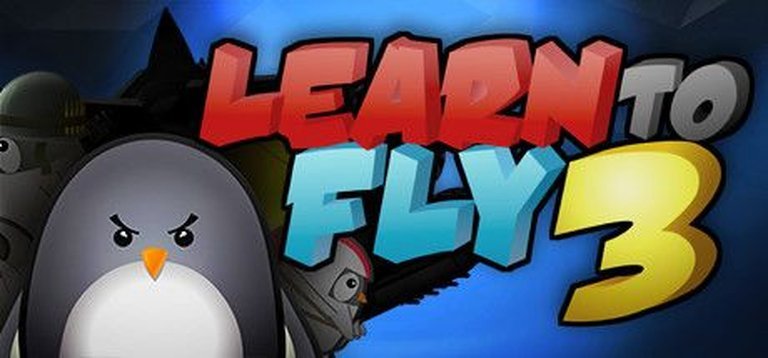
Learn to Fly 3 is a simulation game where players control a penguin determined to prove his critics wrong by launching himself into space after being insulted in an email about his inability to reach the moon. The game features multiple modes including Story Mode (aiming for the moon), Classic Mode (horizontal gameplay from previous titles), Payload Mode (reaching altitudes with weighted attachments), and Sandbox Mode (free experimentation with customizable parameters). New additions include HUD customization, extensive penguin customization options, booster packs with random upgrades, and a black market for unique items.
Gameplay Videos
Where to Buy Learn to Fly 3
PC
Learn to Fly 3 Free Download
Learn to Fly 3 Mods
Learn to Fly 3 Guides & Walkthroughs
Learn to Fly 3 Reviews & Reception
metacritic.com (80/100): Very impressive considering it’s on flash. Has a pretty awesome soundtrack, good gameplay, and solid upgrades. One of the best flash games out there
jayisgames.com (84/100): The Learn to Fly series has always been a little more involved than most launch games, not to mention a great deal cuter with its fantastic animated visuals and sense of humour, and this third installment has everything we’ve come to expect.
Learn to Fly 3 Cheats & Codes
PC
Enter codes at the main menu, character selection screen, skill upgrade screen, or in the Extras > Redeem Code section.
| Code | Effect |
|---|---|
| FLYHIGH | Gives an extra speed boost while flying |
| ICARE | Increases wind resistance for more control |
| POWERUP | Gives an additional boost to flight stats |
| BirdIsTheWord | Gives 250 BP |
| IBelieveICanFly | Gives 250 BP |
| GetInline | Gives 150 Sardines |
| ThisIsAnAwesomeCode | Provides items from Learn to Fly 2 |
| WhoSaysWeCantFly | Gives 250 BP |
| ltf3mailinglistbonus | Unlocks the Capt. Supporter body |
| TimeSureDoesFly | Unlocks Fast Forward (press ‘F’ in game) |
Learn to Fly 3: Review
Introduction
The indomitable penguin protagonist of Light Bringer Games’ Learn to Fly series returns not merely to conquer the skies, but to breach the stratosphere in Learn to Fly 3. Released in 2016 as the series’ ambitious fourth installment (third main title), this browser-born odyssey marks a bold pivot from horizontal flight simulators to vertical rocketry. While initial reception criticized its departure from the series’ roots, Learn to Fly 3 ultimately emerges as a masterclass in iterative design, transforming a niche launch game into a sprawling, customizable space odyssey. This review dissects how Light Bringer Games balanced absurdity with ambition, crafting a title that redefined the series’ legacy through relentless progression, meme-laden world-building, and a sandbox that blurred the line between gameplay and experimentation.
Development History & Context
Learn to Fly 3 was developed by Light Bringer Games, a studio known for its niche but dedicated fanbase in the physics-based casual genre. Conceived as the culmination of the series’ trajectory—from the original ice-berg revenge fantasy (Learn to Fly, 2009) to the horizontal expansion (Learn 2 Fly, 2011)—the game was funded via a Kickstarter campaign, reflecting the series’ cult status. Technologically, it leveraged Adobe Flash for its initial browser release (February 19, 2016), a platform synonymous with mid-2010s web gaming but constrained by performance ceilings and eventual obsolescence. This Flash foundation necessitated compromises, such as the infamous “kill screen” at 107,375,182 units—a hard-coded ceiling where the game’s engine could no longer accurately track position, forcing players into surreal physics limbo.
The 2016 gaming landscape was dominated by mobile and free-to-play models, a trend Learn to Fly 3 embraced with a dual release: browser and mobile (iOS/Android) on the same day, followed by a Steam port (May 12, 2017). This cross-platform strategy, coupled with its shift from horizontal to vertical flight, aimed to capture new audiences while retaining series veterans. Despite Flash’s limitations, the game’s modular design—featuring over 100 unique parts—allowed for unprecedented complexity, a technical feat that later informed its Steam adaptation, which addressed performance issues via Flash’s successor, Ruffle.
Narrative & Thematic Deep Dive
Learn to Fly 3 retains the series’ signature absurdist humor while elevating its scope to interplanetary heights. The narrative opens with the penguin protagonist receiving a scathing email mocking his inability to reach space, prompting a rage-induced punch to his monitor and a quest for lunar vengeance. At Penguin NASA, a professor provides blueprints for space-worthy launches, framing the journey as both scientific endeavor and existential rebuttal to terrestrial critics. The dual climax—reaching space or shattering the moon—encapsulates the game’s thematic duality: perseverance against impossible odds versus cathartic, destructive triumph.
Characters embody this tension: the penguin is “The Determinator,” embodying stubborn ambition; the dodo serves as an eternal antagonist, escalating challenges from icebergs to orbital defiance. Even minor elements like baby penguins in NASA labs contribute to whimsy, while the professor’s dry lectures ground the absurdity in pseudo-scientific logic. Underlying themes include the futility of perfectionism (the “Moon Breaker” achievement requires intentional, destructive recklessness) and the cyclical nature of achievement—each mode unlocks new challenges, mirroring the penguin’s eternal struggle. The narrative, though minimal, transforms a simple launch mechanic into an allegory for human ambition and its comical contradictions.
Gameplay Mechanics & Systems
Learn to Fly 3 revolutionizes the series through four distinct modes and a modular upgrade system, though its complexity initially alienated fans.
Core Mechanics:
– Launch Cycle: Players build a rocket from components (bodies, launchers, boosts, stages), then pilot it vertically using [A/D] for steering, [W] for thrust, and [S] to stage-separate. Success depends on balancing weight, thrust, and fuel—a physics puzzle simplified into accessible arcade action.
– Progression: Currency earned from launches funds upgrades. Research grants permanent bonuses (e.g., reduced fuel consumption), while individual items (e.g., “F1 Bell Nozzle” boosts) require grinding to max levels. The “Booster Packs” system—randomized rewards post-mode completion—introduces gacha-like RNG, though these can be purchased with “sardines” (premium currency).
– Modes:
– Story Mode: Reach space, with optional time challenges.
– Payload Mode: Transport heavy weights (1kg–150kg), demanding robust engineering.
– Classic Mode: Returns to horizontal flight from earlier games, testing distance over altitude.
– Sandbox Mode: Customizes physics (gravity, obstacles, fuel) for experimentation, though excessive tweaking risks crashes or the kill screen.
Innovations & Flaws:
– Customization: Unprecedented personalization includes penguin outfits (memes like “Left Shark,” “Boba Fett”) and rocket aesthetics, with color/hue adjustments tied to “Bonus Points” from achievements.
– Black Market: A shop for cheat codes (e.g., “Infinite Fuel,” “Over-Leveling”) and novelty items, blending pay-to-win with whimsy.
– Criticism: Initial players lamented the loss of strategic nuance—steering felt unresponsive, and optimal paths often boiled down to “point straight up.” The grind, amplified by microtransactions, felt exploitative to veterans, though post-release patches rebalanced parts and added Omega items (highest-tier upgrades) via booster packs.
World-Building, Art & Sound
Learn to Fly 3‘s charm lies in its vibrant, meme-infused ecosystem, transforming a physics sandbox into a pop-cultural tapestry.
World-Building:
The journey spans terrestrial locales (the penguin’s cozy house, Penguin NASA’s labs) to the void of space, where obstacles like the monolith from 2001: A Space Odyssey and Portal’s “Space Core” pay homage to sci-fi classics. Backgrounds are littered with internet ephemera: cloud formations shaped like Doge, Senpai, and Yaranaika, grounding the absurdity in recognizable digital culture. This layering creates a world where science and satire collide, where the moon is both a goal and a punchline.
Art Direction:
Rendered in 2D vector graphics, the art prioritizes clarity and whimsy. The penguin’s expressive animations—flippers flailing during crashes, triumphant poses post-launch—anchor the gameplay in character. Rockets, though functional, are adorned with nods to gaming history (e.g., Team Fortress 2’s rocket launcher, Star Wars helmets). Even UI elements, like the customizable HUD, reflect a commitment to player expression, allowing data displays to be repositioned for minimalism or maximalism.
Sound Design:
The dynamic soundtrack evolves with velocity: a bassline at launch swells into synth-heavy euphoria at 100 mph, mirroring the player’s ascent. Sound effects—metallic clangs, booster ignitions—provide tactile feedback, while voice cues (e.g., “Rise from your Grave!” from Altered Beast) add nostalgic flair. This audio ecosystem transforms each launch into a sensory crescendo, elevating routine flights into spectacles.
Reception & Legacy
Learn to Fly 3 debuted to a fractured reception, emblematic of a series in transition. JayIsGames awarded it 4.2/5, praising its “fantastic animated visuals” but noting its “grindy” nature. Steam reviews later solidified its reputation: 94% “Very Positive” (8,894 reviews), with players lauding its replayability and customization. Critics, however, lamented its departure from Learn 2 Fly‘s streamlined design, with some calling it an “Into Space clone.”
Commercially, the game thrived as a free-to-play browser title, later monetized via Steam and mobile. Its legacy is twofold:
1. Series Evolution: It expanded the Learn to Fly universe into space, inspiring spin-offs like Learn to Fly Idle (2018) while retaining core appeal.
2. Genre Influence: The sandbox and modular systems set a precedent for physics-based games, encouraging experimentation alongside progression. Community-driven content—guides, speedrun strategies, and meme sharing—prolonged its lifespan. Even Flash’s demise couldn’t erase its impact, with preservation efforts (e.g., Internet Archive’s emulation) ensuring its accessibility.
Conclusion
Learn to Fly 3 is a paradox: a flawed, ambitious beast that stumbled into brilliance. Its shift from horizontal flight to rocketry alienated purists but birthed a richer, more enduring experience. Light Bringer Games’ willingness to embrace complexity—through four modes, endless customization, and meme-infused satire—transformed a niche launch game into a genre-defining opus. While the grind and RNG mechanics tested patience, the joy of shattering the moon or optimizing a payload run encapsulated the series’ ethos: triumph through absurd persistence.
In the pantheon of casual gaming, Learn to Fly 3 stands not as a flawless masterpiece, but as a testament to iterative courage. It proved that even a penguin with a rocket could reach the stars—if players were willing to grind, experiment, and embrace the madness. For historians, it remains a pivotal artifact of the Flash era, bridging web gaming’s past with the indie renaissance of the 2010s. Its legacy, etched in sardines and shattered moons, soars far higher than its physics engine ever could.