
- Release Year: 2011
- Platforms: Windows
- Publisher: OnHand Software, Inc.
- Genre: Compilation
- Game Mode: Single-player
- Gameplay: Hidden object
Description
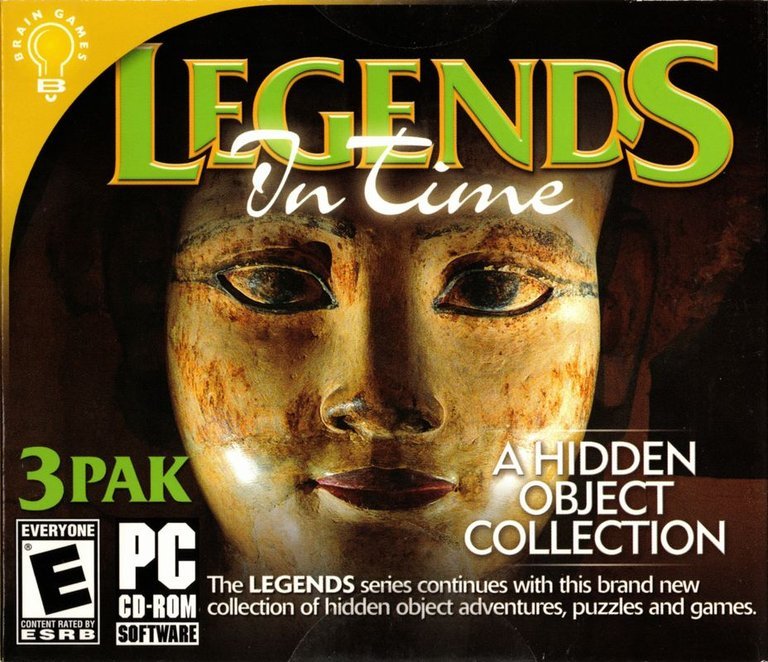
Legends in Time is a compilation of three hidden object games released in 2011 for Windows. The collection includes Dominic Crane’s Dreamscape Mystery, Yard Sale Junkie, and Memorabilia. Each game offers a unique puzzle-solving experience, immersing players in intriguing mysteries and challenging them to find hidden items within detailed scenes. This compilation is part of OnHand Software’s Legends series, known for its engaging and immersive gameplay.
Legends in Time: A Forgotten Compilation in Hidden Object History
Introduction
In the pantheon of video game history, Legends in Time (2011) is a curious footnote—a compilation of three hidden object adventures that encapsulate the casual gaming boom of the early 2010s. Released by OnHand Software, a publisher known for budget-friendly, accessible titles, the bundle offers a snapshot of an era when digital storefronts flooded PCs with pint-sized mysteries for leisurely play. This review argues that while Legends in Time lacks innovation or acclaim, it embodies the design ethos of its time: simple, whimsical, and unpretentious.
Development History & Context
Studio Vision & Technological Constraints
OnHand Software operated in the shadow of juggernauts like PopCap and Big Fish Games, carving a niche with affordable compilations aimed at casual audiences. The early 2010s saw hidden object games thrive as low-spec, browser-friendly experiences, often sold through platforms like Big Fish Games or shovelware-packed Walmart bargain bins. Legends in Time’s trio of titles—Dominic Crane’s Dreamscape Mystery, Yard Sale Junkie, and Memorabilia: Mia’s Mysterious Memory Machine—were likely developed with minimal budgets, prioritizing accessibility over polish.
The Gaming Landscape
Hidden object games (HOGs) dominated the casual market, appealing to older audiences and those seeking stress-free play. These games were rarely reviewed by mainstream critics but found fervent fanbases in online communities. Legends in Time arrived as the genre began experimenting with light RPG elements (e.g., Mystery Case Files), though it stuck to traditional formulas—a safe bet for OnHand’s risk-averse strategy.
Narrative & Thematic Deep Dive
Plot(s) & Characters
Each game in the compilation follows a predictable but cozy template:
– Dominic Crane’s Dreamscape Mystery: A paranormal investigator traverses surreal dreamscapes to solve a supernatural disappearance. Themes of guilt and redemption linger beneath its absurdist vignettes.
– Yard Sale Junkie: A lighthearted scavenger hunt across cluttered Americana settings, leveraging nostalgia for flea-market treasure hunts.
– Memorabilia: The most narratively ambitious, Mia reconstructs her childhood memories via a magical machine, blending sentimentality with light puzzles.
Dialogue & Themes
Writing is functional, favoring simplicity over depth. Characters are archetypes—the quirky inventor, the nosy neighbor—and dialogue serves primarily to contextualize item hunts. Themes of memory and discovery recur, though explored superficially. Memorabilia’s emotional beats, such as Mia reconciling with her past, are undercut by rushed resolutions typical of the genre.
Gameplay Mechanics & Systems
Core Loop
The gameplay adheres to genre staples:
1. Hidden Object Scenes: Scour densely packed 2D environments for listed items.
2. Puzzles: Swap tiles, reassemble broken objects, or solve match-three minigames.
3. Light Exploration: Navigate between static screens to progress the story.
UI & Innovation
The interface is utilitarian, with cursor highlights for interactables and a journal tracking objectives. However, the compilation lacks the metagame progression of contemporaries like Awakening: The Dreamless Castle (2009).
Flaws
– Repetition: Scenes recycle assets, and puzzles lack complexity.
– Clunky Design: Item hitboxes are sometimes misaligned, leading to frustration.
– No Cross-Title Integration: The three games operate in silos, missing an opportunity for thematic synergy.
World-Building, Art & Sound
Visual Direction
Art styles vary by title:
– Dreamscape Mystery leans into surrealism with floating islands and warped physics.
– Yard Sale Junkie embraces cluttered realism—think Hoarders meets Antiques Roadshow.
– Memorabilia uses warm, sepia-toned vignettes to evoke nostalgia.
While technically modest, the hand-drawn backdrops are charming, with meticulous clutter that rewards patient observation.
Sound Design
Ambient tracks are forgettable but serviceable, with twinkling melodies for Memorabilia and eerie drones for Dreamscape. Sound effects—clicking locks, rustling papers—are satisfyingly tactile, a hallmark of the genre.
Reception & Legacy
Commercial & Critical Performance
No critic reviews are documented on MobyGames, and player impressions are absent—a testament to its obscurity. Priced at $6–$8 physically, it likely sold modestly as a bargain-bin impulse purchase.
Influence & Evolution
Legends in Time left no lasting imprint, but it reflects broader trends: the rise of casual gaming demographics and the viability of low-budget compilations. Its successors, like Artifex Mundi’s narrative-driven HOGs, would later elevate the genre with stronger storytelling and production values.
Conclusion
Legends in Time is neither a masterpiece nor a disaster—it is a time capsule. For genre enthusiasts, it offers a quaint dose of early 2010s escapism, but its lack of ambition and polish relegates it to footnote status. As a historical artifact, it underscores how hidden object games served as gateway experiences for millions of casual players, even if this particular trio failed to stand out. In the annals of video game history, Legends in Time is a humble also-ran, but its existence speaks volumes about an era when simplicity reigned.
Final Verdict: A forgettable yet harmless compilation for genre completists; best left to nostalgia-heavy bargain hunters.