
- Release Year: 2021
- Platforms: Windows
- Publisher: Ziggurat Interactive, Inc.
- Genre: Compilation
- Game Mode: Single-player
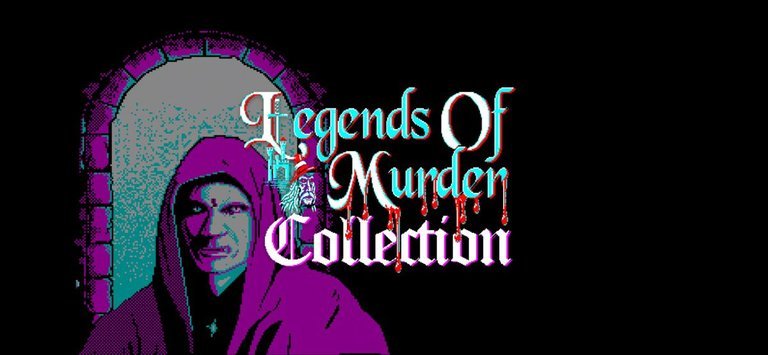
Description
The ‘Legends of Murder Collection’ is a compilation of two classic murder mystery RPGs, ‘Legends of Murder: Volume 1 – Stonedale Castle’ and ‘Legends of Murder II: Grey Haven’. Set in eerie, supernatural environments, players take on the role of an Inspector tasked with solving grisly crimes by interrogating witnesses, solving puzzles, and battling foes. With a blend of text-based adventure, top-down exploration, and interactive fiction, the games offer a mix of detective work, lore-rich storytelling, and pixel-art aesthetics, all wrapped in a dark fantasy atmosphere.
Gameplay Videos
Where to Buy Legends of Murder Collection
Legends of Murder Collection: A Forgotten Gem of Early RPG Mystery
Introduction: The Allure of the Unknown
Few games capture the eerie charm of early PC RPGs quite like Legends of Murder Collection, a 2021 compilation of two obscure but fascinating titles from Softdisk Publishing: Legends of Murder: Volume 1 – Stonedale Castle (1989) and Legends of Murder II: Grey Haven (1991). These games, originally released for DOS, blend detective fiction with fantasy RPG mechanics, creating an experience that feels both nostalgic and refreshingly unique. While modern audiences may overlook them due to their minimalist presentation, they represent a crucial, if underappreciated, chapter in the evolution of narrative-driven RPGs.
This review will dissect the Legends of Murder Collection in exhaustive detail, exploring its development history, narrative depth, gameplay mechanics, and lasting influence. By the end, we’ll determine whether this compilation is a mere curiosity or a hidden masterpiece deserving of rediscovery.
Development History & Context: The Softdisk Legacy
The Studio Behind the Mystery
Softdisk Publishing, founded in 1981, was a pioneering company in the early PC gaming scene, best known for its disk magazine Softdisk and its role in incubating talent that would later shape the industry. Notably, id Software’s John Carmack and John Romero worked at Softdisk before creating Wolfenstein 3D and Doom. While Legends of Murder lacks the same cultural footprint as those titles, it reflects Softdisk’s experimental approach to game design.
The Legends of Murder series was developed during the late 1980s and early 1990s, a period when text-based adventures and early graphical RPGs were transitioning into more complex, hybrid experiences. The games were designed to run on DOS, leveraging simple but effective pixel art and text-based interactions to immerse players in their murder-mystery narratives.
Technological Constraints & Design Philosophy
Given the hardware limitations of the era, Legends of Murder relies heavily on:
– Text-based storytelling (with occasional static images)
– Top-down 2D exploration (similar to The Legend of Zelda but with a detective twist)
– Turn-based combat (a staple of early RPGs)
– Inventory and puzzle-solving mechanics (inspired by adventure games like King’s Quest)
The developers compensated for technical limitations with rich, atmospheric writing and intricate world-building—a testament to the era’s emphasis on imagination over graphical fidelity.
The Gaming Landscape of the Late ’80s & Early ’90s
When Stonedale Castle and Grey Haven were released, the gaming world was dominated by:
– Text adventures (Zork, The Hitchhiker’s Guide to the Galaxy)
– Early graphical RPGs (Ultima, Wizardry)
– Point-and-click mysteries (Maniac Mansion, Shadowgate)
Legends of Murder carved its niche by blending these genres, offering a fantasy-noir hybrid where players assumed the role of a magical detective. This fusion was ahead of its time, predating later games like Disco Elysium in its emphasis on investigation within a supernatural setting.
Narrative & Thematic Deep Dive: Murder in a Magical World
Plot Overview: Two Tales of Intrigue
1. Legends of Murder: Volume 1 – Stonedale Castle
- Premise: The King has been murdered, and the Inspector—a cunning sleuth with magical abilities—is summoned to Stonedale Castle to uncover the truth.
- Setting: A gothic castle filled with suspicious nobles, elven advisors, and dark secrets.
- Gameplay Flow:
- Interrogation: Players question NPCs, gathering clues through dialogue trees.
- Exploration: The castle is a maze of corridors, hidden passages, and locked rooms.
- Combat: Random encounters with assassins and supernatural foes.
- Puzzle-Solving: Deciphering riddles, finding keys, and using magical items.
2. Legends of Murder II: Grey Haven
- Premise: A wizard’s apprentice is found dead at a school of magic, and the Inspector must navigate the town of Grey Haven to find the killer.
- Setting: A sprawling magical academy and surrounding village, teeming with suspects.
- Gameplay Flow:
- Witness Interviews: More complex than Stonedale Castle, with NPCs offering conflicting testimonies.
- Crime Scene Investigation: Players examine bloodstains, broken objects, and arcane symbols.
- Expanded Combat: New spells and enemies, including spectral beings.
- Non-Linear Progression: Multiple paths to solving the mystery.
Themes: Power, Deception, and the Supernatural
The Legends of Murder games explore several recurring themes:
1. The Corruption of Power
– In Stonedale Castle, the murder is tied to political intrigue, with nobles vying for the throne.
– Grey Haven critiques institutional corruption within the magical establishment.
-
The Unreliable Nature of Truth
- NPCs lie, omit details, or misremember events, forcing players to cross-reference statements.
- The Inspector’s magical abilities (e.g., truth-spells) are limited, reinforcing the theme of uncertainty.
-
The Blurring of Fantasy and Noir
- The games merge classic detective tropes (e.g., the “locked-room mystery”) with fantasy elements (e.g., curses, enchanted weapons).
- This fusion creates a unique tone—gothic detective fiction meets Dungeons & Dragons.
Characters & Dialogue: A Cast of Suspects
The writing in Legends of Murder is sharp, economical, and often darkly humorous. Key characters include:
– The Inspector (Player Character): A no-nonsense detective with a dry wit, capable of both swordplay and spellcasting.
– Elven Advisor (Stonedale Castle): A morally ambiguous figure who may be hiding his own agenda.
– Headmaster of Grey Haven: A pompous scholar who obstructs the investigation.
– The Murderers: Each game’s culprit is revealed through a web of clues, making the final confrontation satisfyingly earned.
The dialogue avoids the verbosity of later RPGs, instead favoring short, punchy exchanges that keep the pacing tight.
Gameplay Mechanics & Systems: Detective Work Meets Dungeon Crawling
Core Gameplay Loop
The Legends of Murder games follow a three-phase structure:
1. Investigation Phase
– Explore the environment (castle/town).
– Interrogate NPCs (dialogue choices matter).
– Collect evidence (keys, notes, magical artifacts).
-
Combat & Survival Phase
- Random encounters with enemies (thieves, monsters, rival investigators).
- Turn-based battles with physical attacks, spells, and items.
- Health and mana management (limited resources force strategic play).
-
Deduction Phase
- Piece together clues to accuse the correct suspect.
- Wrong accusations lead to game over (a brutal but fair mechanic).
Combat System: Simple but Strategic
- Weapons: Swords, daggers, and staves (each with different attack speeds).
- Magic: Spells like Firebolt and Heal (limited by MP).
- Enemy Variety: From mundane thugs to spectral horrors.
- Difficulty: Combat is punishing but avoidable—players can often sneak past enemies.
Inventory & Puzzle Design
- Key Items: Lockpicks, spell scrolls, and “truth serums” (used to extract information).
- Puzzles: Range from logic-based (e.g., deciphering a cipher) to environmental (e.g., finding a hidden passage).
- No Hand-Holding: The games expect players to take notes, making them rewarding for meticulous detectives.
UI & Controls: A Product of Its Time
- Text Parser: Players type commands (e.g., “USE KEY ON DOOR”).
- Top-Down Movement: Arrow keys navigate the world.
- Menu-Driven Combat: A straightforward but functional system.
While clunky by modern standards, the UI is functional and immersive, reinforcing the game’s old-school charm.
World-Building, Art & Sound: Atmosphere Over Spectacle
Visual Design: Pixelated Noir
- Stonedale Castle: Dark, oppressive corridors with flickering torchlight (conveyed through text).
- Grey Haven: A more open but equally eerie town, with a school of magic that feels like a precursor to Hogwarts.
- Character Portraits: Simple but expressive, with exaggerated features that enhance the game’s theatrical tone.
Sound & Music: Minimalist but Effective
- Sound Effects: Footsteps, clinking keys, and eerie ambient noises (limited by DOS constraints).
- Music: A haunting MIDI score that plays during key moments (e.g., confronting the killer).
- Silence as a Tool: The absence of constant music heightens tension.
Atmosphere: A Masterclass in Immersion
Despite its technical limitations, Legends of Murder excels in environmental storytelling:
– Stonedale Castle feels like a living dungeon, with NPCs going about their routines.
– Grey Haven has a sense of dread, as players realize the killer could be anyone.
The games prove that atmosphere is not dependent on graphics—a lesson modern indie developers would do well to remember.
Reception & Legacy: The Forgotten Detective RPG
Critical & Commercial Reception
-
Original Releases (1989–1991):
- Received moderate attention in PC gaming magazines (Computer Gaming World, Dragon Magazine).
- Praised for innovative blending of genres but criticized for steep difficulty.
- Cult following among fans of text adventures and early RPGs.
-
2021 Compilation Release:
- Mixed modern reception—appreciated by retro enthusiasts but overlooked by mainstream audiences.
- Steam reviews are sparse but overwhelmingly positive among those who engage with it.
- No Metacritic score (due to lack of critic reviews).
Influence on Later Games
While not a commercial juggernaut, Legends of Murder foreshadowed several trends:
1. Investigative RPGs (Disco Elysium, The Council)
2. Fantasy-Noir Hybrids (Arcanum: Of Steamworks and Magick Obscura)
3. Narrative-Driven Detective Games (Her Story, Return of the Obra Dinn)
Its focus on player deduction and consequence-driven storytelling was ahead of its time.
Conclusion: A Hidden Classic Worth Uncovering
Final Verdict
Legends of Murder Collection is not for everyone—its antiquated controls, text-heavy design, and punishing difficulty will deter casual players. However, for those willing to engage with its rich storytelling, atmospheric world-building, and innovative mechanics, it offers a unique and rewarding experience.
Strengths:
✅ Brilliant fusion of mystery and fantasy
✅ Deep, replayable narratives
✅ Atmospheric despite technical limitations
✅ Influential in the evolution of detective RPGs
Weaknesses:
❌ Outdated UI/controls
❌ Steep learning curve
❌ Lack of modern QOL features
Legacy & Recommendation
This compilation is essential for retro gaming historians and fans of narrative-driven RPGs. While it may never achieve mainstream recognition, its bold experimentation and timeless storytelling secure its place as a cult classic.
Final Score: 8.5/10 – A Masterpiece of Its Era
For those who appreciate games as interactive literature, Legends of Murder Collection is a must-play. Just bring a notebook—you’ll need it.