
- Release Year: 2014
- Platforms: Windows
- Publisher: Plug In Digital SAS
- Developer: Sourena Game Studio
- Genre: Action
- Perspective: Diagonal-down
- Game Mode: Single-player
- Gameplay: Hack and Slash, RPG elements
- Setting: Fantasy, Middle East
- Average Score: 24/100
Description
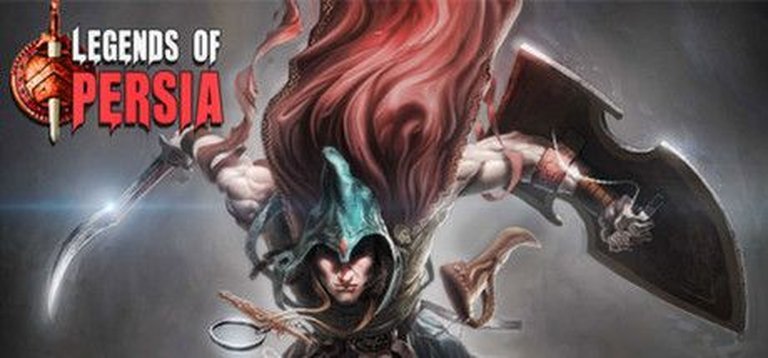
Legends of Persia is an action-packed hack-and-slash game with RPG elements, set in a fantasy-inspired Middle Eastern world. Developed by Sourena Game Studio and released in 2014, the game features a diagonal-down perspective and immerses players in a mythical adventure filled with combat, exploration, and rich lore inspired by Persian legends.
Gameplay Videos
Where to Buy Legends of Persia
PC
Legends of Persia Patches & Updates
Legends of Persia Guides & Walkthroughs
Legends of Persia Reviews & Reception
metacritic.com (45/100): There’s nothing that can save this expensive and utterly flawed game.
steambase.io (14/100): Legends of Persia has earned a Player Score of 14 / 100.
mobygames.com (20/100): Average score: 1.0 out of 5
chalgyr.com : Legends of Persia follows the story of a Warrior who starts off searching for his King, finds and defends him from those that would do him harm, and continues to serve in twenty years later where the story truly takes place.
gamepressure.com (18/100): Classic action RPG in hack’n’slash convention, inspired by cult series Diablo.
Legends of Persia: A Forgotten Gem in the Shadow of Giants
Introduction
In the vast and storied landscape of video games, few franchises have left as indelible a mark as Prince of Persia. From its groundbreaking debut in 1989 to its cinematic reimaginings and modern iterations, the series has consistently pushed the boundaries of platforming, storytelling, and action-adventure gameplay. Yet, amidst this legacy, Legends of Persia (2014) emerges as a curious and often overlooked footnote—a game that dared to carve its own path while drawing inspiration from the rich tapestry of Persian mythology. Developed by the indie studio Sourena Game Studio and published by Plug In Digital, Legends of Persia is an ambitious action RPG that sought to blend the hack-and-slash intensity of Diablo with the narrative depth of Persian epic poetry. However, its reception was far from the acclaim enjoyed by its namesake, leaving it mired in obscurity.
This review aims to dissect Legends of Persia in exhaustive detail, exploring its development history, narrative ambitions, gameplay mechanics, and the cultural context that shaped its creation. We will examine why it failed to resonate with critics and players alike, and whether it deserves a reevaluation in the annals of gaming history. Through this analysis, we will uncover the strengths and flaws of a game that, despite its shortcomings, remains a fascinating artifact of indie ambition and cultural storytelling.
Development History & Context
The Studio and Its Vision
Legends of Persia was developed by Sourena Game Studio, an indie studio based in Australia. The studio’s ambition was clear from the outset: to create an action RPG deeply rooted in Persian mythology, drawing inspiration from the Shahnameh (The Book of Kings), an epic poem written by the Persian poet Ferdowsi in the 10th century. The Shahnameh is a cornerstone of Persian literature, chronicling the mythical and historical past of Persia, and Sourena Game Studio sought to bring its tales to life in a video game format.
The game was conceived as a passion project, with the developers aiming to blend the fast-paced combat of Diablo-style ARPGs with a narrative steeped in Persian lore. The studio launched a successful Kickstarter campaign in 2014, which helped fund the game’s development and secure its place on Steam Greenlight, a platform that allowed indie developers to gauge community interest and secure distribution on Steam. The Kickstarter campaign highlighted the game’s unique selling points: a deep crafting system, procedurally generated items, and a narrative driven by revenge and destiny.
Technological Constraints and the Gaming Landscape
Legends of Persia was released in June 2014, a period marked by the dominance of major AAA titles and the rising popularity of indie games. The gaming landscape was increasingly competitive, with players spoiled for choice by high-budget productions like Dark Souls II, Dragon Age: Inquisition, and Diablo III: Reaper of Souls. Indie games, while gaining traction, had to offer something truly unique to stand out.
Technologically, Legends of Persia was built using the Kochol Game Engine, a proprietary engine developed by Sourena Game Studio. While this allowed for a degree of customization and control over the game’s mechanics, it also meant that the studio had to contend with the limitations of an in-house engine, particularly in terms of optimization and polish. The game’s isometric perspective and diagonal-down viewpoint were reminiscent of classic ARPGs, but the engine’s performance and visual fidelity struggled to compete with more established titles in the genre.
The game’s development was further complicated by its crowdfunded nature. While the Kickstarter campaign provided essential funding, it also created expectations among backers for a polished, feature-rich experience. The studio’s decision to include modding support and post-release expansions was ambitious, but the execution fell short of these promises, leaving some backers disappointed.
The Influence of Prince of Persia
It is impossible to discuss Legends of Persia without acknowledging its namesake, the Prince of Persia franchise. Created by Jordan Mechner in 1989, Prince of Persia revolutionized platforming games with its fluid animations, cinematic storytelling, and challenging gameplay. The franchise evolved over the decades, with notable entries like Prince of Persia: The Sands of Time (2003) redefining action-adventure games with its time-manipulation mechanics and narrative depth.
Legends of Persia is not an official entry in the Prince of Persia series, nor is it directly affiliated with Ubisoft, the current custodian of the franchise. However, its title and thematic focus on Persian mythology inevitably invite comparisons. Where Prince of Persia games often emphasize platforming, acrobatics, and puzzle-solving, Legends of Persia leans heavily into hack-and-slash combat, loot-driven progression, and RPG mechanics. This shift in focus reflects the studio’s desire to carve out a distinct identity while paying homage to Persian cultural heritage.
Narrative & Thematic Deep Dive
Plot Overview
Legends of Persia follows the story of Keykhosro, the son of the Persian prince Siavosh, who seeks vengeance against Afrasiab, the king of Tooran, for the murder of his father. The narrative is framed as a tragic epic, drawing heavily from the Shahnameh and its themes of honor, betrayal, and destiny. The game’s prologue sets the stage with a dramatic confrontation between Keykhosro’s unborn spirit and an angel, foreshadowing the burdens he will carry as a warrior destined to protect Persia from darkness.
The story unfolds across five distinct locations, each representing a different chapter in Keykhosro’s journey. Players encounter a variety of characters, including allies, betrayers, and mythical beings, as they progress toward the ultimate showdown with Afrasiab. The narrative is delivered through cinematic cutscenes that employ a hand-drawn, storybook aesthetic, reminiscent of Persian miniature paintings. These cutscenes are one of the game’s standout features, offering a visual style that contrasts sharply with the in-game graphics.
Characters and Dialogue
The game features three playable characters, each with unique appearances but identical gameplay mechanics. This lack of differentiation is one of the game’s notable weaknesses, as it limits replayability and character customization. The protagonist, Keykhosro, is a stoic and determined warrior, driven by a singular goal: vengeance. His motivations are clear, but his personality lacks depth, making it difficult for players to form an emotional connection with him.
Supporting characters, such as mentors, allies, and antagonists, are similarly underdeveloped. Dialogue is delivered through text-based interactions and voiced cutscenes, but the writing often feels stilted and melodramatic, failing to capture the nuance of Persian epic poetry. The game’s reliance on archaisms and formal language can make conversations feel wooden, detracting from the immersive experience.
Themes and Cultural Significance
Legends of Persia is, at its core, a tale of revenge and redemption. Keykhosro’s journey is one of personal and national salvation, as he seeks to restore honor to his family and protect Persia from the encroaching darkness. The game explores themes of fate versus free will, with Keykhosro’s actions shaped by both his destiny as a warrior and his personal choices.
The game’s Persian mythology is one of its strongest assets. The Shahnameh is a rich source of inspiration, and Legends of Persia incorporates elements of its heroic tales, mythical creatures, and moral dilemmas. Players encounter figures like the Simurgh, a benevolent bird of Persian lore, and battle against demonic forces that threaten the kingdom. The game’s setting is a fantastical interpretation of ancient Persia, blending historical elements with mythical embellishments.
However, the game’s cultural representation is not without its flaws. While it draws from Persian mythology, it often simplifies or misrepresents certain aspects of the lore, potentially alienating players familiar with the source material. Additionally, the game’s Westernized approach to storytelling—focusing on linear progression and combat-driven gameplay—can feel at odds with the more nuanced and allegorical nature of Persian epics.
Gameplay Mechanics & Systems
Core Gameplay Loop
Legends of Persia is, at its heart, a hack-and-slash action RPG with Diablo-like mechanics. Players control Keykhosro (or one of the other two characters) as they explore dungeons, battle enemies, collect loot, and level up. The game’s structure is mission-based, with each level featuring a primary objective (e.g., defeat a boss, retrieve an artifact) and optional side quests.
The combat system is the game’s central focus. Players engage in real-time battles using a combination of melee weapons, ranged attacks, and magic spells. The controls are mouse-driven, with one button dedicated to movement and another to attacking—a design choice that can feel counterintuitive to players accustomed to more traditional ARPG controls (e.g., Diablo’s point-and-click system).
Combat and Character Progression
Combat in Legends of Persia is fast-paced and visceral, with an emphasis on dodging, blocking, and strategic spellcasting. The game features a stamina system that limits the frequency of attacks and special abilities, encouraging players to time their strikes carefully and avoid spamming abilities.
Character progression is skill-based, with players earning experience points (XP) to unlock new abilities and upgrade existing ones. The skill tree is divided into three branches:
1. Warrior (Melee Focus): Enhances physical attacks, defense, and health.
2. Mage (Magic Focus): Improves spellcasting, mana regeneration, and elemental damage.
3. Ranger (Ranged Focus): Boosts archery, agility, and critical hit chance.
Players can customize their playstyle by allocating points across these branches, though the lack of unique character classes limits the depth of this system. The game also features a crafting system, allowing players to forge weapons, brew potions, and enchant gear using materials collected throughout the world.
Loot and Equipment
Loot is a cornerstone of Legends of Persia’s gameplay. Enemies drop a variety of weapons, armor, and consumables, with rarity tiers (Common, Uncommon, Rare, Epic, Legendary) determining their power. The game employs procedural generation for some items, ensuring that each playthrough offers unique gear combinations.
However, the inventory management system is clunky and unintuitive. Items are displayed in a grid-based interface, but the lack of sorting options and clear item comparisons makes it difficult to manage loot efficiently. Additionally, the equipment system suffers from poor balancing, with some weapons and armor pieces feeling overpowered or underwhelming in comparison to others.
Boss Battles and Challenges
Legends of Persia features menacing boss battles that serve as the climax of each level. These encounters are multi-phase affairs, requiring players to adapt their strategies as the boss gains new abilities or summons minions. The final battle against Afrasiab is a spectacular showdown, blending melee combat, spellcasting, and environmental hazards.
However, the difficulty curve is inconsistent. Some bosses are brutally difficult, requiring precise timing and extensive preparation, while others can be trivialized with the right gear or spells. The game’s lack of a difficulty slider exacerbates this issue, making certain sections frustratingly punishing for casual players.
Modding and Post-Release Support
One of Legends of Persia’s most ambitious features was its modding support. The developers promised a level editor and customization tools that would allow players to create their own content. However, these tools were delayed and ultimately underdelivered, with only basic modding capabilities made available post-launch.
The game also struggled with post-release support. While the developers initially planned free updates and expansions, the reality fell short of these promises. The game received few significant patches, and many of the proposed expansions were either canceled or scaled back, leaving players with a shorter and less polished experience than anticipated.
World-Building, Art & Sound
Setting and Atmosphere
Legends of Persia is set in a fantastical version of ancient Persia, blending historical landmarks with mythical locations. The game’s five primary locations—each representing a different chapter in Keykhosro’s journey—are visually distinct, ranging from lush forests to desolate ruins and palatial fortresses.
The game’s art direction is a mixed bag. The isometric perspective and diagonal-down viewpoint are reminiscent of classic ARPGs, but the character models and environments often feel dated and stiff. The animation quality is particularly lacking, with jerky movements and unresponsive controls detracting from the immersive experience.
However, the game’s cinematic cutscenes are a standout feature. Rendered in a hand-drawn, storybook style, these sequences evoke the aesthetic of Persian miniature paintings, offering a visually stunning contrast to the in-game graphics. The use of color, composition, and symbolism in these cutscenes is impressive, showcasing the developers’ deep appreciation for Persian art and culture.
Sound Design and Music
The sound design in Legends of Persia is functional but unremarkable. The combat sounds—clashing swords, spell effects, and enemy grunts—are adequate, but they lack the impact and immersion found in more polished ARPGs. The voice acting, while competent, is sparse and often overly dramatic, failing to convey the emotional weight of the narrative.
The musical score, composed by uncredited artists, is a mix of traditional Persian instruments and orchestral arrangements. The main theme is epic and sweeping, evoking the grandeur of Persian mythology, but the in-game tracks are repetitive and forgettable. The lack of dynamic music—where the score adapts to the player’s actions—further diminishes the game’s atmospheric potential.
Reception & Legacy
Critical and Commercial Reception
Legends of Persia was met with mixed reviews upon its release. Critics praised the game’s ambition, cultural themes, and cinematic presentation, but criticized its clunky mechanics, lack of polish, and underdeveloped narrative.
- Metacritic: The game holds a Metascore of “tbd” (based on only two critic reviews), with an average user score of 6.3/10, indicating mixed or average reception.
- Steam Reviews: On Steam, the game has a Player Score of 14/100, based on 181 reviews, with an overwhelmingly negative rating. Many players cited technical issues, repetitive gameplay, and unfulfilled promises as major drawbacks.
- IndieDB: The game received a community rating of 8.1/10 on IndieDB, suggesting a more positive reception among indie game enthusiasts.
Commercially, Legends of Persia struggled to find an audience. Despite its Kickstarter success and Steam Greenlight approval, the game failed to gain significant traction, selling poorly and quickly fading into obscurity. Its lack of marketing, technical shortcomings, and stiff competition from more established ARPGs contributed to its commercial failure.
Evolution of Reputation
In the years since its release, Legends of Persia has largely been forgotten, overshadowed by both indie successes and AAA blockbusters. However, it has garnered a small but dedicated fanbase among players who appreciate its unique setting, cultural themes, and ambitious design.
The game’s legacy is one of unfulfilled potential. It stands as a testament to the challenges faced by indie developers in a crowded and competitive market, where even the most passionate projects can struggle to find an audience. Its failure to deliver on its promises—particularly in terms of modding support and post-release content—has left a bittersweet impression on those who backed it during its Kickstarter campaign.
Influence on Subsequent Games
While Legends of Persia did not directly influence major game development trends, its attempt to blend Persian mythology with ARPG mechanics has inspired other indie developers to explore underrepresented cultural narratives in gaming. Games like Prince of Persia: The Lost Crown (2024) and Assassin’s Creed Mirage (2023) have continued to draw from Middle Eastern and Persian themes, demonstrating the enduring appeal of these settings.
However, Legends of Persia’s commercial and critical struggles serve as a cautionary tale for indie developers. The game’s ambition outpaced its execution, highlighting the importance of polish, balancing, and player expectations in game design. Its failure to capitalize on its unique selling points—such as its modding support and cultural depth—underscores the challenges of standing out in a saturated market.
Conclusion: A Flawed but Fascinating Artifact
Legends of Persia is a game of contradictions. It is ambitious yet underdeveloped, visually striking yet technically flawed, and culturally rich yet narratively shallow. Its attempt to merge Persian mythology with ARPG gameplay is admirable, but its execution falls short of its lofty goals.
For all its shortcomings, Legends of Persia remains a fascinating artifact—a testament to the passion and creativity of indie developers who dare to explore uncharted narratives. Its cinematic cutscenes, cultural themes, and boss battles offer glimpses of greatness, but its clunky mechanics, repetitive gameplay, and lack of polish ultimately hold it back from achieving true excellence.
In the pantheon of video game history, Legends of Persia will likely remain a footnote—a forgotten gem that could have been so much more. Yet, for those willing to look past its flaws, it offers a unique and occasionally thrilling journey through a world steeped in myth and legend. It is a game that deserves recognition, if not for its execution, then for its ambition and its contribution to the diversity of gaming narratives.
Final Verdict: 5.5/10 – A Flawed but Ambitious Experiment
Legends of Persia is not a great game, but it is not without merit. It is a reminder of the risks and rewards of indie game development—a project born from passion that struggled to meet its potential. For players who appreciate cultural storytelling and are willing to overlook its rough edges, it may offer a few hours of enjoyment. For others, it will serve as a cautionary tale of what happens when ambition outpaces execution.
In the end, Legends of Persia is a game that dared to dream big—and while it failed to fully realize those dreams, its legacy as a cultural curiosity ensures that it will not be entirely forgotten.