
- Release Year: 2010
- Platforms: Windows
- Publisher: Paradox Interactive AB
- Developer: ICE Game Studios AB
- Genre: Strategy, Tactics
- Perspective: Diagonal-down
- Game Mode: Hotseat, LAN, Online PVP
- Gameplay: Board game, Turn-based
- Setting: Fantasy
- Average Score: 61/100
Description
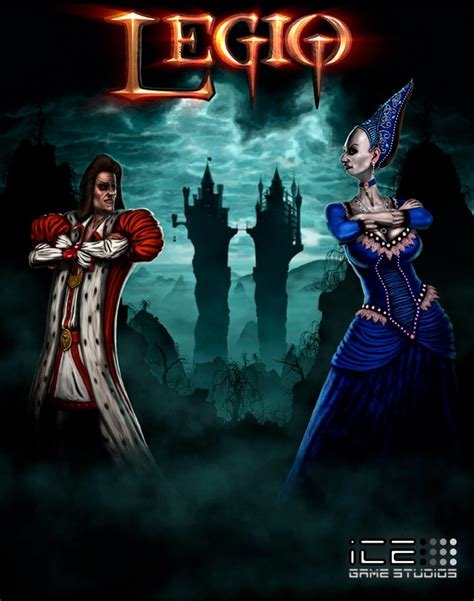
Legio is a turn-based strategy game set in the fantasy kingdom of Bella Lugacia, where twin siblings Lorenzo and Florentia battle for the throne after their father’s death. Players engage in chess-like tactical combat across two stages: an initial drawbridge confrontation and, if defeated, a subsequent castle hallway assault, with options for hotseat, LAN, or online multiplayer in various game modes.
Where to Buy Legio
PC
Legio Reviews & Reception
metacritic.com (61/100): It’s a good thing Ice Game Studios don’t do bomb disposal because they clearly believe in learning through experience.
cheatcc.com : Legio is a thinking-man’s strategy game.
gamersnexus.net : It is with great elation that I say Legio does not suffer from similar ailments.
hookedgamers.com : Legio can best be described as a chess-like strategy game with arcade elements.
Legio: A Noble Failure at the Crossroads of Chess and Chaos
Introduction: The Ghost in the Strategy Machine
In the vast catalogue of Paradox Interactive, a publisher synonymous with deep, complex, and often impenetrable grand strategy, lies a curious ghost: Legio. Released in 2010 by the obscure Swedish studio ICE Game Studios, this title represents a fascinating, if flawed, pivot—an attempt to distill the cerebral elegance of chess and the visceral spectacle of a fantasy war game into a single, accessible package. It is a game that whispers of innovation but stumbles over its own ambitious mechanics. Legio is not a forgotten classic, nor is it a broken disaster. It is instead a compelling case study in design ambition constrained by execution, a “thinker’s game” that frequently asks the player to think around its own most glaring contrivances. This review will argue that Legio is a significant curio in the strategy genre’s history: a game that correctly identified a niche—tactical, chess-like combat with fantasy flair—but failed to build a sustainable ecosystem around its brilliant core, ultimately becoming a lesson in how not to marry arcade sensibility to turn-based strategy.
1. Development History & Context: A Paradoxical Experiment
The Studio and the Publisher: Legio was developed by ICE Game Studios AB, a little-documented Swedish developer with no other known major releases. Their existence is almost entirely tied to this single project, suggesting it may have been a passion project or a one-off contract for a larger entity. That larger entity was Paradox Interactive AB, in 2010 a publisher at a pivotal moment. Best known for the formidable Europa Universalis and Hearts of Iron series, Paradox was actively expanding its portfolio into more casual and hybrid genres (Magicka, King Arthur). Legio fit this experimental phase: a low-system-requirements, point-and-click strategy game that could sit alongside their more complex offerings, targeting a different, perhaps older or less time-rich audience.
Technological and Design Context: 2010 was a year of transition. Digital distribution (Steam, GamersGate, where Legio was sold) was making niche titles viable. The success of Battle vs. Chess (2010) and the enduring popularity of the Heroes of Might and Magic and King’s Bounty series proved there was a market for tactical fantasy combat. Legio‘s stated goal—”a mix between chess and a turn-based war game”—was an explicit pitch to this audience. Technologically, it was built for accessibility: minimal system requirements (Pentium 4, 512MB RAM) ensured it could run on nettops and older laptops, a deliberate choice for a downloadable casual strategy game. The art direction, a low-poly “comic-book” or “Tim Burton-esque” style, was a cost-effective way to achieve a distinct, memorable aesthetic without requiring cutting-edge graphics.
The Gaming Landscape: The strategy genre was bifurcating. On one side were the immersive sims and huge-scale 4X/grand strategy games. On the other were the increasingly popular “casual” strategy and puzzle games on PC and mobile. Legio tried to carve a middle path, offering “easy to learn, difficult to master” depth in a package that felt more immediate than Chessmaster but more structured than Heroes of Might and Magic. Its failure to find a broad audience must be understood within this crowded middle ground, where games like Fray or Battlefleet Gothic also struggled for visibility.
2. Narrative & Thematic Deep Dive: A Kingdom of Petty Tyrants
The lore of Legio is not woven into the gameplay; it is a thin, pre-existing scaffold drawn from the game’s manual and promotional material. It tells the story of Bella Lugacia (or “Bella Lagucia” in some sources), a kingdom ruled by the benevolent King Theoron the Witty. After his wife’s death in childbirth, he raises his twins—Lorenzo and Florentia—to be constant competitors. This engineered rivalry festers into outright hatred. Upon Theoron’s deathbed, he refuses to choose an heir, seeing the “stupidity” of his son and the “pure evil” of his daughter. The siblings partition the kingdom, but their disputes are so incessant that warfare eventually destroys the land, leaving only their two castle towers connected by a drawbridge. They then codify their conflict: all disagreements, great or small, are settled by a game of Legio.
Themes and Execution: This is a narrative about the absurdity of power, the pettiness of succession, and the reduction of geopolitical conflict to a parlour game. Thematically, it aligns with dark fairy tales and political satire. However, the game itself does nothing to explore these themes. There is no campaign, no narrative missions, no character development. The twins are never seen or properly heard; their only presence is through sparse, poorly-executed voice lines (“This is not happening! Bad, bad, bad!”, “Idiot, stupid, stupid!”) that play at the start of a match, as noted by multiple reviewers. This creates a profound disconnect: a rich backstory exists in the manual, but the interactive experience is purely abstract. The “fantasy world” is just a setting for chess pieces. The grim “Alice in Wonderland” aesthetic hinted at in reviews suggests a missed opportunity—a world where the units are the twisted subjects of a deranged royalty, but this tone is never leveraged for storytelling. The narrative is a tombstone for a world we never get to explore, making the warfare feel even more pointless and sterile.
3. Gameplay Mechanics & Systems: Brilliance Beneath a Broken Aiming Reticule
Legio‘s core genius lies in its dual-battle structure and point-based army construction, but its identity is forever tied to its divisive targeting mechanic.
The Two-Round System: A full match is always two battles.
1. The Drawbridge: The initial, symmetrical battlefield. Both players spend 25 “points” to purchase units from a shared roster.
2. The Castle Hall: The loser of Round 1 chooses one of two pre-designed castle layouts (their own or the opponent’s). The winner of Round 1 carries over any surviving units (without healing) and gets an additional 25 points to recruit fresh forces. The loser gets 25 points to recruit for their defensive position.
This creates a brilliant strategic arc. Winning Round 1 provides a material advantage (veteran units + fresh recruits), but losing Round 1 grants the critical choice of terrain and the defensive bonus of fighting on home turf. It’s a “built-in comeback mechanic” that mirrors the narrative of the twins—the aggrieved party sets the terms of the next conflict. However, as Hooked Gamers noted, this advantage is often insufficient; the victor’s numerical superiority usually prevails, making the second round feel somewhat pre-determined unless the castle layout is exploited masterfully.
Army Construction and Unit Balance: With only 25 points per round, every purchase is critical. Units have specific costs (3-6 points), availability (some single-instance, some multiple), and distinct roles. The unit list, consistently detailed across sources, is a strength:
* Warrior (3 pts): Basic melee grunt.
* Archer (4 pts): Ranged attacker, requires line of sight.
* War Rabbit (3 pts): Fast, can leap over units (like a chess Knight).
* Assassin (4 pts): Fast melee, can turn invisible.
* Captain (6 pts): High HP, provides a leadership aura buff to nearby allies.
* Priest (5 pts): Can heal, surprisingly strong in melee but exceedingly slow.
* Giant (6 pts): High HP, slow, area-of-effect attack that can harm friendly units.
* Magician (6 pts): Very slow, weak, ranged AoE attack that does not require line of sight. Unique mechanic: any unit killed by a Magician permanently transforms into a harmless “Toad” unit for the remainder of the game.
The point-cost balance is praised as “surprisingly balanced” (GamersNexus). Each unit has clear counters and synergies. Grouping units negates the Giant/Magician’s AoE risk but makes them vulnerable to it. Priests and Captains demand protection but empower the army. The Toad mechanic is a brilliantly punishing counter to Magicians, turning their kills into tactical dead weight.
The Target-Reticule Minigame: This is Legio‘s defining—and fatal—mechanic. When a unit attacks, the camera shifts to a first-person perspective over the attacker’s shoulder. A static bull’s-eye (target circle) appears over the intended enemy, its size varying with distance. A crosshair then bounces erratically around the screen. The player must click when the crosshair is inside the bull’s-eye. Accuracy determines hit chance and damage.
This system is universally panned by critics. It injects an unwelcome, twitch-based arcade element into a turn-based strategy game. It breaks immersion completely. Worse, as GamersNexus points out, the AI seems to exploit this mechanic unfairly, hitting its target with the “good part” of its 75% accuracy consistently, while the player is subject to pure randomness. It transforms a game of calculated strategy into one where perfect execution of a clumsy minigame can negate superior positioning and unit composition. It is a “game-killing mechanic,” a “failed attempt to lure action gamers.” Its presence fundamentally contradicts the “easy to play, difficult to master” promise, instead creating a barrier of frustration that has nothing to do with tactical mastery.
Other Systems: The UI is functional but sparse. The turn order is based on unit initiative, displayed in a queue. The 20×6 board size and 5×6 deployment area are standard. “Speed Mode” exists to fast-forward repetitive animations, an admission of the game’s limited visual variety. The lack of a proper tutorial is a minor but notable flaw, though the short game length makes learning by doing feasible.
4. World-Building, Art & Sound: A Grim aesthetic, a Quiet Battlefield
Visuals and Atmosphere: Legio employs a deliberately stylized, low-detail 3D model aesthetic. Characters and environments look like “comic-book style drawings” or “a grim ‘Alice in Wonderland’ kind of way,” evoking a Tim Burton-esque gothic whimsy. The castles are simple, blocky, and the drawbridge is stark. This art direction has two effects: it ensures the game runs on virtually any PC from the era (a major plus for accessibility), and it gives the game a unique, memorable silhouette. However, the low detail is a double-edged sword. There is no “polish,” no visual spectacle to reward the player. Battle animations are limited and repetitive (the Archer’s “evil laugh” is singled out), leading players to use Speed Mode to skip them. The promise of a “rich back story” and “immersive fantasy world” is completely unfulfilled by the visuals alone, which present a static, empty stage.
Sound Design and Music: The dynamic music engine, which changes tempo based on gameplay intensity, is a quietly successful feature often noted in press releases. It provides a subtle, effective context for the action. The same cannot be said for the voice acting and sound effects. The unit attack sounds are few and repeated ad nauseam. The voice lines for the off-screen royalty are described as “hard to listen to,” ranging from childish insults to incoherent shrieking. This is a major immersion breaker. In a game with almost no narrative presentment, these grunts and curses are the only “personality” injected, and it is deeply unpleasant. The sound design, therefore, is a net negative, contributing to the feeling of a cheap, unfinished product.
5. Reception & Legacy: A Whisper That Faded
Critical Reception: Legio was reviewed by a handful of outlets, reflected in its Metacritic “tbd” status (based on only 2-3 critic reviews at the time). Scores were middling:
* Level (Romanian): 72% (7.2/10) – The most positive, seeing potential beyond its quirks.
* Gameplay (Benelux): 69% – Called it a “fun board game with more tactical challenges than meets the eye.”
* Hooked Gamers: 58% (5.8/10) – The most negative, citing lack of progression and the targeting system.
* Cheat Code Central: 3.0/5 (Fair) – Balanced praise for depth with criticism for weak online community.
* PC Zone UK: 61% – A terse, negative take.
* GamersNexus: While not scored numerically, the review was highly critical of the targeting and voice acting.
The consensus was: a strategically deep and balanced core game sabotaged by clumsy, frustrating peripheral mechanics and a complete lack of long-term engagement hooks. The “easy to learn, difficult to master” claim was partially true for the army building and positioning, but false for the targeting minigame, which was “hard to play” due to poor implementation.
Commercial and Cultural Legacy: Legio vanished. Its Steam/Paradox Plaza page is a ghost. Its online multiplayer, even at launch, suffered from a “shortage of active players” (CheatCC). Without a platform like Steam Workshop or a robust ladder system integrated into a major service, finding matches was—and is—impossible. It left no discernible footprint on the industry. No other game has adopted its dual-battle carry-over system combined with the targeting minigame. Its closest conceptual relatives are pure chess variants (Battle vs. Chess) or pure tactical RPGs (King’s Bounty). Legio sits in an uncanny valley between them.
Its legacy is that of a cautionary tale. It demonstrates that innovative systems (the two-round carry-over, the Toad transformation) are not enough. A strategy game must have a cohesive, intuitive interface that serves the strategy, not fights against it. It must provide a reason to play repeatedly—a campaign, progression, a thriving community. Legio provided none of these. It is a fascinating “what if” for game design students: what if the targeting minigame were replaced with a pure, stat-based accuracy system? What if a simple campaign existed? The balanced unit roster suggests ICE Game Studios understood tactical interplay, but they failed to package it in a player-respecting form.
6. Conclusion: The Disappointing Sum of Its Parts
Legio is not a bad game. Its core tactical loop—drafting an army for 25 points, deploying on a grid, leveraging unit synergies, and fighting two linked battles—is genuinely thoughtful and well-balanced. The unit abilities are creative and interlocking, creating a rich possibility space for unit composition and castle defense. For $9.95 on GamersGate, a dedicated local multiplayer enthusiast could extract dozens of hours of tense, cerebral fun from its systems.
However, Legio is a profoundly flawed package. The targeting reticule is an inexcusable design blunder that transforms a game of strategy into a game of clumsy luck, and its unfair application by the AI is a cardinal sin. The complete absence of a narrative campaign or any form of progression beyond the next match makes the experience feel hollow and unrewarding. The audio, particularly the grating leader voice lines, is actively detrimental to the experience. Most critically, it failed to foster a community, dying on the vine due to poor online infrastructure.
In the annals of video game history, Legio does not deserve a place among the greats or even the notable failures. It belongs in a smaller, more specific category: the noble, obscure experiment. It is a testament to the fact that brilliant mechanical ideas can be strangled by poor execution and a lack of holistic design. It is a clever answer to a question no one was really asking, built with enough insight to be intriguing but not enough polish or support to be essential. For the historian, it is a footnote—a curious blend of chess and war game published by Paradox that tried to be accessible and instead became inaccessible, not through complexity, but through frustration. Its ultimate verdict is one of poignant potential, a strategy game that knew how to think but forgot how to make the player feel smart in the process.