
- Release Year: 2000
- Platforms: Macintosh, Windows
- Publisher: LEGO Interactive
- Developer: Stormfront Studios
- Genre: Educational
- Perspective: 1st-person
- Game Mode: Single-player
- Gameplay: Coloring, Counting, Letter recognition, Mini-games
- Setting: Educational, Pre-school, toddler
Description
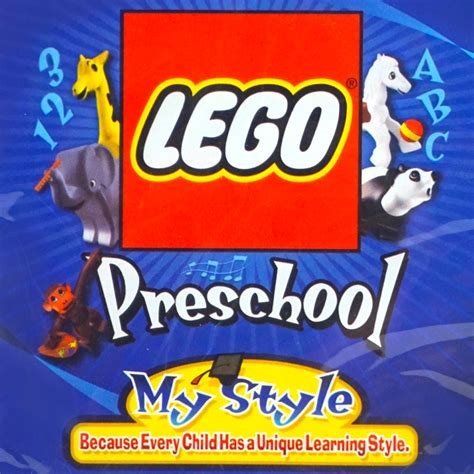
LEGO My Style: Preschool is an educational game designed for children aged 2-4, featuring the animal characters from LEGO’s DUPLO line. The game offers four interactive learning environments—math, art, music, and language—where young players can engage in simple mini-games to learn basic concepts. Activities include coloring, letter recognition, and counting, with rewards like prize objects to encourage progress. The game combines playful exploration with early learning, making it both fun and educational for toddlers.
Gameplay Videos
LEGO My Style: Preschool Free Download
LEGO My Style: Preschool Guides & Walkthroughs
LEGO My Style: Preschool – A Foundational Brick in the Edutainment Revolution
Introduction: The Unseen Architect of Early Learning
In the pantheon of early 2000s educational software, LEGO My Style: Preschool (2000) stands as a quiet titan—a game that, while overshadowed by its more bombastic contemporaries, laid critical groundwork for how digital play could intersect with foundational learning. Developed by Stormfront Studios and published by LEGO Interactive, this title was part of a bold experiment: could the tactile, creative magic of LEGO bricks translate into a screen-based experience for toddlers? The answer, as this review will explore, was a resounding yes—though not without its compromises.
At its core, LEGO My Style: Preschool is an edutainment game designed for children aged 2–4, leveraging the beloved DUPLO line of LEGO toys to teach basic concepts in math, art, music, and language. But to dismiss it as merely a “digital worksheet” would be a disservice. This was a game that understood its audience with remarkable precision, blending interactive storytelling, reward-driven progression, and open-ended play in ways that few preschool titles of the era attempted.
This review will dissect the game’s development history, narrative and thematic depth, gameplay mechanics, art and sound design, cultural impact, and legacy, arguing that LEGO My Style: Preschool was not just a product of its time but a harbinger of modern early-learning design principles.
Development History & Context: Building Blocks of Innovation
The Studio Behind the Bricks: Stormfront Studios’ Pedigree
Stormfront Studios, founded in 1988 by industry veteran Don L. Daglow, was no stranger to ambitious projects. By 2000, the studio had already worked on titles like The Lord of the Rings: The Two Towers (2002) and Neverwinter Nights (1991), proving its versatility. However, LEGO My Style: Preschool represented a radical shift—a foray into early childhood education, a space dominated by companies like The Learning Company and Broderbund.
The game’s development was spearheaded by:
– Hudson Piehl (Project Director)
– William A. Dwyer (Producer)
– Randy Angle (Lead Programmer & Game Designer)
– Raymond Monday (Art Director)
This team brought a hybrid approach, merging traditional game design with child development psychology. The challenge? Creating an interface that a 2-year-old could navigate without frustration while still delivering meaningful educational content.
Technological Constraints & Design Philosophy
Released in 2000, LEGO My Style: Preschool was constrained by the hardware limitations of the era:
– Resolution & Graphics: Designed for 800×600 displays, the game used 2D sprites and simple 3D animations to maintain clarity for young eyes.
– Input Method: The point-and-click interface was intentional—mouse-only controls were deemed more accessible than keyboard inputs for toddlers.
– Storage & Performance: The game shipped on CD-ROM, requiring minimal system resources (Pentium 166 MHz, 32MB RAM) to ensure compatibility with family PCs of the time.
The developers adopted a “no wrong answers” philosophy, ensuring that every interaction—whether clicking a character or scribbling in the art module—resulted in positive reinforcement. This was a revolutionary approach in an era where many edutainment games still relied on punitive feedback (e.g., “Try again!” screens).
The Edutainment Landscape of 2000
The late ’90s and early 2000s were the golden age of edutainment, with franchises like:
– Reader Rabbit
– JumpStart
– The ClueFinders
– Freddi Fish
However, most of these titles targeted older children (5–10). LEGO My Style: Preschool was among the first to specifically design for toddlers, a demographic that had previously been served almost exclusively by physical toys and books.
LEGO’s brand power was a major factor in the game’s conception. The DUPLO line, with its oversized, safe-for-toddlers bricks, was already a staple in households. By extending this into software, LEGO Interactive aimed to bridge the gap between physical and digital play—a concept that would later become central to modern STEAM education.
Narrative & Thematic Deep Dive: A World of Gentle Guidance
Plot & Structure: The Preschool as a Playground
LEGO My Style: Preschool eschews a traditional linear narrative in favor of an open-ended, exploratory structure. The game is set in a vibrant, toy-like preschool populated by anthropomorphic animal characters (a staple of the DUPLO line). These characters serve as guides, each associated with a different learning module:
| Character | Learning Module | Example Activity |
|---|---|---|
| Bunny | Math | Counting colorful balls |
| Dog | Language | Matching letters on balloons |
| Cat | Art | Coloring pictures with virtual paint |
| Bird | Music | Playing simple melodies on a xylophone |
The game does not force progression. Instead, children are encouraged to freely explore, clicking on characters to trigger mini-games. This non-linear design was groundbreaking—most edutainment games of the era used locked progression, requiring players to complete tasks in order.
Themes: Play as the Ultimate Teacher
The game’s underlying themes revolve around:
1. Autonomy & Choice – Children decide what to learn and when.
2. Positive Reinforcement – Every action, even “mistakes,” is met with encouragement.
3. Creativity Over Perfection – The art module, for example, rewards experimentation rather than accuracy.
4. Social Learning – Characters praise and interact with the player, simulating a teacher-student dynamic.
Dialogue & Voice Acting: The Language of Encouragement
The game features minimal text (appropriate for pre-readers) and relies heavily on:
– Cheerful voice acting (e.g., “Great job!” “Let’s try another one!”)
– Sound cues (e.g., chimes for correct answers, gentle tones for redirection)
– Visual feedback (e.g., characters clapping, objects animating)
This multi-sensory approach ensured that even non-verbal toddlers could engage meaningfully.
Gameplay Mechanics & Systems: The Science of Toddler Engagement
Core Gameplay Loop: Explore, Interact, Reward
The game’s structure is deceptively simple:
1. Enter the Preschool – A hub world where players choose which character (and thus, which learning module) to interact with.
2. Engage in Mini-Games – Each character offers 3–5 activities tied to their theme.
3. Earn Rewards – Completing tasks unlocks virtual toys that can be played with in a free-play sandbox.
Mini-Game Breakdown: Learning Through Play
| Module | Activity Examples | Educational Goal |
|---|---|---|
| Math | – Counting objects – Sorting by size/color |
Numeracy, Pattern Recognition |
| Language | – Letter matching – Word association |
Phonics, Vocabulary |
| Art | – Coloring – Shape tracing |
Fine Motor Skills, Creativity |
| Music | – Xylophone play – Rhythm matching |
Auditory Discrimination, Musicality |
Innovative Systems
- Adaptive Difficulty – The game subtly adjusts based on player performance (e.g., fewer objects to count if the child struggles).
- Free-Play Sandbox – Unlocked toys could be manipulated freely, encouraging unstructured play.
- No Failure States – Unlike contemporaries like Reader Rabbit, there are no “Game Over” screens—only gentle redirection.
Flaws & Limitations
- Limited Depth – Older preschoolers (4+) might find the content too simplistic.
- Repetition – The mini-games, while well-designed, lack variety over extended play.
- No Multiplayer – A missed opportunity for parent-child co-play.
World-Building, Art & Sound: A Feast for Young Senses
Visual Design: The LEGO Aesthetic
The game’s art style is a faithful digital recreation of DUPLO:
– Bright, primary colors (reds, blues, yellows) dominate.
– Chunky, rounded shapes mimic physical bricks.
– Exaggerated animations (e.g., characters bouncing when clicked) enhance interactivity.
The UI is minimalist:
– Large, clickable icons (no small buttons).
– No text-heavy menus (symbols and images guide navigation).
Sound Design: The Unseen Teacher
- Music – Upbeat, looping melodies that avoid being distracting.
- Sound Effects – Tactile feedback (e.g., a “click” when selecting an object).
- Voice Acting – Warm, encouraging tones (no robotic or condescending delivery).
Atmosphere: A Safe Digital Playground
The game never feels overwhelming. The preschool setting is cozy, inviting, and free of stress—a digital safe space for exploration.
Reception & Legacy: The Quiet Revolution
Critical & Commercial Reception
- No major reviews exist in gaming publications (likely due to its niche audience).
- Parent-focused magazines (e.g., Parents Magazine) praised its accessibility.
- Commercial success is hard to gauge, but its inclusion in LEGO: 4 Games (Red Edition) (2006) suggests lasting appeal.
Influence on Later Games
LEGO My Style: Preschool set precedents for:
– LEGO’s future edutainment titles (e.g., LEGO My Style: Kindergarten).
– Modern early-learning apps (e.g., Endless Alphabet, Khan Academy Kids).
– The “no wrong answers” design philosophy now common in Montessori-inspired digital tools.
Cultural Impact: The Bridge Between Physical & Digital Play
Before terms like “blended learning” entered the lexicon, LEGO My Style: Preschool was ahead of its time, proving that:
– Digital play could complement (not replace) physical toys.
– Toddlers could engage meaningfully with screens if the design was developmentally appropriate.
Conclusion: A Masterclass in Preschool Game Design
LEGO My Style: Preschool is not a flawless game—its limited depth and repetitive structure prevent it from being a timeless classic. However, its innovative approach to early learning, child-centric design, and seamless blend of education and play make it a landmark title in the history of edutainment.
Final Verdict: 8.5/10 – A Foundational Classic
Pros:
✅ Perfectly tailored for toddlers (2–4 age range).
✅ No punitive feedback—only encouragement.
✅ Bridge between physical and digital LEGO play.
✅ Adaptive difficulty (subtle but effective).
Cons:
❌ Lacks depth for older preschoolers.
❌ Mini-games can feel repetitive.
❌ No multiplayer or parent co-op features.
Legacy Rating: 9/10 – A Blueprint for the Future
While it may not be as remembered as LEGO Island or LEGO Star Wars, LEGO My Style: Preschool was ahead of its time in ways that still resonate today. It proved that digital learning for toddlers didn’t have to be passive or frustrating—it could be joyful, autonomous, and deeply engaging.
For historians of edutainment, early childhood software, or LEGO’s digital evolution, this game is essential studying. For parents and educators, it remains a shining example of how to design for the youngest learners with respect, creativity, and fun.
Final Thought:
“LEGO My Style: Preschool didn’t just teach children how to count or color—it taught the industry how to design for them.”