
- Release Year: 2018
- Platforms: Macintosh, Nintendo Switch, PlayStation 4, Windows, Xbox One
- Publisher: Feral Interactive Ltd., Warner Bros. Interactive Entertainment Inc.
- Developer: Tt Fusion Ltd.
- Genre: Action
- Perspective: Third-person
- Game Mode: Co-op, Single-player
- Gameplay: Open World, Puzzle-solving, Sandbox
- Setting: Fantasy
- Average Score: 68/100
Description
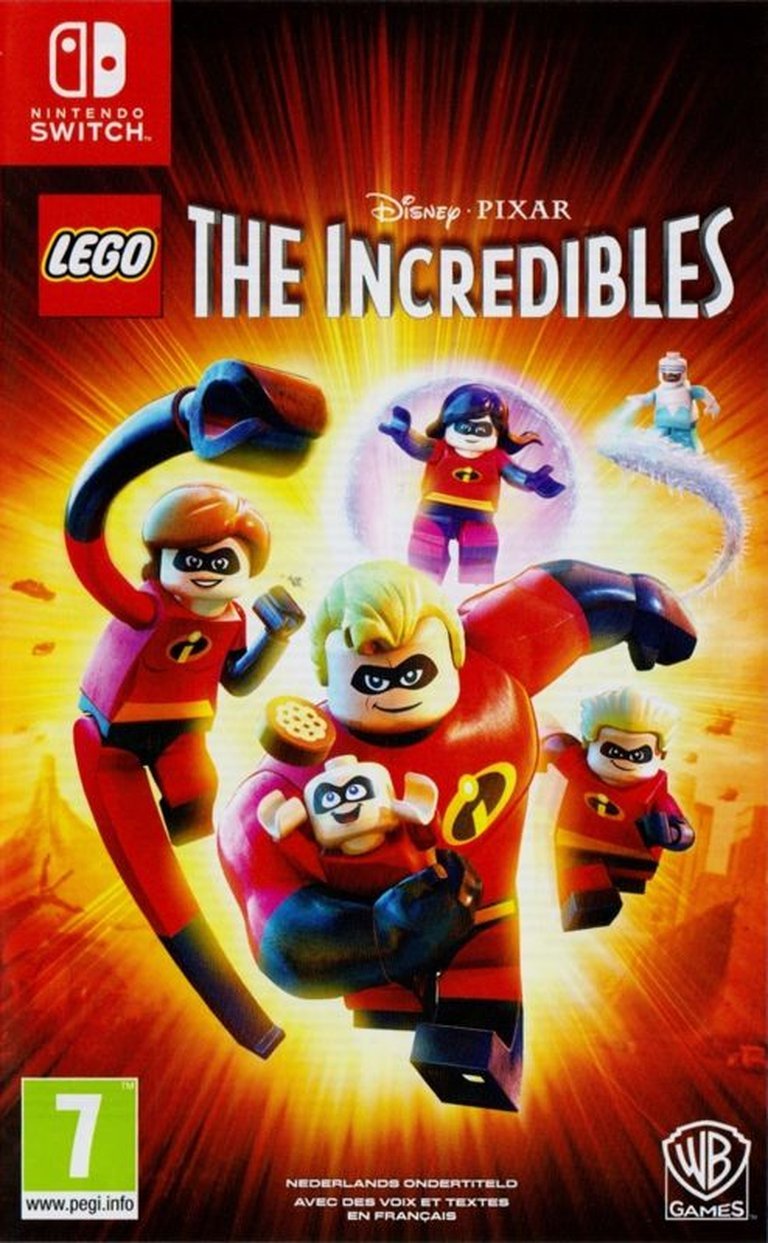
LEGO The Incredibles is an action-adventure game set in the vibrant, block-filled world of the beloved Pixar franchise. Players take on the roles of the Parr family and other iconic characters as they battle villains, solve puzzles, and explore open-world environments inspired by the films. The game blends humor, cooperative gameplay, and classic LEGO charm, allowing fans to relive key moments from The Incredibles and The Incredibles 2 while unlocking new abilities and customizable characters.
Gameplay Videos
Where to Buy LEGO The Incredibles
PC
LEGO The Incredibles Free Download
LEGO The Incredibles Cracks & Fixes
LEGO The Incredibles Mods
LEGO The Incredibles Guides & Walkthroughs
LEGO The Incredibles Reviews & Reception
metacritic.com (69/100): A triumphant return to form for the series.
switchscores.com (68.4/100): This game has a video.
nintendolife.com : LEGO The Incredibles rarely breaks from the blueprint that’s served it well for so long.
opencritic.com (68/100): LEGO The Incredibles is exactly the kind of inoffensive and family-friendly action adventure fun you’d expect from a TT Games offering.
LEGO The Incredibles Cheats & Codes
PC
Pause the game, select the ‘Extras’ option, and choose the ‘Enter Code’ selection.
| Code | Effect |
|---|---|
| BRAB1R | Unlocks Edna Mode (Juniors) |
| G1MHR7 | Unlocks Gamma Jack |
PlayStation 4
Pause the game, select the ‘Extras’ option, and choose the ‘Enter Code’ selection.
| Code | Effect |
|---|---|
| BRAB1R | Unlocks Edna Mode (Juniors) |
| G1MHR7 | Unlocks Gamma Jack |
Xbox One
Pause the game, select the ‘Extras’ option, and choose the ‘Enter Code’ selection.
| Code | Effect |
|---|---|
| BRAB1R | Unlocks Edna Mode (Juniors) |
| G1MHR7 | Unlocks Gamma Jack |
Nintendo Switch
Pause the game, select the ‘Extras’ option, and choose the ‘Enter Code’ selection.
| Code | Effect |
|---|---|
| BRAB1R | Unlocks Edna Mode (Juniors) |
| G1MHR7 | Unlocks Gamma Jack |
LEGO The Incredibles: A Comprehensive Retrospective
Introduction
In the vast, block-strewn landscape of licensed video games, LEGO The Incredibles stands as a testament to the enduring appeal of the LEGO video game formula. Released in 2018 by TT Fusion and published by Warner Bros. Interactive Entertainment, this title sought to capitalize on the resurgence of Pixar’s beloved superhero family, timed perfectly with the theatrical release of Incredibles 2. But does it rise to the occasion, or does it merely assemble the same old pieces in a familiar pattern? This review will dissect LEGO The Incredibles from every angle—its development, narrative, gameplay, world-building, reception, and legacy—to determine its place in the pantheon of LEGO games and the broader gaming landscape.
Development History & Context
The Studio and the Vision
LEGO The Incredibles was developed by TT Fusion, a subsidiary of TT Games, the studio behind the long-running LEGO video game series. TT Fusion, known for its work on portable and smaller-scale LEGO titles, took the reins for this project, marking a shift from the larger TT Games team that typically handled major console releases. The decision to assign the project to TT Fusion may have been influenced by the game’s simultaneous development alongside Incredibles 2, requiring a nimble team capable of adapting to the evolving narrative of the sequel.
The vision for LEGO The Incredibles was clear from the outset: create a game that faithfully adapts both The Incredibles (2004) and Incredibles 2 (2018) while infusing the experience with the humor, creativity, and cooperative gameplay that define the LEGO series. The game was announced on March 28, 2018, just three months before its release, a tight turnaround that suggests a focused development cycle aimed at aligning with the film’s marketing blitz.
Technological Constraints and Innovations
Developed using a modified version of the engine powering previous LEGO titles, LEGO The Incredibles did not push technological boundaries but instead refined existing mechanics. The game’s open-world hub, comprising the fictional cities of Municiberg and New Urbem, was a notable addition, offering players a sandbox to explore between story missions. However, the engine’s limitations were evident in the game’s performance, particularly on the Nintendo Switch, where frame rate drops and loading issues marred the experience at launch.
One of the game’s most innovative features was the “Crime Wave” system, a dynamic mission structure that tasked players with responding to supervillain threats in real-time. This system added a layer of unpredictability to the open world, though its execution was somewhat hampered by repetitive objectives.
The Gaming Landscape in 2018
2018 was a year of both innovation and stagnation in the gaming industry. Open-world games like Red Dead Redemption 2 and Spider-Man set new standards for narrative depth and technical prowess, while indie titles like Celeste and Hollow Knight proved that creativity could thrive outside the AAA space. Against this backdrop, LEGO The Incredibles entered a market where licensed games were often viewed as safe but unremarkable.
The LEGO video game series, by this point, had become a staple of family-friendly gaming, with titles like LEGO Marvel Super Heroes and LEGO Star Wars: The Force Awakens enjoying commercial success. However, the formula was beginning to show its age, and LEGO The Incredibles faced the challenge of proving that the series could still innovate within its established framework.
Narrative & Thematic Deep Dive
Plot Structure and Adaptation
LEGO The Incredibles takes the unusual approach of beginning with the events of Incredibles 2 before flashing back to the original film. This narrative structure was likely chosen to avoid spoiling the sequel for players who had not yet seen the movie, but it also created a disjointed experience for those familiar with the source material. The game’s story closely follows the plots of both films, albeit with humorous deviations and LEGO-style reinterpretations of key scenes.
For example:
– Mr. Incredible is aided by Frozone in the battle against the Omnidroids on Nomanisan Island, a departure from the film where he fights alone.
– Gazerbeam survives his encounter with Syndrome, assisting Mr. Incredible in sneaking into the villain’s lair.
– Syndrome’s defeat is altered, with Jack-Jack’s powers forcing him into hiding rather than killing him via jet engine.
These changes, while minor, reflect the game’s commitment to maintaining the lighthearted tone of the LEGO series while staying true to the spirit of the films.
Character Dynamics and Themes
The game’s narrative explores themes of family, heroism, and identity, much like the films. The Parr family’s struggles to balance their superhero duties with their personal lives are front and center, with missions often requiring players to switch between characters to solve puzzles or overcome obstacles. This mechanic reinforces the game’s emphasis on teamwork and cooperation, a recurring theme in both the Incredibles films and the LEGO series.
The game also introduces new characters and cameos from other Pixar properties, such as Flik from A Bug’s Life, Merida from Brave, and Woody from Toy Story. These additions expand the game’s roster and provide fans with a sense of nostalgia, though their inclusion feels somewhat forced at times.
Dialogue and Voice Acting
The voice acting in LEGO The Incredibles is a mixed bag. While some original cast members reprise their roles—such as Sarah Vowell as Violet and Huck Milner as Dash—the leads are voiced by sound-alikes:
– Jeff Bergman as Mr. Incredible (replacing Craig T. Nelson)
– Ally Johnson as Elastigirl (replacing Holly Hunter)
– John Eric Bentley as Frozone (replacing Samuel L. Jackson)
The performances are serviceable but lack the emotional depth and nuance of the original actors. The game’s dialogue is peppered with LEGO-style humor, including slapstick gags and fourth-wall-breaking jokes, which will delight younger players but may feel tired to longtime fans of the series.
Gameplay Mechanics & Systems
Core Gameplay Loop
LEGO The Incredibles follows the tried-and-true LEGO gameplay formula:
1. Destroy everything in sight to collect studs (the game’s currency).
2. Solve puzzles using character-specific abilities.
3. Build LEGO objects from scattered bricks to progress.
4. Repeat until the level is complete.
This loop is as satisfying as it is familiar, though it does little to innovate upon the series’ established mechanics. The game’s 12 story levels (six for each film) are linear and straightforward, with free-play mode unlocking after completion to allow players to revisit levels with any character.
Character Abilities and Progression
Each member of the Parr family—and the game’s extensive roster of unlockable characters—possesses unique abilities that are essential for progression:
– Mr. Incredible: Super strength, invulnerability.
– Elastigirl: Elasticity, grappling.
– Violet: Invisibility, force fields.
– Dash: Super speed, wall-crawling.
– Jack-Jack: Multiple powers (fire, telekinesis, teleportation).
– Frozone: Ice blasts, freezing water.
These abilities are used to solve puzzles, defeat enemies, and navigate environments, with the game often requiring players to switch between characters to overcome obstacles. The character progression system is minimal, with most unlocks tied to collecting minikits and character tokens rather than traditional leveling.
Combat and Enemy Variety
Combat in LEGO The Incredibles is simple but effective. Players can punch, kick, and use special abilities to defeat waves of enemies, with boss battles serving as the game’s primary combat challenges. The Crime Wave system introduces dynamic enemy encounters in the open world, though these often devolve into repetitive brawls.
The game’s enemy variety is limited, with most foes consisting of generic thugs, robots, and supervillain minions. Boss battles, while visually impressive, are often overly simplistic, relying on basic patterns that can be exploited with minimal effort.
Open World and Exploration
The game’s open-world hub, comprising Municiberg and New Urbem, is one of its most ambitious features. Players can freely explore the cities, completing side missions, responding to Crime Waves, and collecting hidden items. However, the open world feels underutilized, with many areas serving as little more than empty backdrops for the game’s primary objectives.
The Crime Wave system is a highlight, tasking players with responding to supervillain threats in real-time. These missions add a sense of urgency to the open world but are often repetitive, with objectives ranging from defusing bombs to defeating enemy waves.
Cooperative Play
LEGO The Incredibles supports local co-op for two players, a feature that has become a staple of the series. The drop-in/drop-out mechanics make it easy for a second player to join at any time, though the split-screen implementation can feel cramped, particularly on smaller displays.
The game’s family-friendly design shines in co-op mode, with puzzles and combat encounters often requiring teamwork to overcome. However, the AI companion in single-player mode is lackluster, often failing to assist in meaningful ways.
World-Building, Art & Sound
Visual Design and Aesthetics
LEGO The Incredibles adopts the signature LEGO art style, with characters and environments rendered in blocky, colorful detail. The game’s visuals are charming and vibrant, though they do little to push the boundaries of the series’ established aesthetic.
The open-world cities of Municiberg and New Urbem are faithfully recreated, with landmarks from the films serving as key locations. However, the cities often feel empty and lifeless, with few NPCs or interactive elements to engage with.
Sound Design and Music
The game’s sound design is a highlight, with crunching LEGO bricks, superhero sound effects, and dynamic music creating an immersive experience. The score, composed by Simon Withenshaw, draws heavily from Michael Giacchino’s iconic themes from the Incredibles films, remixed to fit the game’s lighthearted tone.
The voice acting, while serviceable, is a mixed bag. The sound-alike performances for the lead roles are passable but lack the emotional depth of the original actors. The game’s humor, delivered through slapstick gags and fourth-wall-breaking jokes, will appeal to younger players but may feel tired to longtime fans.
Reception & Legacy
Critical Reception
LEGO The Incredibles received mixed or average reviews upon release, with critics praising its faithful adaptation of the films and family-friendly gameplay while criticizing its repetitive mechanics and lack of innovation.
- Metacritic Scores:
- PlayStation 4: 69/100
- Xbox One: 74/100
- Nintendo Switch: 65/100
Critics highlighted the game’s strong co-op mechanics and humorous tone but noted that it failed to evolve the LEGO formula in meaningful ways. The Nintendo Switch version was particularly criticized for its technical issues, including frame rate drops and loading delays.
Commercial Performance
The game enjoyed solid commercial success, debuting as the seventh best-selling game in the U.S. for June 2018 and the second best-selling game in the U.K. for the week ending July 14, 2018. Its timing alongside the release of Incredibles 2—which grossed $1.243 billion worldwide—undoubtedly contributed to its strong sales.
Legacy and Influence
LEGO The Incredibles has had a modest impact on the LEGO video game series. While it did not introduce any groundbreaking mechanics, it reinforced the series’ commitment to family-friendly gameplay and cooperative experiences. The game’s open-world structure and Crime Wave system have since been refined in later LEGO titles, though LEGO The Incredibles itself remains a minor entry in the series’ history.
Conclusion
LEGO The Incredibles is a competent but unremarkable entry in the LEGO video game series. It faithfully adapts the Incredibles films with humor and charm, offering a family-friendly experience that shines in co-op play. However, its repetitive gameplay, lack of innovation, and technical issues prevent it from standing out in a crowded field.
For fans of the Incredibles films or the LEGO series, LEGO The Incredibles is a solid but safe choice. It delivers exactly what one would expect from a LEGO game—fun, accessible gameplay with a dash of humor—but does little to push the series forward. In the grand tapestry of LEGO video games, LEGO The Incredibles is neither the best nor the worst; it is simply another brick in the wall.
Final Verdict: 7/10 – A fun but forgettable adventure for fans of the franchise.