
- Release Year: 2018
- Platforms: Nintendo Switch, PlayStation 4, Windows Apps, Windows, Xbox One
- Publisher: AnotherIndie LLC, Mayflower Entertainment Co., Ltd.
- Developer: PT Semisoft Entertainment Studios
- Genre: Role-playing, RPG, Strategy, Tactics
- Perspective: 3rd-person
- Game Mode: Single-player
- Gameplay: Action RPG, Japanese-style RPG, Point and select, Quick-time events, Turn-based
- Setting: Fantasy
- Average Score: 67/100
Description
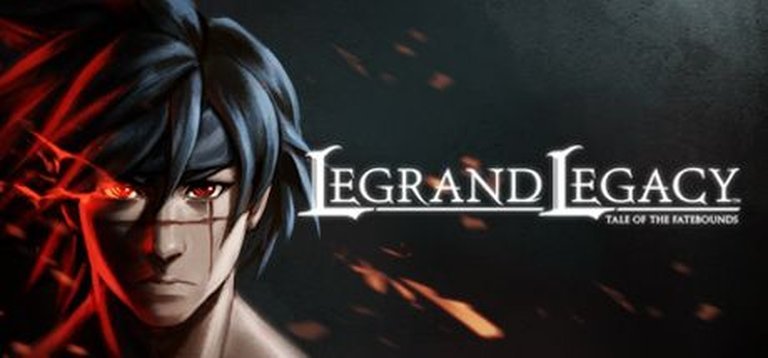
Legrand Legacy: Tale of the Fatebounds is a classic-style JRPG set in the war-torn continent of Legrand, where players lead a band of heroes known as Fatebounds on an epic journey to save their world. Featuring strategic turn-based combat, anime-inspired visuals, and deep narrative elements, the game combines exploration, party management, and fate-altering decisions within a fantasy universe filled with political intrigue, ancient prophecies, and tactical boss battles that pay homage to golden-era JRPGs.
Gameplay Videos
Where to Buy Legrand Legacy: Tale of the Fatebounds
Legrand Legacy: Tale of the Fatebounds Free Download
Legrand Legacy: Tale of the Fatebounds Cracks & Fixes
Legrand Legacy: Tale of the Fatebounds Guides & Walkthroughs
Legrand Legacy: Tale of the Fatebounds Reviews & Reception
metacritic.com (67/100): Gorgeous visuals and gameplay make up for it tenfold
destructoid.com (65/100): Familiar but dated
opencritic.com (70/100): A pretty but otherwise generic RPG
Legrand Legacy: Tale of the Fatebounds: Review
Legrand Legacy: Tale of the Fatebounds is a game that stands as a testament to the enduring appeal of classic Japanese-style RPGs (JRPGs). Developed by Semisoft, a small Indonesian studio, and published by Another Indie, this title is a nostalgic love letter to the golden era of JRPGs, evoking the spirit of games like Suikoden, The Legend of Dragoon, and Final Fantasy. Released in January 2018 for Microsoft Windows, and later ported to Nintendo Switch, PlayStation 4, and Xbox One, Legrand Legacy offers a rich and engaging experience that harkens back to a time when storytelling and gameplay mechanics were king.
Development History & Context
Semisoft, the developer behind Legrand Legacy, is a small studio with a big vision. Comprising 27 in-house developers, the team embarked on a journey to create a game that would capture the essence of classic JRPGs. The development process began in 2015, with the team working independently for two years before turning to Kickstarter for additional funding. Two crowdfunding campaigns were launched; the initial one in November 2016 was unsuccessful, but the second campaign in January 2017 met its funding goals, raising an additional £40,000 (approximately $54,000) for the latter part of development.
The game’s premise was to create a “love letter to classic JRPGs,” featuring 3D models that move over hand-drawn 2D backgrounds, a visual style shared by many PlayStation 1 and PlayStation 2 JRPGs. Influences for the game include Suikoden, The Legend of Dragoon, and Final Fantasy. A “prologue demo” of the game was released in November 2016, and an early build was featured at SXSW, PAX East, and E3 2017. The game’s final release was initially scheduled for September 2017 but was later delayed, ultimately releasing on Microsoft Windows on January 24, 2018, via Steam and GOG.com. Around the time of its original release, it was also announced that the game would later be released on other platforms as well: Nintendo Switch, PlayStation 4, and Xbox One in 2019.
Narrative & Thematic Deep Dive
Legrand Legacy follows the story of Finn, a reluctant leader of a group of travelers. Finn suffers from amnesia and possesses special powers he doesn’t understand, traveling through a world torn by civil war between Fandor and Altea. The narrative is rich with tropes that fans of the genre have seen in the latest fifteen to twenty years: amnesiac main character, tomboy heroine, a mysterious old man with strange powers, a great war between nations, and otherworldly powers aiming to destroy the world. Despite this, both the story and characters manage to be enjoyable, but mostly as a tribute to older games since they are not terribly original.
The world of Legrand Legacy is crafted with distinct atmospheres, each location having a unique feel heightened by impressive hand-drawn backgrounds. The story is engaging from start to finish, with a standard-fare and heavy-handed use of tropes, but it remains fairly captivating nonetheless. The game’s homage to PS1 era JRPGs doesn’t stop at the story and characters; the gameplay plays like one released shortly after Final Fantasy VII. Players control Finn as he explores towns and dungeons, all coming with static camera angles and visible enemies. Touching an enemy from behind allows players to initiate combat with a sound advantage, while getting touched from behind an enemy will allow them to attack party members at the start of the battle. Completing the homage are treasure chests scattered all over the locations and secret exits which can lead to the discovery of rare items and more.
Gameplay Mechanics & Systems
Legrand Legacy employs a turn-based battle system with interesting tactical and action elements which make it quite involving. At the start of each turn, players can choose to perform a regular attack with the equipped weapon, use items, defend, and unleash skills which are called Grimoires. With the exception of using items, all actions, when performed, bring up a circle with a highlighted area: if the player manages to hit the shown button at the right time, the action will be more effective. Pressing the wrong button will decrease both strength and accuracy of the regular attack or Grimoire, or make the defensive action way less effective.
Alongside these small action elements, the Legrand Legacy battle system also comes with plenty of tactical ones. Even before battles begin, players have to decide the party formation: characters in the front can only attack enemies in the front if they have a short range weapon, while those in the back can only attack with long-range weapons or Grimoires. The formation can be changed during battle, allowing players to adapt to the situation. Additionally, all enemies come with resistances and weaknesses, adding yet another tactical element to the battle system. All these action and tactical elements mesh quite well, so it doesn’t take too long to get acquainted with the battle system intricacies.
The growth system is also quite interesting, even though it’s not something we haven’t seen before. Upon level up, characters receive an HP and AP increase as well as ATPs that can be spent to increase stats. Increasing stats to certain points also unlocks Grimoires, opening up some interesting customization possibilities: while Finn, to make an example, is mostly a short range, powerful fighter, players can choose to make him more balanced by allowing him to learn a variety of supportive Grimoires, which are learned by improving stats other than strength. Leveling up and learning Grimoires aren’t the only way to make characters stronger in the game, as a crafting system also allows players to craft weapons that are not available in regular shops.
Adding more variety to the experience are also some true tactical battles, which have definitely been influenced by another great JRPG series which started on the original PlayStation, Suikoden. During the course of the game, players will get involved in some tactical battles, moving units on a battlefield and fight enemies. There are a different set of mechanics behind these battles, adding more variety to the experience.
Most of the JRPGs from the PS1 era came with a lot of mini-games, and, being a homage to them, Legrand Legacy features plenty of them, ranging from some fighting mini-games to fishing and so on. They are not particularly difficult to complete, so they are a welcome change of pace. The game also features a town-building mini-game where players recruit craftsmen to rebuild the abandoned city of Dumville. Not terribly original, but definitely a welcome diversion.
World-Building, Art & Sound
The game’s setting is a fantasy world torn by war, with a rich history and lore that is gradually revealed as the player progresses. The atmosphere is enhanced by the game’s unique art direction, which features hand-drawn backgrounds and 3D character models that move over these backgrounds. The visual style is reminiscent of classic JRPGs from the PlayStation era, creating a sense of nostalgia for players who grew up with these games.
The soundtrack is also a standout feature, with select town themes being particularly memorable. The music complements the game’s atmosphere perfectly, enhancing the overall experience. The sound design is equally impressive, with clear and distinct sound effects that add to the immersion.
Reception & Legacy
Legrand Legacy received mixed reviews from critics. At Metacritic, which assigns a normalized rating out of 100 to reviews from mainstream critics, the Windows release of the game has an average score of 67 out of 100 which indicates “mixed or average reviews,” based on 10 reviews. RPGFan’s review illustrated this mixed sentiment, asserting that while the developers accurately recreated the feel of classic JRPGs, this mean they recreated much of the good and the bad parts of the genre, stating that “Although it clearly has its flaws, I enjoyed the roughly 40 hours I spent with it all the same…Semisoft wished to create a ‘love letter’ to JRPGs, and perhaps it did that in a most unintentional way. Legrand Legacy manages to capture much of the indelible charm of the JRPGs to which it pays homage through its rough-around-the-edges execution.”
The game has a Moby Score of 6.9, ranking #16,230 of 27K games. Critics gave it an average score of 68% (based on 9 ratings), with reviews ranging from 40% to 80%. The game was praised for its nostalgic appeal and engaging gameplay mechanics, but criticized for its lack of innovation and reliance on past lessons over experimenting with new ones. Despite this, Semisoft clearly understood the fine line between derivative mimicry and inspiration.
Conclusion
Legrand Legacy: Tale of the Fatebounds is a difficult game to score properly. While the game is definitely enjoyable, there isn’t anything new that hasn’t been done by other games in the past fifteen years. For this reason, those looking for something new may be disappointed in Legrand Legacy, as the game doesn’t go past tributing the golden era of JRPGs. However, for fans of classic JRPGs, Legrand Legacy offers a nostalgic and engaging experience that is well worth the time. The game’s strengths lie in its rich narrative, engaging gameplay mechanics, and impressive art and sound design. While it may not break new ground, Legrand Legacy is a solid entry in the JRPG genre that fans of the style will appreciate.