
- Release Year: 2023
- Platforms: Windows
- Publisher: Aionware Ltd
- Developer: Aionware Ltd
- Genre: Action
- Perspective: First-person
- Gameplay: Shooter
- Setting: Futuristic, Sci-fi
- Average Score: 63/100
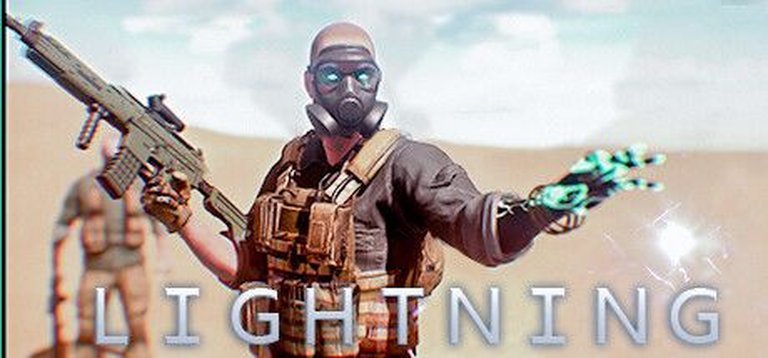
Description
Lightning is a fast-paced first-person shooter set in a futuristic, sci-fi world overrun by zombies. Developed by Aionware Ltd and released in Early Access on Steam, the game uses Unreal Engine 4 and PhysX to deliver intense combat with direct control mechanics, challenging players to survive in a zombie-infested environment.
Where to Buy Lightning
PC
Lightning Free Download
Lightning Reviews & Reception
metacritic.com (63/100): everything about Lightning Returns just screams “serviceable”, not “good”, and absolutely not “great”.
Lightning: The Icon Who Redefined and Divided a Franchise – A Definitive Historical Analysis
Introduction: The Lightning Paradox
In the sprawling, often convoluted cosmos of video game icons, few characters embody a trajectory of adoration, revulsion, and relentless reinvention quite like Lightning Farron. Born as Claire Farron in the nebulous worldbuilding of Final Fantasy XIII, she was intended to be Square Enix’s answer to the stoic, cool archetype—a reserved warrior driven by familial love. Over a trilogy of games released between 2009 and 2013, however, Lightning metamorphosed from a relatable protagonist into a near-omnipotent goddess, a cosmic savior, and finally, a weary reaper of souls. Her journey, culminating in Lightning Returns: Final Fantasy XIII, is one of the most audacious—and divisive—narrative experiments in the modern RPG canon. This review posits that Lightning’s legacy is a dual-edged sword: she represents the Final Fantasy series’ greatest commitment to thematic, ludic, and narrative ambition, but also its most profound stumble into self-parody, uneven execution, and alienating design. To analyze Lightning is to analyze a decade of Square Enix’s creative confidence, its fraught relationship with fan expectations, and the very definition of what an RPG protagonist can be.
(Note on Source Material Confusion: The provided MobyGames entry for a 2023 indie FPS titled “Lightning” is entirely unrelated to this analysis. The subject here, as contextually defined by the Reddit and RPG Site reviews, is unequivocally Lightning Farron from the *Final Fantasy XIII trilogy, with a primary focus on her final chapter, Lightning Returns. The following analysis synthesizes the latter two sources as its core critical material.)*
1. Development History & Context: The XIII Trilogy’s Tumultuous Arc
The Vision and Its Discontents
The Final Fantasy XIII trilogy was conceived under the “Fabula Nova Crystallis” mythos umbrella, a sub-series binding games through shared deities and lore but allowing for wildly disparate tones. XIII (2009), developed by a team led by Motomu Toriyama and character-designed by Tetsuya Nomura, was a reaction to the more open-ended, world-map-heavy entries of the PlayStation 2 era. Its development was famously protracted and troubled, with the team struggling to balance the PS3’s hardware with a desire for cinematic spectacle. The result was a game of stark, beautiful linear corridors—a design choice defended as “ludonarrative harmony” (you’re a fugitive, so you can’t freely explore) but criticized as a confining corridor shooter with RPG elements.
XIII-2 (2011) was a direct, almost panicked, response to this criticism. It jettisoned the original’s party-based Paradigm Shift system for a time-traveling monster-taming framework, introduced a massive, branching world map, and shifted the perspective to Serah Farron. It was a game of “over-corrections,” as RPG Site’s Paul Shkreli notes, feeling at times like it was built from a forum wishlist rather than cohesive vision.
Lightning Returns: The Experimental Swan Song
Lightning Returns (2013 in Japan, 2013/2014 in the West) was the trilogy’s finale and its most radical departure. Developed under immense pressure to conclude a story many felt had spun out of control, it was designed by a team that seemed determined to break every established “Final Fantasy” and “XIII” rule. It removed party members, levels, and traditional experience points. It imposed a hard, narrative-driven time limit. It embraced a costumey, almost parody-like aesthetic for its protagonist. This was not a safe sequel; it was a high-stakes gamble to distill the trilogy’s themes—salvation, sacrifice, the nature of the soul—into a unique gameplay loop. As Shkreli observes, its experimental nature, “coupled with its nigh-perfect mix of RPG mechanics and action-style combat,” is precisely what makes it a sublime, if flawed, example of the “transgressive” spirit of Final Fantasy.
Technological & Market Context
All three games ran on Square Enix’s proprietary Crystal Tools engine, which struggled with the PS3/Xbox 360 generation’s complexity, leading to performance issues and visual compromises. By 2013, the Western RPG landscape was dominated by the open-world sensibilities of Skyrim and the polished, cinematic action of The Witcher 2. Lightning Returns was an outlier: a Japanese RPG that felt aggressively action-oriented in its combat yet narratively tight and restrictive in its structure, placing it at odds with both AAA Western trends and the more traditional JRPG fanbase it was leaving behind.
2. Narrative & Thematic Deep Dive: Salvation on the Clock
The Premise and Its Promises
The plot of Lightning Returns is famously convoluted, even by Final Fantasy standards. Set 500 years after XIII-2, the world is a dying “Nova Chrysalia” under the threat of total dissolution in thirteen days. Lightning, having become the Goddess of the Dead, is chosen by the god Bhunivelze (manifesting as a teenage Hope Estheim) to be the “Savior,” collecting the souls of the living to create a new world. Her stated goal: to reunite with her resurrected sister, Serah. This premise immediately establishes the core conflicts: the morality of forcibly harvesting souls, the deceptive nature of Bhunivelze, and Lightning’s own journey from a duty-bound instrument to a rebel against divinity.
Themes: Soul, Duty, and False Gods
The narrative is a dense tapestry of theological and existential questioning. The central theme is the value and definition of a soul. Side quests systematically dismantle Lightning’s initial assumptions: she learns that the “dead” (like her friend Sazh’s son Dajh) can be saved, that non-humans (like the beastman bandits) possess souls worthy of salvation, and that Bhunivelze’s plan is a cold, mechanistic evacuation that discards the flawed but beautiful world. This progressive revelation is the plot’s greatest strength, turning the main quest from a divine commission into a quest for genuine, compassionate salvation.
Lightning’s arc is one of reclaiming agency. She begins as a “tool” and ends by defying Bhunivelze, choosing to save all souls and restore the world’s original inhabitants. Her relationship with Lumina, a chaotic doppelgänger of Serah who manifests negative human traits, is a brilliant externalization of her own internal struggle—she must confront the parts of herself (and others) she’d rather ignore to achieve true growth.
Narrative Flaws: The Mess of Mythos
However, the execution is marred by what the Reddit reviewer calls “Mad Libs style exposition word salad.” The XIII trilogy’s lore—fal’Cie, l’Cie, crystal stasis, paradoxes—is referenced but rarely explained satisfyingly for newcomers or even returning players. Hope’s de-aging is “acknowledged, if never satisfactorily explained.” The treatment of supporting characters is uneven. While the reviewer praises the “reduction to their absolute worst” for most of the original cast (a potent thematic device forcing them to save themselves), Sazh Katzroy’s sidelining in the finale is a palpable narrative failure—a beloved character reduced to a cameo while Noel takes his thematic place. The ending’s vagueness regarding the fates of Serah and Snow is a lingering frustration, and the dialogue is often cited as repetitive and clunky.
3. Gameplay Mechanics & Systems: The Schema Revolution
The Core Loop: Temporal Pressure & Schema Switching
Lightning Returns’ genius lies in its Schema system, which replaces the Paradigm Shift of the first two games. Lightning can have up to three Schemata active at once, each a loadout of garb (costume), weapon, shield, accessory, and up to four abilities. Each Schema has its own ATB (Active Time Battle) gauge that depletes with ability use. The frantic, real-time strategy involves constantly switching between Schemata to empty a gauge (to recharge another) and to match the enemy’s weaknesses or stagger state.
This system is a perfect blend of the Final Fantasy job system’s customization and Final Fantasy X-2’s Dressphere immediacy. It makes Lightning a one-woman army, demanding player mastery over a vast ability library. The Reddit reviewer’s enthusiasm is palpable: “Switching schema is a ton of fun and very fluid… figuring out the optimal ways to stagger enemies is great.” It encourages deep experimentation—building a tanky healer, a glass-cannon magic user, or a staggering physical specialist—and truly “tailors Lightning to your playstyle.”
Progression & Customization: A Double-Edged Sword
Character progression is divorced from combat. Stats increase via quest completion (Combat,探索, Rescue, etc.), a clever integration of narrative goals into mechanical growth. Equipment and ability upgrades are central, but the system has severe friction points. The Reddit reviewer highlights the “interface for ability upgrading is just bad” and that equipment upgrading is NG+ only, withholding a key progression layer from initial playthroughs. The sheer volume of customization (garbs, weapons, shields, accessories, ability房) is staggering but can be overwhelming. The garbs themselves—ranging from warrior-like to absurdly frilly or fanservice-y—are a point of contention, with the reviewer noting they feel “ridiculous and wildly out of character for Lightning.” This touches on a core ludonarrative dissonance: the game mechanically encourages playful, stylized expression while narratively demanding a grave, solemn savior.
The Time mechanic: Annoyance or Asset?
The thirteen-day world-ending clock is the game’s most controversial feature. It can be extended by completing quests or using EP (Energy Points). Shkreli correctly identifies it as “little more than an annoyance” for a skilled player who can extend time freely, but for others, it creates a stressful, artificial urgency that conflicts with the desire to explore and master the deep systems. It’s a narrative device first, gameplay mechanism second, and its value depends entirely on player tolerance for timed pressure. The reviewer finds it manageable but un-inspiring.
Flaws: Repetition and Gauntlets
The combat’s Achilles’ heel is enemy variety. As both reviews note, you’ll skewer countless Gremlins and fight repetitive Archangeli. Large monster fights before the endgame are described as “incredibly annoying.” The Stagger indicator is criticized as useless compared to the clear gauges of XIII and XIII-2. The Ultimate Lair and final dungeon are “simple” and “enemy gauntlets,” failing to leverage the combat system’s potential in a climactic way. Menus for turning in quests are a “slog,” a common complaint about the game’s UI/UX polish.
4. World-Building, Art & Sound: A Dying World of Contrasts
The World of Nova Chrysalia
The setting is a fragmented, dying world divided into starkly different zones:
* Luxerion: A dark, gothic city of eternal twilight, dripping with religious iconography and political tension.
* Yusnaan: A chaotic, perpetually partying metropolis of excess and dying light.
* The Dead Dunes: A vast, empty desert with ancient ruins, criticized for its size and lack of transport (no Odin).
* The Wildlands: A lush, green zone where Lightning’s Eidolon, Odin, serves as a mount, making it feel most integrated.
Each city is a narrative theme made manifest. The world-building is environmental storytelling at its best—lore is found in books, item descriptions, and NPC dialogues that deepen the philosophical questions. However, as noted, the Ultimate Lair (a series of arena-like corridors) and the Temple Ruins are visually and spatially unremarkable, a drop in quality from the main cities.
Aesthetic Duality: Gothic and Garb
The art direction, led by Tetsuya Nomura, is a study in contrasts. The environments are generally gothic, somber, and beautiful, emphasizing decay and endings. Lightning’s costumes, however, explode with colorful, often outlandish design—from warrior leathers to magus robes to frilly dresses. This creates a jarring but intentional dissonance between the world’s grave tone and the protagonist’s customizable, sometimes silly, appearance. It reflects the game’s central tension: a serious story being told through a system that encourages player whimsy.
Soundtrack: A Mix of Brilliance and Fatigue
Composer Masashi Hamauzu returns, weaving new themes with repurposed motifs from XIII and XIII-2. The new area and battle themes are “generally very good, with the area and most of the battle themes in particular standing out.” However, the reviewer laments the overuse of recycled music, which lessens the sense of a fresh sonic landscape. The soundtrack also suffers from an “open world issue”—repetition within large zones like Yusnaan. The most egregious flaw is loading screens cutting off music, ruining the atmospheric continuity even in supposedly seamless areas like the Ultimate Lair. This is a significant technical and design misstep that undermines immersion.
5. Reception & Legacy: A Black Sheep’s Complex Afterlife
Contemporary Reception (2013-2014)
Upon release, Lightning Returns received mixed-to-positive reviews from critics (typically in the 75-80/100 range) but was profoundly divisive among fans. Praises focused on the innovative, addictive combat and the bold, focused narrative. Criticisms centered on the restrictive time mechanic (feeling like a “chore”), the garish costume design for a traditionally stoic character, the shallow main quest structure padded by repetitive side quests, and the feeling that it was an appendix to a story many felt concluded with XIII.
Commercial performance was modest. It sold over 1 million copies worldwide by 2014, but this was seen as a decline from XIII-2, reflecting the trilogy’s waning momentum and increasing audience polarization.
Evolving Reputation: From Scorn to Cult Status
In the decade since, its reputation has warmer but remains fiercely debated. The Reddit reviewer’s experience—going in with low expectations and emerging with a “9.5/10” adoration—is increasingly common. Reappraisals focus on:
1. Combat as the Trilogy’s Pinnacle: It’s widely acknowledged as the most strategically deep and mechanically satisfying entry, a system that “the series continues to chase” (Shkreli), influencing later action-RPGs like Final Fantasy XVI and Stranger of Paradise.
2. Thematic Cohesion: As a finale, it directly confronts the trilogy’s core ideas of fate, godhood, and redemption in a way the more meandering XIII-2 did not.
3. Aesthetic Boldness: Its gothic-punk world and unapologetic costume design are now seen as a distinct, if uneven, artistic vision.
However, the narrative flaws remain glaring. Sazh’s erasure, the muddled treatment of the XIII lore, the clunky dialogue, and the unsatisfyingly vague ending are perennial criticisms. It is, as Shkreli says, “a divisive, experimental game and some parts are less successful than others.”
Industry Influence
Its influence is subtle but present. The Schema system is a clear antecedent to the job/class-swapping mechanics in Final Fantasy XVI’s Eikonic shifts and the ability-focused builds in Stranger of Paradise. Its willingness to impose a hard time limit for narrative purposes can be seen in later games like The Legend of Zelda: Majora’s Mask (reappraised) and Outer Wilds. Most importantly, it embodies a “transgressive” Final Fantasy ethos—a AAA game taking massive, unpopular creative risks based on a specific thematic vision, rather than playing it safe.
6. Conclusion: Lightning’s Legacy – A Flawed Masterpiece of Ambition
Lightning Returns: Final Fantasy XIII is not a great game by conventional metrics. Its UI is clunky, its world has dead ends, its story is messy, and its design choices are often baffling. Yet, it is a brilliant, essential failure. It represents the final, desperate, and spectacularly creative gasp of a team trying to reconcile a sprawling, mangled mythos into a coherent, emotionally resonant conclusion.
Lightning Farron’s journey concludes here not as a traditional hero, but as a thematic linchpin. The Schema system makes the player feel her struggle—constantly adapting, switching gears, managing resources—in a way no other RPG mechanic has matched for a solo protagonist. The time pressure and soul-collecting premise force a relentless engagement with the world’s fate. When it works, it’s transcendent. When it stumbles, it’s spectacularly awkward.
Her legacy is the Lightning Paradox: a character whose narrative trajectory became so mythically inflated it broke plausibility, yet whose final gameplay embodiment was so mechanically insightful it redefined action-RPG design for her franchise. Lightning Returns is the black sheep that, against all odds, proved the most interesting sheep in the fold. It would be a disservice to call it “underrated,” but it is absolutely misunderstood. Its worth lies not in its polish or accessibility, but in its uncompromising, messy, and deeply human attempt to marry a grand, cosmic story to an intimate, actionable player experience. For better or worse, Lightning earned her place in history not as a goddess, but as the ultimate case study in creative audacity—a lightning rod for criticism that, in its brilliant flashes, illuminated the very possibilities of the medium.
Final Verdict: 8.5/10 – A flawed, experimental, and essential conclusion to one of gaming’s most ambitious and troubled trilogies. Its influence is disproportionate to its commercial and critical reception at the time. A must-play for historians of RPG design and Final FantasyCompletionists, approached with patience and a forgiving eye for its many cracks.