
- Release Year: 2019
- Platforms: Windows
- Publisher: Campus ADN
- Genre: Action
- Perspective: Side view
- Average Score: 64/100
Description
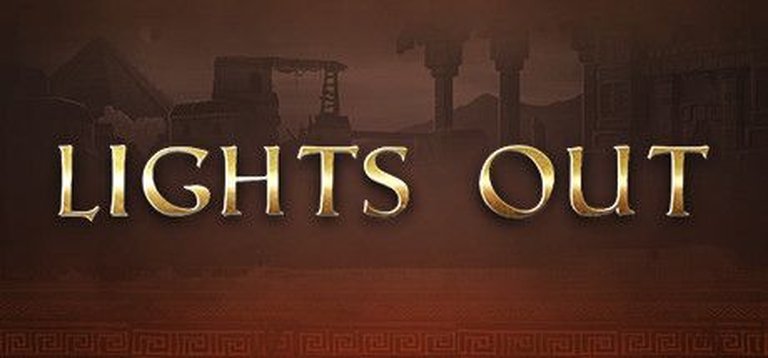
Lights Out is a 2D action-adventure platformer where players assume the role of Soona, the light-blessed last hope of Jiruho, who must venture into the dark Netherworld to save her people from an apocalypse. Guided by her agility and newfound powers, she explores the city’s treacherous temples to recover fragments of a sacred mirror, each shard granting abilities that come with unforeseen consequences as she confronts the lurking dark forces.
Gameplay Videos
Where to Buy Lights Out
PC
Lights Out Patches & Updates
Lights Out Mods
Lights Out: Review
Introduction
In the crowded landscape of independent game development, student projects often emerge as testaments to raw potential and pedagogical ambition. Lights Out, a 2D action-adventure platformer released in January 2019 by the 2017–2018 graduating class of Le Campus ADN in Montreal, stands as a fascinating microcosm of this phenomenon. While its lineage as a 15-week, student-driven production places it outside the traditional commercial narrative, Lights Out offers a compelling, if imperfect, glimpse into the fusion of academic rigor and creative aspiration. This review posits that despite its technical and narrative limitations, Lights Out succeeds as an ambitious proof-of-concept, demonstrating how constrained development cycles can yield surprisingly resonant experiences through focused thematic exploration and collaborative ingenuity. Its legacy lies not in revolutionizing its genre, but in embodying the democratizing power of accessible game development tools like Unity and Wwise.
Development History & Context
Lights Out was conceived within the unique ecosystem of Le Campus ADN, a publicly-funded vocational school dedicated exclusively to video game development. The project materialized in the final trimester of a one-year program, where students from Level Design, 3D Modeling, and 3D Animation cohorts collaborated intensively over 15 weeks to create a fully playable game. This compressed timeline imposed severe constraints: the team, numbering “30 something” students, had to scope a narrative-driven platformer from initial concept to polished release. The resulting dual output—alongside another student game, Surge—highlights the school’s pedagogical model of cross-disciplinary immersion, mirroring professional studio pipelines.
Technologically, the team leveraged Unity as its game engine and Wwise for audio, tools that democratized development but also demanded rapid mastery. The choice of a 2D side-scrolling perspective was a pragmatic decision, allowing students to focus on core mechanics and art direction rather than complex 3D rendering. Released on January 25, 2019, the game arrived amid a saturated indie platformer scene dominated by titles like Hollow Knight and Celeste. Its free-to-play model and emphasis on narrative—a deliberate departure from pure action—positioned it as a niche offering, one that prioritized thematic cohesion over market trends. This context is crucial: Lights Out is less a standalone product and more a portfolio piece, showcasing the students’ ability to execute under pressure within a structured, educational framework.
Narrative & Thematic Deep Dive
The narrative of Lights Out is lean yet thematically rich, centering on Soona, a protagonist “blessed by the light” and the last hope for the city of Jiruho. Framed as a savior narrative, the plot tasks her with venturing into the treacherous Netherworld to recover fragments of a shattered sacred mirror, thereby averting an apocalypse. The core premise—light versus darkness—serves as both a literal and metaphorical foundation. As Soona collects mirror shards, she gains new abilities, but with each power comes “consequences,” a mechanic that introduces a layer of moral ambiguity. This binary system (light/dark, power/price) echoes classical mythological tropes while allowing for nuanced exploration of sacrifice and hubris.
Character development is intentionally minimalistic, with Soona existing as an archetypal hero rather than a deeply fleshed-out individual. Her journey is defined by her purpose rather than personal growth, a choice likely necessitated by the project’s scope. Dialogue is sparse and functional, primarily serving as plot exposition rather than emotional depth. However, the narrative’s strength lies in its thematic consistency. The Netherworld is not merely a physical realm but a psychological one, its “dark forces and traps” representing existential threats to Jiruho’s culture. The fragmented mirror acts as a powerful symbol of a society in disarray, with its reassembly implying a restoration of unity and order. This allegorical approach to world-building elevates the story beyond its student-project constraints, offering a meditation on hope, consequence, and the cyclical nature of apocalypse. While the narrative lacks the polish of professional titles, its thematic coherence provides a compelling emotional anchor for the gameplay.
Gameplay Mechanics & Systems
Lights Out’s gameplay is a refined iteration of the 2D action-adventure formula, built around three core pillars: platforming, light-based combat, and mirror shard progression. The side-view perspective enables precise control, with Soona’s movement emphasizing agility through jumping, wall-sliding, and dodging. Environmental challenges include timed puzzles, spike traps, and collapsing platforms—standard but competently executed elements that leverage Unity’s physics engine effectively.
Combat is the game’s most distinctive mechanic, revolving around Soona’s “light” abilities. As she acquires mirror shards, players choose from a suite of powers, such as light projectiles, defensive shields, or area-of-effect attacks. The “nothing is free from consequences” system introduces strategic depth: each power has a resource cost (e.g., limited energy) or a debuff (e.g., reduced speed), forcing players to balance offense and utility. This risk-reward dynamic encourages experimentation and prevents ability progression from feeling purely incremental.
Character progression is linear and tied to shard collection, with shards acting as both keys and power-ups. The UI is clean and utilitarian, displaying health, energy, and equipped abilities without clutter. However, the game’s reliance on an X360 controller (as noted in system requirements) highlights a design flaw—keyboard controls are reportedly cumbersome, a critical oversight for a PC-exclusive release. Additionally, the 15-week timeline manifests in limited enemy variety and repetitive level design in later stages. Despite these issues, the core mechanics demonstrate a strong understanding of player engagement, blending familiar tropes with a unique twist on ability customization.
World-Building, Art & Sound
The world of Lights Out is defined by its stark dichotomy between Jiruho’s decaying urbanity and the Netherworld’s surreal hostility. Art direction leans into a dark, painterly aesthetic, with environments characterized by muted earth tones punctuated by luminescent light sources. Temples are rendered as crumbling stone structures overgrown with bioluminescent flora, creating a sense of ancient grandeur reclaimed by nature. Character designs are stylized and minimalist—Soona’s flowing robes and glowing aura serve as visual shorthand for her connection to the light—while enemies feature twisted, shadowy forms that emphasize the Netherworld’s corruption.
Sound design, powered by Wwise, amplifies the atmosphere. A haunting, minimalist soundtrack underscores moments of tension, with percussion-heavy tracks accompanying combat and exploration. Environmental audio is equally effective: the echo of footsteps in empty temples, the crackle of distant fires, and the low hum of ambient darkness all immerse the player. Voice acting is absent, replaced by grunts and musical stings, which, while limiting emotional nuance, reinforces the game’s wordless, fable-like tone.
The visual and audio cohesion is Lights Out’s strongest suit. The art style, though not technically groundbreaking, creates a cohesive and memorable atmosphere that transcends the project’s budgetary constraints. The consistent use of light and dark as both visual motifs and gameplay mechanics ties the aesthetic to the narrative, resulting in a world that feels lived-in and thematically resonant. This synergy between art, sound, and gameplay is a remarkable achievement for a student project, proving that atmospheric impact can be achieved without AAA resources.
Reception & Legacy
Upon release, Lights Out received a mixed reception, with its Steam page reflecting a 63% positive rating based on 33 user reviews. Positive feedback highlighted its art direction, thematic ambition, and the polish of its core mechanics, particularly the light-based ability system. Critics praised the game’s success in creating a cohesive atmosphere within its 15-week development cycle. However, negative reviews frequently cited its short length, repetitive late-game content, and the aforementioned control issues as significant drawbacks. Notably, professional outlets like IGN and Metacritic largely ignored the title, likely due to its niche student-project status, resulting in a lack of mainstream critical analysis.
Lights Out’s legacy is primarily educational and communal. Within Le Campus ADN, it serves as a benchmark for subsequent cohorts, demonstrating the viability of producing a complete, polished game under intense time pressure. Its use of Unity and Wwise also underscores the growing importance of accessible tools in academic settings. While it hasn’t directly influenced major commercial titles, its existence contributes to a broader conversation about the role of student projects in the industry. Games like What Remains of Edith Finch and Untitled Goose Game originated in similar academic environments, and Lights Out follows this tradition of proving that innovation can flourish outside traditional development pipelines. Over time, it may be recognized not for its commercial success, but for its embodiment of collaborative creativity and the potential of vocational training to foster new talent.
Conclusion
Lights Out is a testament to the adage that ambition can outweigh polish. As a student project, it excels in thematic cohesion, atmospheric design, and innovative mechanics, offering a compact yet resonant experience. While its narrative brevity, technical limitations, and lack of critical recognition prevent it from achieving greatness, it stands as a compelling case study in constrained development. The game’s greatest legacy lies in its proof that a small, determined team can craft a memorable adventure—one that honors its mythological inspirations while pushing the boundaries of academic game development. For players seeking a unique, free-to-play diversion with a strong artistic vision, Lights Out is worth experiencing. For industry historians, it represents a vital, if unheralded, chapter in the ongoing democratization of game creation. In the grand tapestry of video game history, Lights Out may not be a masterpiece, but it is a fascinating stitch—one that illuminates the power of light in even the darkest of creative constraints.