
- Release Year: 2024
- Platforms: Windows
- Publisher: Scripting Ventures
- Developer: Scripting Ventures
- Genre: Adventure
- Perspective: 3rd-person
- Game Mode: Single-player
- Gameplay: Visual novel
- Setting: Cyberpunk, dark sci-fi
- Average Score: 25/100
Description
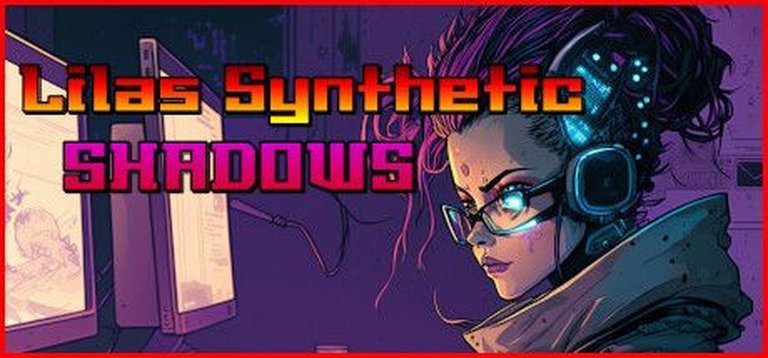
Lila’s Synthetic Shadows is a cyberpunk visual novel set in the neon-lit underworld of Neo-Tokyo, where players follow the story of Lila, a skilled hacker entangled in a high-stakes conspiracy. As she navigates a web of corporate intrigue, advanced technology, and shadowy adversaries, Lila uncovers dark truths that threaten to unravel her reality. With a gripping narrative, full audio narration, and a third-person perspective, the game blends adventure and suspense, challenging players to piece together the mysteries before the consequences spiral out of control.
Where to Buy Lila’s Synthetic Shadows
PC
Lila’s Synthetic Shadows Guides & Walkthroughs
Lila’s Synthetic Shadows Reviews & Reception
steambase.io (25/100): This score is calculated from 4 total reviews which give it a rating of 4 user reviews.
Lila’s Synthetic Shadows: A Cyberpunk Visual Novel That Stumbles in the Shadows
Introduction: A Promising Premise Undermined by Execution
Lila’s Synthetic Shadows (2024) is a cyberpunk visual novel that attempts to blend hacking intrigue, dystopian storytelling, and immersive narration into a compact, atmospheric experience. Developed by the obscure indie studio Scripting Ventures, the game positions itself as a thrilling descent into the neon-lit underbelly of Neo-Tokyo, where protagonist Lila—a skilled hacker—unravels a conspiracy that threatens to consume her. On paper, it’s a compelling setup: a female-led cyberpunk narrative with full audio narration, autoplay functionality, and a branching story that promises tension and moral ambiguity.
Yet, despite its ambitions, Lila’s Synthetic Shadows has struggled to find an audience. With a Steam user score of 25% (as of 2026), only 36 units sold, and a single active discussion thread (which critiques its AI-generated artwork), the game has become a cautionary tale about the pitfalls of AI-assisted development, minimalist design, and over-reliance on narrative at the expense of gameplay depth.
This review will dissect Lila’s Synthetic Shadows in exhaustive detail—examining its development context, narrative strengths and weaknesses, gameplay mechanics, artistic choices, and legacy—to determine whether it’s a hidden gem or a flawed experiment in indie storytelling.
Development History & Context: The Rise of AI in Indie Game Creation
The Studio Behind the Shadows: Scripting Ventures
Little is known about Scripting Ventures, the one-person (or small-team) studio behind Lila’s Synthetic Shadows. The developer’s Steam profile reveals no prior commercial releases, suggesting this is either a passion project or an experimental venture into game development. The studio’s name hints at a focus on narrative scripting, which aligns with the game’s visual novel structure.
The game’s AI-generated content disclosure is one of its most controversial aspects. According to the Steam store page, Lila’s Synthetic Shadows uses:
“AI-generated audio and visual graphics content. All AI-generated content is commercially licensed from the industry’s leading AI generation platforms.”
This admission places the game squarely in the 2023-2024 wave of AI-assisted indie games, a trend that has sparked ethical debates about artistic authenticity, job displacement, and creative ownership. While tools like MidJourney, Stable Diffusion, and ElevenLabs have democratized game asset creation, they’ve also led to uncanny valley visuals, repetitive designs, and a lack of artistic cohesion—issues that plague Lila’s Synthetic Shadows.
The Cyberpunk Renaissance & Market Saturation
Lila’s Synthetic Shadows entered a crowded cyberpunk landscape in 2024, competing with:
– AAA juggernauts (Cyberpunk 2077: Phantom Liberty)
– Indie darlings (Citizen Sleeper, The Red Strings Club)
– Visual novel hybrids (VA-11 Hall-A, Neon White)
The Steam “cyberpunk” tag alone has thousands of entries, making visibility a Herculean task for an unknown developer. The game’s $2.99 price point (later discounted to $0.59) suggests a low-budget, high-risk release strategy, likely aiming for impulse purchases rather than sustained marketing.
Technological Constraints & Design Choices
The game’s technical specifications are modest:
– Fixed/flip-screen visuals (a rarity in modern VNs)
– Menu-driven interface (no point-and-click exploration)
– 1GB storage requirement (indicating minimal assets)
– No Steam Deck support (limiting its reach)
The AI-generated artwork—while cost-effective—has drawn criticism for its inconsistent quality, as seen in the Steam community’s sole discussion thread, where a user mocks the unnatural hand and finger designs in promotional screenshots. This uncanny valley effect undermines immersion, a cardinal sin in a genre that thrives on atmosphere and aesthetic cohesion.
Narrative & Thematic Deep Dive: A Story of Hacking, Betrayal, and Existential Dread
Plot Summary: A Hacker’s Descent into Conspiracy
Lila’s Synthetic Shadows follows Lila, a freelance hacker in Neo-Tokyo, who takes on a seemingly routine job—infiltrating a corporate database. However, she quickly discovers that the assignment is far more dangerous than anticipated, entangling her in a web of corporate espionage, synthetic intelligence, and shadowy syndicates.
Key narrative beats include:
1. The Initial Hack – Lila breaches a mysterious server, uncovering encrypted files hinting at illegal human experimentation.
2. The Double-Cross – Her employer betrays her, forcing her to go rogue.
3. The AI Revelation – She learns that the corporation is developing sentient AI constructs that can manipulate human perception.
4. The Moral Dilemma – Lila must decide whether to expose the conspiracy (risking her life) or sell the data (becoming complicit).
The story culminates in a branching finale, where Lila’s choices determine whether she:
– Escapes Neo-Tokyo as a fugitive
– Joins the resistance against corporate tyranny
– Becomes a pawn of the very system she sought to dismantle
Themes: Identity, Control, and the Illusion of Free Will
The game’s cyberpunk themes are familiar but well-executed:
– Corporate Dystopia – Neo-Tokyo is ruled by megacorporations that monetize human consciousness.
– Digital vs. Human Identity – The synthetic shadows of the title refer to AI entities that mimic human thought, blurring the line between machine and man.
– The Cost of Knowledge – Lila’s journey mirrors classic hacker archetypes (e.g., Neuromancer’s Case, Watch Dogs’ Aiden Pearce), where uncovering truth leads to isolation.
However, the writing quality is inconsistent:
– Strong moments – The hacking sequences (text-based terminal interactions) feel authentic, with jargon-heavy dialogue that immerses players in the cyberpunk aesthetic.
– Weak moments – Some character interactions feel stiff, and the branching paths lack meaningful divergence, reducing replayability.
Characters: Lila and Her Synthetic Adversaries
- Lila – A cynical but compassionate hacker, voiced with emotional depth (though the AI narration occasionally sounds unnaturally flat).
- The Fixer – Lila’s mysterious employer, whose true allegiance remains ambiguous until the finale.
- Project Echo – The sentient AI at the heart of the conspiracy, which manipulates Lila through psychological warfare.
The supporting cast is underdeveloped, with few memorable side characters, a missed opportunity in a genre that thrives on eccentric NPCs (Deus Ex, Shadowrun).
Gameplay Mechanics & Systems: A Visual Novel with Limited Interactivity
Core Gameplay Loop: Reading, Choosing, and Hacking
Lila’s Synthetic Shadows is a linear visual novel with light interactive elements:
1. Dialogue Choices – Players select branching responses, though most lead to similar outcomes.
2. Hacking Minigames – Text-based terminal sequences where Lila bypasses firewalls, decrypts files, and traces IP addresses.
3. Autoplay Mode – A hands-off “audiobook” experience, which removes player agency but enhances immersion.
Combat & Progression: A Missed Opportunity
The game lacks traditional combat, instead relying on:
– Stealth Hacking – Avoiding digital detection via timed button presses.
– Resource Management – Limited battery life for Lila’s cyberdeck, forcing strategic hacking.
However, the lack of meaningful progression (no skill trees, upgrades, or inventory) makes the experience feel static. Compared to interactive cyberpunk narratives like Observer or The Red Strings Club, Lila’s Synthetic Shadows prioritizes story over gameplay, which may alienate players seeking depth.
UI & Accessibility: Functional but Uninspired
- Menu-Driven Navigation – Simple but visually dull.
- Full Audio Narration – A strong accessibility feature, though the AI voice acting lacks emotional range.
- No Controller Support – A surprising omission for a casual-friendly game.
World-Building, Art & Sound: A Cyberpunk Facade with Cracks
Setting: Neo-Tokyo’s Synthetic Underbelly
The game’s Neo-Tokyo is a classic cyberpunk dystopia:
– Neon-lit streets contrasted with gritty back alleys.
– Megacorporations ruling over a disillusioned populace.
– Underground hacker collectives resisting digital oppression.
However, the AI-generated artwork fails to capture the grit and detail of handcrafted cyberpunk (Blade Runner, Ghost in the Shell). Characters often appear uncanny, and backgrounds lack depth, making the world feel hollow.
Sound Design: Atmospheric but Repetitive
- Synthwave Soundtrack – Moody and immersive, though limited in variety.
- Ambient City Noise – Rain, distant sirens, and humming servers enhance the cyberpunk vibe.
- Voice Acting – The AI narration is serviceable but lacks nuance, making emotional scenes less impactful.
Reception & Legacy: A Cautionary Tale of AI in Game Development
Critical & Commercial Reception: Mostly Negative
- Steam User Score: 25% (4 reviews, 1 positive, 3 negative)
- Steambase Player Score: 40/100
- Units Sold: 36 (as of 2026)
- Wishlists: 264 (but low conversion rate)
Common Criticisms:
✔ “The AI art looks uncanny and cheap.”
✔ “The story is engaging, but the gameplay is nonexistent.”
✔ “Too short for the price (even at $0.59).”
Praise:
✔ “The hacking sequences are fun.”
✔ “The narration makes it feel like an audiobook.”
Legacy: Will It Be Remembered?
Lila’s Synthetic Shadows is unlikely to leave a lasting mark on gaming history. However, it serves as:
– A case study in AI-assisted indie development (both its potential and pitfalls).
– A reminder that strong writing alone cannot carry a game without polished presentation.
– A testament to the challenges of standing out in an oversaturated market.
Conclusion: A Flawed but Fascinating Experiment
Final Verdict: 5/10 – “A Cyberpunk Story with Synthetic Flaws”
Lila’s Synthetic Shadows is a bold but flawed attempt at a cyberpunk visual novel. Its strong narrative foundation and immersive hacking sequences are undermined by AI-generated art, repetitive gameplay, and a lack of polish.
Who Should Play It?
✅ Cyberpunk enthusiasts who prioritize story over gameplay.
✅ Visual novel fans looking for a short, narratively driven experience.
✅ Budget gamers willing to overlook rough edges for $0.59.
Who Should Avoid It?
❌ Players expecting deep gameplay mechanics.
❌ Those sensitive to AI-generated art’s uncanny valley.
❌ Gamers seeking a long, replayable experience.
Final Thoughts: The Future of AI in Indie Games
Lila’s Synthetic Shadows is not a bad game, but it’s not a great one either. It exists in a liminal space—too ambitious for its budget, too rough for mainstream appeal. As AI tools evolve, future indie developers may avoid its mistakes, but for now, it stands as a cautionary example of how cutting corners can diminish a game’s potential.
If you’re curious, wait for a sale—but temper your expectations.
Score Breakdown:
– Narrative: 7/10
– Gameplay: 4/10
– Art & Sound: 5/10
– Replayability: 3/10
– Overall: 5/10 – “A Synthetic Shadow of What It Could Have Been”
Would I recommend it? Only to the most devoted cyberpunk fans—and even then, with reservations.
Lila’s Synthetic Shadows is not a failure, but it’s far from a masterpiece. In the end, it’s a game that hacked its way into existence, but couldn’t quite crack the code of greatness.