
- Release Year: 2022
- Platforms: Nintendo Switch, PlayStation 4, Windows, Xbox One, Xbox Series
- Publisher: naptime.games Sp. z o.o., Skullfish Studios
- Developer: Skullfish Studios
- Genre: Action
- Perspective: Side view
- Game Mode: Co-op, Single-player
- Gameplay: Platform, Puzzle elements
- Setting: Fantasy
- Average Score: 75/100
Description
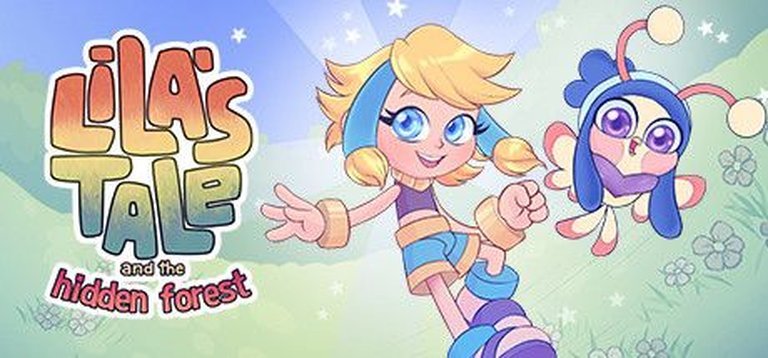
Lila’s Tale and the Hidden Forest is a magical 2D platformer set in a fantasy world where players guide Lila and her friend Flee through the Hidden Forest of Solaria to rescue Guardian Owls from evil thieves. Featuring colorful hand-drawn visuals, the game combines platforming challenges with puzzle elements, supporting both single-player and local co-op modes for up to two players across Windows, PlayStation, Xbox, and Nintendo Switch platforms.
Gameplay Videos
Where to Buy Lila’s Tale and the Hidden Forest
PC
Lila’s Tale and the Hidden Forest Guides & Walkthroughs
Lila’s Tale and the Hidden Forest Reviews & Reception
thexboxhub.com (60/100): Lila’s Tale and the Hidden Forest is competent but unimaginative, leaving you feeling like you deserve more.
opencritic.com (76/100): While absolutely designed with younger or more casual gamers in mind, this light budget platformer has creativity and charm on its side
Lila’s Tale and the Hidden Forest: A Comprehensive Review
Introduction
In the crowded landscape of indie platformers, Lila’s Tale and the Hidden Forest stands out as a charming, if somewhat modest, entry. Developed by Skullfish Studios and released in November 2022, this 2D side-scrolling adventure follows Lila and her avian companion Flee as they navigate the magical Hidden Forest of Solaria to rescue captured Guardian Owls. While the game draws inspiration from classic platformers like Mario and Rayman, it carves out its own niche with a focus on cooperative gameplay and exploration. This review will delve into the game’s development history, narrative depth, gameplay mechanics, and its reception, ultimately assessing its place in the annals of video game history.
Development History & Context
Skullfish Studios, a relatively small indie team, brought Lila’s Tale and the Hidden Forest to life as a follow-up to their earlier title, Lila’s Tale. The game was built using the Unity engine, a popular choice for indie developers due to its accessibility and robust toolset. The development team, comprising 14 developers and 4 special thanks, aimed to create a game that emphasized cooperation and exploration, setting it apart from more competitive or solitary platformers.
The gaming landscape in 2022 was dominated by high-budget AAA titles and a resurgence of retro-inspired indie games. Lila’s Tale and the Hidden Forest positioned itself as a family-friendly, cooperative experience, targeting a broader audience than typical platformers. The game’s release on multiple platforms—Windows, PlayStation 4, Xbox One, Nintendo Switch, and Xbox Series X|S—reflects its ambition to reach a wide demographic.
Narrative & Thematic Deep Dive
The narrative of Lila’s Tale and the Hidden Forest is straightforward but effective. Lila and her friend Flee embark on a journey to save the Guardian Owls from the clutches of the Red Wing gang, a group of thieves who have invaded the Hidden Forest of Solaria. The story is told through environmental storytelling and minimal dialogue, allowing players to immerse themselves in the game’s whimsical world.
The game’s themes revolve around friendship, bravery, and environmental conservation. Lila and Flee’s bond is central to the narrative, with their cooperation being a mechanic as much as a thematic element. The Red Wing gang’s actions serve as a metaphor for environmental degradation, with the players’ mission to restore balance to the forest resonating with eco-conscious players.
Gameplay Mechanics & Systems
Lila’s Tale and the Hidden Forest is a 2D platformer with a focus on cooperative gameplay. Players control Lila, who can jump, glide, and attack enemies, while Flee, her bird companion, provides support by shooting homing projectiles. The game features a unique mechanic where Flee can be lost if Lila takes damage, requiring players to retrieve her from designated washing lines.
The game’s levels are designed to encourage exploration, with hidden passages, owl eggs, and feathers scattered throughout. These collectibles add replay value, as players can aim for 100% completion. The game also supports local co-op, allowing a second player to control Flee or Lucas, Lila’s brother, in the full game version.
However, the gameplay is not without its flaws. The homing projectiles can feel imprecise, and the difficulty curve is somewhat uneven. While the game is generally easy, the final boss battle introduces a time-based challenge that feels disproportionately difficult compared to the rest of the game.
World-Building, Art & Sound
The game’s art style is a standout feature, with hand-drawn, cartoonish visuals that evoke a sense of nostalgia. The Hidden Forest of Solaria is a vibrant, magical world filled with diverse biomes, from lush woods to frozen mountains. The character designs are expressive and charming, with Lila and Flee’s dynamic being particularly endearing.
The sound design complements the visuals well, with a whimsical soundtrack that enhances the game’s fairy-tale atmosphere. The sound effects are crisp and immersive, from the rustling of leaves to the whooshing of Flee’s projectiles.
Reception & Legacy
Lila’s Tale and the Hidden Forest received mixed reviews upon release. Critics praised its charming art style and cooperative gameplay but criticized its short length and lack of depth. The game holds an 88% positive rating on Steam, with players appreciating its family-friendly appeal and replayability.
In terms of legacy, the game has not had a significant impact on the industry. However, it has found a niche audience among fans of cooperative platformers and casual gamers. Its success can be attributed to its accessibility and charming presentation, making it a worthy addition to the platformer genre.
Conclusion
Lila’s Tale and the Hidden Forest is a competent but unremarkable platformer. Its strengths lie in its cooperative gameplay, charming art style, and whimsical world-building. However, its short length and uneven difficulty may leave some players wanting more. While it may not be a groundbreaking title, it offers a delightful experience for casual gamers and families looking for a cooperative adventure. In the grand tapestry of video game history, Lila’s Tale and the Hidden Forest is a small but colorful thread, adding to the rich diversity of the platformer genre.