
- Release Year: 2013
- Platforms: Macintosh, Windows
- Publisher: Geeta Games, Headup Games GmbH & Co. KG
- Developer: Geeta Games
- Genre: Adventure
- Perspective: 3rd-person
- Game Mode: Single-player
- Gameplay: Puzzle elements
- Setting: Fantasy
- Average Score: 75/100
Description
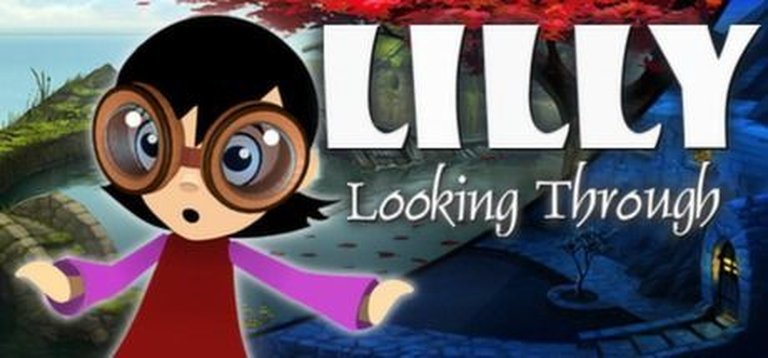
In Lilly Looking Through, a hand-drawn third-person puzzle adventure set in a fantastical forest, young Lilly witnesses her brother Row being whisked away by a powerful wind caught in a piece of red fabric. Armed with magical goggles that allow her to see back in time, she navigates beautifully animated environments, solving simple puzzles by manipulating objects, adjusting between past and present, and progressing through short chapters without an inventory.
Gameplay Videos
Where to Buy Lilly Looking Through
Lilly Looking Through Guides & Walkthroughs
Lilly Looking Through Reviews & Reception
metacritic.com (71/100): Lilly Looking Through is an easy-to-love game with a top-notch presentation that unfortunately comes to an end all too soon.
geekculture.co (84/100): A beautiful game with some clever gameplay mechanics that fans of point-and-click adventure games will enjoy.
steamcommunity.com : Lilly is a beautifully imaginative tale, with breathtaking artwork, and an enchanting musical score to match.
Lilly Looking Through: Review
Introduction
Imagine slipping on a pair of enchanted goggles and peering into a faded past where crumbling ruins bloom into vibrant life, all to rescue a sibling swept away by a whimsical gust of wind. Lilly Looking Through, the 2013 debut from indie studio Geeta Games, evokes this exact sense of childlike wonder, blending point-and-click puzzles with time-bending magic in a hand-drawn fantasy world. As a modest Kickstarter success story, it carved a niche amid the indie boom of the early 2010s, earning accolades for its art and animation while sparking debates on brevity versus impact. This review argues that Lilly Looking Through is a masterful mood piece—a concise, atmospheric triumph that prioritizes emotional resonance over epic scope, cementing its place as an underappreciated jewel in adventure gaming history, ideal for families seeking a gentle escape but frustrating for those craving depth.
Development History & Context
Geeta Games emerged in 2012 as a passion project from husband-and-wife team Steve Hoogendyk (creative director, programmer, and designer with prior Myst-series experience) and Jessica Hoogendyk (lead character animator from film backgrounds). What began as a family affair—complete with voice work from child actors McKenna Laabs as Lilly and Garret Laabs as Row—ballooned into a collaborative effort boasting 109 credits, including Myst veteran Mark H. DeForest as CTO, Pixar illustrator Garrett Taylor, and technical artist Daran Chapman. Funded via a successful Kickstarter campaign that raised over $33,000 against an $18,000 goal (exceeding stretch targets for extended content), the game launched on October 31, 2013, for Windows, followed by Macintosh, with Linux support added later.
This era’s indie landscape was defined by platforms like Steam and GOG democratizing distribution, alongside crowdfunding pioneers like Double Fine Adventure. Technological constraints favored 2D hand-drawn art over AAA budgets, allowing Geeta to emphasize cinematic multi-plane animation and a “densely sweet” experience, as Chapman described—eschewing fluff for concentrated wonder. Publishers Headup Games aided European release, but Geeta’s self-published vision shone through: a no-inventory, dialogue-free adventure targeting all ages amid a surge of narrative-driven indies like Machinarium and Botanicula. Bugs and novice design slips (e.g., inconsistent puzzle logic) reflect first-time hurdles, yet the film’s influence yielded fluid, storybook-quality visuals on modest hardware (2GB RAM minimum).
Narrative & Thematic Deep Dive
Lilly Looking Through unfolds as a silent, pantomime-driven fable across ten linear chapters, where young Lilly pursues her brother Row after he’s ensnared by a crimson scarf and borne off by wind. Acquiring magical goggles mid-journey grants visions of the past, enabling her to mend decayed bridges, drain sunken forts, and activate ancient mechanisms—rewriting history to alter the present. No exposition dumps or branching paths exist; story emerges organically through environmental storytelling, loading screens hinting at progression, and Row’s distant cries.
Core Characters and Emotional Core
Lilly embodies fearless curiosity, her animations—from playful frog-mimicry to determined dust-offs—infusing personality sans words. Row, the vulnerable tag-along, amplifies sibling bonds, his dejected poses (e.g., slumping over unreachable goggles) tugging heartstrings. Supporting elements like Pahn (voiced by John Slenk) add fleeting mystery, but the duo drives a universal theme: childhood innocence confronting loss and isolation.
Themes Explored
– Time, Memory, and Nostalgia: Goggles symbolize peering into “better yesterdays”—lush forests reclaiming ruins—mirroring adult reflections on lost youth. Past actions ripple forward, underscoring consequences and agency.
– Wonder vs. Solitude: Abandoned huts, hieroglyph-adorned machines, and silent civilizations evoke post-apocalyptic reverie, blending awe with loneliness. Lilly’s solo trek amplifies vulnerability, evoking Myst‘s isolation.
– Family and Pursuit: The scarf’s enigmatic role culminates in a circular, interpretive twist—esoteric yet poignant, prioritizing emotional payoff (redemption through ingenuity) over closure. Critics noted its cliffhanger feel, sparking sequel hopes unfulfilled.
Dialogue is nonverbal—gasps, giggles, yells—ensuring global accessibility, while full voice acting heightens immersion. This minimalist plot, light on lore, prioritizes feeling over plot twists, crafting a “short story” (per Eurogamer.de) that lingers philosophically.
Gameplay Mechanics & Systems
A pure point-and-click puzzle adventure, Lilly eschews inventory for screen-bound interactions: manipulate levers, pressure plates, dials, and time-states to progress. Core loop: explore hotspots (highlighted via hint button), toggle goggles for dual timelines, experiment logically.
Core Loops and Puzzles
– Time-Switching: Pivotal innovation—e.g., boulders block a present-day boat but vanish in the past; low water reveals fort interiors. Multi-toggle sequences build complexity.
– Environmental Manipulation: No items carried; puzzles resolve via machinery (reminiscent of Lighthouse: The Dark Being) or observation (e.g., animal behaviors, color-matching finales).
– Progression: Linear chapters auto-save at starts (no mid-chapter saves), with 10 screens (2-3 hours total). Early puzzles ease in; later ones layer mechanics (e.g., sequential color puzzles, inter-screen dependencies).
UI and Accessibility
Mouse-only, intuitive: single-click triggers deliberate animations (frustratingly uncancelable, slowing retries). Hint system reveals hotspots, aiding families/kids but diluting challenge for veterans—trial-and-error dominates, with occasional illogic (e.g., obscure levers). No difficulty modes, but family-friendly curve suits casual play. Flaws: Repetitive late-game (four color puzzles), bugs (noted in reviews), slow pacing.
| Mechanic | Strengths | Weaknesses |
|---|---|---|
| Time Toggle | Innovative, visually rewarding | Can feel gimmicky if over-relied |
| Puzzles | Logical buildup, observation-based | Trial/error heavy; esoteric ends |
| Controls/UI | Simple, hint-aided | Slow animations, no skips |
| Length/Saves | Bite-sized chapters | Too brief; no mid-progress saves |
Overall, systems innovate modestly within constraints, favoring relaxation over rigor.
World-Building, Art & Sound
Set in a fantastical, unnamed forest-realm—crumbling forts, subterranean lairs, misty lakes—the world pulses with decayed majesty. Past timelines teem greener, alive with critters; present echoes abandonment, fostering eerie solitude.
Visual Direction
Hand-drawn, storybook backdrops (illustrators Garrett Taylor, Christian Piccolo, David Kyhn) employ cinematic multi-plane parallax for depth. Lilly/Row’s frame-by-frame animations—fluid climbs, expressive idles—rival animated films, earning Aggie Best Animation. Intro’s gradual reveal hooks instantly; contrasts (blocky characters vs. painterly environs) jar slightly but enhance dreaminess.
Sound Design
Chris Beazer’s ethereal score—haunting flutes, distant rhythms—shifts with time-states, amplifying mood. Quentin Dorsey’s effects (rustles, gasps) and nonverbal VO create universality. No bombast; subtlety immerses, like wind-whisked calls evoking loss.
These elements forge a “magical playground” (Indie Game Mag), where visuals/score evoke playground reverie, loneliness underscoring adventure’s joy.
Reception & Legacy
Launch reception was “mixed or average” (Metacritic 71/100; MobyGames 75% critics, 7.2 overall). Highs: Destructoid/Phenixx/Adventure Gamers (80%) lauded charm, art, brevity as virtue. Lows: Hooked Gamers (69%) cited obscurity/marketing woes; RPS/Diehard GameFan unscored, slamming shortness/esoterica. Steam: Mostly Positive (77% of 191 reviews), praising relaxation but echoing length gripes.
Accolades: Intel Level Up 2013 (Best Adventure/RPG, Best Art); Aggie Awards Best Animation. Collected by 56 MobyGames users; $9.99 on Steam/GOG endures.
Evolution and Influence: Post-2013, reputation solidified as “hidden gem” for art-driven indies, inspiring family adventures amid Inside-era minimalism. No sequels, but Geeta’s Myst/Pixar ties influenced time-puzzle hybrids (e.g., The Witness echoes). Legacy: Proof small teams yield big hearts, prioritizing “experience without fluff” in bloated markets—paving for Unavowed-like emotional shorts.
Conclusion
Lilly Looking Through distills adventure gaming to its poetic essence: a 2-3 hour reverie of sibling love, temporal tinkering, and wistful wonder, elevated by exquisite art, animation, and score. Its brevity—ten chapters feeling demo-like—curbs replayability and depth, yielding frustration amid praise, but this focus crafts an unforgettable mood capsule. As Geeta’s debut, it exemplifies indie purity, earning a definitive 8/10 and firm recommendation for all-ages escapism. In gaming history, it resides as a timeless vignette, whispering “childhood’s magic endures”—flawed, fleeting, forever enchanting.