
- Release Year: 2006
- Platforms: Windows
- Publisher: NCsoft Corporation
- Genre: Compilation, Special edition
- Game Mode: MMO
- Average Score: 72/100
Description
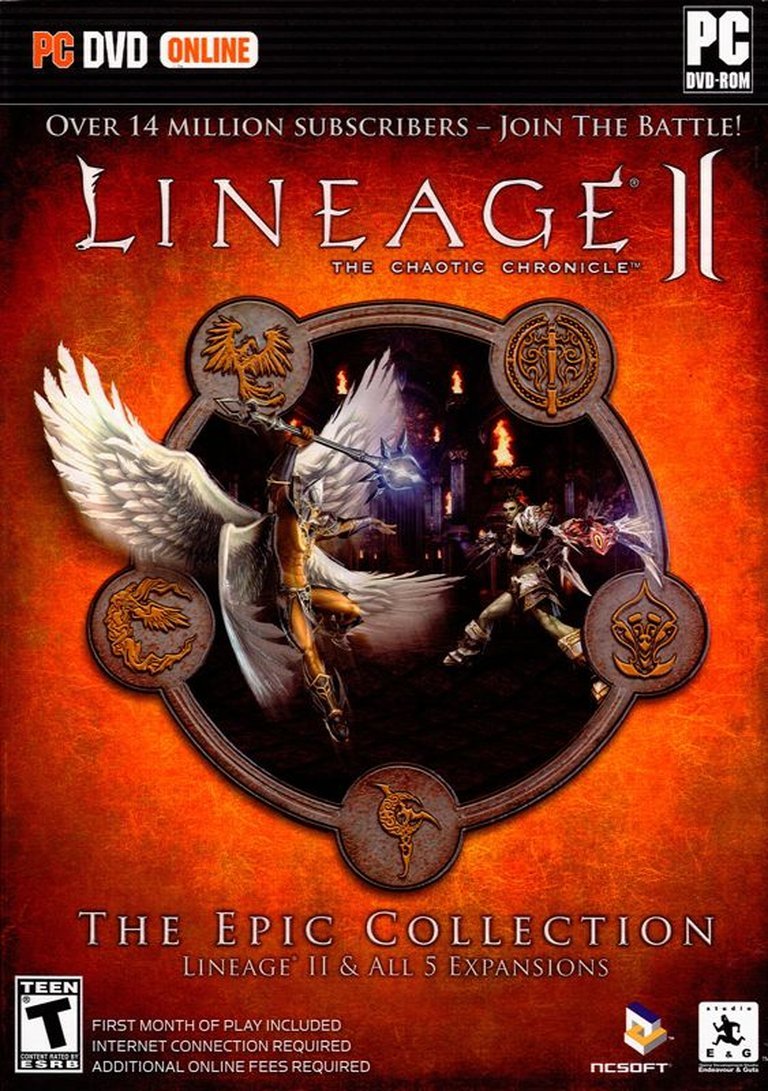
Lineage II: The Epic Collection is a definitive MMORPG compilation set in a war-torn fantasy world where the kingdoms of Aden, Elmore, and Gracia vie for dominance amid political intrigue and internal strife. This edition includes the base game ‘The Chaotic Chronicle’ and all five expansions, offering a complete saga where players forge their destinies through character development and factional warfare. Enhanced with exclusive in-game items, developer footage, wallpapers, and extended playtime, this collection immerses players in a rich lore of divine conflicts and mortal ambitions.
Gameplay Videos
Lineage II: The Epic Collection Mods
Lineage II: The Epic Collection Guides & Walkthroughs
Lineage II: The Epic Collection Reviews & Reception
gamefaqs.gamespot.com (60/100): A gorgeous boilerplate game with little innovation and many sections of tedious play.
rpgwatch.com (84/100): The core gameplay remains essentially the same from when NCsoft first launched the title.
Lineage II: The Epic Collection: Review
As a professional game journalist and historian, I have had the privilege of experiencing countless MMORPGs over the years, but few have left as indelible a mark on the genre as Lineage II: The Epic Collection. Released in 2006, this compilation stands as a testament to the enduring legacy of NCSoft’s groundbreaking series, offering players a comprehensive journey through the rich lore and innovative gameplay mechanics that defined an era. In this review, we will delve into the development history, narrative depth, gameplay mechanics, world-building, reception, and lasting impact of Lineage II: The Epic Collection.
Introduction
In the sprawling landscape of MMORPGs, few titles have managed to capture the imagination and dedication of players quite like Lineage II. Originally released in 2003, Lineage II quickly established itself as a pioneer in the genre, blending deep lore, strategic gameplay, and a unique blend of PvE and PvP mechanics. Lineage II: The Epic Collection, released in 2006, encapsulates the essence of the series, offering players a comprehensive experience that includes the base game and all five expansions up to that point. This collection is not just a game; it is a historical artifact, a snapshot of a time when MMORPGs were on the cusp of mainstream acceptance, and Lineage II was at the forefront of that revolution. My thesis is that Lineage II: The Epic Collection is a masterclass in MMORPG design, a title that has stood the test of time and continues to influence the genre to this day.
Development History & Context
Lineage II was developed by NCSoft, a South Korean gaming giant known for its ambitious and innovative projects. The game was conceived in early 2000, with development beginning in October of the same year. The creative team, led by Hyeong-Jin Kim, aimed to create a prequel to the original Lineage, set 150 years before the events of the first game. This decision was driven by a desire to explore the rich lore and mythology of the Lineage universe, rather than simply creating a sequel.
The development team chose the Unreal Engine 2 for its ability to render outdoor scenes and its powerful editing features. This engine allowed the developers to create a visually stunning world, filled with detailed environments and immersive gameplay mechanics. The game’s subtitle, “The Chaotic Chronicle,” was chosen to express the large-scale war, strategies, conflicts, and collaborations that the developers hoped to encourage among players.
The gaming landscape in 2003 was dominated by titles like World of Warcraft and EverQuest, both of which had established the foundations of modern MMORPGs. However, Lineage II differentiated itself through its focus on player-driven content, strategic gameplay, and a deep, interconnected lore. The game’s release in South Korea on October 1, 2003, was met with overwhelming success, reporting 40,027,918 unique users during the month of March 2007. To date, the game has been played by more than 94 million users from all over the world.
Narrative & Thematic Deep Dive
Lineage II is set in a world torn by war, where three kingdoms vie for power: Aden, Elmore, and Gracia. The game’s lore is a complex tapestry of mythology, history, and political intrigue, drawing heavily from the original Lineage series. The story is divided into several sagas, each exploring different aspects of the world’s history and the struggles of its inhabitants.
The Legend of Lineage II
The game’s background consists of legends telling tales of what happened before the events described in the game. These stories are rich with detail, exploring the creation of the world, the rise and fall of gods, and the struggles of the various races that inhabit the land. The narrative is divided into episodes, each focusing on a specific period or event in the world’s history.
The Creation of Races
One of the most fascinating aspects of Lineage II‘s lore is the creation of the various races. Each race has its own unique history and culture, shaped by the gods and the struggles they have endured. The elves, orcs, dwarves, and humans all have distinct origins, with the humans being created from the leftovers of other races, a fact that has shaped their identity and struggles throughout the game’s history.
The War of the Gods
The War of the Gods is a pivotal event in Lineage II‘s lore, shaping the world and the races that inhabit it. The war was sparked by the actions of Gran Kain, a god of destruction, who seduced his daughter Shilen and was subsequently banished. Shilen’s children, the dragons, led an army of demons against the gods, resulting in a catastrophic war that reshaped the world.
The Great Flood
The Great Flood is another significant event in the game’s lore, caused by the actions of Eva, the goddess of water. Her inability to control the waters led to widespread destruction, forcing the gods to intervene and restore balance to the world.
The Challenge of the Giants
The giants, once the masters of the world, challenged the gods and were subsequently punished. Their fall from grace led to the rise of the other races, each vying for power and control over the land.
Gameplay Mechanics & Systems
Lineage II is known for its deep and strategic gameplay mechanics, which set it apart from other MMORPGs of its time. The game features a unique blend of PvE and PvP content, encouraging players to engage in both cooperative and competitive gameplay.
Character Creation
Players begin their journey by creating a character, choosing from one of seven races: Humans, Elves, Dark Elves, Orcs, Dwarves, Kamael, and Ertheia. Each race has its own unique characteristics and abilities, shaping the player’s experience throughout the game. The character creation process is straightforward, allowing players to customize their appearance and choose their starting class.
Combat
Combat in Lineage II is a blend of real-time action and strategic planning. Players can engage in battles against monsters, other players, or participate in large-scale sieges. The game features a unique karma system, which tracks a player’s actions and determines their alignment. This system encourages players to engage in both cooperative and competitive gameplay, with consequences for their actions.
Death
Death in Lineage II is a significant mechanic, with players losing experience points and items upon dying. Players can choose to resurrect at the nearest town or village, or wait for another player to resurrect them with a scroll or spell. The game’s death penalty adds a layer of strategy and consequence to combat, encouraging players to be cautious and strategic in their actions.
Quests and Progression
Lineage II features a vast array of quests, ranging from simple fetch quests to complex, multi-step storylines. Players can choose to focus on PvE content, completing quests and leveling up their characters, or engage in PvP combat, battling other players for control of territory and resources. The game’s progression system is deep and rewarding, with players unlocking new abilities and equipment as they level up.
World-Building, Art & Sound
Lineage II is set in a richly detailed world, filled with diverse environments and immersive lore. The game’s art style is a blend of fantasy and realism, with detailed character models and environments that bring the world to life. The sound design is equally impressive, with a sweeping orchestral score and immersive sound effects that enhance the gameplay experience.
Setting and Atmosphere
The game’s setting is a war-torn land, filled with political intrigue, betrayal, and conflict. The world is divided into three main continents, each with its own unique culture and history. The atmosphere is dark and gritty, reflecting the struggles and conflicts of the game’s narrative.
Visual Direction
The game’s visual direction is a blend of fantasy and realism, with detailed character models and environments that bring the world to life. The use of the Unreal Engine 2 allowed the developers to create a visually stunning world, filled with immersive gameplay mechanics.
Sound Design
The sound design in Lineage II is top-notch, with a sweeping orchestral score and immersive sound effects that enhance the gameplay experience. The game’s audio design is a crucial part of its immersive world-building, transporting players to a rich and detailed fantasy setting.
Reception & Legacy
Lineage II was met with mixed reviews upon its release, with critics praising its deep gameplay mechanics and immersive world-building, but criticizing its outdated graphics and steep learning curve. However, the game’s legacy has grown over time, with many players citing it as one of the most influential and innovative MMORPGs of its era.
Critical and Commercial Reception
The game’s initial reception was mixed, with critics praising its deep gameplay mechanics and immersive world-building, but criticizing its outdated graphics and steep learning curve. However, the game’s commercial success was undeniable, with over 94 million users worldwide. The game’s expansions, particularly Chronicle 5: Oath of Blood, were praised for their innovative content and storytelling.
Influence on Subsequent Games
Lineage II has had a significant influence on subsequent MMORPGs, with many games drawing inspiration from its deep lore, strategic gameplay, and unique blend of PvE and PvP content. The game’s karma system, in particular, has been cited as a pioneering feature, influencing later generations of MMORPGs.
Conclusion
Lineage II: The Epic Collection is a masterclass in MMORPG design, a title that has stood the test of time and continues to influence the genre to this day. Its deep lore, strategic gameplay, and immersive world-building have left an indelible mark on the genre, inspiring countless games and players. Despite its mixed initial reception, the game’s legacy has grown over time, with many players citing it as one of the most influential and innovative MMORPGs of its era. Lineage II: The Epic Collection is not just a game; it is a historical artifact, a snapshot of a time when MMORPGs were on the cusp of mainstream acceptance, and Lineage II was at the forefront of that revolution. Its place in video game history is secure, a testament to the enduring power of innovative design and immersive storytelling.