
- Release Year: 2020
- Platforms: Browser, Linux, Windows
- Genre: Action, Horror
- Perspective: 1st-person
- Game Mode: Single-player
- Gameplay: Grid-based movement, Key collection, Maze navigation, Real-time movement
- Setting: Dungeon
- Average Score: 57/100
Description
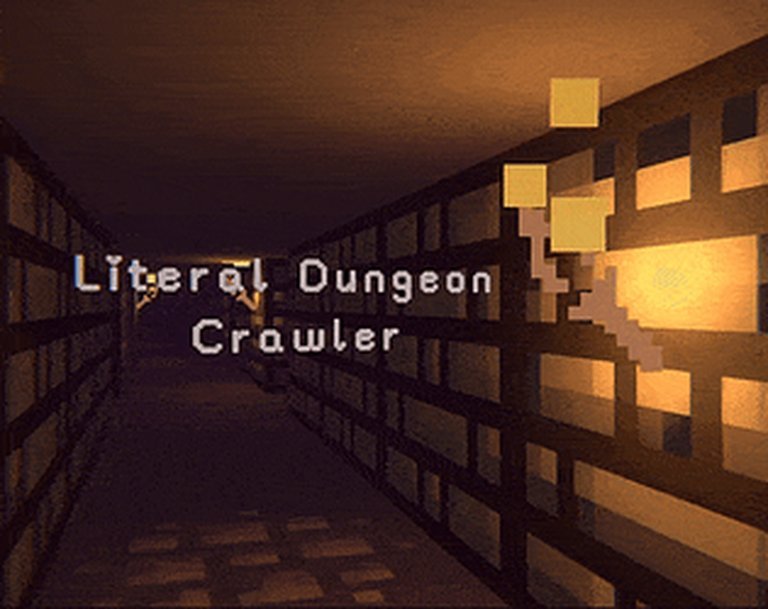
Literal Dungeon Crawler is a compact, first-person maze game where players navigate a grid-based dungeon in real-time, collecting seven keys while evading a roaming monster. Created for the Miz Jam 1 game jam, it blends classic dungeon-crawling mechanics with a tense, horror-infused atmosphere, challenging players to escape the labyrinth before being caught.
Literal Dungeon Crawler Guides & Walkthroughs
Literal Dungeon Crawler Reviews & Reception
mythcreants.com : This justification requires technology so advanced that not even Arthur C. Clarke could distinguish it from magic, and you also need to accept that fantasy MMOs are a cultural constant throughout the galaxy.
mobygames.com (40/100): Average score: 2.0 out of 5
jeroenthoughts.wordpress.com (75/100): This book makes me investigate why I read books, and what I even want from a story. This one wasn’t really for me, but I can’t fault its execution.
Literal Dungeon Crawler: A Minimalist Masterpiece or a Missed Opportunity?
Introduction: The Dungeon in a Nutshell
Literal Dungeon Crawler is a game that dares to strip the dungeon crawler genre down to its barest essentials. Developed for the Miz Jam 1 game jam and released in 2020, this first-person maze game challenges players to collect seven keys and escape a labyrinthine dungeon while evading a relentless monster. Its grid-based movement and real-time mechanics pay homage to classic dungeon crawlers, but its minimalist design and lack of narrative depth leave it feeling more like a proof of concept than a fully realized experience. This review will explore whether Literal Dungeon Crawler succeeds as a nostalgic throwback or if it falters due to its simplistic execution.
Development History & Context: Born from a Game Jam
Literal Dungeon Crawler was created by a small team of 10 people, led by developer Kiwi, as part of the Miz Jam 1 game jam. The game was built using the Unity engine, a popular choice for indie developers due to its accessibility and versatility. The Miz Jam 1 game jam, like many such events, encouraged rapid development and creativity within tight constraints, which likely influenced the game’s straightforward design and mechanics.
The gaming landscape in 2020 was dominated by both AAA titles and a burgeoning indie scene, with games like Hades and Among Us capturing widespread attention. Literal Dungeon Crawler entered this competitive space as a niche title, appealing primarily to fans of retro-style dungeon crawlers and maze games. Its development was constrained by the game jam’s time limits, which may explain its lack of depth in narrative and gameplay variety.
Narrative & Thematic Deep Dive: A Dungeon Without a Story
Literal Dungeon Crawler is, as its name suggests, a literal interpretation of the dungeon crawler genre. There is no overarching plot, no character development, and no dialogue. The game’s narrative, if it can be called that, is reduced to a simple objective: collect keys and escape. This minimalist approach strips away the storytelling elements that often define the genre, leaving players with a pure, unadulterated dungeon-crawling experience.
Thematically, the game leans into the horror and tension inherent in dungeon crawlers. The dungeon itself is a dark, oppressive space, and the ever-present threat of the roaming monster creates a sense of urgency and dread. However, without any context or backstory, the dungeon feels hollow. There are no lore entries, no environmental storytelling, and no hints about why the player is there or what the dungeon represents. This lack of thematic depth makes the game feel more like a technical exercise than a fully realized experience.
Gameplay Mechanics & Systems: Grid-Based Movement and Real-Time Tension
The core gameplay of Literal Dungeon Crawler revolves around navigating a grid-based maze in first-person perspective. Players must collect seven keys scattered throughout the dungeon while avoiding a monster that patrols the corridors. The game’s mechanics are simple but effective, with movement restricted to a grid, adding a tactical layer to the exploration. Players must plan their routes carefully, as the monster’s movements are unpredictable and can quickly lead to a game over if they are caught.
The real-time element of the game adds tension, as players must balance speed and caution. The monster’s presence is constant, and its movements are not tied to the player’s actions, making every decision critical. The lack of combat mechanics means that players must rely entirely on stealth and strategy to survive, which can be both frustrating and rewarding.
The game’s UI is minimalist, with no HUD or inventory system to speak of. Players must rely on their memory and spatial awareness to track their progress, which can be challenging given the dungeon’s labyrinthine layout. The absence of a map or any form of navigation aid adds to the game’s difficulty but also to its immersive quality.
World-Building, Art & Sound: A Dark and Oppressive Atmosphere
The dungeon in Literal Dungeon Crawler is a dark, claustrophobic space filled with narrow corridors and dimly lit chambers. The art style is simple but effective, with a focus on creating an oppressive atmosphere. The dungeon’s design is functional rather than elaborate, with little in the way of decorative elements or environmental storytelling. The lack of visual variety can make the dungeon feel repetitive, but the tension created by the monster’s presence helps to maintain engagement.
The sound design plays a crucial role in building the game’s atmosphere. The ambient sounds, such as the distant echoes of the monster’s movements and the eerie silence of the dungeon, create a sense of isolation and dread. The game’s soundtrack, composed of tense, atmospheric tracks, further enhances the horror elements. The sound effects are minimal but effective, with the clinking of keys and the monster’s footsteps adding to the immersive experience.
Reception & Legacy: A Niche Title with Limited Impact
Literal Dungeon Crawler has received limited attention since its release, with only one player rating on MobyGames, giving it an average score of 2.0 out of 5. This low score suggests that the game has not resonated strongly with players, likely due to its lack of depth and repetitive gameplay. The game’s minimalist design and lack of narrative may have appealed to a niche audience, but it has not achieved widespread acclaim or commercial success.
The game’s legacy is similarly limited. While it may have served as a learning experience for its developers, it has not had a significant impact on the dungeon crawler genre or the broader gaming industry. Its lack of innovation and depth means that it is unlikely to be remembered as a standout title in the years to come.
Conclusion: A Minimalist Experiment with Mixed Results
Literal Dungeon Crawler is a game that succeeds in its simplicity but falters in its lack of depth. Its grid-based movement and real-time tension create an engaging, if repetitive, experience, but the absence of narrative, character development, and environmental storytelling leaves it feeling hollow. The game’s minimalist design and lack of innovation mean that it is unlikely to appeal to a broad audience, but it may find favor with fans of retro-style dungeon crawlers and maze games.
Ultimately, Literal Dungeon Crawler is a mixed bag. It delivers on its promise of a pure dungeon-crawling experience but fails to elevate the genre or offer anything truly new. For players seeking a straightforward, tension-filled maze game, it may be worth a try. However, those looking for a richer, more immersive experience may find it lacking. In the grand scheme of video game history, Literal Dungeon Crawler is likely to remain a footnote—a minimalist experiment that, while competent, does little to push the boundaries of its genre.