
- Release Year: 2024
- Platforms: Nintendo Switch, PlayStation 4, PlayStation 5, Windows, Xbox One, Xbox Series
- Publisher: Microids SA
- Developer: 2.21] S.A.S
- Genre: Action, Adventure
- Perspective: Diagonal-down
- Game Mode: Single-player
- Gameplay: Puzzle elements
- Average Score: 60/100
Description
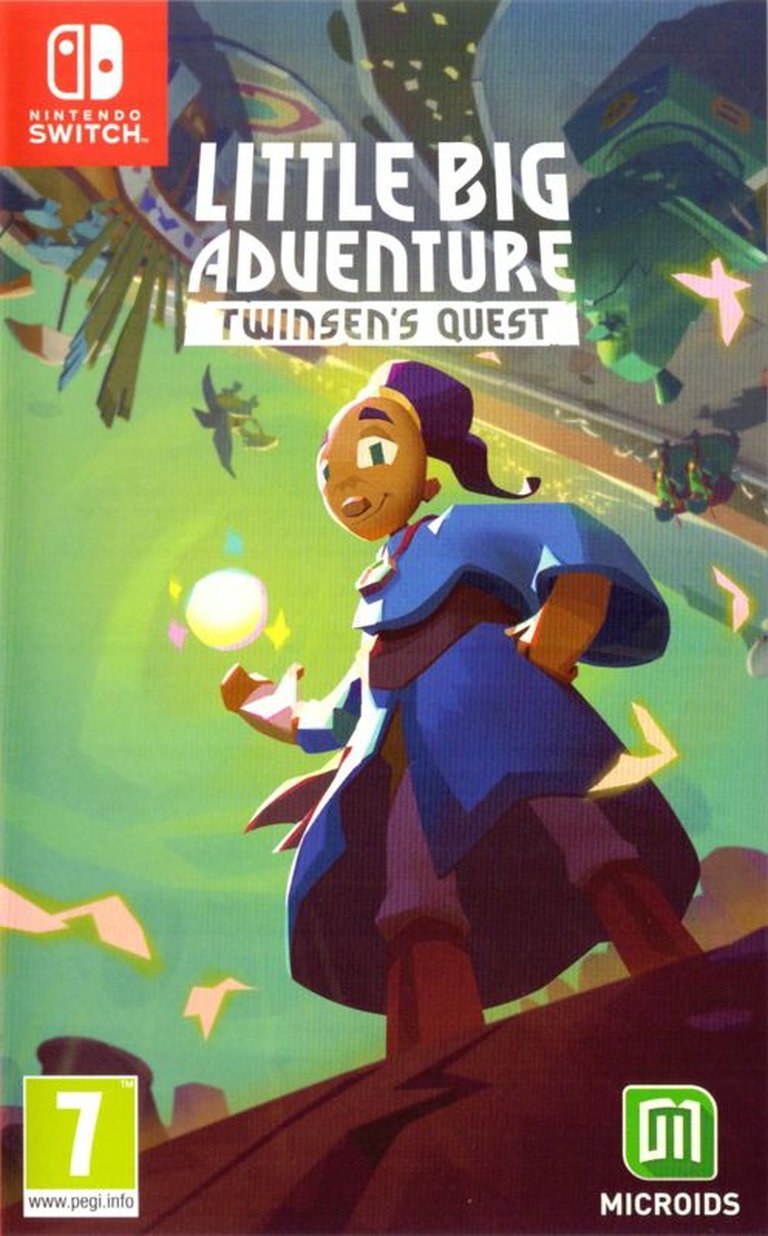
Little Big Adventure: Twinsen’s Quest is a 2024 enhanced remake of the 1994 cult classic adventure game originally developed by Adeline Software, where players guide the hero Twinsen through the fantastical planet of Twinsun in a diagonal-down 2D scrolling world filled with action, puzzle elements, quirky inhabitants, and combat against the tyrannical regime of Emperor FunFrock.
Gameplay Videos
Where to Buy Little Big Adventure: Twinsen’s Quest
Little Big Adventure: Twinsen’s Quest Free Download
Little Big Adventure: Twinsen’s Quest Cracks & Fixes
Little Big Adventure: Twinsen’s Quest Guides & Walkthroughs
Little Big Adventure: Twinsen’s Quest Reviews & Reception
metacritic.com (60/100): Little Big Adventure – Twinsen’s Quest will undoubtedly bring back fond memories for many veterans.
nintendolife.com : ingenious… and now kind of awful.
moviesgamesandtech.com : this new game unfortunately represents many of the negatives which become apparent in trying to recapture the magic of a beloved game.
ladiesgamers.com : a fun, somewhat clunky rerun of an old classic.
adventuregamers.com : Appreciated for the fresh air that it breathed into the rigid genres of video games.
Little Big Adventure: Twinsen’s Quest: Review
Introduction
Imagine a world orbiting two suns, where whimsical anthropomorphic creatures navigate a blend of magic and tyranny under a dictator’s iron fist—a planet where a reluctant hero wields a glowing Magic Ball to topple clones and unravel cosmic prophecies. This is Twinsun, the beating heart of Little Big Adventure (1994), a cult classic that dared to fuse open-world exploration, point-and-click puzzling, and action in an era dominated by linear shooters and pixelated platformers. Three decades later, Little Big Adventure: Twinsen’s Quest—a full remake by studio [2.21]—revives this eccentric gem with revamped visuals, a reorchestrated soundtrack, and streamlined controls. As a game historian, I’ve revisited the original via emulators and GOG ports, and while this remake captures the nostalgic whimsy that made the Adeline Software original a pioneer, it stumbles in modernization, delivering a charming but clunky time capsule best suited for veterans rather than newcomers. My thesis: Twinsen’s Quest honorably preserves a radical 1990s vision of freedom and hybrid gameplay, yet its imprecise controls, bugs, and diluted quirks reveal the perils of remaking a game too tied to its era’s idiosyncrasies.
Development History & Context
Little Big Adventure emerged from the ashes of Adeline Software, founded in Lyon, France, by Frédérick Raynal—architect of survival horror’s blueprint, Alone in the Dark (1992). Released in November 1994 on PC (as Relentless: Twinsen’s Adventure in North America), it arrived amid a transitional gaming landscape: Doom’s id Tech engine had popularized fast-paced 3D shooters, while point-and-click adventures like LucasArts’ Day of the Tentacle ruled narrative-driven play. Adeline’s innovation? An isometric 3D world blending Zelda-like exploration with adventure-game dialogue trees, constrained by 1994 tech—640×480 prerendered 2D backdrops, low-poly 3D sprites, tank controls, and screen-by-screen loading that masked ambitious openness.
The 2024 remake stems from [2.21], a boutique studio formed in 2021 by veterans like artist/level designer Didier Chanfray (original LBA co-creator), composer Philippe Vachey, and programmer Sébastien Viannay, joined by newcomers like writer Samantha Bailly and artist Paulo Torinno. Initially eyeing a new sequel to complete the intended trilogy (after 1997’s superior Twinsen’s Odyssey), market realities pivoted them to remakes, published by Microids SA—known for retro revivals like Flashback 2. Development began in early 2023 using Unity, emphasizing fidelity: Raynal’s original idea is credited, with nods to Paul de Senneville (1933-2023). Key goals included ditching tank controls and the infamous “mood system” (normal, athletic, aggressive, discreet), introducing seamless 3D worlds, and Philippe Vachey’s reimagined score. Yet, 1990s constraints linger—die-and-retry platforming, opaque quests—clashing with modern polish expectations, as public playtests revealed unpolished combat and jumps. In a post-Breath of the Wild era of fluid adventures, [2.21]’s vision honors radical freedom but exposes remake pitfalls: balancing nostalgia with accessibility.
Narrative & Thematic Deep Dive
At its core, Twinsen’s Quest unfolds on Twinsun, a planetoid bathed in dual suns, home to four harmonious species—Quetch (human-like, ponytail-bearing protagonists like Twinsen), burly Grobo, spherical Sphero, and hoppy Rabibunny—until Dr. Funfrock’s cloning/teleportation tech enforces totalitarian control. Twinsen, a model citizen plagued by prophetic dreams from goddess Sendell, escapes an asylum (now tied to protecting sister Luna, a modern tweak from original love interest Zoé), rallies rebels, and confronts Funfrock’s apocalypse via Magic Ball quests across islands: Citadel’s urban sprawl, White Leaf Desert’s sands, Hamalayi Mountains’ ice, and more.
Thematically, it’s a prescient satire: Funfrock embodies authoritarianism (echoing 1990s French politics, per Adventure Gamers), with Soviet-inspired architecture, crude dialogues skewering propaganda, and resistance underscoring freedom/resilience. Remake tweaks add Luna for personal stakes, evolving Twinsen from reluctant fugitive to leader, but dilute tension—original’s darker tone (imprisonment for warnings) becomes lighter, undermining planetary doom’s gravity. Characters shine: quirky NPCs like pirate LeBorgne or inventor Baldow deliver flavorful, satirical banter (“a big arrow that flashes to show you what to do” mocks hand-holding), fostering immersion via exhaustive dialogue trees. Pacing jumps whimsically—fetch quests yield temple lore or alien reveals—mirroring 1990s radicalism, but frustrates modern players sans markers. Voice acting mixes charm (irksome Luna) with dated awkwardness, amplifying French “touch” eccentricity. Ultimately, themes endure: hybrid worlds (magic/tech) symbolize player agency against oppression, though remake’s levity softens original’s bite.
Gameplay Mechanics & Systems
Twinsen’s Quest retains hybrid loops: explore open islands, chat exhaustively with NPCs for quests (no journal clarity, just vague logs/maps), solve environmental puzzles (item combos, switches), and skirmish clones. Core innovation—Magic Ball—evolves from stun-shot to puzzle/combat tool (enhanced range/strategies), but execution falters: imprecise aiming amid gun-toting foes leads to attrition wars.
Modernization axes tank controls/moods for analog running (stick-click walks, uselessly), enabling fluid traversal sans mode-swaps—praiseworthy for accessibility, yet jumps float frustratingly, platforming (rare but pivotal) evokes unpolished relics. Combat? Melee punches/kicks collide poorly (enemies glitch/stuck), ball-throws cancel via shots; AI wanders aimlessly. Progression: KA money grinds (boats, items), no levels but Ball upgrades gate areas. UI shines—clean inventory, adventure log—but lacks quest trackers, forcing “talk-to-everyone” blindness (e.g., Pirate LeBorgne loops post-resolution). Flaws abound: bugs (silent NPCs, crashes, stuck objectives), echoing launch woes (Nintendo Life/Jimquisition note tedium/bugs). Innovations like seamless worlds beat original loads, but “die & retry” anachronism persists. For historians, it’s pioneering (pre-Zelda 3D openness), yet remake’s half-measures yield clunky loops suiting nostalgia, not fluidity.
World-Building, Art & Sound
Twinsun captivates: reimagined islands burst with detail—Citadel’s brutalist towers, desert oases, snowy peaks—fostering discovery in an open-yet-gated world. Atmosphere blends childlike whimsy (cartoon boings, bird flocks) with dystopia (clone patrols, propaganda), weather/animations enhancing immersion.
Visuals pivot from isometric prerendered 2D/low-poly to full 3D: pastel, rounded models (expressive Twinsen) charm, but blocky environments/cutscenes (playdough hues) feel cheap/mobile-like, losing original’s hypnotic CGI depth (Gazettely notes “homogeneous”). Switch/PC perform adequately, though aliasing/bugs mar.
Sound excels: Vachey’s orchestra swells gloriously (iconic theme evokes fantasy heroism), effects (ball “boings,” bass tiptoe absent) amplify jauntiness. Full NPC voicing adds personality, despite cheesiness. Collectively, they weave magic—nostalgic chills persist—but visuals’ inconsistency undercuts cohesion.
Reception & Legacy
Launch reception mirrors cult status: MobyGames 66% (9 critics, 50-80%; Adventure Gamers 80%, Nintendo Life/Jimquisition 50%), Steam Very Positive (89%, 681 reviews) from fans, Metacritic mixed (PS5 60, Switch 54). Praise: visuals/sound/nostalgia (“charm intact,” StarGamers); gripes: clunky combat/controls/bugs (“dated,” Nindie Spotlight), mood excision alienating purists. Commercial? Modest—$30 digital, limited physicals—buoyed by demo/playtests, but Microids’ rep (mediocre remakes) tempers sales.
Legacy evolves: Original pioneered hybrid genres/openness (influencing Zelda-likes, early 3D adventures), outselling expectations despite tech limits. Sequel refined it; remakes ([2.21]’s Enhanced Editions) sustain via GOG/Steam. Influence: French touch (satire, eccentricity) echoes in Beyond Good & Evil; Magic Ball prefigures ability progression. Quest cements LBA as “museum piece” (Adventure Gamers)—pioneering yet flawed—sparking trilogy hopes, but warns: modernization risks soul-loss.
Conclusion
Little Big Adventure: Twinsen’s Quest resurrects Twinsun’s quirky brilliance—profound themes, inventive hybridity, Vachey’s score—but falters on clunky action, bugs, and quirk dilutions, polarizing fans/newcomers. As historian, it earns 7.5/10: essential for 1990s completists (nostalgic triumph), skippable for moderns sans patches. In gaming history, it reaffirms LBA’s radical pivot toward player freedom, a flawed but vital relic urging authenticity over forced polish. Play the original first; this is loving tribute, not replacement.