
- Release Year: 2017
- Platforms: Windows
- Publisher: Visual Art’s
- Developer: Key
- Genre: Adventure
- Perspective: 1st-person
- Game Mode: Single-player
- Gameplay: Arcade minigames, Baseball minigame, Visual novel
- Average Score: 90/100
Description
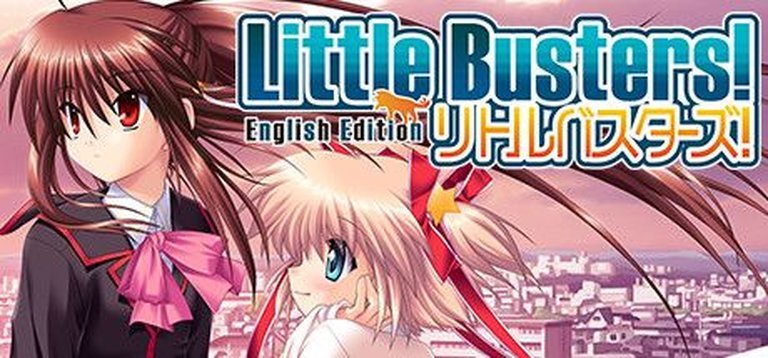
Little Busters! English Edition is a visual novel set in a Japanese high school that follows a group of friends as they navigate everyday life, personal challenges, and deep emotional bonds, with a focus on themes of friendship and resilience. This definitive edition features a complete English translation (including the previously untranslated ‘Ecstasy’ routes), dual language text options, full voice acting, and an extensive playtime of over 50 hours, complemented by iconic minigames like baseball and a memorable soundtrack.
Gameplay Videos
Where to Buy Little Busters! English Edition
PC
Little Busters! English Edition Patches & Updates
Little Busters! English Edition Mods
Little Busters! English Edition Guides & Walkthroughs
Little Busters! English Edition Reviews & Reception
opencritic.com (90/100): Little Busters! English Edition is the best way to experience an amazing visual novel about friendship, heart ache, and baseball.
opencritic.com : it is highly worth your time picking this one up on Steam!
opencritic.com (90/100): it is the first visual novel to have impacted me on such an emotional level, enough so that I had to fight back tears.
dualshockers.com : I felt a certain connection to Riki that could only be done with this type of story telling.
escapethisplanet.wordpress.com : Little Busters is crammed with little minigames that soak up a lot of playtime without adding anything significant to the story.
Little Busters! English Edition: The Kōshōnen no Mahō (The Magic of Adolescence) Embodied
Introduction: A Decade-Long Wait, A Thousand-Tissue-Box Journey
For over a decade, Western fans of the visual novel studio Key have lived with a glaring omission in the canonical “Key Seasonal Trilogy” often cited by aficionados: the absence of an official English release for Little Busters!. While Kanon, Air, and Clannad found their way onto Western PCs and consoles, the 2007 title that Jun Maeda and Key considered their most ambitious project to date remained a mythologized text, known only through fan translations and the acclaimed 2012-2013 anime adaptation. The release of Little Busters! English Edition in November 2017 was thus not merely a new product launch; it was the culmination of a decade-long pilgrimage, the final piece of a sacred puzzle. This review argues that Little Busters! English Edition is the definitive, albeit imperfect, vessel for one of the most thematically rich and mechanically daring narrative experiences in the visual novel canon—a game that masterfully intertwines the boundless optimism of childhood fantasy with the crushing, inescapable weight of adult tragedy, all wrapped in a deceptively jovial shell of slapstick comedy and baseball minigames. Its legacy is secured not just by its emotional payoff, but by its audacious structural ambition and its profound influence on how stories about friendship and healing are told within interactive media.
Development History & Context: Key’s Pivot to Proportions
The Studio and The Vision: Little Busters! was developed by Key, the Visual Art’s brand synonymous with “nakige” (crying game) drama. Following the monumental, generation-defining success of Clannad (2004), director Jun Maeda sought to create a game with a fundamentally different core. While Clannad was a sprawling family epic, Maeda wanted to focus on the pure, unadulterated bond of a chosen family—a group of childhood friends. As he stated in early interviews, the story’s length was intended to be twice that of Air but only half of Clannad’s, a massive commitment that would ultimately balloon with the additions of the Ecstasy version. The central thematic question posed in the opening movie—”What ‘Adolescence’ do you have?”—was a direct challenge to the player to reflect on their own formative years, positioning the game as a nostalgic yet profoundly introspective journey.
A Split Art Direction & Expanded Team: For the first time in Key’s history, dual art directors were appointed: the veteran Itaru Hinoue (Kanon, Air), and the rising star Na-Ga (Air, Tomoyo After). Character design was split between them—Hinoue designed Komari, Haruka, and Yuiko, infusing them with her signature softer, emotive style, while Na-Ga designed Rin, Kudryavka, and Mio, lending them a sharper, more distinct silhouette. This split aesthetic subtly reinforces the game’s dichotomy of light and shadow. The scenario writing team also expanded beyond Maeda. Leo Kashida (Tomoyo After) handled Mio’s route, while two new writers to Key, Yūto Tonokawa and Chika Shirokiri, were given primary responsibility for the other heroines (Tonokawa: Komari & Yuiko; Shirokiri: Haruka & Kud). Maeda retained the crucial roles of Rin’s route and all male cast scenarios, ensuring the core thematic throughline remained his.
The “Ecstasy” Pivot and Technical Constraints: A mere 3-4 months before the original all-ages release, a decision was made to create an adult version, Little Busters! Ecstasy. This was a stark reversal from Key’s previous pattern (where Kanon and Air were adult-first, all-ages later). Ecstasy added three new heroine routes (Kanata, Sasami, Saya), significantly expanded existing routes with new scenes and CGs, and inserted adult content. The data load was so immense it required two DVDs. Technologically, the game was a product of its mid-2000s PC era, with its visual novel engine supporting basic sprite expression and, most notably, integrating several non-interactive minigames (battle sequences, batting practice) that ran on a separate statistics system. These were born from Maeda’s desire to visually represent the “fights” and “missions” of the Little Busters’ childhood play, a literalization of their ethos that would become one of the game’s most iconic and divisive features.
The Gaming Landscape: Released in 2007, Little Busters! entered a Japanese visual novel market hungry for Key’s brand of melodrama but also seeing rising interest in gameplay integration. Its direct predecessor, Clannad, was a narrative behemoth but largely traditional in its VN mechanics. Little Busters! positioned itself as a more “gamey” alternative with its stat-driven battles and minigames, while simultaneously promising a story of friendship that stood apart from the romance-centric focus of many contemporary bishōjo games.
Narrative & Thematic Deep Dive: The Architecture of a Shared Dream
Plot Structure: The Layers of Reality The genius of Little Busters! lies in its masterful, patient deception. The first act presents a seemingly straightforward slice-of-life comedy-drama. Protagonist Riki Naoe, a timid young man with narcolepsy, is tasked by the ever-enthusiastic leader Kyousuke to recruit girls for a baseball team. He forms bonds with the six female main characters (Rin, Komari, Haruka, Kud, Yuiko, Mio), exploring each of their personal traumas and conflicts through individual routes. This structure, where completing a route locks it out for subsequent playthroughs, is a classic VN trope. However, Little Busters! subverts it entirely with the Refrain scenario, unlocked only after all six routes are completed.
Refrain reveals the shattering truth: the entire school world is an artificial reality, a collective dream constructed by the dying minds of the Little Busters (minus Riki and Rin) following a catastrophic bus accident on a field trip. They are in a coma; Riki and Rin are the only physical survivors, with Riki’s narcolepsy a symptom of his severe trauma. The loops of the game world are Kyousuke’s desperate plan to make Riki and Rin strong enough to face the real world and save everyone. This isn’t a mere plot twist; it re-contextualizes every single interaction, every childish mission, every “ridiculous” idea of Kyousuke’s as a profound, loving act of sacrifice. The final act, where Riki and Rin enter a world of their own creation to finally confront the accident and save their friends, transforms the narrative from a collection of personal dramas into a unified epic about collective will, memory, and the literal power of friendship to rewrite fate.
Character Archetypes as Psychological Case Studies: Each heroine route is a meticulously crafted exploration of a specific psychological or social wound, tied to a core theme:
* Rin Natsume (The Main Heroine): Her route, written by Maeda, is the emotional anchor. Her antisocial behavior, her bond with stray cats, and her ultimate “secret” (her cat Lennon is a manifestation of her own loneliness and desire for connection) is a masterclass in showing how severe childhood neglect and lack of familial love warps expression. Her growth from a mute, kicking nuisance to a girl who can articulate her love for Riki and her friends is the heart of the entire story.
* Komari Kamikita: A portrait of arrested development and escapism. Her obsession with fairy tales and “wonderful things” is a defense mechanism against the grim reality of her parents’ death and her brother’s abandonment. Her route, about confronting reality and finding “keys to happiness” in real people, is a poignant metaphor for leaving childhood fantasy behind.
* Haruka Saigusa & Kanata Futaki: A stellar double-act exploring the fracturing of twin identity under parental pressure. Haruka’s chaotic mischief is a cry for attention and an assertion of self against the “perfect” prefect persona forced upon Kanata. Their route dissects the resentment and hidden love within sibling rivalry, with Kanata’s “coldness” revealed as a protective shell for her own immense guilt and sense of duty.
* Kudryavka Noumi: The “mascot” route deconstructing exoticism and belonging. Kud’s forced English and self-consciousness about her mixed heritage mask a deep-seated loneliness. Her story is about accepting that “home” and “family” are the people who accept you, not a mythical homeland. Her pun-heavy dialogue is not just comic relief but a linguistic shield.
* Yuiko Kurugaya: The “older sister” who is secretly the most vulnerable. Her samurai persona and caretaking of others hide her own fear of abandonment and her desperate need to be needed. Her route is a powerful look at the burden of emotional labor in friend groups.
* Mio Nishizono: A quiet commentary on social anxiety and bibliophilic escapism. Her parasol, weak health, and BL-reading hobby build a fortress against a world she finds overwhelming. Her route involves confronting a mysterious “darkness” that literalizes her fear of being forgotten, tying directly into the game’s overarching mystery.
* The Ecstasy Routes (Saya, Kanata, Sasami): These expansions are not mere add-ons. Saya Tokido’s route is a surreal, meta-commentary on the nature of the game itself. Her “treasure” and “Darkness Executives” are allegories for the player’s progress through the game’s routes and the “threat” of forgetting. Its repetitive, dungeon-crawling minigame is intentionally frustrating, mirroring the grind of achieving the true ending and making the player experience Saya’s cyclical, frustrating search. Kanata and Sasami’s routes provide crucial depth to the twins’ conflict and Sasami’s dog-centric rivalry with Rin, fleshing out the school’s social ecosystem.
Thematic Resonance: Friendship as Lifeline and Lifedeath The central, repeated thesis is that friendship is the “irreplaceable one.” The opening video’s line, “The irreplaceable one existed there,” refers to the bonds of childhood. But the narrative pushes further: this friendship is so powerful it can subvert death itself. The artificial world is born from the collective desire to save Riki and Rin. The final loop’s success hinges on Riki and Rin’s mutual, active love—Riki overcoming his narcolepsy (a metaphor for his helplessness) and Rin choosing to fight for everyone. It’s a message that is both incredibly uplifting and profoundly sad, acknowledging that the real world may not offer such a clean reset, but the memory and strength gained from those bonds is what allows one to go on.
Gameplay Mechanics & Systems: The Stat-Block Symphony
Little Busters! is a visual novel first, but its gameplay systems are inextricable from its narrative message.
Branching Plot & The Refrain Gate: The core loop involves making choices during text segments that direct Riki toward specific heroine routes. The genius is the gatekeeping mechanism: completing a heroine’s story uses up her “option” in future runs, forcing the player to experience others first. This structures the playthrough like a puzzle box, building tension toward the inevitable Refrain unlock. The requirement to finish all six normal routes to access the true ending is often criticized as a “grind,” but it is thematically perfect: it mirrors the Little Busters’ collective effort, forcing the player to intimately know every member of the family before they can save them.
The Battle System: Slapstick as Stat Sheet: The recurring battle sequences are unique. They function on a hidden statistics system (Strength, Stamina, Agility, Reflex, Concentration, Judgment, Luck) and a life bar. Weapons and accessories can be equipped and swapped. Critically, these battles are non-interactive cutscenes; the outcome is pre-determined by the characters’ current stats. The player’s influence comes indirectly through the Baseball Batting Practice Minigame and other Missions. Success in these minigames grants experience points and accessories, permanently boosting the party’s stats for future battles in subsequent playthroughs. This creates a satisfying progression loop: getting better at batting makes Rin and the others stronger in story battles, making the “missions” feel impactful even if they don’t alter the main plot. The baseball minigame, in particular, is iconic—a simple, RNG-heavy timing game that became a beloved ritual.
UI and Presentation Flaws: The English Edition, ported by PROTOTYPE from the later Perfect Edition, is built on a tablet-focused interface. On PC, this leads to a “janky” experience: text boxes and UI elements can feel oversized, navigation is clunky with mouse/keyboard, and, as noted in user reviews, it can crash randomly. The option to toggle between Japanese and English text (a major selling point for language learners) is implemented well, but the underlying port feels less polished than dedicated PC visual novel engines. The requirement to cycle through every route to see the true ending, while thematically sound, feels archaic to modern players accustomed to quicker access to content.
World-Building, Art & Sound: The Aesthetics of Memory and Melancholy
The School as Liminal Space: The setting—a seemingly normal Japanese high school with restricted rooftops, dorms across from each other, a pool, and a baseball field—is rendered with exquisite, mundane detail. Yet, it is a world suspended in time (the “term before Little Busters!”) and ultimately false. The familiarity of the setting makes the reveal of its artifice more haunting. Key locations like the rooftop (where many key conversations happen) and the school at night (Saya’s hunting ground) become charged with symbolic weight.
Dual Aesthetic Visions: The combined art of Hinoue and Na-Ga creates a cohesive yet varied cast. Hinoue’s heroines (Komari, Haruka, Yuiko) have softer features, larger eyes, and a more traditionally “cute” bishōjo style. Na-Ga’s (Rin, Kud, Mio) are more distinct, with sharper jawlines and a memorable, almost iconic design—Rin’s scowl and cat-ear hair, Kud’s petite frame and braids, Mio’s serene face and parasol. This visual split subtly supports their thematic roles: Hinoue’s characters are more overtly expressive comedians, Na-Ga’s often hold their emotions closer to the chest, reflecting deeper hidden pains. The background art by Torino is consistently beautiful, painting a school that feels both inviting and eerily empty.
Soundtrack as Emotional Leitmotif: The music by Jun Maeda, Shinji Orito, Magome Togoshi, and others is not just accompaniment; it’s narrative. Key heroines have signature leitmotifs: Rin’s frantic “Ring Ring Ring!”, Komari’s whimsical “Magic Ensemble”, Haruka’s chaotic “Grief of a Noisy Girl”, Kud’s exotic “Exotic Toybox”, Yuiko’s dignified “Heart-colored Capriccio”, Mio’s serene “Approaching Light”, and Kyousuke’s poignant “Boys Don’t Cry”. These themes evolve and reappear, musically signaling character presence and growth. The vocal themes are legendary: Rita’s powerhouse opening “Little Busters!”, the bittersweet “Song for friends”, and the hopeful “Alicemagic”. Ecstasy additions like Lia’s heartbreaking “Saya’s Song” and the rock remixes on the Rockstar Busters! album deepen the tonal palette. The soundtrack is a key (pun intended) reason for the game’s enduring emotional impact.
Reception & Legacy: From Niche Triumph to Western Landmark
Japanese Reception (2007-2008): Little Busters! (2007) and Ecstasy (2008) were commercial juggernauts. Both ranked first in national PC game pre-orders and sales in their release months. Ecstasy sold over 100,000 units in three months—a huge number for a niche PC title. Critically, it dominated the 2007 Getchu.com Bishōjo Game Awards, winning 1st place in Overall, Scenario, Theme Songs, and Background Music, and placing 3rd in Visuals. Rin became the #1 most popular heroine. For Ecstasy in 2008, it placed 2nd Overall, 2nd in Scenario, and saw Saya (new heroine) rank 5th and Kud 10th in character polls. The PlayStation Vita port (2012) received a solid 30/40 from Famitsu.
Anime Adaptation and Broader Media: The two-season J.C.Staff anime (2012-2013) and the EX OVAs (2014) significantly broadened the franchise’s reach. The anime’s solid production values and faithful (if condensed) adaptation introduced the story to millions outside the visual novel sphere. The subsequent deluge of manga adaptations (14 series), light novels, art books, and internet radio shows cemented its status as a multimedia franchise within the Key universe, second only to Clannad in ancillary content.
Western Reception & The English Edition (2017-): The 2017 Steam release was a major cultural moment for the Western VN community. Critics largely praised it:
* Operation Rainfall (100%): Hailed it as “just as fantastic now as it ever was,” noting the ~55-hour playtime and calling it a must-buy for fans of CLANNAD.
* DualShockers (90%): Called it “the best way to experience one of the most well-told visual novels ever,” praising Key’s venture into the Western market.
* cublikefoot (90%): Noted it as the first VN to move them to tears, praising characterization and minigames while acknowledging some “rushed” routes.
* Player Consensus (Steam: Overwhelmingly Positive, 97%): The user reviews are a testament to its impact. The most common praises are for the unbeatable translation (swappable EN/JP text), the inclusion of the Ecstasy routes (unavailable in any other English version), and the sheer volume of content. The criticisms consistently target the tablet-optimized, janky PC port (crashes, UI), the love-it-or-hate-it nature of some routes, and the annoying RNG in minigames (especially baseball and Saya’s labyrinth).
Its MobyScore of 8.1 and ranking as the #629 game on Windows from a database of 27,000+ titles reflects a beloved, high-quality title, though its niche genre keeps it from wider recognition.
Conclusion: An Imperfect Masterpiece of the Heart
Little Busters! English Edition is not a flawless game. Its port can be unstable, its minigames can feel like arbitrary chores, and its central structural demand—completing every route to see the true ending—is a significant time investment that can feel like friction. Yet, these quirks are inseparable from its identity. The grind is the point; the battles’ lack of player control reflects the characters’ predetermined fates; the portable, “janky” feel is a relic of its specific developmental lineage.
What it achieves, however, is unparalleled. It is a monumental work of empathetic storytelling that uses the interactivity of its medium not for branching trivialities, but for a profound, cumulative emotional education. By forcing the player to live the lives of every member of the Little Busters before they can save them, the game makes the final, reality-shattering reveal and the triumphant, painful victory in the real world feel earned on a cellular level. The themes of adolescence as a time of both boundless imagination and formative trauma, of friendship as both a shelter and a springboard, are rendered with a sincerity that can be overwhelming.
In the pantheon of Key’s works, Little Busters! stands as their most structurally ambitious and perhaps their purest exploration of its stated theme. Clannad is a family saga; Air is a mythic tragedy. Little Busters! is a love letter to the friends who shape you, a memorial for the childhood self you leave behind, and a testament to the idea that the bonds we forge in our youth possess a magic powerful enough to mend a broken world. The English Edition is the definitive way to experience this magic, warts and all. It is not just a visual novel; it is an interactive heirloom, a challenging but ultimately life-affirming journey that secures its place as a cornerstone of the genre and one of the most important Japanese narrative games of the 21st century. To play it is to remember your own adolescence, to feel the sting of its loss, and to believe, for a moment, in the little busters within us all.