
- Release Year: 2009
- Platforms: Windows
- Publisher: Orange France SA
- Developer: Kylotonn SARL
- Genre: Simulation, Strategy, Tactics
- Perspective: Isometric
- Game Mode: Single-player
- Gameplay: Collection completion, Community management, Drag and drop, Lore fulfillment, Music charm, Resource gathering
- Setting: Faery, Fantasy
- Average Score: 88/100
Description
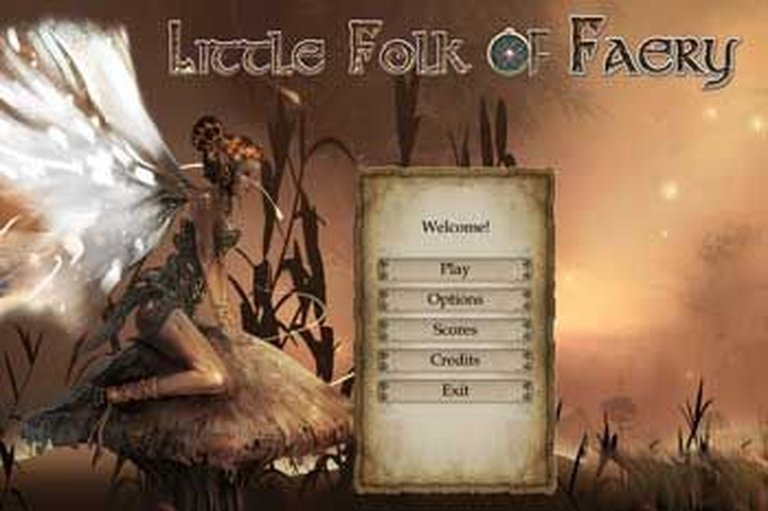
Little Folk of Faery is a simulation-strategy game set in a whimsical world where a giant tree grows inside an antique shop, housing a struggling faery village at its base. The player, having inherited the shop, must manage and restore a community of faeries—including Gnomes, Dryads, Pixies, and Leprechauns—by charming wandering spirits with music to enable their work. Using mouse-controlled drag-and-drop commands, players guide the faeries to repair structures, gather resources, and complete tasks to revive the village from ruin.
Gameplay Videos
Little Folk of Faery Free Download
Little Folk of Faery Guides & Walkthroughs
Little Folk of Faery Reviews & Reception
jayisgames.com (88/100): Little Folk of Faery is a gorgeous, whimsical, amusing little game.
gamezebo.com : the game is a visual delight even as the gameplay itself is nothing groundbreaking.
Little Folk of Faery: A Review
Introduction: Whimsy in the Workshop
In the crowded landscape of mid-2000s casual simulation games—a genre then dominated by tropical island paradises and village clones—Little Folk of Faery arrived as a meticulously crafted, visually intoxicating anomaly. Released in November 2009 by the French studio Kylotonn, the game promised a fusion of life simulation and real-time strategy set within a singular, imaginative locale: the base of a colossal, ancient tree growing inside a dusty antique shop. While it did not achieve blockbuster status or redefine its genre, Little Folk of Faery stands as a testament to the power of cohesive artistic vision and thematic cohesion in a market often saturated with formulaic design. Its legacy is not one of widespread influence, but of enduring charm and exceptional polish within a specific niche—the “casual sim” space where accessibility and atmosphere are paramount. This review will argue that Little Folk of Faery is a forgotten gem of its era, a game whose profound artistic and auditory strengths are somewhat let down by conventional, at times passive, core gameplay loops.
Development History & Context: Kylotonn’s Foray into Faery
The Studio and Its Vision: Little Folk of Faery was developed by Kylotonn SARL, a French studio founded in 2002. At the time, Kylotonn was better known for military and racing titles (Bet on Soldier, Speedball 2: Tournament) than for whimsical fantasy sims. The game represents a clear, deliberate departure for the team, spearheaded by Creative Director Yann Tambellini and designed by Damien Bernard and Cédric Hauteville. The project was published by Orange France SA and distributed digitally through portals like Oberon Media and WildTangent, targeting the booming casual PC gaming market.
Technological and Market Context: 2009 was the heyday of the “casual” genre on PC and emerging platforms. Games like Virtual Villagers 2: The Lost Children (2007), Cake Mania (2007), and Dora’s Cooking Club (2008) defined a style of gameplay centered on simple interfaces, passive real-time mechanics, and low barrier-to-entry. The typical hardware target was modest—the recommended specs (Pentium III 1.3 GHz, 512MB RAM, 128MB graphics card) reflect an era where many players still used systems capable of running such titles. Kylotonn utilized 2D hand-drawn graphics in an isometric view, a technically undemanding style that allowed for rich detail without requiring 3D rendering power. This choice was both economic and artistic, enabling the small team of 51 credited developers to create a lush, painterly world that stood out from the simpler vector or 3D graphics of many contemporaries.
The Studio’s Broader Portfolio: Interestingly, the credit lists show Kylotonn’s team working across genres. Many developers on Little Folk of Faery also contributed to The Cursed Crusade (action-adventure), Warhammer Online: Age of Reckoning (MMO), and later entries in the WRC series. This suggests a versatile, multi-project studio where Little Folk of Faery was a passion project or a strategic foray into the lucrative casual market, rather than a genre-defining core title.
Narrative & Thematic Deep Dive: Inheritance, Decay, and Musical Restoration
The narrative framework of Little Folk of Faery is deceptively simple but serves as an effective emotional anchor for the gameplay. The player character, a silent protagonist, inherits a “curiosity shop” from their grandparents. The shop is described as dark and dingy, but its most remarkable feature is a giant, ancient tree growing through its very structure. At the base of this tree resides a village of “Little Folk”—Gnomes, Dryads, Pixies, and Leprechauns—who were once cared for by the protagonist’s grandparents.
Thematic Core: The Wistful Spirits and Causes of Decay: The central conflict stems from the “wistful spirits,” melancholic, ghostly entities that have encroached upon the village. These spirits are not malicious but infect the faeries with a “depressive coma” through their tales of woe, sapping their will to work. This metaphorically links the faeries’ malaise to the neglected state of the shop and the village itself. The game’s world is one of profound decay and abandonment, where resources are scarce, the water source has disappeared, and many villagers are lost in the woods. The restoration process is thus both practical (repairing infrastructure) and psychological (lifting the spirits’ depression through music and feasting).
Lore and the Tome of Lore: The narrative is not delivered through cutscenes but through incremental discovery via the “Tome of Lore.” This in-game compendium tracks completed “chapters” as the player fulfills quests and uncovers artifacts. It provides snippets of regional folklore—the history of the Gnome miners, the Dryads’ sacred groves, the Pixies’ pranks, and the Leprechauns’ treasure. This lore-drip-feed approach rewards exploration and task completion, transforming mundane actions like repairing a “Stele” or cleaning a “Compass” into meaningful acts of cultural preservation. The ultimate goal evolves from mere rehabilitation to restoring a fragmented cultural memory.
Characterization Through Mechanics: The four faery types are not just units with stats; they embody archetypal traits. Dryads, linked to Nature, are plant-tenders and healers. Gnomes, linked to Knowledge, are scholars and repairmen. Pixies (or Musicians), linked to Music, charm spirits. Leprechauns, linked to Exploration (and implicitly Luck/Magic), find hidden things. Their distinct “animal sidekicks” (mentioned in the Jayisgames review) add visual personality. The antagonists, the wistful spirits, are poignant—they are “nostalgic creatures” whose sorrow must be soothed, not destroyed, reinforcing the theme of empathetic restoration.
The Ending: The culmination involves leading the King of the Fireflies back to his lamp, a quest chain that requires high-level skills in Music, Knowledge, and Nature. Success banishes the mist, returns the protagonist’s dog (Ginger) to the mortal realm, and reopens the curiosity shop. The ending ties the faery realm’s fate to the mortal world’s, suggesting the shop’s restoration is symbiotic with the faeries’.
Gameplay Mechanics & Systems: The Drag-and-Drop Ballet
Little Folk of Faery operates on a real-time, pause-able simulation model. The entire interface is mouse-driven, centered on the “drag-and-drop” paradigm: the player clicks on a faery, drags the cursor to an interactive object (a resource node, broken structure, or spirit), and releases to issue a command. This creates a direct, tactile sense of agency.
Core Loops and Resource Management:
1. Task Assignment & Skill Training: Each faery has four skill trees: Nature, Knowledge, Music, Exploration. Performing related tasks increases skill proficiency (e.g., harvesting food trains Nature; deciphering writings trains Knowledge). Many main and side quests require a faery of a specific type and skill level (e.g., “Requires 2 Scholars” means two faeries with high Knowledge). Training can also be done at dedicated “Learning Nooks,” allowing passive skill growth.
2. The Spirit Threat – Music as a Shield: Wistful spirits wander the map. If a faery works within their radius without protection, their “mental health” (displayed in the bottom menu) plummets, and they eventually flee to the safety of the Great Tree. The counter is to assign a Musician (Pixie) to play music at a spirit’s location, charming it and temporarily neutralizing its effect. This is the game’s signature mechanic—a real-time resource (musician) vs. hazard (spirit) management layer that requires constant attention during complex tasks.
3. Morale and Banquets: Faery morale is tied to food consumption and spirit exposure. If food stores run low, faeries stop working to forage. To boost morale and attract lost villagers (up to 12 total), the player can throw a Banquet, consuming a large amount of food but instantly lifting spirits and potentially triggering new faeries to join the village. This creates a vital feedback loop: more workers speed up tasks, but require more food, necessitating efficient harvesting.
4. Enchantment Points: A meta-currency earned through completing tasks, repairing objects, and collecting sparkling runes (“Ent Roots,” “Moonstones,” “Breaths of Sylphs”). Enchantment Points are spent in a central pool to upgrade the global proficiency of all faeries in a given skill tree (e.g., “Rank 1 Harvest”). This provides long-term progression, making all faeries more efficient over time.
5. Collections and Exploration: Four sets of randomly spawning collectibles provide ongoing side objectives. While the walkthrough notes they can reappear as duplicates, collecting full sets grants significant Enchantment bonuses. The dog, Ginger, barks to alert the player to nearby collectibles, though the timing is often imperfect, requiring vigilance.
6. Real-Time and Idle Play: The game continues when closed. Critically, unlike Virtual Villagers, faeries do not die of old age or starvation. If food is zero, they simply stop and forage. This makes the game low-stress and “anxiety-free” for sessions away from the computer, but also removes a key tension and sense of generational legacy. It encourages a “set it and forget it” approach for long tasks, making the mid-to-late game a waiting game punctuated by brief management bursts (spirit distraction, redirecting workers).
UI and Navigation: The bottom HUD displays resource counters (Food, Enchantment) and individual faery morale. A speed slider allows pausing or speeding up time (1x to 8x). Navigation is achieved by dragging the background, using arrow keys, or clicking a minimap—a necessary feature for the large, multi-zone isometric map. The Tome of Lore acts as the primary quest log and bestiary.
Innovation vs. Convention: The music-charm mechanic is the game’s most innovative system, transforming a standard hazard into a thematic, skill-based puzzle. The four distinct, non-interbreeding faery types with defined roles is also a clear, intuitive design. However, the overall structure is fundamentally conservative: gather resources, repair infrastructure, unlock new areas via prerequisites, repeat. The lack of reproduction, aging, or random catastrophic events makes the simulation feel more like a task management puzzle than a living ecosystem.
World-Building, Art & Sound: A Victorian Watercolor Brought to Life
This is where Little Folk of Faery achieves masterpiece status within its budget and genre. The world is a masterclass in cohesive, whimsical environmental storytelling.
Visual Design: The game employs lush, hand-drawn 2D backgrounds in an isometric perspective. The color palette is vibrant yet soft, evoking a storybook or Victorian-era naturalist illustration. The environment is a “junk-art faery realm“—the faeries repurpose human trinkets. As the Jayisgames review brilliantly notes: “chairs made of buttons,” a “water mill made of an old coffee mill and thimbles.” This found-object aesthetic makes the world feel simultaneously magical and tangibly antique. The four faery types are visually distinct and animated with charming, personality-filled idle and work animations (Pixies flutter, Gnomes trudge, Dryads sway). The wistful spirits are rendered with a beautiful, ethereal glow, their melancholy visible in their slow drifts and mournful animations.
Atmosphere and Map Design: The map is divided into clear zones—The Orchard, Swamp, Library ruins, Firefly territories—each with a unique visual identity. The overarching presence of the great tree and the encroaching mist creates a constant atmospheric tension. The transition from mist-shrouded desolation to clear, vibrant zones as the player progresses provides a powerful visual reward loop.
Sound Design: The soundtrack is described as “lively and unobtrusive,” likely acoustic or folk-inspired melodies. The true triumph is in the incidental sound design: the “lively, incomprehensible chatter” of the faeries, the “mournful cries” of the spirits, the clinks and clatters of their found-object tools. These sounds sell the illusion of a living, breathing microcosm. The act of charming a spirit is accompanied by a distinct musical flourish and particle effects, making it a satisfying audiovisual moment.
Contribution to Experience: The art and sound do heavy narrative lifting. They communicate the faeries’ cheerful industriousness versus the spirits’ sorrowful disruption. The “Victorian watercolor” aesthetic (as per the review) creates a sense of timelessness and wonder, perfectly suiting a fantasy rooted in antique curiosities. It elevates the game from a mere management sim to an explorable diorama of faery life.
Reception & Legacy: A Niche Darling
Contemporary Reception: Critically, reception was limited but positive. GameZebo awarded it 70% (3.5/5), praising its “appealing graphics, very good music, some interesting twist,” but noting a lack of varied actions (“if there was more actions to do”). On the user side, Jayisgames gave it a strong 4.4/5 (based on 33 votes at the time), where the community review hailed it as “casual gameplay done right” and “gorgeous, whimsical, amusing.” The Metacritic score is not listed, and MobyGames shows only one critic score. This indicates a game that flew under the mainstream radar but found an appreciative audience within dedicated casual and hidden-object game communities.
Commercial Performance: The game was a digital-only release, published by Oberon Media and available on platforms like WildTangent and the Microsoft Store. It does not appear to have been a major commercial success; its “Collected By” stat on MobyGames shows only 3 players as of the latest data, and it lacks significant Wikipedia or widespread contemporary press coverage. It was a niche product in a crowded marketplace.
Legacy and Influence: Little Folk of Faery has no discernible direct influence on major AAA or indie trends. Its DNA is clearly visible in later, more polished titles like Faery: Legends of Avalon (2010), though that game took a more RPG-oriented approach. Its closest spiritual successor in mechanics is arguably the Folk Tale series (2013) or Hidden Path of Faery (2013), both of which also focus on village management in fantasy settings. Its primary legacy is as a high-water mark for artistic presentation in the casual sim genre. It demonstrated that a game with simple mechanics could still achieve a remarkable sense of place and mood through art and sound. For historians, it represents a specific sub-type of casual game: the “real-time village sim with task-based progression,” a lineage from Virtual Villagers but with a uniquely European, storybook aesthetic.
Conclusion: A Flawed Jewel of the Casual Sim Era
Little Folk of Faery is a game of exquisite contrasts. It presents a world of breathtaking, hand-crafted beauty and melancholic whimsy, yet its gameplay is often a study in patient, sometimes passive, waiting. Its central music-charm mechanic is a clever, thematic twist on resource management, but it is not enough to overcome the genre’s inherent repetitiveness or the lack of a living, evolving population (no aging, no romance, no reproduction). The real-time “continue when off” design is a double-edged sword: it relieves pressure but also diminishes long-term investment, as the world’s fate doesn’t hang in the balance during your absence.
Its place in history is that of a cult classic curio. It is not a lost masterpiece that changed the industry, but it is a game that executed its specific vision—a musical, restorative faery management sim inside an antique shop—with such artistic integrity and charm that it transcends its mechanical limitations. For players seeking a relaxing, visually stunning experience with a unique fantasy setting, it remains a worthy download. For game historians, it is a perfect case study in how art direction can elevate conventional mechanics and how a small studio can leave a lasting, if quiet, impression through pure aesthetic commitment.
Final Verdict: An exceptionally stylish and thematically coherent casual simulation, held back by a lack of deeper systemic interplay and the passive waiting endemic to its genre. Its heart is in the right, magical place, even if its gameplay pulse occasionally slows to a crawl. It deserves to be remembered not as a genre-definer, but as one of its most beautifully decorated cottages.