
- Release Year: 2023
- Platforms: Nintendo Switch, Windows
- Publisher: H2 Interactive Co., Ltd., Super Rare Games Limited
- Developer: Cuddle Monster AB
- Genre: Action
- Perspective: Diagonal-down
- Game Mode: Single-player
- Gameplay: Platform, Roguelike, Shooter
- Setting: Fantasy
Description
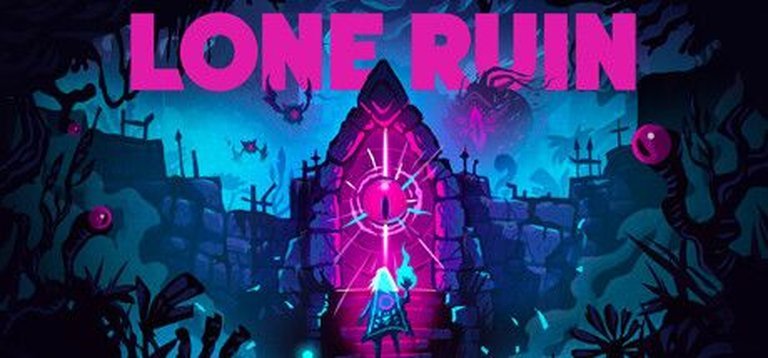
Lone Ruin is a dark, electrifying 2D roguelike shooter set in a fantasy world. Players navigate through procedurally generated levels, battling enemies and collecting upgrades in a fast-paced, diagonal-down perspective. The game’s stylish visuals and addictive gameplay make it a standout in the genre, offering a challenging and rewarding experience for fans of roguelikes.
Where to Buy Lone Ruin
PC
Lone Ruin Cracks & Fixes
Lone Ruin Mods
Lone Ruin Guides & Walkthroughs
Lone Ruin Reviews & Reception
foreverclassicgames.com : Lone Ruin builds a strong foundation for a roguelike, but lacks the content required to engage players through what is intended to be many runs.
Lone Ruin: A Radiant but Fleeting Dance Through Magical Ruins
Introduction
In a genre oversaturated with procedurally generated labyrinths and permadeath challenges, Lone Ruin (2023) dares to carve its own neon-lit path. Developed by the Swedish one-person studio Cuddle Monster Games (led by Hannes Rahm) and published by Super Rare Originals, this spellbinding twin-stick roguelike blends arcade intensity with hypnotic visuals. While its runtime may be brief, Lone Ruin delivers a tightly wound, electrifying experience that distills the essence of the roguelike formula into a laser-focused package. This review argues that Lone Ruin is a flawed gem—a game whose strengths lie in its audiovisual splendor and kinetic combat, but one held back by repetitive content and a lack of long-term hooks.
Development History & Context
Lone Ruin emerged from the creative mind of Hannes Rahm, whose prior work—Hell is Other Demons (2019)—established his flair for marrying retro aesthetics with modern design. Initially prototyped as a one-week passion project titled Robes, Lone Ruin evolved into a two-year labor of love, with Rahm handling design, art, and programming, while his brother Alfred Rahm contributed the pulsating synthwave soundtrack.
Released in January 2023, the game entered a crowded roguelike market dominated by titans like Hades and Dead Cells. Cuddle Monster Games consciously avoided meta-progression systems (à la Vampire Survivors), instead focusing on pure combat mastery. Built in Unity, the game’s development was constrained by the studio’s small size, leading to a compact runtime—critics later noted this as both a blessing (accessibility) and a curse (lack of depth).
Narrative & Thematic Deep Dive
Lone Ruin’s narrative is minimalist, opting for mood over exposition. Players assume the role of an unnamed spellcaster drawn to a once-great city corrupted by ancient magic. The premise—exploring ruins to cleanse a cataclysmic power—serves as a backdrop for the action, with brief cutscenes bookending runs.
Themes of obsession and transformation linger beneath the surface. The ruins’ inhabitants, now grotesque abominations, reflect the consequences of unchecked ambition—a subtle nod to humanity’s Faustian bargains. However, these ideas remain underdeveloped, as the game prioritizes gameplay over storytelling. Characters are sparse, with only a cryptic robed figure offering spells at the start of each run. Dialogue is nonexistent, leaving players to project their own motivations onto the silent protagonist.
Gameplay Mechanics & Systems
Core Loop & Combat
At its heart, Lone Ruin is a twin-stick shooter with roguelike elements. Each run begins with selecting one of eight spells—ranging from rapid-fire Shards to the melee Scythe—and diving into a series of procedurally generated rooms. The combat loop thrives on momentum:
– Spell Synergy: Upgrades let players tailor abilities (e.g., adding homing to Fireball or area-of-effect to Chain Lightning).
– Risk vs. Reward: Choosing between new spells or upgrading existing ones adds strategic tension.
– Boss Battles: Screen-filling bullet-hell encounters demand precision dodging and spell management.
Innovations & Flaws
- Survival Mode: A standout addition, this 10-minute wave-based mode emphasizes improvisation, with escalating difficulty and leaderboard support.
- Shortcomings: Repetitive enemy variety (only ~12 types) and static boss arenas dampen replayability. The lack of meta-progression, while intentional, leaves little incentive beyond high-score chasing.
Controls & UI
The controls are razor-sharp, with responsive movement and tactile feedback. The UI is minimalist, though some players noted visibility issues in frenetic fights due to the game’s dark color palette.
World-Building, Art & Sound
Visual Identity
Lone Ruin’s aesthetic is its crowning achievement. The game melds 3D isometric environments with 16-bit pixel art, drenched in neon purples, cyans, and pinks. Inspired by Hyper Light Drifter and Jen Zee’s work on Hades, the world feels alien yet inviting—a hallucinogenic dreamscape of crumbling towers and pulsating crystals. Particle effects dazzle without overwhelming, ensuring readability even in chaos.
Soundscape
Alfred Rahm’s soundtrack blends neurofunk basslines with ethereal synth layers, creating a soundscape that oscillates between tranquil and frenetic. While not as memorable as Hades’ orchestral score, it complements the action impeccably. Sound design shines, with spellcasts and enemy telegraphs providing crucial auditory cues.
Reception & Legacy
Critical Response
Lone Ruin garnered mixed-to-positive reviews (averaging 68% on Metacritic). Praise centered on:
– “Tight, refined, addictive combat” (TechStomper).
– “A visual feast with intoxicating energy” (Shacknews).
Critics, however, lamented its “paucity of content” (Gameluster) and “lack of narrative drive” (TheSixthAxis).
Player reception on Steam was similarly polarized, with many praising its pick-up-and-play design but calling it “hollow” compared to genre staples.
Industry Impact
While not a paradigm shift, Lone Ruin demonstrated the viability of bite-sized roguelikes in an era of sprawling epics. Its survival mode and spell-crafting mechanics influenced subsequent indies like Go Mecha Ball. Post-launch updates (e.g., the Fool’s Errand patch) added difficulty modifiers and quality-of-life improvements, showcasing Cuddle Monster’s commitment to refinement.
Conclusion
Lone Ruin is a paradox—a game whose brilliance is tempered by its brevity. It excels as a distilled arcade experience, offering blistering combat and a mesmerizing audiovisual identity. Yet its lack of depth and repetitive structure prevent it from standing among roguelike royalty. For twin-stick devotees seeking a weekend adrenaline rush, it’s a radiant diversion. For those craving narrative heft or endless variety, its magic may flicker too soon.
In the pantheon of indie gems, Lone Ruin occupies a curious niche: a celestial flare that burns brightly but briefly, daring players to bask in its glow before it fades.