
- Release Year: 2012
- Platforms: Linux, Macintosh, Windows
- Publisher: superflat games
- Developer: superflat games
- Genre: Action, Adventure, Survival horror
- Perspective: Side view
- Game Mode: Single-player
- Gameplay: Exploration, Inventory management, Multiple endings, Puzzle elements, Resource Management, Stealth, Survival horror
- Setting: Horror, Post-apocalyptic, Urban
- Average Score: 86/100
Description
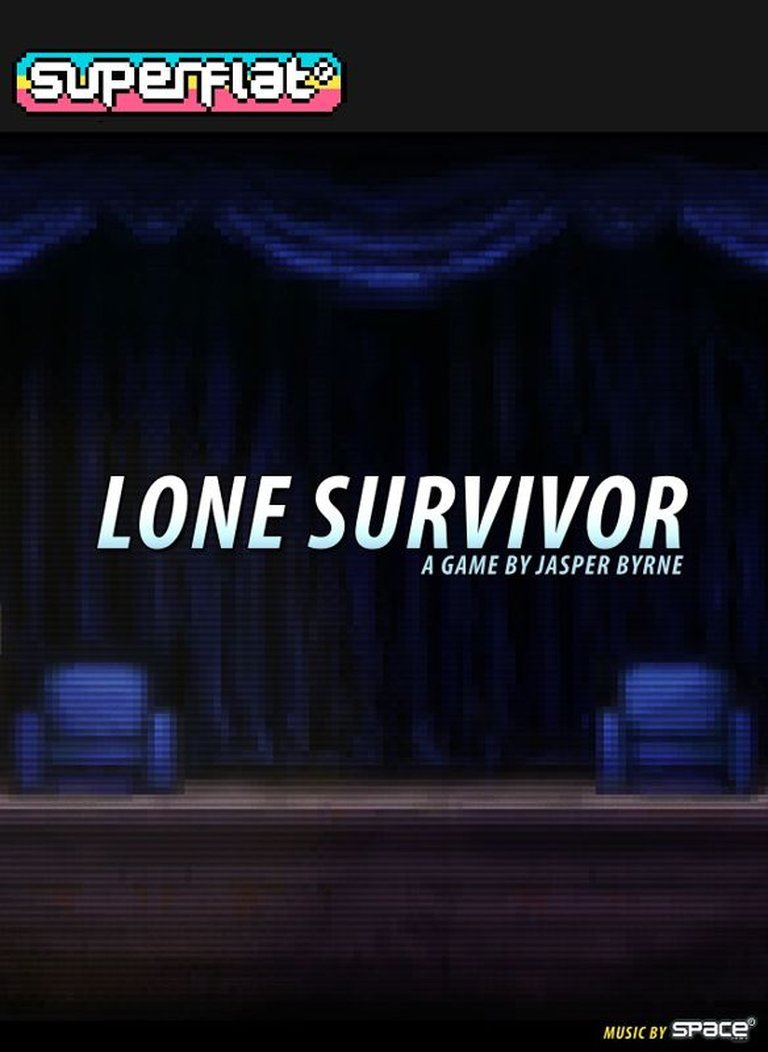
Lone Survivor is a 2D side-scrolling survival horror game where the player controls a masked protagonist struggling to escape a disease-ravaged city. Combining action, adventure, and puzzle elements, the game features retro graphics with scanlines and a haunting atmosphere. Players must manage limited resources like food, sleep, and ammunition while navigating dark, monster-infested environments. The protagonist can fight, hide, or use items like flares and rotten meat to survive, with choices affecting the narrative and multiple possible endings.
Gameplay Videos
Where to Buy Lone Survivor
Lone Survivor Guides & Walkthroughs
Lone Survivor Reviews & Reception
opencritic.com (82/100): A gripping narrative and an irresistible atmosphere of spine-tingling dread make Lone Survivor a compelling horror experience.
imdb.com (90/100): LONE SURVIVOR (2012) is an interesting survival horror game. It’s one of those underrated, lesser talked about indie games.
ign.com (86/100): Effective survival horror games don’t have to be flashy.
Lone Survivor: A Masterclass in Psychological Horror and Survival
Introduction
Lone Survivor is not just a game—it’s an experience, a descent into the fractured psyche of a man clinging to sanity in a world that may or may not be real. Released in 2012 by Jasper Byrne under the Superflat Games banner, Lone Survivor is a 2D side-scrolling survival horror game that defies conventions, blending psychological depth, retro aesthetics, and innovative gameplay mechanics into a hauntingly unforgettable journey. This review will dissect the game’s development, narrative, mechanics, and legacy, arguing that Lone Survivor is a landmark title in indie horror, a game that transcends its technical limitations to deliver a profoundly human story about grief, guilt, and the fragile nature of reality.
Development History & Context
The Birth of a Vision
Jasper Byrne’s Lone Survivor emerged from a deeply personal and creative crucible. Byrne, a former indie musician and developer, had already made a name for himself with Soundless Mountain II, a “demake” of Silent Hill 2 that won the 2008 TIG Bootleg Demakes Competition. This project was more than a fan tribute—it was a proof of concept. Byrne sought to distill the psychological horror of Silent Hill 2 into a 2D, pixelated framework, proving that atmosphere and tension could thrive without cutting-edge graphics.
The development of Lone Survivor spanned four years, a period during which Byrne grappled with personal loss and newfound fatherhood. His father’s death from cancer and the birth of his daughter deeply influenced the game’s themes of grief, survival, and the duality of pain and hope. Byrne’s multidisciplinary background—he composed the game’s soundtrack, designed its art, and programmed it using a custom engine reminiscent of SCUMM (the language behind Maniac Mansion)—allowed him to craft a cohesive, deeply personal vision.
The Gaming Landscape in 2012
Lone Survivor arrived at a pivotal moment in horror gaming. The Silent Hill series, once the gold standard for psychological horror, had strayed from its roots with titles like Silent Hill: Homecoming and Downpour, which prioritized action over atmosphere. Meanwhile, the indie scene was burgeoning, with games like Amnesia: The Dark Descent (2010) and Limbo (2010) redefining what horror could be. Lone Survivor carved its niche by embracing the retro aesthetic while pushing narrative and mechanical innovation.
Technologically, Lone Survivor was constrained by its 2D side-scrolling perspective and pixelated visuals. Yet, these limitations became strengths. The game’s lo-fi presentation forced players to engage with its world through imagination, filling in the gaps left by its blocky, scanline-heavy graphics. The result was a game that felt more immersive than many of its 3D counterparts, proving that horror is not about photorealism but about atmosphere, sound, and psychological tension.
Narrative & Thematic Deep Dive
Plot Overview: A Descent into Madness
Lone Survivor follows an unnamed protagonist—referred to simply as “You”—who is the sole survivor of a mysterious pandemic that has turned the city’s inhabitants into grotesque, zombie-like mutants. Trapped in his apartment, “You” must scavenge for food, ammunition, and clues while battling hunger, exhaustion, and a crumbling grip on reality. The game’s narrative unfolds through exploration, cryptic radio transmissions, and surreal dream sequences, all of which blur the line between hallucination and reality.
The story is deliberately ambiguous, inviting players to piece together its meaning. Key figures include:
– The Director: A mysterious survivor who communicates via radio and occasionally provides supplies. His true identity and motives remain unclear until the game’s later stages.
– The Man Who Wears a Box: A pacifist figure who advocates for non-violence and provides batteries and food. His presence is calming, but his true nature is shrouded in mystery.
– The Man in Blue: A taunting, hostile figure who supplies ammunition but seems to represent the protagonist’s violent impulses.
– The Girl in the Blue Dress: A spectral figure who appears in dreams and visions, hinting at a deeper, personal tragedy.
The game’s climax reveals that “You” may be a patient in a psychiatric ward, his journey a manifestation of survivor’s guilt following the death of a loved one (possibly in a bus bombing). The multiple endings—Blue, Red, Green, White, and Yellow—reflect different outcomes based on the player’s choices, from further descent into madness to tentative healing.
Themes: Grief, Guilt, and the Fragility of Reality
Lone Survivor is a meditation on trauma and the human psyche. Its themes include:
1. Survivor’s Guilt: The protagonist’s journey is a metaphor for the psychological toll of surviving a tragedy. The mutants, the decaying city, and the protagonist’s isolation all symbolize the weight of guilt and the struggle to move forward.
2. The Duality of Human Nature: The Man Who Wears a Box and the Man in Blue represent the protagonist’s conflicting impulses—pacifism versus violence, hope versus despair. The player’s choices determine which side dominates.
3. The Unreliable Narrator: The game’s ambiguity forces players to question what is real. Is the protagonist truly in a post-apocalyptic world, or is it all a hallucination? The lack of clear answers mirrors the disorientation of grief.
4. Healing Through Confrontation: The Green and White endings suggest that facing one’s pain—rather than suppressing it—is the path to recovery. The protagonist’s interactions with the Girl in the Blue Dress hint at a lost loved one, and his ability to confront this loss determines his fate.
Dialogue and Character Depth
The game’s dialogue is sparse but impactful. Conversations with the Man Who Wears a Box and the Man in Blue are cryptic, forcing players to read between the lines. The protagonist’s internal monologues—such as his refusal to steal (“This isn’t mine”) or his comments on his appearance in mirrors—reveal his moral compass and deteriorating mental state.
The lack of traditional exposition is a strength. Lone Survivor trusts players to interpret its narrative, making the experience deeply personal. The game’s ambiguity is not a flaw but a deliberate choice, inviting replayability and discussion.
Gameplay Mechanics & Systems
Core Gameplay Loop: Survival and Exploration
Lone Survivor blends survival horror with adventure game mechanics. The core loop involves:
1. Scavenging: Players explore the apartment complex and later the city, searching for food, ammunition, keys, and other items. Hunger and exhaustion are constant threats, requiring regular returns to the protagonist’s apartment to eat and sleep.
2. Combat and Stealth: Enemies, known as “Thinmen” and “Fatmen,” can be avoided, distracted with rotten meat, or killed with a pistol (though ammunition is scarce). Flares can stun enemies, allowing for safe passage.
3. Puzzle-Solving: Progress requires solving environmental puzzles, such as finding keys to unlock doors or using mirrors to teleport between locations.
4. Resource Management: Food, ammunition, and flashlight batteries are limited. Players must decide whether to conserve resources or use them liberally, with consequences for their mental health.
Innovative Systems
- Sanity and Mental Health: The protagonist’s mental state is tracked invisibly, affecting which ending the player receives. Actions like killing enemies, taking pills, or eating rotten meat lower sanity, while positive interactions (e.g., feeding a stray cat) improve it.
- Dream Sequences: Sleeping or taking pills triggers surreal dreams that provide narrative context and additional supplies. These sequences are integral to the story, revealing the protagonist’s subconscious struggles.
- Dynamic World: The game world changes subtly based on the protagonist’s mental state. Rooms may appear different upon revisiting, and certain areas become accessible only after specific actions.
- No Pause Mechanism: The game does not pause when accessing the inventory or map, adding tension. Players must manage resources on the fly, heightening the survival horror experience.
Flaws and Frustrations
While Lone Survivor is a masterpiece, it is not without flaws:
– Backtracking: The game’s open-ended design requires frequent backtracking, which can become tedious. While this reinforces the survival aspect, it occasionally disrupts immersion.
– Combat Limitations: The pistol’s clunky aiming and scarce ammunition make combat a last resort. While this aligns with the game’s themes, it can frustrate players accustomed to action-oriented horror.
– Lack of Visual Feedback: The absence of a visible sanity meter or health bar can be disorienting. Players must rely on contextual clues (e.g., the protagonist’s comments) to gauge their status.
– No Traditional Pause: The inability to pause can be punishing, especially during tense moments. This design choice, while immersive, may alienate some players.
World-Building, Art & Sound
Setting and Atmosphere
Lone Survivor’s world is a claustrophobic nightmare. The protagonist’s apartment serves as a hub, a fragile sanctuary in a decaying city. The environments—dark hallways, abandoned rooms, and eerie basements—are rendered in a retro pixel art style that evokes classic horror games while feeling distinctly modern. The use of scanlines and flickering lighting creates a sense of unease, as if the world itself is unstable.
The game’s setting is deliberately ambiguous. Is the protagonist in a real post-apocalyptic world, or is it all a hallucination? The lack of clear answers enhances the horror, making the player question their own perceptions.
Visual Direction: Retro Meets Psychological Horror
The game’s art style is a triumph of minimalism. The pixelated graphics, while initially jarring, become a strength. The lack of detail forces players to fill in the gaps with their imagination, making the horror more personal and unsettling. The protagonist’s surgical mask, the grotesque designs of the Thinmen, and the surreal dream sequences all contribute to a cohesive, nightmarish aesthetic.
The use of color is particularly effective. The game’s palette is muted, with occasional bursts of color (e.g., the Girl in the Blue Dress) standing out as beacons of hope or memory. The contrast between the dark, oppressive environments and these fleeting moments of color reinforces the game’s themes of despair and fleeting hope.
Sound Design: A Haunting Soundtrack
Jasper Byrne’s soundtrack is a masterclass in atmospheric horror. The game’s music, composed using a scratchy guitar and synthwave elements, evokes a sense of melancholy and dread. Tracks like “Sleep Forever” (the Red and Blue endings’ theme) and “Survival” (the Green ending’s theme) underscore the game’s emotional weight.
The sound design extends beyond music. The protagonist’s heartbeat, the distant groans of mutants, and the static of radio transmissions all contribute to the game’s oppressive atmosphere. The lack of voice acting is a deliberate choice, forcing players to engage with the text and imagine the characters’ voices for themselves.
Reception & Legacy
Critical Reception: A Modern Classic
Lone Survivor was met with widespread acclaim upon release. Critics praised its atmosphere, narrative depth, and innovative gameplay. Major outlets awarded it high scores:
– IGN: 8.5/10 – “Lone Survivor is one of those games that remain on your mind long after you’ve finished it.”
– Destructoid: 9/10 – “Easily among the best survival horror games that I’ve ever played.”
– Eurogamer: 8/10 – “Brave, uncompromising, and a little bit knowing.”
– PC Gamer: 79/100 – “A smart, unembellished survival horror adventure which rewards patience and inspires introspection.”
The game’s reception highlighted its strengths—its psychological depth, atmospheric tension, and willingness to challenge players—but also noted its flaws, such as the occasionally frustrating backtracking and combat mechanics.
Commercial Performance and Ports
While Lone Survivor was not a commercial blockbuster, it found a dedicated audience. The game’s initial release on PC (2012) was followed by ports to Mac, Linux, and later consoles, including the PlayStation 3, PlayStation Vita, PlayStation 4, and Wii U. The Director’s Cut (2013) added new content, including additional endings and refined mechanics.
The game’s physical release on PlayStation 4 and Vita (2016) through Limited Run Games cemented its status as a cult classic. In 2022, Super Lone Survivor, a remake with updated visuals and gameplay, was released for Nintendo Switch and PC, introducing the game to a new generation of players.
Influence on the Genre
Lone Survivor’s impact on survival horror is profound. It demonstrated that indie developers could craft deeply personal, thematically rich horror experiences without relying on jump scares or high-end graphics. Its emphasis on psychological horror, player agency, and ambiguous storytelling influenced later titles such as:
– SOMA (2015): A sci-fi horror game that explores consciousness and identity, sharing Lone Survivor’s focus on narrative and atmosphere.
– The Cat Lady (2012): Another indie horror game that delves into themes of depression and trauma, using a similar 2D aesthetic.
– World of Horror (2020): A Lovecraftian horror game that embraces retro visuals and psychological tension.
Lone Survivor also contributed to the resurgence of 2D horror games, proving that the genre could thrive outside of 3D environments. Its success paved the way for games like Darkwood (2017) and Faith: The Unholy Trinity (2023), which similarly blend retro aesthetics with modern horror sensibilities.
Conclusion: A Landmark in Psychological Horror
Lone Survivor is more than a game—it’s a haunting, introspective journey into the human psyche. Jasper Byrne’s magnum opus transcends its technical limitations to deliver a story that is as emotionally resonant as it is terrifying. Its themes of grief, guilt, and the fragility of reality are explored with a depth rarely seen in horror games, and its innovative mechanics—such as the sanity system and dynamic world—create a deeply personal experience.
While the game is not without flaws—its backtracking can be tedious, and its combat is intentionally frustrating—these elements serve its overarching themes. Lone Survivor is not about providing a comfortable experience; it’s about immersing players in the protagonist’s despair and forcing them to confront the same questions he faces.
In the pantheon of survival horror, Lone Survivor stands as a modern classic. It is a testament to the power of indie development, proving that a single creator with a vision can craft an experience that rivals—and often surpasses—the work of major studios. For those willing to embrace its ambiguity and endure its challenges, Lone Survivor offers a journey that lingers long after the credits roll.
Final Verdict: 9/10 – A Masterpiece of Psychological Horror
Lone Survivor is essential playing for fans of horror, narrative-driven games, and anyone who appreciates a story that dares to explore the darker corners of the human mind. It is a game that demands patience, introspection, and a willingness to embrace the unknown—and for those who do, it rewards with an experience that is as profound as it is unsettling.