
- Release Year: 2016
- Platforms: Windows
- Developer: NomnomNami
- Genre: Adventure
- Perspective: Top-down
- Game Mode: Single-player
- Gameplay: Visual novel
- Setting: Rabbit town
Description
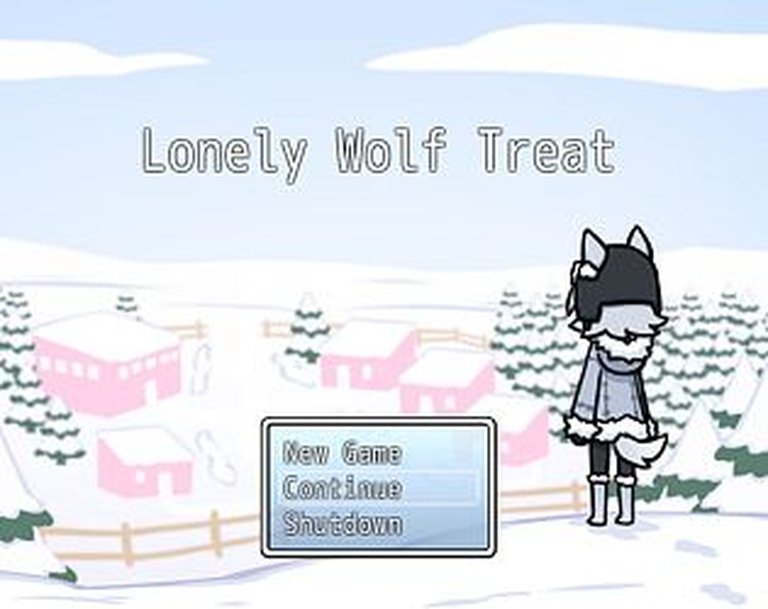
Lonely Wolf Treat is a visual novel styled as an RPG, where the player takes on the role of Treat, a wolf girl who moves to a rabbit town. Initially shunned due to her wolf heritage, Treat’s life changes when a brave rabbit decides to befriend her. The game features top-down exploration and a narrative focused on romance, set within an anime/manga art style.
Gameplay Videos
Lonely Wolf Treat Free Download
Lonely Wolf Treat Patches & Updates
Lonely Wolf Treat Guides & Walkthroughs
Lonely Wolf Treat: A Quiet Revolution in Queer Indie Storytelling
Introduction
In an era dominated by blockbuster franchises and hyper-realistic graphics, Lonely Wolf Treat (2016) emerges as an unassuming yet profound meditation on prejudice, belonging, and the fragility of connection. This bite-sized RPG Maker visual novel—crafted almost entirely by solo developer NomnomNami—defies its technical limitations to deliver a narrative experience steeped in emotional resonance. Though overlooked by mainstream audiences, its legacy lies in its radical gentleness: a story about a wolf girl navigating a rabbit-eat-rabbit world that quietly redefines what LGBTQ+-themed games can achieve through metaphor and minimalist design.
Development History & Context
The Solo Visionary Behind the Wolf
NomnomNami, a polymath developer responsible for the game’s art, writing, and music, positioned Lonely Wolf Treat as part of a broader narrative universe. Released alongside companion titles like Friendly Bunny Mochi (2016), the game was born from an indie ecosystem thriving on platforms like itch.io, where small-scale, personal projects could flourish without commercial pressures.
The RPG Maker Paradox
Built using RPG Maker, a tool often associated with amateur horror games, Lonely Wolf Treat subverts expectations by repurposing the engine’s top-down exploration and dialogue systems for intimate storytelling. While the game lacks complex mechanics, its use of RPG scaffolding—players “battle” social tension through dialogue choices—adds tactile engagement to what might otherwise be a passive visual novel.
A 2016 Gaming Landscape in Flux
Released alongside landmark narrative titles like Firewatch and Undertale, Lonely Wolf Treat quietly contributed to the indie wave prioritizing emotional authenticity over technical spectacle. Its themes of outsiderhood also arrived alongside growing mainstream recognition of LGBTQ+ stories in games, positioning it as a grassroots counterpart to larger studio efforts.
Narrative & Thematic Deep Dive
The Wolf in Rabbit’s Clothing
The game follows Treat, a lone wolf girl ostracized by a rabbit-dominated town wary of her predatory heritage. Her isolation breaks when a rabbit named Mochi—a fearless optimist—decides to befriend her. What begins as a quirky premise evolves into a nuanced exploration of otherness, with Treat’s claws and fangs serving as metaphors for marginalized identities.
Dialogue as a Weapon and Shield
Every conversation in Lonely Wolf Treat feels fraught with tension. Players navigate dialogue trees where innocuous remarks (“I like your ears”) can trigger defensiveness or vulnerability. The game’s most ingenious flourish is its “Trust Meter,” which fluctuates based on choices, subtly teaching players to balance honesty with self-preservation.
Queer Allegory Through Anthropomorphism
By cloaking its LGBTQ+ themes in animal allegory, the game sidesteps didacticism. Treat’s struggle mirrors the queer experience: erasure (“You don’t seem like a wolf”), microaggressions (“Are you dangerous?”), and the exhaustion of constant self-explanation. Mochi’s unwavering support—flawed but earnest—reflects allyship’s complexities.
Gameplay Mechanics & Systems
Walking Simulator, Emotional Explorer
The game’s RPG-inspired exploration is deliberately constrained. Players meander through a handful of quaint, hand-drawn environments—a bakery, a park—each interaction reinforcing Treat’s alienation. The simplicity amplifies the narrative: when Treat finally gains access to a previously locked area (Mochi’s home), it feels like a monumental victory.
The Illusion of Choice
While Lonely Wolf Treat offers branching dialogue, its endings are minimal—a reflection of its focus on emotional truth over player power fantasy. A seemingly minor choice, like whether to hide Treat’s claws, carries profound narrative weight, emphasizing that marginalized individuals often navigate lose-lose scenarios.
UI as Narrative Device
The game’s retro-styled menus and pixelated text lean into its RPG Maker roots, but these elements are cleverly diegetic. The “Save Screen” is framed as Treat’s diary, with each save file representing a fleeting moment of hope or doubt.
World-Building, Art & Sound
A Pastel Dystopia
NomnomNami’s art style—reminiscent of early 2000s manga—imbues the rabbit town with deceptive cheerfulness. The candy-colored palette contrasts with Treat’s muted grays, visually reinforcing her outsider status. Subtle details, like rabbits flinching when Treat approaches, build unease without explicit confrontation.
Soundscapes of Loneliness
The soundtrack, composed using chiptune-inspired synths, oscillates between melancholic solos and cautiously upbeat melodies. A recurring motif—a lone piano track titled “Sharp Teeth, Soft Heart”—underscores Treat’s internal conflict. Ambient sounds (rustling leaves, distant chatter) are conspicuously absent in Treat’s early scenes, emphasizing her isolation.
Reception & Legacy
A Cult Classic in Shadows
Lonely Wolf Treat garnered little mainstream attention at launch, but its legacy grew organically within queer gaming circles. Its lack of a MobyScore or major reviews reflects its niche status, yet its translation into 10+ languages—crowdsourced by fans—speaks to its grassroots impact.
Paving the Way for “Quiet Queer” Games
The game’s influence surfaces in later titles like Butterfly Soup (2017) and A Summer’s End – Hong Kong 1986 (2020), which similarly prioritize low-stakes, slice-of-life LGBTQ+ narratives. Its use of anthropomorphic allegory also anticipates the viral success of Beastars, bridging gaming and anime subcultures.
Conclusion
Lonely Wolf Treat is a masterclass in minimalism, proving that profound storytelling requires neither budget nor complexity. Its greatest triumph lies in how it transforms RPG Maker’s limitations into strengths, using every pixel and dialog box to interrogate prejudice with tenderness. While it may never occupy a mainstream pantheon, its whispered legacy—as a beacon for marginalized players and developers—cements its place as a quiet revolution in gaming history. 9/10; a small game with fangs that leave lasting marks.