
- Release Year: 2012
- Platforms: Windows
- Publisher: dtp entertainment AG, Viva Media, LLC
- Developer: Cranberry Production GmbH
- Genre: Adventure
- Perspective: Third-person
- Game Mode: Single-player
- Gameplay: Point-and-click, Puzzle
- Setting: Fantasy
- Average Score: 79/100
Description
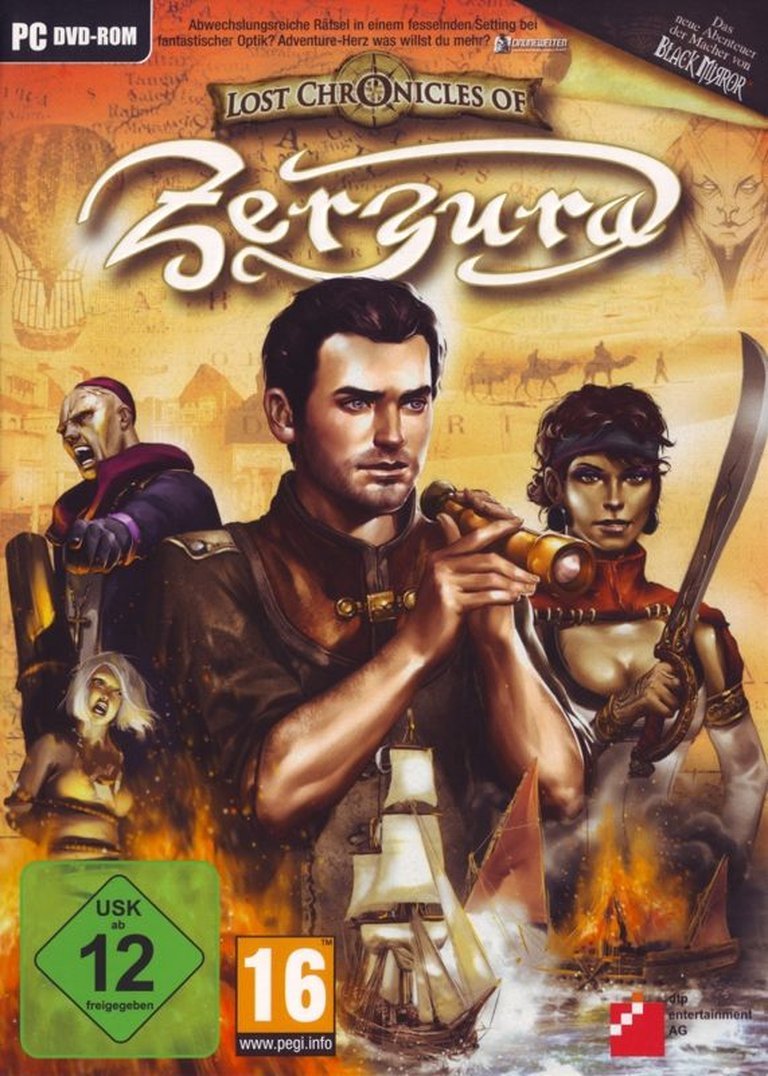
Lost Chronicles of Zerzura is a traditional point-and-click adventure game set in the 16th century, following inventor Feodor as he searches for his brother Ramon, who was kidnapped by the Inquisition. His journey spans Barcelona, Almeria, Malta, Tripoli, and finally the legendary lost city of Zerzura, combining puzzles, object manipulation, and dialogue-driven exploration with historical intrigue and romantic encounters.
Gameplay Videos
Where to Buy Lost Chronicles of Zerzura
PC
Lost Chronicles of Zerzura Cracks & Fixes
Lost Chronicles of Zerzura Patches & Updates
Lost Chronicles of Zerzura Guides & Walkthroughs
Lost Chronicles of Zerzura Reviews & Reception
metacritic.com (76/100): A more open environmental structure and a larger amount of hotspots per screen, and it would be perfect. Even so, it’s a stunning game that must not go missing from your collection.
gamrgrl.com (80/100): Though it doesn’t chart new territory with its premise, Lost Chronicles of Zerzura combines all the right elements to create a thoroughly enjoyable old-school adventure.
Lost Chronicles of Zerzura: Review
Introduction
In the sun-drenched crucible of 16th-century Barcelona, where the sparks of Renaissance innovation clashed against the iron fist of the Spanish Inquisition, Lost Chronicles of Zerzura unfolds an epic odyssey. Developed by Cranberry Production—the studio behind the atmospheric Black Mirror series—this 2012 point-and-click adventure plunges players into a meticulously researched world of flying machines, corsairs, and the mythical lost city of Zerzura. While its premise may echo classic tales like Indiana Jones and the Fate of Atlantis, Zerzura carves its own niche as a rich, narrative-driven experience that balances historical verisimilitude with fantastical mystery. Despite minor technical and design hiccups, it stands as a testament to the enduring power of the adventure genre, offering a journey that is both intellectually stimulating and emotionally resonant. This review dissects the game’s legacy, dissecting its craftsmanship, thematic depth, and place in gaming history.
Development History & Context
The Studio’s Vision
Cranberry Production, renowned for the brooding, narrative-heavy Black Mirror sequels, pivoted toward grand historical adventure with Zerzura. Founded in 1999, the German studio established itself as a master of atmospheric storytelling, often blending Gothic horror with psychological depth. Zerzura represented a deliberate shift: less supernatural dread, more swashbuckling realism. As director Michael Holzapfel noted, the game aimed to capture the “Renaissance’s dual nature: a golden age of discovery shadowed by religious tyranny.”
Technological Constraints & Release
Built on an enhanced Black Mirror III engine, Zerzura employed pre-rendered 2D backgrounds with 3D character overlays—a common mid-2000s compromise for cinematic visuals. This allowed for lush, detailed environments (e.g., Barcelona’s harbor or Libyan deserts) but constrained animation fluidity. The German version launched in February 2012, with the English international release following in November via publishers dtp entertainment and Viva Media. Timing was crucial: the adventure genre saw a modest revival in early 2010s, with titles like Deponia proving niche viability. Zerzura positioned itself as a more “serious” alternative, targeting players weary of comedic excesses.
The Gaming Landscape
Zerzura emerged in an era dominated by mainstream action games, yet adventure titles thrived in dedicated circles. Its peers included Gray Matter (2009) and Black Mirror III (2010), emphasizing complex puzzles and mature narratives. Unlike those games, Zerzura embraced a “journey” structure, spanning continents—a bold move that contrasted with the localized settings of many contemporaries.
Narrative & Thematic Deep Dive
Plot Structure
The narrative begins in 1514, framing the Morales brothers as Renaissance prodigies. Feodor, our protagonist, is an idealistic inventor; Ramon, his elder brother, is an Egyptologist obsessed with ancient artifacts. Their lives unravel when the Inquisition, led by the menacing Grand Inquisitor, kidnaps Ramon for possessing a mysterious talisman linked to Zerzura. Feodor’s quest spans Barcelona, Almeria, Malta, Tripoli, and finally the Libyan desert, merging real history (e.g., corsair raids, Ottoman trade routes) with myth. The plot twists through alliances (e.g., Jamila, a corsair captain’s daughter) and betrayals, culminating in Zerzura’s revelation as a city safeguarding a secret that could upend religious and scientific paradigms.
Characterization
- Feodor: A likable but sometimes bland hero, embodying Renaissance curiosity. His charm lies in his inventiveness (e.g., repairing a ship with scrap metal), yet his emotional arc lacks the grit of Black Mirror’s protagonists.
- Jamila: The love interest and Feodor’s moral compass, her development is undercut by a jarring miscast—her Mediterranean origins are voiced with a rural British accent.
- Grand Inquisitor: A nuanced antagonist, less a caricature than a product of his era, justifying tyranny as “preserving God’s order.”
- Supporting Cast: From Jewish scholars in Tripoli to Maltese knights, NPCs enrich the world, though their dialogue often reduces to “exhaust options” tropes.
Themes
The game excels in juxtaposing science vs. dogma. Feodor’s flying machines symbolize human ingenuity, while the Inquisition represents institutionalized fear. This tension extends to cultural collision: Feodor’s journey through Islamic, Christian, and Jewish societies highlights 16th-century Mediterranean cosmopolitanism. The lost city of Zerzura itself symbolizes forbidden knowledge—a recurring motif in adventure games, here rendered with archaeological authenticity. Yet the narrative occasionally stumbles in pacing, with exposition-heavy segments that halt momentum.
Gameplay Mechanics & Systems
Core Mechanics
Zerzura adheres to classic point-and-click conventions: players explore pre-rendered locales, collect items, and solve environmental puzzles. The interface is streamlined: a context-sensitive cursor (eye for examination, hand for items) and a bottom inventory bar. A journal tracks objectives, while a space-bar toggles hotspot indicators—a modern concession to accessibility.
Puzzle Design
Puzzles are the game’s strength, blending logic with historical plausibility:
– Invention Puzzles: Unique to Zerzura, these require players to combine parts (e.g., fabrics, wood) in Feodor’s notebook to construct tools like gliders or hot air balloons. They reward mechanical intuition over trial-and-error.
– Inventory Integration: Solutions often involve multi-item combinations (e.g., using a lens with sunlight to ignite a torch).
– Mini-Games: A gambling den in Tripoli and a jigsaw puzzle in Malta offer diversion but feel underdeveloped.
– Map Travel: A desert segment transitions to an overworld map, emphasizing journey over minutiae.
Flaws
The biggest critique is difficulty. Puzzles are rarely challenging for veterans, though novices may appreciate their clarity. Choices in dialogue exist but lack consequence, undermining replayability. Character animations are stiff—Feodor moves like a marionette—a stark contrast to the fluid backgrounds.
World-Building, Art & Sound
Setting & Atmosphere
Cranberry’s love for historical detail shines in locales like Barcelona’s cliffside workshops or Malta’s fortresses. Each location breathes with period-authenticity: spices in Tripoli’s souk, salt-crusted ships in Maltese harbors. The Inquisition’s menace permeates even sun-drenched scenes, with burning pyres and whispered fears. Zerzura itself, glimpsed only late in the game, is a masterclass in myth-making: its oasis ruins blend Berber and Egyptian motifs, radiating ancient power.
Visual Design
- Backgrounds: Staggeringly detailed. Textures—from stone to fabric—are rendered with painterly depth, using lighting to evoke time of day.
- Character Models: 3D figures clash with 2D scenes. Faces lack expressiveness, and animations (e.g., walking) are robotic.
- Art Direction: Oliver Specht’s vision marries realism with romanticism, recalling The Secret of Kells’ folk-art influences in Zerzura’s hieroglyphs.
Sound Design
The score is an adventure triumph: orchestral swells evoke Indiana Jones, while lutes and ouds punctuate Mediterranean scenes. Sound effects—from clinking ship rigging to desert wind—ground the world. Yet voice acting is uneven. While Feodor’s Spanish accent is plausible, Jamila’s Devonshire brogue feels like a casting oversight. Critical lines land well, but the audio mix occasionally buries dialogue under music.
Reception & Legacy
Critical Response
Upon release, Zerzura earned 82% on MobyGames, praised for its story, art, and puzzles. Adventure-Treff (90%) lauded it as a “wonderful adventure,” while GameStar (86%) called it “atmospheric and logical.” Critics universally commended the historical setting but flagged flaws: GamersGlobal noted puzzles were “too easy,” and Looki (74%) criticized the “flat” protagonist. Metacritic’s 76% score reflected this mixed praise.
Commercial & Legacy Status
Commercially, Zerzura was a niche success, appealing to adventure loyalists but failing to break into mainstream charts. Its legacy endures as a bridge between eras: it preserved pre-2010s adventure traditions (purity, narrative depth) while modernizing with streamlined UIs. Cranberry’s closure in 2012—due to parent publisher dtp’s bankruptcy—cemented Zerzura as the studio’s swan song. It influenced later games like Noir Chronicles (2018), which adopted its historical detective-mystery framework. Today, it’s remembered fondly for its ambition, if not its perfection.
Conclusion
Lost Chronicles of Zerzura is a flawed gem—an adventure that honors its genre’s roots while charting its own course. Cranberry Production’s historical immersion and inventive puzzles create an experience that feels both timeless and timely. Though hampered by technical limitations (stiff animations, voice miscasts) and design conservatism (easy puzzles), it delivers a satisfying journey through one of gaming’s most evocative settings. For enthusiasts of Indiana Jones-style epics or Black Mirror-esque gravitas, Zerzura remains essential. It stands as a poignant reminder of a developer’s final voyage—a testament to the power of stories that dare to explore the intersection of history, myth, and human ambition. In a landscape saturated by action-blockbusters, Zerzura’s quiet persistence is its own triumph.