
- Release Year: 2021
- Platforms: Nintendo Switch, Windows
- Publisher: Morning Shift Studios, Ultimate Games S.A.
- Developer: Morning Shift Studios
- Genre: Adventure, Simulation
- Perspective: 3rd-person
- Game Mode: Single-player
- Gameplay: Puzzle elements
- Setting: Fantasy
- Average Score: 32/100
Description
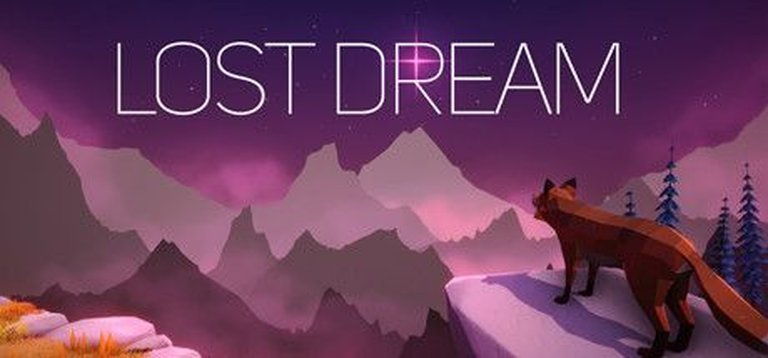
Lost Dream is a meditative adventure-simulation game set in a fantasy world, where players explore as a fox in a serene, puzzle-filled environment. Released in 2021 by Morning Shift Studios, the game emphasizes a tranquil, third-person perspective with direct control, blending light puzzle elements and a soothing soundtrack. Despite its short playtime and mixed reviews, it offers a visually simple yet atmospheric experience, though critics note its lack of depth and polish.
Gameplay Videos
Where to Buy Lost Dream
Lost Dream Free Download
Lost Dream Patches & Updates
Lost Dream Guides & Walkthroughs
Lost Dream Reviews & Reception
mobygames.com (32/100): Lost Dream tells a story about your friend being taken away by humans.
Lost Dream: A Meditative Fox’s Journey Through a Forgotten World
Introduction: The Illusion of a Dream
Lost Dream (2021) is a game that lingers in the liminal space between ambition and execution—a fleeting, hour-long experience that aspires to the emotional resonance of Journey or the atmospheric beauty of Firewatch, yet stumbles in its attempt to carve out its own identity. Developed by Morning Shift Studios and published by Ultimate Games S.A., Lost Dream presents itself as a “meditative/zen” adventure where players assume the role of a fox on a quest to rescue a kidnapped friend from human captors. Its Steam description promises a “relaxing” experience, one that prioritizes graphical design and soundtrack over traditional gameplay depth. But beneath its serene veneer lies a game that feels more like a tech demo than a fully realized vision—a beautiful shell with little substance to sustain it.
This review will dissect Lost Dream in its entirety: its troubled development context, its narrative and thematic aspirations, its mechanical shortcomings, and its place in the broader landscape of indie games. We’ll explore why, despite its visual and auditory charm, it fails to leave a lasting impression, and how its legacy—if it can be called that—reflects the challenges of indie game development in an oversaturated market.
Development History & Context: A Dream Deferred
The Studio Behind the Fox
Morning Shift Studios, the developer of Lost Dream, is a relatively obscure indie team with a portfolio that includes other short-form experiences like Dream (2020) and Dream Time (1987, though this is likely a separate, unrelated title). The studio’s output suggests a focus on atmospheric, narrative-light games that prioritize mood over mechanics. Lost Dream is no exception, positioning itself as a “relaxing” adventure with a runtime of under an hour—a deliberate choice, as the game lacks a save system, reinforcing its design as a single-sitting experience.
The game’s development appears to have been swift, with a release on Windows (March 12, 2021) followed shortly by a Nintendo Switch port later that year. This rapid turnaround, combined with its minimalist scope, hints at a project conceived as either a passion piece or a low-risk commercial venture. The absence of substantial marketing or critical coverage further underscores its niche appeal.
The Gaming Landscape of 2021
Lost Dream arrived during a golden age for indie “walking simulators” and atmospheric adventures. Games like The Artful Escape (2021), Sable (2021), and The Forgotten City (2021) demonstrated how indie developers could craft deeply immersive, emotionally resonant experiences with limited resources. Even Journey, nearly a decade old by 2021, remained a benchmark for environmental storytelling and meditative gameplay.
Yet Lost Dream fails to distinguish itself in this crowded field. While it borrows heavily from the visual language of titles like Firewatch and The First Tree (as acknowledged in its Steam disclaimer), it lacks the narrative depth, mechanical innovation, or world-building prowess to stand alongside them. Its brevity—often cited as a selling point—becomes a liability when the experience feels more like a proof of concept than a complete game.
Technological Constraints and Design Philosophy
The game’s technical specifications reveal a modest project:
– Engine: Unspecified (likely Unity or Unreal, given its 3D aesthetic).
– Input: Supports gamepad, keyboard, and mouse, though controller support was a point of contention among players (as seen in Steam discussions).
– Pacing: Marketed as “meditative/zen,” with puzzle elements and direct control.
The lack of a save system is a curious design choice, one that suggests the developers envisioned Lost Dream as a brief, uninterrupted experience. However, this decision also limits its accessibility, particularly for players who prefer to engage with games in shorter bursts. The absence of resolution settings or other basic customization options (a recurring complaint in Steam forums) further highlights the game’s rough edges.
Narrative & Thematic Deep Dive: A Story Without Substance
Plot Summary: The Fox’s Quest
Lost Dream’s premise is simple: a fox awakens to find its friend kidnapped by humans. The player, as the fox, embarks on a journey through a surreal, dreamlike world to rescue them. The narrative is delivered with minimal dialogue—if any—and relies almost entirely on environmental storytelling and atmospheric cues.
The game’s Steam description frames this as a tale of determination and friendship, but in practice, the story is so barebones that it struggles to evoke any meaningful emotional response. The fox’s motivations are clear, but the world it inhabits is devoid of context. Who are the humans? Why did they take the fox’s friend? What is the significance of the dreamlike landscapes the player traverses? These questions are left unanswered, leaving the narrative feeling more like a loose framework than a cohesive tale.
Themes: Isolation and the Search for Meaning
Thematically, Lost Dream attempts to explore isolation, loss, and the perseverance required to overcome adversity. The fox’s journey through empty, ethereal landscapes mirrors the protagonist’s emotional state—a lonely trek through a world that feels both familiar and alien. The game’s title itself suggests a focus on lost aspirations or fractured memories, but these themes are never developed beyond their most superficial interpretations.
The lack of character development is particularly glaring. The fox is a silent protagonist, and its kidnapped friend is little more than a MacGuffin—a narrative device to justify the player’s progression. Without meaningful interactions, dialogue, or even environmental clues to deepen their relationship, the emotional core of the story remains hollow.
Dialogue and Environmental Storytelling
Lost Dream eschews traditional dialogue in favor of atmospheric storytelling, a choice that aligns with its meditative tone. However, this approach only works if the world itself is rich enough to convey meaning. Games like Journey or Shadow of the Colossus succeed in this regard by using environmental design, music, and subtle visual cues to create a sense of history and emotion.
Lost Dream, by contrast, offers little in the way of environmental narrative. Its landscapes are beautiful but generic—rolling hills, caves, and abstract structures that lack distinct personality. There are no ruins to explore, no relics to uncover, no NPCs to interact with. The world feels empty, not in a way that enhances the theme of isolation, but in a way that underscores the game’s lack of content.
Gameplay Mechanics & Systems: A Walk in the Park
Core Gameplay Loop: Exploration and Light Puzzles
Lost Dream is, at its heart, a 3D platformer with light puzzle elements. The player guides the fox through a linear series of environments, occasionally encountering obstacles that require simple interactions to overcome. These puzzles are rudimentary—often involving basic platforming or activating switches—and pose little challenge.
The game’s Steam description mentions puzzle elements, but in practice, these are so simplistic that they barely register as gameplay mechanics. The most frequent “puzzle” involves navigating the fox through tight spaces or timing jumps, neither of which requires much thought. The lack of difficulty is intentional, aligning with the game’s meditative pacing, but it also means there’s little to engage players beyond the act of moving forward.
Combat and Progression: Nonexistent
One of the most striking aspects of Lost Dream is its complete absence of combat. The fox cannot attack, defend, or even interact with enemies in any meaningful way. This design choice reinforces the game’s zen-like atmosphere, but it also removes a key layer of player agency. Without combat or even basic survival mechanics, the gameplay loop becomes repetitive quickly.
Character progression is equally nonexistent. The fox does not gain new abilities, unlock upgrades, or even collect meaningful items. The only “progression” comes from moving through the environment, which, given the game’s short length, feels more like a guided tour than a journey.
UI and Controls: Functional but Unremarkable
The game’s UI is minimalist, with no HUD to speak of. Players are given no health bar, no inventory, no map—just the fox and the world around it. While this aligns with the game’s immersive goals, it also means there’s little feedback to guide the player. The lack of a map, in particular, can be disorienting, though the linear level design mitigates this somewhat.
Controls are straightforward, with the fox responding adequately to input. However, as noted in Steam discussions, some players reported issues with controller support and resolution settings, suggesting that the game’s technical polish is lacking.
Innovation and Flaws: A Missed Opportunity
Lost Dream’s most innovative aspect is its commitment to a purely meditative experience. By stripping away combat, complex puzzles, and even traditional storytelling, it attempts to create a space for players to simply exist within its world. However, this approach only works if the world itself is compelling enough to justify the lack of gameplay depth.
Unfortunately, Lost Dream fails in this regard. Its environments, while visually pleasing, are too generic to hold the player’s attention for long. The absence of any meaningful interaction—whether through dialogue, exploration, or gameplay mechanics—leaves the experience feeling hollow. The game’s brevity, rather than being a strength, becomes a weakness, as there’s simply not enough content to make the journey feel worthwhile.
World-Building, Art & Sound: A Feast for the Senses, a Famine for the Soul
Setting and Atmosphere: A Dream Unfulfilled
Lost Dream takes place in a surreal, dreamlike world that blends natural landscapes with abstract, almost surrealist structures. The game’s Steam description acknowledges its visual inspiration from titles like Firewatch, The First Tree, and Journey, and this influence is evident in its use of soft lighting, vibrant colors, and expansive vistas.
However, while these games use their environments to tell stories—whether through environmental details, hidden lore, or emotional resonance—Lost Dream’s world feels devoid of meaning. The landscapes are beautiful but sterile, lacking the depth and personality that make similar games memorable. There are no landmarks to discover, no secrets to uncover, no history to piece together. The world is a backdrop, not a character.
Visual Direction: A Borrowed Aesthetic
The game’s art style is its strongest asset. The fox model is well-animated, and the environments are rendered with a soft, almost painterly quality. The use of color is particularly effective, with warm oranges and cool blues creating a sense of tranquility. The game’s visuals are undeniably pleasant, but they are also derivative, borrowing heavily from the games it cites as inspiration without adding anything new to the formula.
The lack of originality in the visual design is compounded by the game’s short length. With so little time to explore, the environments begin to blur together, making it difficult for any single location to leave a lasting impression.
Sound Design and Music: The Game’s Saving Grace
If Lost Dream has one standout feature, it’s its soundtrack. The game’s Steam description emphasizes the importance of its music, and for good reason. The score is atmospheric and soothing, perfectly complementing the game’s meditative tone. The lack of dialogue or ambient noise means the music carries much of the emotional weight, and it does so admirably.
Sound effects are minimal but effective. The fox’s footsteps, the rustling of leaves, the distant calls of unseen creatures—all contribute to the game’s immersive atmosphere. However, like the visuals, the sound design is more functional than innovative. It serves its purpose well but doesn’t elevate the experience beyond what’s expected.
Reception & Legacy: A Dream Quickly Forgotten
Critical Reception: A Harsh Awakening
Lost Dream’s reception has been overwhelmingly negative. On MobyGames, it holds a critic score of 32% (based on one review) and a player score of 2.0 out of 5. The sole critic review, from Gamer’s Palace, is scathing:
“I was looking for a game with a fox. I found Lost Dream, which still reminds me more of a demo than a real game. Not every game needs hidden depth, but Lost Dream lacks everything. I was done in less than 20 minutes, and that was only because I got stuck at the jumping mechanics at the end. Apart from a successful soundtrack and a passable fox model with good animations, everything else feels like it was put together from a construction kit—not like a small, loving indie game. A shame.”
This sentiment is echoed in Steam discussions, where players describe the game as a “beautiful demo” or a “missed opportunity.” The lack of content, the derivative design, and the technical issues all contribute to its poor reception.
Commercial Performance: A Niche Within a Niche
Lost Dream’s commercial performance is difficult to gauge, but its presence in bundles (such as the Morning Shift Collection and Lost Dream Collection on Steam) suggests it was not a major success. Its low price point ($3.99) and short runtime likely limited its appeal, even among fans of atmospheric indie games.
Influence and Legacy: A Footnote in Indie History
Lost Dream’s legacy, if it can be said to have one, is as a cautionary tale about the challenges of indie game development. It demonstrates how even a visually striking game with a strong atmospheric foundation can fail if it lacks meaningful content or innovation. Its derivative design and lack of depth ensure that it will be quickly forgotten, overshadowed by the many other indie games that achieve what Lost Dream only aspires to.
The game’s sequel, Lost Dream: Memories (2022), and subsequent entries in the series (Lost Dream: Darkness, Lost Dream: Stars, etc.) suggest that Morning Shift Studios is attempting to iterate on the formula. However, without addressing the core issues that plagued the original—namely, its lack of substance—it’s unlikely these follow-ups will fare much better.
Conclusion: A Beautiful Shell, an Empty Core
Lost Dream is a game that promises much but delivers little. Its visuals are pleasing, its soundtrack is soothing, and its premise is intriguing, but these elements are not enough to sustain an engaging experience. The game’s brevity, lack of gameplay depth, and derivative design make it feel more like a tech demo than a complete product.
In the pantheon of indie games, Lost Dream will likely be remembered—if at all—as a footnote, a minor experiment that failed to leave a lasting impression. It’s a shame, because the foundation is there: a beautiful world, a compelling premise, and a commitment to a meditative experience. But without meaningful content to fill that foundation, Lost Dream remains just that—a dream, half-remembered and quickly forgotten.
Final Verdict: 4/10 – A fleeting, forgettable experience that squanders its potential.
For players seeking a truly meditative adventure, Journey, The First Tree, or Firewatch remain far superior alternatives. Lost Dream is, at best, a curiosity—a brief diversion that fails to justify its existence beyond its hour-long runtime.