
- Release Year: 2018
- Platforms: iPhone, Nintendo Switch, PlayStation 3, PlayStation 4, PlayStation 5, PS Vita, Windows Apps, Windows, Xbox One, Xbox Series
- Publisher: Gold Town Games
- Developer: Gold Town Games
- Genre: Action
- Perspective: Diagonal-down
- Game Mode: Single-player
- Gameplay: Puzzle elements
- Setting: Fantasy
- Average Score: 82/100
Description
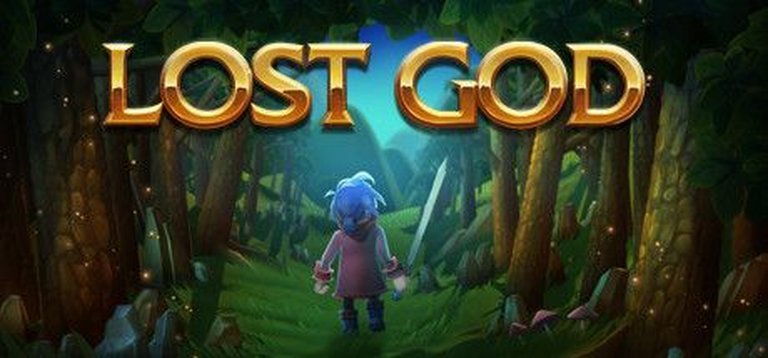
Lost God is a single‑player action‑adventure set in a haunting fantasy forest where exiled criminals are forced to atone under the watch of a terrible monster. Awakening on a mysterious stone platform with your wounds healed, you explore vibrant woods, overgrown ruins and dark tunnels, uncovering the secrets of a broken world and mastering a challenging combat system using a variety of weapons as you piece together the legend of the lost god.
Gameplay Videos
Where to Buy Lost God
PC
Lost God Reviews & Reception
steambase.io (82/100): Positive player sentiment reflected in an 82/100 score.
store.steampowered.com : Mostly positive reception with 72% of user reviews favorable.
Lost God: Review
Introduction
The moment the stone platform materializes beneath you, a blade whizzing toward your throat, Lost God thrusts the player into a world that feels both ancient and freshly imagined. Brought to Windows by the indie studio Gold Town Games on 7 February 2018, the title promises “atmospheric exploration” across vibrant forests, overgrown ruins, and dark tunnels—an adventure that hides secrets behind every moss‑covered stone. My thesis is simple: while Lost God never reaches the lofty heights of its myth‑laden namesakes, its earnest design, evocative world‑building, and surprisingly deep combat mechanics make it a noteworthy entry in the indie action‑adventure canon.
Development History & Context
Studio & Vision
Gold Town Games, a modest indie developer, self‑published Lost God under its own banner. The studio’s public footprint is thin—no major press releases or dev‑logs survive beyond a handful of community posts—but the game’s design reflects a clear ambition: to fuse classic top‑down action with puzzle‑driven exploration, all within a mythic fantasy framework.
Technological Constraints
Built on the Unity engine, Lost God leverages a diagonal‑down perspective reminiscent of early action‑RPGs, while employing “direct control” for character movement. Unity’s flexibility allowed the team to target a wide range of hardware: the minimum spec lists a Windows 7 32‑bit OS, a dual‑core 2 GHz CPU, 4 GB RAM, and an Nvidia GTX 750 Ti GPU; the recommended spec bumps this to a quad‑core 2.5 GHz CPU, 8 GB RAM, and a GTX 950 with DirectX 11. These modest requirements reflect the indie budget and the desire to reach a broad PC audience.
Gaming Landscape (2018)
When Lost God launched, the indie scene was thriving with titles that blended narrative depth and tight mechanics—Hades, Dead Cells, and Celeste dominated the conversation. Meanwhile, AAA action‑adventure games such as God of War (2018) were pushing cinematic storytelling and high‑fidelity graphics. Lost God positioned itself as a bridge: a low‑budget, hand‑crafted experience that emphasized atmospheric world‑building over spectacle, appealing to players yearning for exploration without the hardware demands of blockbuster titles.
Narrative & Thematic Deep Dive
Plot Overview
The story opens with the player character—an exiled criminal—awakening on a mysterious stone platform in an ancient forest, inexplicably healed of wounds and stripped of clothing. The world is a “sacred forest” where “criminals are sent to atone for their sins,” and a terrifying monster stalks the exiles as a sacrificial offering to an unseen god. The protagonist’s journey revolves around uncovering the forest’s secrets, confronting the monster, and piecing together the fragmented history of a broken world.
Characters & Dialogue
The narrative is largely solitary; the player is the sole protagonist, with minimal NPC interaction. Dialogue is sparse, delivered through environmental storytelling—ancient runes, weathered murals, and cryptic notes. This restraint forces players to infer lore from visual cues, fostering a sense of mystery.
Themes
Redemption & Immortality: The premise of criminals seeking atonement through sacrifice raises questions about guilt and rebirth. The protagonist’s sudden immortality—wounds healed, tears gone—acts as a metaphor for a second chance, albeit in a hostile environment.
Nature vs. Divine Wrath: The forest is both a sanctuary and a prison, echoing the classic trope of nature as a living deity. The “lost god” looms as an unseen force, its wrath manifesting as the monster that hunts the exiles.
Memory & History: Collecting “fragments from the history of a broken world” is a core gameplay loop, emphasizing the act of remembering as a means to reclaim agency. The game subtly suggests that the world’s decay is a result of forgotten divine contracts, inviting players to contemplate the consequences of neglecting mythic duties.
Gameplay Mechanics & Systems
Core Loop
At its heart, Lost God follows a classic action‑adventure loop: explore → discover → combat → upgrade → repeat. The player traverses a semi‑linear overworld composed of distinct zones—vibrant forest, overgrown ruins, dark tunnels—each populated with enemies, puzzles, and hidden lore.
Combat System
Combat is “engaging and challenging,” featuring a variety of weapons and strategies. While specifics are scarce, community screenshots depict melee weapons (swords, axes) and ranged options (bows). The system rewards timing and positioning; enemies exhibit distinct attack patterns that require the player to adapt. The presence of “puzzle elements” suggests that combat may intertwine with environmental interactions (e.g., using a weapon to trigger switches).
Character Progression
Players can upgrade equipment and acquire new weapons, a typical RPG‑style progression that encourages exploration. The game offers “26 Steam Achievements,” hinting at milestone‑based rewards that guide players toward hidden areas and tougher foes.
Interface & Control
The “direct control” scheme, combined with a diagonal‑down perspective, provides a clear line of sight while preserving a sense of intimacy with the character. The UI is minimalistic, focusing on health, stamina, and inventory slots, allowing the environment to take visual precedence.
Innovative & Flawed Systems
Innovation: The integration of lore fragments as collectible items that unlock narrative pieces is a clever way to blend story with exploration.
Flaws: Early community feedback (as seen in Steam discussions) points to occasional camera clunkiness and a lack of fast‑travel until later in the game, which can make backtracking tedious. Additionally, the combat, while solid, may feel repetitive without a deeper skill tree or combo system.
World‑Building, Art & Sound
Setting & Atmosphere
The game’s world is a fantasy forest that feels both alive and decayed. Lush foliage, towering ruins, and dimly lit tunnels create a visual contrast that encourages curiosity. The “vibrant forest” glows with saturated greens, while the “overgrown ruins” are draped in moss and broken stone, evoking a sense of forgotten grandeur.
Visual Direction
Using Unity’s 3D capabilities, Lost God adopts a stylized aesthetic. The diagonal‑down camera offers a quasi‑isometric view, allowing players to appreciate both character animation and environmental detail. The art style leans toward a hand‑painted texture palette, which, while not photorealistic, imbues the world with an otherworldly charm.
Sound Design
The Steam store lists “full audio” and subtitles, suggesting a complete voice‑over and ambient soundtrack. While no composer is credited, the atmospheric soundscape—forest rustles, distant monster roars, and the clink of weapon strikes—contributes to immersion. The ambient music likely shifts between serene melodies in open areas and tension‑building tones in dungeons.
Contribution to Experience
The synergy of visual and auditory cues makes exploration rewarding. Secrets “around every corner” are hinted at by subtle sound cues (e.g., a faint chime when near a hidden fragment) and visual glints on walls, encouraging players to linger and observe.
Reception & Legacy
Critical & Commercial Reception
Lost God has a modest presence on Steam: 11 user reviews, 72 % positive, and a price tag of $9.99 (as of the latest listing). No major critic reviews exist on MobyGames, indicating limited mainstream coverage. The community’s “Mostly Positive” rating suggests that players who discovered the game appreciated its atmosphere and depth, despite its rough edges.
Evolution of Reputation
Over the years, the game has remained a niche indie title, occasionally resurfacing in community forums and Steam discussions. Its modest sales (no public figures) and lack of post‑launch DLC point to a self‑contained experience that has not been expanded upon.
Influence on Subsequent Games
While Lost God did not spawn a franchise or inspire high‑profile successors, it exemplifies a trend in indie development: marrying classic top‑down action with narrative exploration. Its design choices—collectible lore fragments, atmospheric world‑building, and Unity‑based production—can be seen echoed in later indie titles such as Moonlighter (2018) and Eastward (2021), which also blend exploration with story‑driven collectibles.
Industry Impact
The game’s most notable contribution is its affirmation that small teams can deliver a cohesive, mythic adventure without the backing of a major publisher. It demonstrates the viability of Unity for creating richly textured worlds on modest hardware, encouraging other indie developers to pursue ambitious thematic concepts.
Conclusion
Lost God may never achieve the cultural ubiquity of its mythic namesakes, but it stands as a commendable indie effort that delivers a compelling blend of exploration, combat, and storytelling. Its atmospheric world, rooted in a forgotten forest of sacrifice and redemption, invites players to piece together a fragmented mythology while battling the lurking monster that embodies divine wrath. Though the camera can be finicky and the progression system modest, the game’s heart—its earnest attempt to make every stone and ruin whisper a secret—remains intact.
Verdict: Lost God earns a solid place among 2018’s indie action‑adventure titles. It is a worthwhile experience for players who cherish atmospheric exploration and narrative mystery over flashy production values. In the annals of video‑game history, it may be a footnote, but for those who wander its haunted woods, it is an unforgettable pilgrimage.